

SSAB, Autoliv to research green steel for auto safety products
Sweden-based steel producer SSAB and the world’s largest automotive safety supplier Autoliv have started a collaboration to research and develop fossil-free steel components for automotive safety products such as airbags and seatbelts, the two companies said in separate statements Nov 15.
“We are initiating a number of pilot projects together with Autoliv with the aim to reduce climate impact and strengthen competitiveness,” said Martin Lindqvist, president and CEO of SSAB.
Mikael Bratt, president and CEO of Autoliv, said the company was committed to becoming carbon neutral in its own operations by 2030 and “furthermore aim for net-zero emissions across our supply chain by 2040.”
“This means reducing our carbon emissions through use of renewable electricity in our own and supplier operations, improving energy and materials efficiency and adopting low carbon logistics and low carbon materials,” he said.
SSAB is one of the frontrunners among steel producers to cut CO2 emissions with the aim of supplying the market with fossil-free steel at a commercial scale in 2026, after a conversion of its Oxelösund blast furnaces into an electric arc furnace and by using HYBRIT technology.
SSAB, LKAB and Vattenfall created HYBRIT – Hydrogen Breakthrough Ironmaking Technology – in 2016, with the goal of developing a technology for fossil-free iron and steelmaking to eliminate CO2 emissions in steel production.
The technology replaces coking coal, traditionally used for iron ore-based steelmaking, with fossil-free electricity and hydrogen.
As reported by Platts, on August, SSAB showcased the first steel made of hydrogen reduced iron.
— Annalisa Villa


EU HRC in ‘wait-and-see’ mode with Q1 prices dependent on auto sector
The European HRC market showed further signs of stability Nov. 15, with prices in a stalemate amid automotive contract negotiations and fears of higher energy costs bolstering the bullish sentiment, sources told S&P Global Platts.
Despite the shortfall in automotive demand, European mills were trying to keep production running while also finalizing large volumes for lower prices, though market sources have said this was likely to cease in the new year once the semiconductor issues resolve.
A European mill source said he was already seeing positive signs for next year, with some major original equipment manufacturers announcing full schedules, suggesting greater production for first-quarter 2022.
“OEM schedules are promising – plants are running at full speed and there is a broader sense that the industry is improving,” the mill source said. “On the supply side, mills are willing to take the opportunity to do maintenance now that we’re managing the supply situation. We are optimistic for next year.”
The source said he was confident renewed automotive demand in Q1 would utilize the short-term overstocking many mills and distributors were currently trying to mitigate.
Ongoing problems with transport and packaging logistics, including a shortage of truck drivers in Germany and a scarcity in paper and wood, was also adding to the bullish sentiment as industry manufacturers remained severely hampered by these supply chain issues.
In the Italian market, a steel coils distributor was less expectant of higher prices for Q1, and instead cited prices for CRC and HDG around Eur20/mt lower than the current Italian spot market.
The source said he expected CRC prices to settle at Eur1,100/mt ex-works Italy and Eur10/mt higher for HDG. For HRC, Q1 prices were expected within Eur920-930/mt EXW Italy.
“They’ll be lucky to finalize at Eur920-930/mt for Q1 Italian market,” the distributor said. “We will continue to wait for beginning of next year. I have no confidence in final demand of the markets – there are some inquiries but not so much due to automotive call-offs.”
— Amanda Flint

Primetals sells Technologies Italy, reorganises long products
Primetals Technologies has transferred all its shares of Primetals Technologies Italy S.r.l., Marnate, to Callista Private Equity GmbH, a financial investor based in Munich, Germany.
As part of the transaction, Primetals Technologies Italy will be renamed to Pomini Long Rolling Mills S.r.l. (Pomini). The intellectual property of Primetals Technologies Italy is entirely transferred to Pomini, Kallanish learns. Primetals and Callista Private Equity have agreed to continue collaborating on certain types of long product rolling mills, WinLink plants, and in the field of mini-mills for long products on a project-by-project basis.
The group also announces it is bundling its in-house key product offerings for Long Rolling business under the lead of its two Centres of Competence (CoC). The one in Sutton, Massachusetts, USA, will focus on wire rod mills, bar in coil lines, combination mills including wire rod, bar in coil and straight bar outlet, high speed rebar mills, and nonferrous applications. The other one is the Electrics & Automation for Long Rolling Mills unit in Erlangen, Germany, supported by regional entities in Poland, Russia, India, China, and the USA.
In future, the WinLink technology – which directly links a high-speed caster to a high availability rolling mill for long products – will be owned by Primetals alone. Engineering, research and development, and project management for long rolling mills will be concentrated at Sutton, Massachusetts, the company adds.
Christian Koehl Germany

Tata Steel UK maintenance to spare deliveries
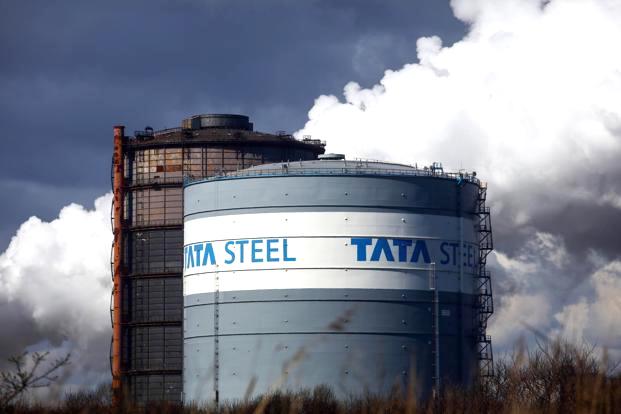
A Tata Steel spokesperson confirms the group is planning to carry out maintenance at some of its UK mills during December, but stresses this will not have an impact on customers.
Sources in the market suggest the maintenance will be carried out at the Port Talbot mill between 3 and 22 December. Kallanish understands two of the mills at the site will be under maintenance during that period, but the company does not expect this downtime to impact deliveries as they are part of planned annual operations.
The integrated Port Talbot site can produce up to 5 million tonnes/year of crude steel.
Emanuele Norsa Italy
European sections subject to speculation, says Salzgitter
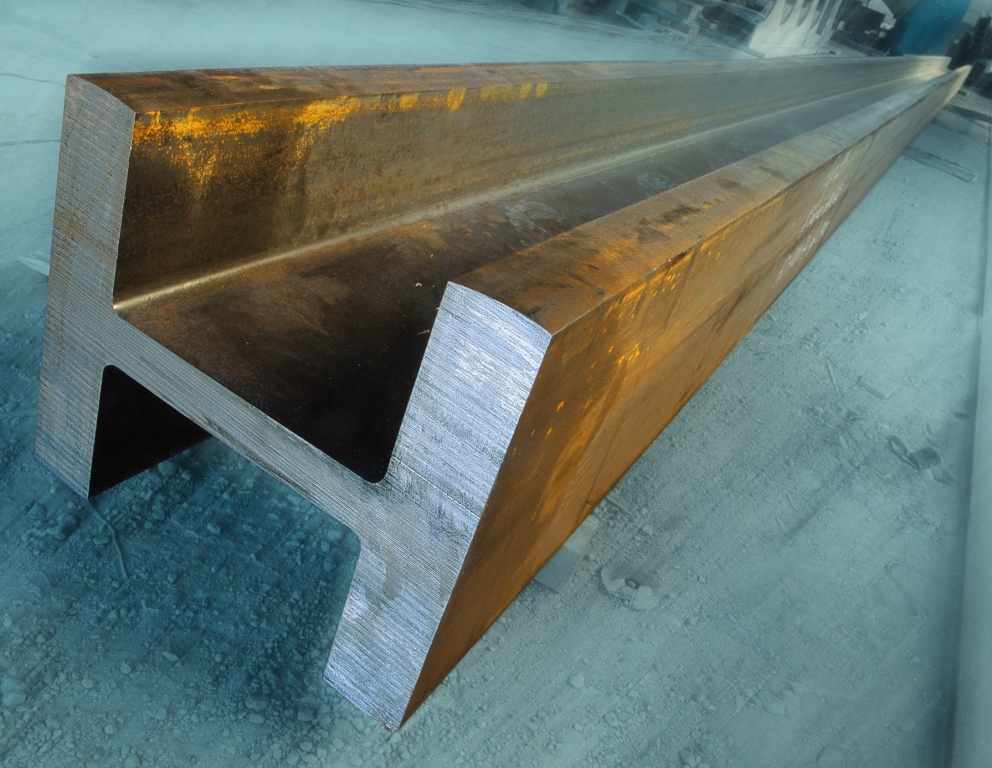
Following high demand for sections in the first half-year, order bookings had markedly decreased by the end of September, Salzgitter observes.
In H1, demand was driven by restocking, but also by speculation about further price hikes. Since late summer, sections mills have had increasing difficulty securing utilisation, Kallanish learns from Salzgitter’s nine-month report. Notably, the company points out that real demand has actually not changed overall.
Salzgitter attributes this to speculative buying patterns, both of the stockholding steel distributors and of end consumers. “Many had assumed that the available volumes would become increasingly scarce, making it difficult to secure supplies, and that prices would continue to rise, prompted by stable demand,” it writes in the report.
This scenario did not play out, however, Salzgitter concludes. The reductions in inventory anticipated in August did not take place, and have not occurred in September either. Instead, inventory turnover remained at a weak level, with all manufacturers producing again after downtime in the summer, and delivering large volumes. This resulted in rising inventory levels at stockholders.
At Salzgitter, sections are combined in a business unit with heavy plate. The unit delivered 458,000 tonnes in total in the third quarter and 1.499 million tonnes in the first nine months. It lifted its revenue to €503 million ($576m), from €306m in Q3 2020, and returned to an Ebit of €19m, against a loss of €39m a year earlier.
Christian Koehl Germany

Chinese real estate confirms worst crisis since 2015
Data on China’s real estate sector in October was the weakest since the major contraction in 2015. Indicators of construction activity and house prices were all weak and the sector is expected to continue to weigh on steel demand, Kallanish notes.
Completed investment in real estate is still up 7.2% year-on-year to CNY 12.493 trillion ($1.98 trillion), according to the National Bureau of Statistics (NBS). That implies however that in October investment was down 5.4% y-o-y at CNY 1.237 trillion. Falling investment has come amid credit tightening and developers being forced to offload apartments at a discount.
Real estate sales by volume were up 7.3% y-o-y at 1.43 billion square metres over ten months, but in October they were down 21.7% y-o-y at 123.9 million sqm. Average prices also fell in October to CNY 9,749/sqm, the third consecutive month of decline and the lowest since April 2020. The NBS survey of 70 cities showed new house prices falling on-month in 52 cities, the most widespread decline since early 2015, when rebar prices fell to less than half their current level.
Weak prices and financing are likely to keep steel demand low for some time. Indicators of construction are all collapsing. New starts year-to-date are now down 7.7% at 1.667 billion sqm, with October new starts down 33.1% y-o-y at 137.92m sqm. Completions meanwhile are still up 16.3% y-o-y year-to-date at 572.9m sqm, as developers rush to market to raise cash to pay off their debts. Despite this, October saw completions drop 20.6% to 62.77m sqm as this strategy starts to run out of steam and developers seek to avoid collapsing prices further.
A very brief rebound in futures prices was triggered last Thursday on reports that China would allow developers more leeway in managing their debts by issuing bonds. China now faces a decision over how hard it can press the real estate sector without triggering a wider economic slump.

Alro plans to build distribution centre in Iowa
Michigan-based US service centre chain Alro Steel plans to build a new $20 million distribution centre in southwestern Iowa, Kallanish understands.
Earlier this month, Alro received approval from the city council of Cedar Rapids, Iowa, to receive tax incentives to build a new 199,200 square-foot distribution centre.
According to the project proposal by Alro, the new facility qualifies under the city’s high quality jobs benefit programme, as the centre will create over 40 new jobs. Under the city’s high quality jobs program, projects that create over 10 or more high wage jobs (over $24.20/hour) can receive a tax rebate, with the standard incentive deal being a 10-year, 50% increment tax rebate on the project’s investment.
“We’re attracting a new business to Cedar Rapids, going along with our big emphasis in attracting large warehousing organisations, and Cedar Rapids is really becoming a hub for warehousing on a national basis. And this is a diversified company that we’re bringing into the area,” says council member Scott Overland in support of the project, during a city council meeting.
The Cedar Rapids council estimates the investment will generate $5.2m in new taxes over a 10-year period.
Zach Johnson USA