


Shell, Thyssenkrupp plan 200-MW green hydrogen plant in Rotterdam
Thyssenkrupp has signed a contract with Shell for its planned 200-MW Hydrogen Holland I electrolyzer plant in Rotterdam, Thyssenkrupp said Jan. 10.
Construction of the electrolyzers is planned to start in spring, with a final investment decision from Shell on the Holland Hydrogen I plant expected in 2022, and hydrogen production starting from 2024, Thyssenkrupp said in a statement.
Thyssenkrupp Uhde Chlorine Engineers will engineer, procure and fabricate the plant based on its 20-MW alkaline electrolysis module, the company said.
The facility will produce 50-60 mt/day of hydrogen once at full capacity, engineering contractor Worley said in a statement announcing early design works in 2021.
The plant will be linked to renewable electricity from the 759-MW Hollandse Kust Noord offshore windfarm, using guarantees of origin. The windfarm is due to start in 2023.
Holland Hydrogen I will be built in the Tweede Maasvlakte area of the Port of Rotterdam.
“We are looking forward to support building a major hydrogen hub in central Europe and to contribute to Europe’s transition to green energy,” Thyssenkrupp Uhde Chlorine Engineers Head of Green Hydrogen Christoph Noeres said in the statement.
“With our large-scale standard module size, we will further strengthen Shell’s hydrogen strategy,” he said. “Our partnership perfectly combines our engineering excellence with Shell’s competence of a large global energy player.”
Hydrogen from the plant will be transported by pipeline to Shell’s Energy and Chemicals Park Rotterdam, and used for industry and the transport sector, the statement said.
The Netherlands is one of the leaders in Europe for green and blue hydrogen plans, with several projects in the pipeline.
Blue hydrogen produced from fossil fuel sources coupled with carbon capture and storage is currently projected to be cheaper to produce than green hydrogen from electrolysis powered by renewables, but costs are expected to fall rapidly this decade.
S&P Global Platts assessed the cost of producing renewable hydrogen via alkaline electrolysis in Europe at Eur15.02/kg ($16.96/kg) Jan. 7 (Netherlands, including capex), based on month-ahead power prices. PEM electrolysis production was assessed at Eur17.81/kg, while blue hydrogen production by steam methane reforming (including carbon, CCS and capex) was Eur5.99/kg.
— James Burgess, Annalisa Villa

China’s 2021 steel output drops 35 million mt on year: CISA
China’s crude steel production is expected to reach 1.03 billion mt in 2021, down 35 million mt, or 3.3%, from 2020, Gao Xiangming, vice chairman of the China Iron & Steel Association said Jan. 10.
China’s crude steel output has declined on an annual basis for the first time since 2016.
Gao said he expected China’s steel demand in 2022 to remain at the level of 2021. Property construction will face downward pressure, but construction of infrastructure projects will accelerate, and the manufacturing sector will remain strong in 2022, he said.
However, some market sources said they believed steel demand growth in infrastructure and manufacturing would not be enough to fully offset the slowdown in the property sector in 2022, while China’s crude steel output might have to drop further in 2022 in order to strike a balance between supply and demand.
Due to constraints from high local government debts and a lack of new and steel-intensive infrastructure projects, some market sources said they expected infrastructure investment to see only low-single-digit growth in 2022.
China’s manufacturing sector is likely to face downward pressure in late 2022, with overseas demand likely to shrink fast as operations at overseas factories will be gradually back to normal, and the US may tighten monetary policy.
One mill source said China’s steel margins was likely to decline notably in 2022 from 2021 due to sluggish demand, but added that loss-making is unlikely to be seen in the steel industry as China is also planning to cap crude steel production in 2022 at 2021 levels, which would provide support to steel margins.
Crude steel output seen rising
According to CISA, China’s daily crude steel output over Dec. 21-31 rebounded 9.7% from mid-December to 2.634 million mt/day. As a result, daily crude steel output in December averaged 2.604 million mt/day, up 12.7% from November but still down 11.6% year on year. The rebound was largely because most Chinese steelmakers had ramped up production after they had met 2021 steel output cut requirements by November or mid-December.
Some mill sources said China’s crude steel output was likely to continue to climb in January but remain lower than a year ago, as steel output cuts in northern China had remained stringent to guarantee clear air ahead of and during the Winter Olympics in Beijing over Feb. 4-20.
They said they expected China’s crude steel production to rise along with demand for most of the first half of 2022, before falling in the second half in tandem with slower steel demand of both home and abroad.
— Staff

China continues to dominate Turkish stainless market with competitive prices
China continued to raise its share in the Turkish stainless steel market with competitive prices, according to the latest monthly Turkish Statistical Institute (TUIK) data sent to S&P Global Platts.
Turkey imported 82,000 mt of stainless steel coil (HS code: 7219-7220) in November, of which 25,500 mt was from China, up 68% on the year, the data showed.
Stainless imports from China thus reached 207,800 mt in the first 11 months of 2021, 86% higher on the year, while Turkish mills’ overall stainless steel imports totaled 690,000 mt, around 150,000 mt higher on the year, on higher stainless steel consumption in Turkey with the easing of the pandemic.
The cost of these imports also rose to $1.5 billion in that period, 53% higher on the year due to globally higher steel pricing.
Following China, another Asian country, South Korea, became Turkey’s second largest stainless steel supplier in the 11-month period at 130,000, 15,000 mt lower on year.
Turkey’s imports of stainless flat steel from another Asian country, Indonesia, totaled 102,000 mt in January-November, more than double on year.
Turkey also imported 39,000 mt of stainless steel coil from Spain in that period, while imports from Italy totaled 37,000 mt.
Turkey decreased its duty on imports of cold-rolled stainless sheets to 8% from 12% effective Jan. 1 2022, amid increased stainless flat steel demand in the country.
The tariff does not apply to countries, such as those of the EU, with which Turkey has a free trade agreement, according to a decree published in the country’s Official Gazette.
Turkey’s sole stainless cold-rolling mill, Posco Assan TST, based in Izmit, Kocaeli, near Istanbul, has a production capacity of 300,000 mt/year of 0.3-3.0 mm thick stainless cold-rolled coil up to 1,600 mm wide.
— Staff, Cenk Can
German steel users fear high CBAM costs
The Carbon Border Adjustment Mechanism (CBAM) as proposed by the European Commission could cause extra costs of up to €2 billion ($2.27 billion) for German steel fabricators, a study says.
It was carried out by the Cologne Economic Institute (IW Köln), and commissioned by the steel and metals working industry federation Wirtschaftsverband Stahl- und Metallverarbeitung (WSM). The study finds that CBAM would protect steelmakers from foreign competition with greater CO2 burdens at a lower CO2 price, but would massively hurt steel processors due to rising input material costs. Hence, CBAM could increase the risk of relocation of production sites to foreign shores, WSM fears.
The federation says it does not question the need for the border adjustment mechanism, but criticises its limitation to materials like steel, aluminium and cement. WSM is therefore urgently calling on the European Commission to make improvements and to include the entire value chain, Kallanish reads in a statement.
According to the study, the European Commission’s regulation would swallow up a steel fabricator’s entire 2% return on sales, especially since the mostly medium-sized companies would not be able to pass on the costs. Since many of the firms are strong exporters, national costs for CO2 certificates would need to be reimbursed in the case of exporting finished goods, as is the case for steel, WSM argues.
Christian Koehl Germany

Acerinox implements energy surcharge
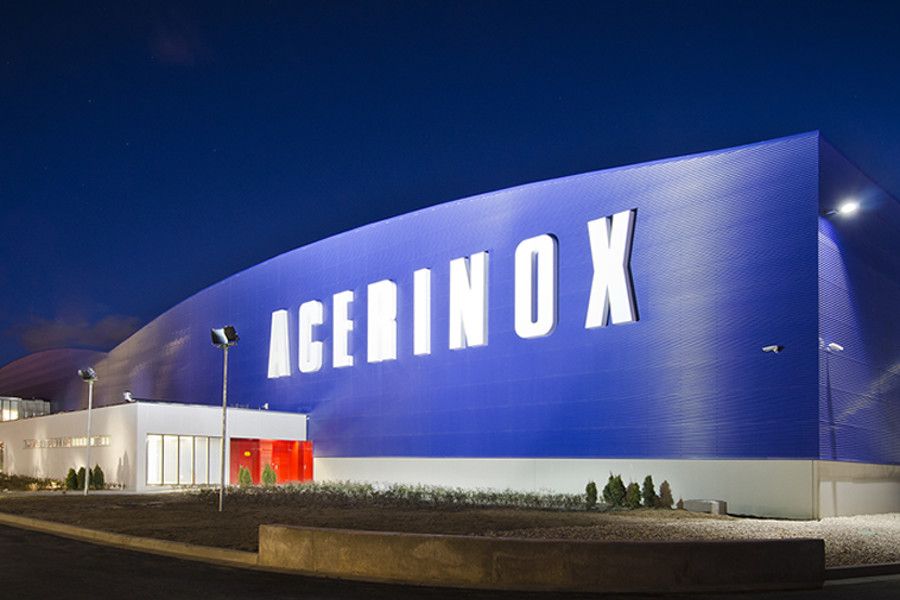
Acerinox, the Spanish-headquartered stainless steel supplier, has announced to its European clients the decision to implement an energy surcharge on all new deliveries from January, Kallanish learns.
The surcharge will be included in the alloy surcharge that is set monthly, the firm says in a letter to its clients. The extra will be calculated monthly and will be influenced by the average cost of electricity and gas.
The company stresses that the energy surcharge will nevertheless not cover 100% of the energy costs it incurs. For January, the energy surcharge will be €253/tonne ($287) for flat products and €284/t for long products.
The move by Acerinox follows similar moves by other European steelmakers implemented since the end of the third quarter of 2021.
Emanuele Norsa Italy