

Yukselen doubling processing capacity with new Turkish service center
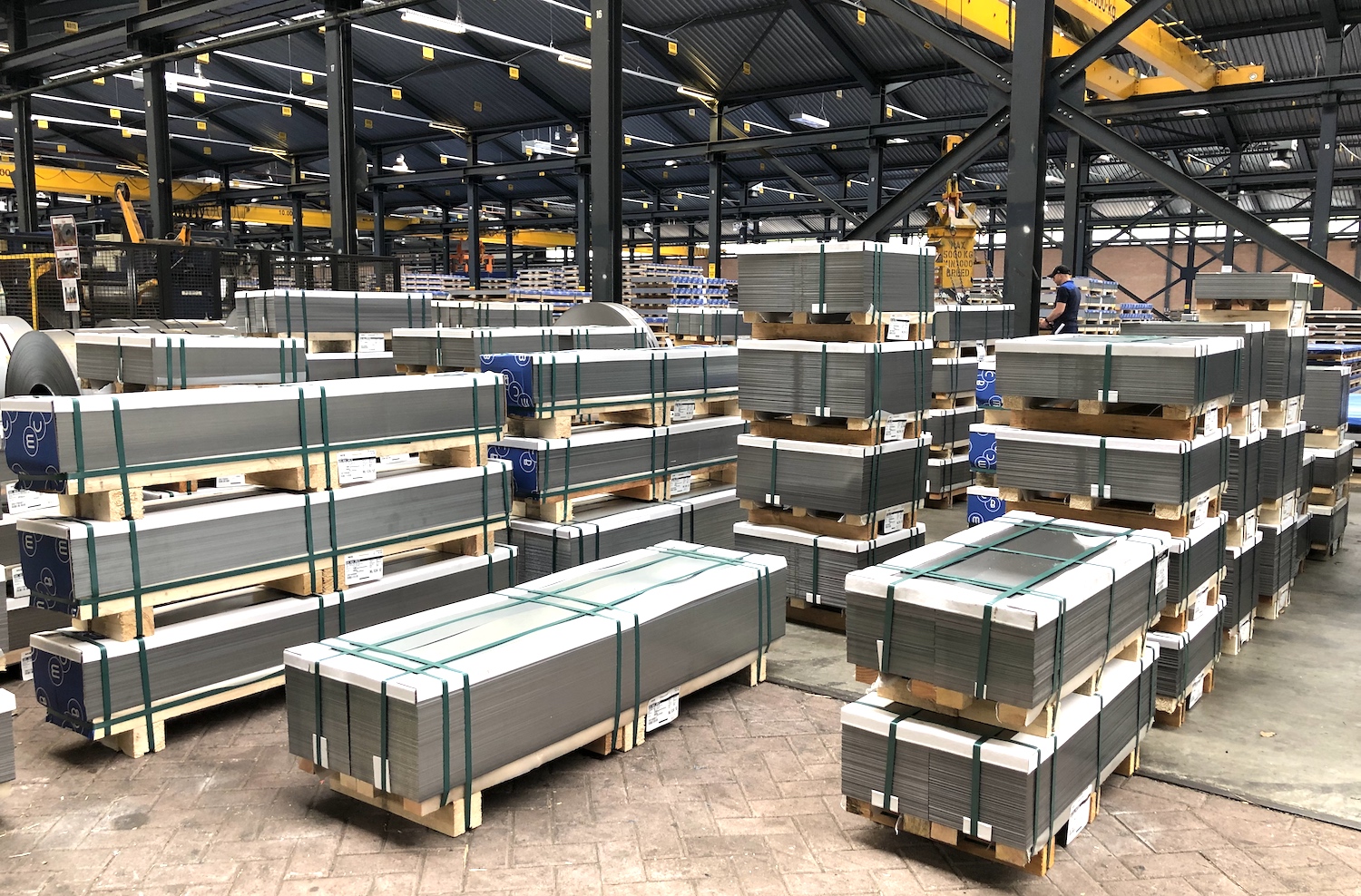
Turkey’s first and only stock exchange listed steel service center, Yukselen Celik, with three major operations in the Istanbul and Izmir regions, is starting construction work at its new steel center, which is expected to roughly double the company’s steel processing capacity.
The new operation will be built in one of the industry zones in Kocaeli, western Turkey with a Lira 60 million ($7 million) investment and the prime contractor agreement for the construction works was signed on Jan. 25, the company said.
According to the company’s regulatory filing, rough construction works at the steel service center will soon begin and are expected to be completed by the end of October 2022.
The company is targeting to start commercial operations at its new steel center in the first half of 2023.
Yukselen Celik currently has 100,000 mt/year of steel processing capacity.
The company offers carbon, alloy, tool and high-speed steels and shipbuilding plates serving automotive, defense and other manufacturing sectors.
— Cenk Can

Thyssenkrupp supplies desulphurisation plant to ArcelorMittal Belgium
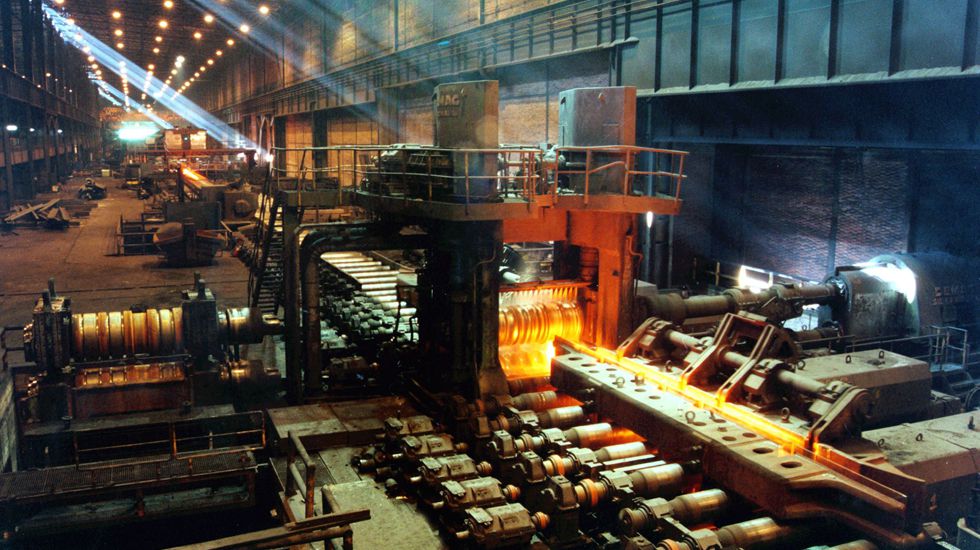
ArcelorMittal Belgium has awarded thyssenkrupp Uhde an order for a desulphurisation plant to be installed at its Ghent site, Kallanish learns from the plant-building unit of thyssenkrupp group.
The main aim of this brownfield project is to enhance the existing coke oven gas treatment plant with a state-of-the art sulphur removal and recovery unit. The original coke plant was built by tk Uhde 25 years ago, then under the name of Thyssen Still Otto company. Tk Uhde will now install its proprietary process “Cyclasulf”, for desulphurisation, as well as “Monoclaus”, for efficient sulphur recovery.
Cyclasulf removes hydrogen sulphide (H2S) and ammonia (NH3) from coke oven gas. The acid gas stream is concentrated and prepared for further processing, either to sulphur or sulphuric acid. In Ghent, elemental sulphur will be recovered. Modern mass transfer elements significantly reduce the size of the required equipment, keeping the footprint low. The Monoclaus process for sulphur recovery and ammonia decomposition enables the production of liquid pure sulphur utilising a minimum number of equipment and pipelines.
The new units are planned to go into operation in July 2023.
Christian Koehl Germany


Northwest European plate prices bottom out
The softening of plate prices in northwest Europe appears to have halted at the end of 2021, when S235 grade product had dipped under €900/tonne ($1,007) ex-works.
“You can get it for €890 on relatively short notice, and for €870 when you are prepared to wait longer,” a southern German-based manager told Kallanish only a week ago.
But around that time a turn of the trend had already kicked in, a manager of a mill group claims now, attributing this to increasing costs for slab, raw materials including alloys, and energy. He sees prices from NW European integrated works for S235 going towards, or already reaching, €950/t. He re-calculates the value for S235 from the more common quote of S355 delivered, which he says is now back at €1,000.
However, prices for S235 may be softer altogether, as regional mills have little interest in making this grade, leaving the segment to Eastern European mills.
Looking at Italy, he says prices there are relatively high, and unattractive for northern customers, at a current local ex-works price for S275 of around €850. He notes that the transalpine gap has become narrower, from a typical €80+ to €60 now, which would set the price of northwestern mills for S235 at around €920 ex-works.
Not everybody necessarily agrees that a rebound of prices has already kicked in. Strengthening prices are more likely for thick gauges from reversing mills, rather than for plate cut from coil. As one observer pointed out earlier, cut-from-coil plate remains soft, corresponding to the lack of direction felt on the strip coil market.
Christian Koehl Germany
Iron ore rises on China’s recovering sentiment
Seaborne iron ore prices moved higher on Thursday as the spot market caught up with increases in futures earlier in the week. Spot trading activity remained muted as mills have completed restocking, but sentiment continues to be bolstered by expectations of Chinese spending.
The Kallanish KORE 62% Fe index increased $2.07/t to $138.15/dry metric tonne cfr Qingdao. The Kallanish KORE 65% Fe index gained $2.94/t to $167.23/dmt cfr, and the KORE 58% Fe index appreciated $1.27/t to $109.72/dmt cfr. 170,000 tonnes of PB Fines sold at $137.50/t with a laycan in 5-14 March.
On the Dalian Commodity Exchange, May iron ore settled up CNY 5/t at CNY 770.5/t ($121.13/t), while on the Singapore Exchange February 62% Fe futures settled up $0.23/t at $137.87/t. The same contract for 65% Fe and 58% Fe futures settled up $0.12/t at $168.25/t, and up $0.71/t at $105.97/t respectively.
6mm+ heavy scrap delivered to mills in the Yangtze River Delta remained flat at CNY 3,627/t, while Tangshan billet was also unchanged at CNY 4,480/t.
Despite spot markets having largely already broken up for the Chinese New Year holiday, limited trading followed futures prices higher on Thursday. Prices are being bolstered by expectations that China’s support for the economy will translate into steel demand in the coming months.
China has yet to announce several key decisions such as its local government special purpose bond quota for 2022. Talk of increased spending however has triggered hopes that the infrastructure sector could begin to recover.
Real estate has meanwhile partly stabilised amid an inflow of new financing. Increased mortgage issuance and looser rules around escrow accounts on pre-sales show the pressure China’s authorities are under to loosen their stranglehold on developer debts. In the short term, the release of funds could mean developers rush to get projects to market and boost construction activity.
China’s overall policy direction however is still towards reform of the sector and moving investment to other areas. That means that any loosening in the short term should lead to a tightening once Beijing feels confident enough to do so.

UK 2021 car production down 6.7% to 859,575 units, EV output up 30%: SMMT
UK passenger car production in 2021 fell 6.7% to 859,575 units, mostly due to COVID-19 pandemic-related issues, the Society of Motor Manufacturers and Traders said Jan. 27, adding it expected a rebound in 2022.
It was the lowest total since 1956 and 34% below pre-pandemic levels seen in 2019, said the SMMT, which expected output in 2022 to rise above 1 million units, and then to 1.1 million in 2025, due to the expected end of the global chip shortage, new models and the avoidance of additional trade barriers.
“2021 was another incredibly difficult year for UK car manufacturing, one of the worst since the Second World War which lays bare the exposure of the sector to structural and, especially, COVID-related impacts,” SMMT CEO Mike Hawes said in a statement.
The ongoing shortage of semiconductors was cited by the SMMT as a key cause of the decline, with many automakers forced to reduce or pause production while awaiting chips, whose supply was severely constrained by the pandemic.
Automakers also experienced staff shortages due to COVID self-isolation and lower demand as showrooms were forced to closed for parts of the year due to lockdowns, the SMMT said.
However, output of hybrid electric vehicles in 2021 jumped 30% to 224,011 units, which accounted for 26.1% of overall production, with production of battery-only EVs up 72%, the data showed.
Exports down 5.8%
Production for the domestic market fell 11% in 2021 to 153,749 units, while output for export markets dropped 5.8% to 705,826 vehicles.
Of the exports, 388,249 units, or 55%, went to the EU, up from a 53.5% share in 2020 although the overall total dropped 3% year on year.
While the Brexit deal allowed automotive trade with Europe to be tariff-free, the SMMT said frictions and costs had arisen from the new trading arrangements.
“While automotive businesses were as well prepared as they could be, an SMMT member survey in April revealed some nine-in-ten (91%) firms were spending more time and resource managing UK/EU trade than in 2020,” the SMMT said.
The data showed exports to the US fell 10.5% year on year and 36% to Japan, although shipments to China rose 0.6% to 57,356 units.
Exports to Canada fell 5.3% and to Australia by 31, with South Korea down 30%, the data showed.
Optimism for the future
Despite the dismal overall performance, the SMMT said there had been some developments that could give the industry increased confidence, such as the signing of the EU-UK Trade and Cooperation Agreement and publicly announced investments of up to GBP4.9 billion ($6.6 billion) in 2021, the highest total since 2013, into Ellesmere Port, Halewood, Norfolk, Sunderland and Surrey.
Of the total investment around GBP2.5 billion was in support of EVs.
Dawes was also optimistic going forward.
“With Brexit uncertainty largely overcome with the TCA deal, investments have been unleashed, most of which will help transform the sector to its zero-emission future,” Dawes said.
“This is a vote of global confidence in the UK but must be matched by a commitment to our long-term competitiveness; support for the supply chain in overcoming parts shortages, help with skills and training and, most urgently, measures to mitigate the escalating energy costs which are threatening viability.”
— Jacqueline Holman