

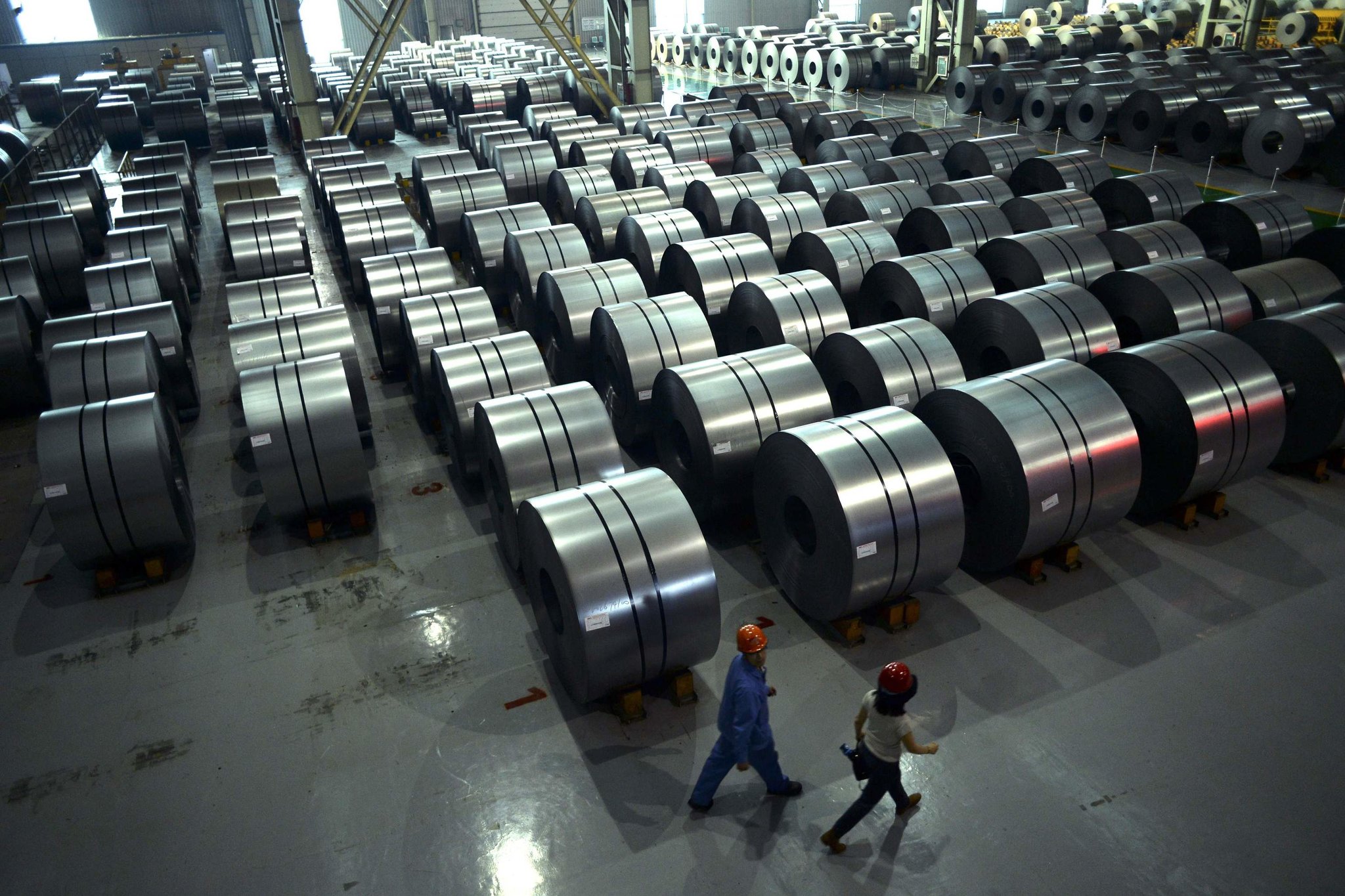
Steelmaker Aperam has record 2021; moves into specialty recycling
Special and stainless steel maker Aperam, with operations in Brazil and Europe, achieved record results for the fourth time in a row in the fourth-quarter 2021 amid a positive market environment, the company reported Feb. 11. It also diversified into stainless steel scrap and superalloys recycling in the quarter with the purchase of ELG.
Fourth-quarter 2021 steel shipments at 424,000 mt were marginally lower than the 431,000 mt of Q4 2020, Aperam’s results statement showed. However, notably higher market sales prices took EBITDA per metric ton to Eur1,090 ($1,238), almost triple the Eur369 of a year previously.
Aperam’s Q4 EBITDA rose to Eur462 million, up from Eur159 million in the year-ago quarter, beating analysts’ estimates.
For the whole of 2021, the steelmaker shipped a total of 1.8 million mt of steel, up 8.5% on 2020, while higher prices boosted sales revenue by 40.58% to Eur5.1 billion. EBITDA for the year shot up to Eur1.19 billion, from Eur343 million in the previous year, while net income rose to Eur968 million, from Eur175 million in 2020.
In Q1 2022, Aperam’s adjusted EBITDA is expected to grow slightly from the record Q4 2021 base, it said.
“Looking ahead, our long order book signals a good first half,” CEO Timoteo Di Maulo said in the results statement.
“We’ve not witnessed any softening of demand in Europe in recent weeks,” Di Maulo said in a later call with analysts. “The market is seeing a good level of supply and demand.”
The company’s energy costs peaked in Q4 and are expected to fall moving forward, which should help bolster profitability, he said.
The company will start a share buyback in Q2, Di Maulo added.
Aperam has a flat stainless and electrical steel capacity of 2.5 million mt/year in Brazil and the EU, where it has six production facilities in Brazil, Belgium and France. It also has an integrated distribution, processing and services network and can produce stainless and special steels from low-cost biomass (charcoal made from its own FSC-certified forestry).
ELG
Aperam consolidated Germany-based ELG as of Dec. 31, 2021, under a new recycling segment.
With this development, Aperam say it has become a global leader in collecting, trading, processing and recycling of stainless steel scrap and high performance alloys, including nickel- and titanium-based superalloys scrap, delivering around 1.2 million mt of materials annually. The recycling segment’s results will be presented as a division along with the rest of Aperam’s results as from Q1 this year, Di Maulo said on the call.
“2021 was an extremely exciting year and the future will be even more exciting,” he said. “We expect a lot of progress on ELG in the short term.”
— Diana Kinch


Kaltenbach.Solutions professionalizes supply chain for BoosterBOXes
The growing demand for universally applicable digital devices for measuring performance on machines in the steel processing industry made it necessary to professionalize the supply chain management of Kaltenbach.Solutions GmbH. A newly established warehouse and shipping center in the Rhine-Main area will take over Europe-wide shipping of the “BoosterBOXes“.
In the processing of the steel trade, the topic of “Industry 4.0” has now become part of everyday working life. More and more companies are using universally applicable digital measuring devices such as the “BoosterBOX” from Kaltenbach.Solutions GmbH as well as specially developed industry solutions on a daily basis to precisely measure the performance of their machines and increase performance. Therefore, Kaltenbach.Solutions’ existing delivery systems had to be adapted to the increasing demand. The challenge was to design an efficient, cost-effective and easily scalable supply chain management solution. The warehouse and shipping center in the Rhine-Main area features a high-bay storage system and professional packing stations and enables a 24-hour delivery service of BoosterBoxes to customers in the steel processing industry in Europe.
www.kaltenbach-solutions.com

Liberty Steel ‘in dialogue with all creditors’ for sustainable UK future
Liberty Steel Group, part of the GFG Alliance group of companies, said Feb. 11 it remains in dialogue with creditors to ensure a sustainable future for its UK businesses, after press reports suggested UK tax authority HMRC could take it to court or wind some operations up over unpaid tax, which might result in works closures and unemployment. HMRC said that it aimed generally to be “supportive.”
“Our priority has been to protect thousands of jobs in the UK. We are committed to repaying all our creditors and continue to work with all stakeholders around the UK to create a sustainable future for our businesses following the collapse of Greensill Capital,” a Liberty Steel spokesperson said. “We are in continuous dialogue with all our creditors including HMRC to find an amicable solution that’s in the best interest of all stakeholders. Short term actions that risk destabilizing these efforts are not in anyone’s interest, and undermine creditor recovery at a critical stage in our debt restructuring efforts that seek to secure the future of our businesses.”
Liberty Steel started to experience cash flow difficulties following the collapse of GFG’s main financier, Greensill Capital, in March 2021. This also led to raw materials supply interruptions at some plants as some suppliers reportedly pulled out of supply arrangements due to fears of not being paid, hitting Liberty’s output levels. While a UK market upturn from mid-2021 allowed Liberty Steel UK to restart operations by October at its “greensteel” Rotherham electric arc furnace and its speciality steel division in Stocksbridge – this latter having been closed since spring 2021 – high electricity costs have forced Liberty to operate the EAF only at night since that time.
“Against a very challenging backdrop in the UK with record high energy prices and imports we have provided tens of millions in funding to keep our people in employment and maintain operations to serve customers and strategic supply chains while we complete our refinancing”, the Liberty spokesperson said.
The spokesperson did not immediately confirm Liberty Steel’s current production levels in the UK.
According to reports in the Financial Times and The Guardian newspapers, HMRC has issued petitions to wind up operations at Liberty’s Speciality Steel UK, Liberty Pipes (Hartlepool), Liberty Performance Steels and Liberty Merchant Bar operations which reportedly owe a total of GBP26.4 million ($35.83 million) to the tax authority.
Usually informed sources said they could not confirm that the HMRC had yet filed any court case against the steelmaker.
HMRC, BEIS indicate ready to be supportive
An HMRC spokesperson said in an email to S&P Global Platts: “We take a supportive approach to dealing with customers who have tax debts, working with them to find the best possible solution based on their financial circumstances.” The authority added it could not comment on identifiable taxpayers due to the law around taxpayer confidentiality.
A government spokesperson from the Department for Business, Energy and Industrial Strategy said in an email that: “The Government is closely monitoring developments around Liberty Steel and continues to engage closely with the company. As always, we stand ready to support their dedicated employees and their families affected by any developments.
“We have provided extensive support to the steel sector as a whole to help with the costs of electricity and are working with them to support their low carbon transition.”
The BEIS spokesperson noted that HMRC’s decisions regarding issuing of winding-up petitions are taken independently, and that it is “first and foremost the responsibility of the company to manage commercial decisions for the future of the organization.”
— Diana Kinch
UK car output declines further, 2022 improvement foreseen
UK car production fell 6.7% on-year to 859,575 units due to multiple factors, most Covid-19-related, says the Society of Motor Manufacturers and Traders (SMMT). However, electric vehicle output surged, while improvement is forecast for 2022 thanks to a potential £4.9 billion ($6.6 billion) of investment and recovery in production.
The shortage of semiconductors was the principal cause of the output decline, with factories having to reduce or even pause production while awaiting parts whose supply has been heavily constrained by the global pandemic, SMMT observes. Carmakers also wrestled with staff shortages arising from the need to self-isolate, and depressed demand with car showrooms closed for months due to lockdowns. The closure of a major UK car plant in July also contributed to the decline.
Honda saw the largest output drop of 21.5% in 2021 to 54,465 units, while largest producer Jaguar Land Rover reduced production 9.6% to 220,554 units, Kallanish notes.
British car factories nevertheless produced an annual record 224,011 of battery electric (BEV), plug-in hybrid (PHEV) and hybrid electric vehicles (HEV), representing over 26% of all cars made.
Some 80% of cars produced were exported, with the EU accounting for 55% of exports, despite shipments there dropping 3% on-year in 2021. Shipments to second- and fourth-largest markets the US and Japan fell 10.5% and 36% respectively. Third-placed China however increased intake by 0.6%.
The avoidance of an EU/UK “no deal” and the signing of the Trade and Cooperation Agreement (TCA) saw publicly announced investment for the industry reach a potential £4.9 billion. This includes vital investment announcements in Ellesmere Port, Halewood, Norfolk, Sunderland and Surrey.
Adam Smith Germany


Salzgitter confident for 2022 after 2021 earnings surge
Salzgitter posted pre-tax profit in 2021 of €707 million ($807m), on revenue of €9.8 billion, versus a loss of €196m in 2020, Kallanish learns from an ad-hoc statement.
Looking ahead, the German group speaks of a “decidedly encouraging start to the new year” and believes in a sustained, strong profit trend predominantly in the strip steel business. It thus anticipates an increase in 2022 revenue to just under €11 billion and a pre-tax profit of between €600m and €750m.
Salzgitter assesses the probability of another pandemic-induced plunge in the economy as rather unlikely. However, it warns of virtually unquantifiable forecast risks stemming from extremely high energy costs and the threat of further price increases, as well as uncertainty surrounding the current geopolitical hazards.
The company underlines that its sections segment also reported an outstanding result despite the massive increase in energy prices, which badly hit the electric arc furnace mill for sections in Peine.
The complete annual report for 2021 will be published on 21 March.
Christian Koehl Germany