

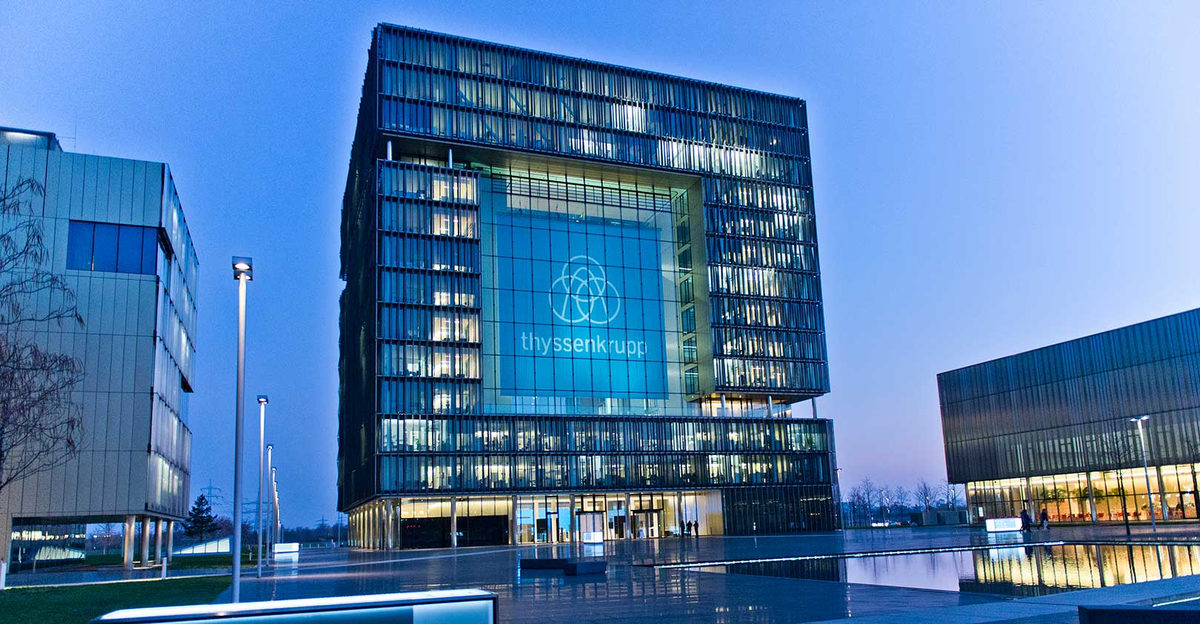
Thyssenkrupp to join ResponsibleSteel
Thyssenkrupp Steel will join the ResponsibleSteel initiative, which promotes a global standard and certification programme to ensure steel is responsibly sourced and manufactured.
“We want to give our customers the certainty that we are shaping our transformation to climate-neutral steel production,” says Arnd Köfler, thyssenkrupp Steel’s chief technology officer. This will apply to the entire value chain, also taking into account social and ecological criteria, Kallanish understands.
“It is of particular importance to us to pursue these goals jointly with our downstream users and customers,” Köfler adds. For the German steelmaker, the commitment to the Responsible Steel standard is another important element of its technological transformation process.
“We are rolling out the ResponsibleSteel standard across the globe and we are proud that our positive impact is already making a change,” says Ali Lucas, acting chief executive of ResponsibleSteel. “Thyssenkrupp Steel membership will be a fundamental part of this.”
Major mill groups that recently became members of the initiative include Posco and Severstal.
Christian Koehl Germany

Construction growth moderates, auto bottlenecks continue: Fitch Solutions
Global construction industry growth will moderate in 2022 as base effects normalise, but will average annually at 3.4% in the coming years, above pre-Covid growth, thanks to support from government stimulus measures, according to Fitch Solutions.
There will however be increasing divergence between developed and emerging markets, with the latter being less able to pump funds into infrastructure investment. Most central banks in developed markets will not hike rates as aggressively as the market expects, but emerging markets will face tightening monetary policy, with rate hikes likely to be aggressive, says Fitch Solutions infrastructure analyst Daine Loh.
Public investment will also boost green infrastructure development in the EU and US, with a considerable portion of funds aimed at catalysing private investment. Western Europe’s favourable environment for hydrogen infrastructure investment will see this region emerge as a “hotspot” for this type of technology, Loh observed during a webinar on Tuesday attended by Kallanish.
Construction material input prices will remain elevated in 2022, which could see further construction project delays, but values will moderate from record 2021 highs. The tight market should ease in the second half of 2022 as supply and demand rebalances. The slowdown in Chinese construction growth will be a major factor in easing market pressures.
On automotive, global vehicle demand will remain robust but production to meet this demand will continue to be restricted by semiconductor shortages and shipping delays. Global vehicle sales growth will slow to 5.3% in 2022 versus 12.8% in 2021, but Middle East and North Africa sales should record the largest growth of 12.4%, surpassing 2019 volumes amid accelerating economic recovery, said Fitch Solutions principal autos analyst Joshua Cobb.
The transition to electric vehicles will see pressure from persistently high battery prices in 2022 due to costly metals. Automakers’ shift to more cost-effective lithium iron phosphate (LFP) battery chemistries should tame rising costs associated with nickel-rich chemistries.
In order to limit the supply chain disruptions seen in 2021, automakers will shorten and strengthen their supply chains. They will employ additive manufacturing, meaning onshoring 3D printing of components to eliminate the need to source across larger distances. They are also establishing micro-factories to improve lead times and using artificial intelligence to improve inventory management.
Adam Smith Germany
Brazil flat steel distributors’ shipments fall 8.1% on year in January: Inda
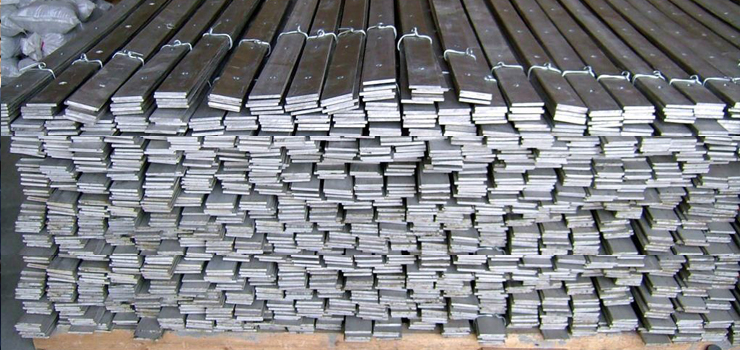
Shipments by Brazilian independent flat steel distributors and service centers dropped 8.1% on the year, to 298,500 mt in January, according to data from the national flat products distributors association Inda on Jan. 22.
On month, shipments increased 14.2%
“Sales picked up in the last week of January,” said Carlos Loureiro, executive president of Inda.
On the other hand, purchases fell 10% on the year, to 302,400 mt in January. Compared with the previous month, purchases increased 21.7%.
“Since by late January, market commented about a possible price increase, so it is normal to anticipate buys,” said Loureiro.
Flat product inventories in the Brazilian distribution network totaled 827,100 mt, up 0.5% from December. The average inventory-turnover was 2.7 months of supply.
Finished flat steel imports rose 5.3% on the year in January to 169,880 mt, excluding slab, mostly from China (59.1%), followed by Russia (14.7%)
“If there are sanctions on Russia, it may affect exports to Brazil and impact prices, mostly on slab,” he said.
Imports of slabs were 578,200 mt, Inda said. “It is a low volume, market is very tight, which reflects on prices. When there was need, domestic mills purchased internally.”
— Jose Guerra


January global crude steel production down 6.1% : Worldsteel
World crude steel production in January decreased 6.1% to 155.0 million mt from January 2021, the World Steel Association said Feb 22.
The world’s largest steelmaker, China, produced an estimated 81.7 million mt, down 11.2% year on year on low demand, worldsteel said in a statement. European production decreased 6.8% to 11.5 million mt year on year, with production in Germany, the Continent’s largest producer, down1.2% to 3.3 million mt, as the sharp rise in energy costs weighed on volumes.
Turkey produced 3.2 million mt, down 7.8% year on year, while Brazil produced 2.9 million mt, down 4.8%. Japan produced 7.8 million mt, down 2.1%. South Korea is estimated to have produced 6 million mt, down 1.0%.
The second-largest top producer, India, increased production in January by 4.7% to 10.8 million mt. Iran is estimated to have produced 2.8 million mt, marking the largest increase, up 20.3% year on year.
The US produced 7.3million mt, up 4.2%, while Russia is estimated to have produced 6.6 million mt, up 3.3% year on year.
— Annalisa Villa

China’s steel industry eyes major HRC capacity expansion in 2022-2023
China’s hot-rolled coil capacity expansion is set to gain pace in 2022-2023 as the country marks a slow but gradual transition from property-driven to manufacturing-driven economic growth, a development that is expected to diminish demand for long steel from the property and infrastructure sectors in the long term.
As China moves to high-end manufacturing and long steel demand plateaus, it will help grow flat steel demand, industry sources told S&P Global Platts.
China has about 14 new hot strip mills that are scheduled to be commissioned in 2022, with a combined HRC production capacity of around 41.4 million mt/year, according to Platts calculations based on official reports and market sources.
In 2023, another 10 hot strip mills will come onstream with a combined production capacity of 26.6 million mt/year.
Currently, China has about 350 million mt/year of HRC production capacity, according to some market sources. That means if the new mills are commissioned on a timely basis, China’s HRC production capacity will increase by around 11.8% in 2022 and 6.8% in 2023.
The new hot strip mills width ranges from 1,450 mm to 2,250 mm. Most of them will aim to produce high-end flat steel products used in industries such as vehicle and engineering machinery manufacturing, high strength containers, oil and gas transmission pipelines, steel structure housing and prefabricated construction.
Expansion motive
Some steelmakers building the hot strip mills are long steel producers aiming to extend their market from long steel to flat steel. Some other already produce flat steel and are looking to expand their product range to be more competitive.
Flat steel products are usually more value-added than long steel products, market sources said.
The demand for long steel in China’s property and infrastructure sectors may have plateaued, while high-end manufacturing, which mainly consumes flat steel, may gradually become the major driver of China’s economic growth, the sources said.
China has also been pushing for steel structure housing and prefabricated construction, which will lower the overall steel and cement consumption and thus help reduce China’s carbon emissions.
“In the near future, we may see that even in the construction sector, the consumption of HRC will gradually increase while that of rebar and wire rod will decline,” one mill source said.
However, HRC production capacity might be expanding too fast, making fierce competition or oversupply inevitable in the near future despite the potential demand growth for flat steel, some sources said.
One source said his company was aware of the fast-growing HRC capacity and eventually gave up on plans to build their own hot strip mill.
Production still under control
Most of the steelmakers planning the new mills have been also building new iron and crude steel-making facilities, with capacity quotas purchased from other mills through China’s capacity swap mechanism.
China started capping its crude steel output since 2021 in order to meet its decarbonization goals.
“Government’s direct interventions in steel production may ease in 2022, but China’s crude steel production this year is still likely to decline further from 2021, mainly due to poor steel demand in property and its related sectors,” one mill source said.
“China will continue to cap its steel production in the future, but more through raising environmental protection costs and industry consolidation,” the source said.
As a result, the trend of rising HRC production and falling long steel production may continue over the upcoming years.
In 2021, China’s output of medium-wide HRC, a major HRC, increased 4.3% on the year to 179.33 million mt, after a 12.2% year-on-year growth in 2020, according to the National Bureau of Statistics.
The combined output of rebar and wire rod, also indicators of long steel output, decreased 5.7% on the year to 407.91 million mt in 2021.
| China’s upcoming hot strip mills – 2022-23 | ||
| Number of new mills | Capacity (in million mt/year) | |
| Provinces/Region | ||
| Hebei | 5 | 13.2 |
| Guangxi | 2 | 8.5 |
| Inner Mongolia | 1 | 2 |
| Henan | 1 | 1.8 |
| Jiangsu | 1 | 3.5 |
| Shandong | 1 | 4 |
| Hunan | 1 | 2 |
| Fujian | 1 | 2.8 |
| Guangdong | 1 | 3.6 |
| 2022 total | 14 | 41.4 |
| Hebei | 7 | 18.5 |
| Guangdong | 1 | 2.6 |
| Chongqing | 1 | 3 |
| Yunnan | 1 | 2.5 |
| 2023 total | 10 | 26.6 |
| Source: official reports, market sources | ||
— Staff