


Ryerson nets record full year earnings
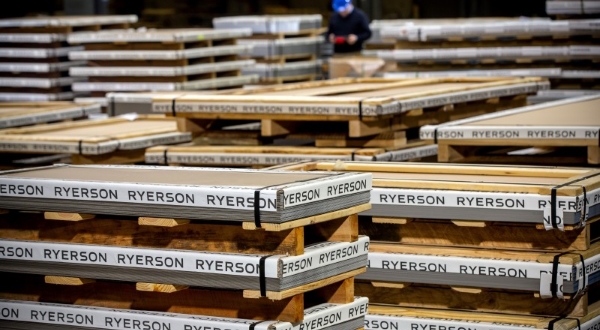
Chicago, Illinois-based US service centre chain Ryerson achieved record-breaking earnings in both the fourth quarter and full-year 2021, Kallanish learns from the company’s latest performance results.
Ryerson earned $106.4 million on sales of $1.53 billion in the fourth quarter of last year, bringing the company’s full-year earnings to $294.3m on sales of $5.68 billion. In an on-year comparison, the company’s fourth quarter earnings are up from a loss of $16.7m on sales of $853m during Q4 2020. In the full year of 2020, Ryerson netted a loss of $65.8m on sales of $3.47 billion. The company’s revenues are up 63.7% in 2021 year-over-year, as selling prices per ton increased by 57% from the prior year.
“[The year of] 2021 was a consequential year in all of its dimensions where our phrase ‘cohere and persevere’ took on new meaning…The end of 2021 finds Ryerson with a stronger balance sheet and operating model providing a glide path for bettering the customer experience, employee experience, supplier experience and shareholder experience in 2022 and beyond,” explains Ryerson ceo Eddie Lehner.
Ryerson anticipates a seasonal decline in shipments during the first quarter of this year, with sales projected to be in the range of $1.55-1.65 billion. As metal prices have declined in recent weeks, the company expects selling prices to be down by 2-4% in the first quarter of 2022.
Zach Johnson USA

Ryerson ceo, president appointed to board of directors
Eddie Lehner, president and ceo of Chicago, Illinois-based US service centre chain Ryerson, has been appointed to the company’s board of directors, Kallanish learns.
The appointment expands the number of members from seven to eight.
“Eddie has been a tremendous leader and his accomplishments as president and ceo have been transformative for Ryerson. He brings to this appointment a deep knowledge of the metals industry and a fantastic track record of executing on his vision for Ryerson. The board looks forward to continuing to work with him in this expanded capacity,” says Jacob Kotzubei, a member of Ryerson’s board of directors.
Lehner has served as both president and ceo for Ryerson since 2015 after serving as the company’s chief financial officer for three years.
“It is my true honor to join the board at this moment in Ryerson’s storied history with gratitude and humility. The work we have done as an organisation to improve Ryerson’s financial condition as well as the industrial metals customer experience has come a long way, however our best work together is still to come,” says Lehner.
Earlier today, Ryerson reported record-breaking fourth quarter and full-year earnings for 2021 (see related story).
Zach Johnson USA

Olympic Steel posts record results, remains optimistic
Despite declining carbon steel prices, US flatrolled and tubular service centre chain Olympic Steel is expressing optimism about first quarter business conditions as the stainless, aluminium, and pipe and tube markets remain robust.
The Cleveland-based stockist reports record results for Q4 and full-year 2021. Q4 net income of $24.9 million and sales of $625m pushed full-year income to $121.1m and sales to $2.3m. Income was up significantly from 2020’s net loss of $5.6m and sales were up 87%, Kallanish notes.
The company’s carbon flat product sales were up 3% year-on-year to 921,295 short tons in 2021, while sales of specialty flats rose 25% to 157,807 st. Average carbon flat selling prices jumped 90% on-year to $1,459/st while specialty selling prices rose 50% to $3,712/st.
“All three of our operating segments earned record ebitda in 2021, reflecting not only strong market demand for our products but also the benefits of our diversification and acquisition strategy,” says ceo Richard Marabito.
To minimise the impacts of market cyclicality, Olympic is working to broaden its offerings and expand into higher-margin products. The company has acquired five companies since 2018, including October’s purchase of Shaw Stainless and Alloy. Additionally, it divested its Detroit flatrolled metal operations last year.
Laura Miller USA
Digitization course continues at Carl Spaeter
Breisach, February 28, 2022
Following the already implemented project for the introduction of digital equipment management, Carl Spaeter is now also using the solutions of Kaltenbach.Solutions GmbH at the Karlsruhe site to sustainably increase performance in preprocessing. A project team began in February to record the performance of machines on sawing, drilling and blasting lines using the digital measuring device “BoosterBOX”. Based on the precise measurements during operation, optimal decisions for more efficient preprocessing can be derived.
The digitization strategy of the Carl Spaeter Group is being consistently driven forward in numerous projects. Together with Kaltenbach.Solutions, the company implemented, among other things, the introduction of a uniform and fully digital equipment management system for 15 organizational units at 19 locations in the fourth quarter of 2021. In addition to 200 crane systems and over 1,000 other pieces of equipment, the operating resources included also include around 150 machines in pre processing. The next step will be to significantly improve performance in preprocessing with the help of Industrie 4.0 digital tools. Through stable further development of the performance of the sawing, drilling and blasting systems in pre-processing, the aim is to increase pre-processing volumes and shorten delivery times to customers at the Karlsruhe location, among other things. By consistently increasing the efficiency of all processes, Carl Spaeter is working to further consolidate its position as market leader in steel trading in southwestern Germany.
After good experiences in a similar project in Hamburg, Kaltenbach.Solutions was chosen as an implementation partner for other sites as well, including Carl Spaeter Südwest GmbH, Karlsruhe. A project team led by Sebastian Engel (Commercial Manager) and Jahn Senger (Operations Manager) is now using so-called “BoosterBOXes” on the machines in the preprocessing department for eight weeks. In five workshops, the measured data is analyzed and suitable options for action are developed. On this objective basis, suitable decisions can be made to achieve an increase in machine performance of at least 30%.

The project team at Carl Spaeter in Karlsruhe: far right Sebastian Engel (Commercial Manager), third from right Jahn Senger (Operations Manager), second from left Valentin Kaltenbach (Kaltenbach.Solutions)
About us
KALTENBACH.SOLUTIONS GmbH strives for long-term cooperation with companies in the steel processing industry. It has set itself the goal of becoming a preferred partner – to the benefit of both sides. As a full-service provider with decades of experience in the steel industry, it develops innovative web- and AI-based industry solutions to improve performance in operations. Thanks to its expertise in mechanical engineering, KALTENBACH.SOLUTIONS has succeeded in linking the world of steel with the digital world. This unique link guarantees customers their measurable success and creates sustainable added value.
Press contact
Nicola Chlench
T 00800 45402345
marketing@kaltenbach-solutions.com
www.kaltenbach-solutions.com

Konjunkturlage der Stahl- und Metallverarbeitenden Industrien
23.02.2022 von unsem Gastkommentator
Aufholprozess mit angezogener Bremse
 „Die mittelständischen Industrien sehen einen Lichtschimmer am Horizont. Mehr aber auch nicht – die Kosten belasten zu sehr.“ So bewertet der Wirtschaftsverband Stahl- und Metallverarbeitung (WSM) die konjunkturelle Lage angesichts der jüngsten vorläufigen Zahlen des Statistischen Bundesamtes. Sie zeigen für 2021 beim Produktionswachstum ein Plus von 10,4 Prozent im Vergleich zu 2020 – aber auch ein Minus von 3,5 Prozent gegenüber dem Vorkrisenjahr. Ob insbesondere die gebeutelten Automobilzulieferer bald weitere Punkte gutmachen können, ist – neben der Überwindung der Lieferengpässe – eine Kostenfrage: Steigende Material-, Energie- und Logistikbelastungen sowie wachsende Klimaschutzanforderungen bremsen den Aufholprozess ab. „Wir brauchen hier dringend politische Unterstützung, um die internationale Wettbewerbsfähigkeit der verarbeitenden Branchen und ihre Arbeitsplätze zu erhalten“, fordert daher der WSM.
Stabile Material- und Teileversorgung könnte Produktionszuwachs weiter steigern
 2021 haben vor allem Materialengpässe das Produktionswachstum gestoppt – laut WSM hätten Auftragslage und Kapazitätsauslastung sonst ein größeres Plus ermöglicht. Ob, wann und wie sich die Lieferketten 2022 entspannen, ist noch unklar, aber die Automobilhersteller zeigen sich für die zweite Jahreshälfte vorsichtig optimistisch. Dieser Lichtschimmer hebt die Prognose ihrer Zulieferer für die nächsten sechs Monate um vier Prozent an. Bei einer Stabilisierung der Material- und Teileversorgung könnte laut WSM für 2022 insgesamt sogar ein Produktionszuwachs von rund sieben Prozent erreichbar sein.
Zusatzbelastungen hemmen positive Entwicklung
Der Lichtstreif am Horizont verliert allerdings an Leuchtkraft, wenn die Politik die Unternehmen im Stich
lässt. Denn am Zuliefererhimmel sind längst neue Wolkenfelder aufgezogen: extrem ansteigende
Vormaterial-, Energie- und Logistikkosten einerseits und die Forderung nach einer schnellen
Transformation zur CO₂-neutralen Produktion andererseits. Auch wenn die Konjunktur sich positiv
entwickelt, werden diese Zusatzbelastungen ohne politische Hilfe für die meist mittelständisch
aufgestellten Unternehmen zum Hemmschuh.
Transformation: „Internationale Wettbewerbsfähigkeit des verarbeitenden Gewerbes erhalten“
„Die Bundesregierung muss die weitreichenden Anpassungen rund um die Transformation über
sämtliche Wertschöpfungsstufen begleiten. So wie wir es auch beim Carbon Border Adjustment
Mechanism (CBAM) fordern“, betont WSM-Hauptgeschäftsführer Christian Vietmeyer. Der WSM
erwarte, dass sich deutsche Politiker dafür auch auf europäischer Ebene einsetzen, um die
internationale Wettbewerbsfähigkeit der hiesigen Unternehmen zu schützen.
mehr Informationen: WSM

US steel imports jump 43% in 2021; HRC shipments near double
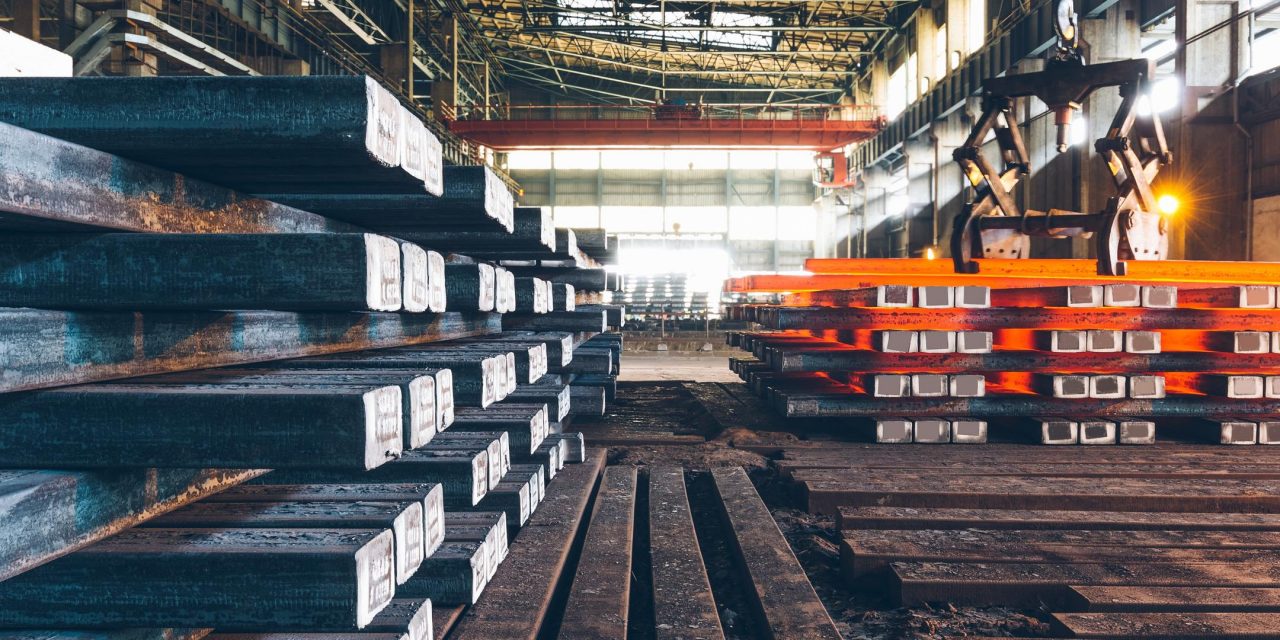
Total US steel imports in 2021 climbed 43% year over year, with significant increases seen in hot-rolled coil and Russian slab shipments, according to Commerce Department data released Feb. 25.
The US imported 28.58 million mt of steel in the year, up from 20.03 million mt in 2020, marking the highest import volume since 30.63 million mt in 2018.
HRC imports nearly doubled in 2021, reaching 2.77 million mt, up from 1.47 million mt in 2020, representing the largest gain in import volumes for the flat product category.
For other flat products during the year, hot-dipped galvanized sheet imports rose 34% to 2.67 million mt, imports of cold-rolled coil increased 27% to 1.33 million mt, and other coated sheet and strip shipments increased 69% to 1.04 million mt.
Imports of slab surged 61% year over year to 5.47 million mt, while imports of non-slab semis ticked up 16% to 2.04 million mt.
In other major product categories, imports of oil country tubular goods and rebar climbed 69% to 1.66 million mt and 23% to 1.21 million mt, respectively.
Canada was the top supplier of steel to the US in 2021, with imports totaling 6.33 million mt, up from 4.76 million mt the previous year. Mexico was the second-largest supplier at 4.32 million mt, up from 3.01 million mt last year.
Brazil, South Korea and Russia were the third-, fourth- and fifth-largest steel suppliers to the US in 2021, respectively.
Imports from Russia more than tripled in 2021, rising 276% year over year to 1.47 million mt, boosted by shipments of slab that hit 1.1 million mt, up from 98,064 mt in 2020.
Steel shipments from Vietnam also increased significantly, as imports were up 200% year over year to 855,681 mt.
The finished steel import market share was an estimated 21% in full-year 2021, according to the American Iron and Steel Institute.
— Nick Lazzaro


German steel stocks rise 5% on-month in January: BDS
German steel stocks rose to a total of 2.184 million mt in January, up 5% from 2.073 million mt in Dec. 2021, and higher than 2021’s average monthly stock level of 2.025 million mt, according to German steel stockholder association BDS data.
January’s stocks were notably higher than the 1.941 million mt reported January 2021, the data showed.
Both January long products and flat products stocks, at 741,216 mt and 1.393 million mt, respectively, were higher than in December 2021, increasing 3% and 6%, respectively.
Product sales up on month
Despite January’s higher stocks, German steel product sales also rose notably to a total of 857,602 mt, according to BDS data. This compared to sales of 633,653 mt in December 2021. However, January’s total was still lower than the average 2021 monthly sales of 885,549 mt, the association reported.
January sales were also down on the year from the 910,589 mt total sales seen January 2021.
Long product sales in January stood at 261,535 mt, up from 171,545 mt in December 2021, while January flat product sales of 517,865 mt jumped from 388,645 mt the month prior, BDS said.
— Diana Kinch
Russian steel majors say finances offer buffer against sanctions; large projects may be at risk
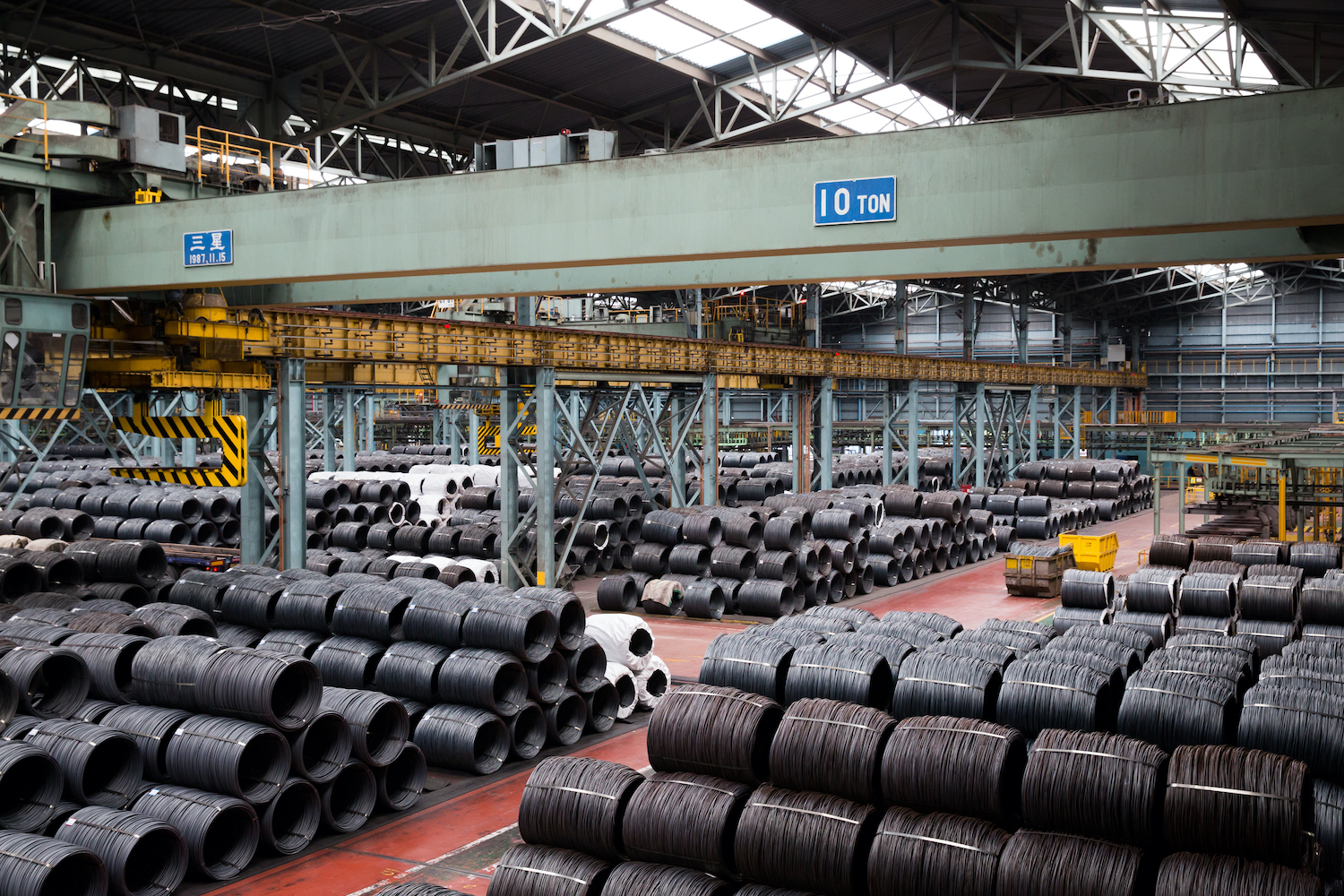
Russian major steel companies say sanctions the West has imposed on Russia over its invasion of Ukraine will not have much immediate effect, emphasizing their strong financial positions, low debt levels and experiences of functioning under earlier sanctions but analysts fear infrastructure-heavy projects and some environmental, social and governance criteria plans might be shelved.
“We do not see any threats from sanctions in our regard, our business operates as before and maintains financial stability,” a representative for steelmaker MMK told S&P Global Platts Feb. 25.
Russian mining and steel company Severstal said Feb. 25 it was closely monitoring the situation and any possible implications for its business; adding it was to operate as usual.
The company maintains a strong financial position and a low level of debt — this came to 0.23x net debt-to-EBITDA as of the end of 2021, it said in a note, adding its business model ensures high operational sustainability, which is reflected in its position as one of the lowest cost public steel companies in the world.
Asked what could ensure business continuity given the current geopolitical tensions, senior management of another major miner and steelmaker Evraz said during the call with analysts on Feb. 25 that the company’s cash and cash equivalents on the balance sheet were slightly in excess of $1 billion towards year-end 2021 and are currently higher thanks to the strong months in January and February. The majority of this is held in Russian banks.
Evraz was not clear about its exposure to banks under sanctions, but CEO Alexey Ivanov said that since 2014, the company have learnt how to work in the sanction framework; it is well prepared for this round of sanctions and has strong compliance service to monitor its transactions in the circumstances.
Evraz is proceeding with its business as usual, although it is reviewing inventory positions,and may increase stocks of spare parts, according to Ivanov.
“We believe the sanctions will not have significant effect on our company,” CEO said. “At the moment it is premature to say that we see any consequences. Sanctions were announced very recently, we need more time to analyze and find the way forward.”
Infrastructure demanding projects and ESG
Evraz’s $5 billion EBITDA in 2021 was twice as much as its pre-tax earnings in 2020. Its net profit increased by 3.5 times on the year to $3 billion and net debt to EBITDA went down to 0.5x as at 2021 year-end. Severstal a week earlier posted record high earnings too.
The companies’ capex plans for this year — $1.1 billion for Evraz and $1.6 billion for Severstal – represent 40% of the companies’ profits and so can be fully financed from their own proceeds in the face of sanctions.
Yet the announced sanctions on a few banks, including some major ones may undermine long-term development plans within the country’s mining and metals industry as tapping into greenfields – especially in remote regions lacking basic infrastructure and especially for the most capital intensive for extraction resources like copper or iron ore — with limited finance options is becoming more difficult, according to an industry insider who wished to be unnamed.
Ruble loans have always been expensive, while sanctions against several large banks have now effectively scrapped the possibility to obtain long-term finance in foreign currency. Short-term effects on the mining industry are probably going to be negligible, but the long-term price of it might be a few unrealized or mothballed projects — those that require vast finance to build not only mining and processing plants, but a lot of infrastructure around them like power transmission, roads, railroads and ports, according to the source.
In the mid to long term, the company’s ESG agenda, especially its environment component, may be the area most sensitive to sanctions for the Russian steel industry, according to a Moscow-based analyst, who thinks that in the worst case Russian companies may be prompted to revisit their capital intensive ESG-driven commitments or shift their focus from the environment to the social component of the triad.
“Motivation to invest in ESG, especially in direct-reduced and hot-briquetted iron and hydrogen projects might somewhat deflate if Russian steel is going to be sidelined in certain markets,” the analyst said. “This motivation has largely been reasoned by political considerations, as economically DRI-based steelmaking cannot compete with classical blast furnace-basic oxygen furnace route.
“BF-BOF makes a steelmaker devoid of any iron ore issues as any iron ore grade would do to produce decent quality pig iron,” the analyst said. “With DRI-based electric arc furnace route, mills are hinged on chemistry: it takes particular ore characteristics to get decent steel quality, and this is an acute disadvantage of the much-touted DRI-EAF route.”
That said, the top management of Evraz has just said the company is researching options to produce DRI using iron ore from Kachkanar — the vanadium-rich iron ore mining and beneficiation plant in the Sverdlovsk region, and from Timir in Russia’s Far Eastern republic of Sakha (Yakutia).
If approved, the respective DRI project will become a part of the company’s decarbonization strategy.
Ivanov said Evraz is finalizing its long-term decarbonization roadmap, which it aims to present by this year end. This has already included the intermediary target of reducing the group’s CO2 emissions by 20% by 2030, something the company aims to achieve through energy efficiency programs, green energy purchases and more initiatives to substitute coke in blast furnaces.
A week ago, Severstal CFO Alexey Kulichenko told analysts the company will be considering developing HBI production after the completion of its current 2019-23 strategic cycle.
— Ekaterina Bouckley
Celsa recovers production prior to Covid-19
Spanish longs supplier Celsa tells Kallanish that it has recovered its pre-Covid-19 production levels in 2021. According to preliminary results of the group’s activity, steel output amounted to almost 6.5 million tonnes last year. Celsa did not disclose comparison figures with the periods before the pandemic.
“During 2021 we were able to capture the growth in the activity that has been registered, in general, in all the sectors to which we supply our products,” Celsa comments. “This was possible once most of the projects were reactivated following the forced stoppage caused by Covid-19, which exceptionally affected the company’s results in 2020.”
In Spain, the steelmaker produced 3.6mt of steel, while Celsa France`s output exceeded 625,000t of steel in 2021. The company`s Polish and UK plants reached 1.1mt and 1mt of production, respectively. The company also highlights Celsa Nordics` performance in Norway, where finished steel output totalled 538,000t last year. The Group confirms that its products were supplied to 115 countries.
During the last year, Celsa’s plants melted more than 7.3mt of ferrous scrap. The steel company aims to have a 100% circular business model based on the use of recycled scrap as a raw material by 2025.
Todor Kirkov Bulgaria
Russo-Ukrainian war rapidly reshapes trade patterns
As the global steel trading community remains watchful over the evolving armed conflict in Ukraine, consequent supply and demand issues are already reshaping established trade patterns in some areas.
Exports of steel products from both countries halted completely on Friday, with many participants telling Kallanish a swift resolution of the conflict and return to stable trade is unlikely given Russian President Vladimir Putin’s demands. The fallout from Russia’s offensive on Ukraine will likely create even tighter conditions in the near term, creating a gaping hole in supply of an essential quantity of various steel products, continuing to reshape trade flows.
On Friday, loading halted of steel cargoes at all Ukrainian and Russian Black and Azov Sea ports and Russia’s northern Baltic ports. Suppliers and buyers were not willing to take any of the numerous risks associated with wartime maritime international trade and a possible tightening of sanctions against Russia. Although existing financial sanctions do not forbid general trade with Russia, numerous banks have already informed their clients they are ceasing financing trade with Russia, including, rather unexpectedly, several Chinese banks. Ukrainian trade is similarly affected due to the paralysing effect of the invasion.
CIS suppliers’ abrupt and potentially long-term absence has already reflected on prices of steel products, and scrap and trading patterns. The largest trade volume so far this year has taken place in the CIS billet market following the removal of Egypt’s import duty late in 2021. The cancellation of existing order loading at CIS mills has sent traders scouring the Turkish market for billet at significantly elevated prices. Starting from $720/tonne fob Turkey earlier last week and rising to $740/t fob towards its end, these deals, totalling over 100,000 tonnes, are close to rebar in prices, and have also lifted Turkey’s scrap import market.
Some of the volumes purchased, up to late-April loading schedule, are destined for other North African destinations and are far from enough to cover rapidly rising demand, according to traders.
Indeed, with the CIS, which supplies around 30% of the global merchant billet market, out of the picture for some time, demand is expected to rise further, pushing up prices for steel. Valuable feedstocks, such as metallics and ferroalloys, will also be impacted. With no supply coming from the CIS, some European mills are bidding vehemently for available alternatives, but ongoing shortages may force these mills to halt production and cancel orders, sources say.
Merchant slab supply, however, is even more critical, after several months of very scarce trade due to supply shortages, and very few available alternatives. CIS mills’ combined global merchant slab market share is almost 50%, with the only alternative being Brazil, and, in case of prompt lifting of sanctions, Iran.
The delay in booked volumes’ delivery, temporary suspension of intercompany volume shipping to CIS mills in Europe and the US, and the likelihood of the absence of CIS slab in Western markets for some time, is already reflecting in higher hot rolled coil and plate prices (see separate articles).
The halting of HRC shipments from Russia’s northern ports, even temporary, is also creating a supply vacuum, driving up prices, but alternative Asian supply is at the ready, with the EU now reconsidering its quota allocations for certain suppliers (see Kallanish passim).
For now, the rising prices are likely to stay, traders say, for all products, for some time, depending on the outcome of the conflict. There has been a lot said about China becoming Russian steel’s ultimate destination for diverted exports, due to the friendly ties between the countries.