


Czech output returns to pre-Covid level, exports grow
Czech domestic steel production in 2021 was able to offset losses from the previous year due to a huge increase in demand in the first half of the year. Crude steel output rose 9% on-year to 4.7 million tonnes, exceeding 2019 production.
Long and flat steel output totalled 3.1mt and 1.1mt respectively. Pipe output recorded the smallest increase of 2% to 405,000t. “Demand for steel products grew rapidly mainly in the first half of last year. Czech companies often produced at the limit of production capacities,” says Czech and Slovak steel association Steel Union chairman Daniel Urban.
Czech steel imports in 2021 reached 8.3mt, at a value of CZK 182.3 billion ($8.2 billion). Exports grew to 4.9mt, at a value of CZK 122.6 billion. EU member states remained the key export markets, but especially neighbours Poland, Germany and Slovakia.
In contrast to the modest growth in Czech Republic, the production of pipe in the EU increased by 18% in 2021 to 3.1mt, Urban points out.
Czech steelmakers are so far coping with the disruption to feedstock supply from the CIS as a result of Russia’s invasion of Ukraine, but are concerned over future supply shortages and enquiring with alternative suppliers (see Kallanish passim).
Adam Smith Germany

Salzgitter announces new group structure
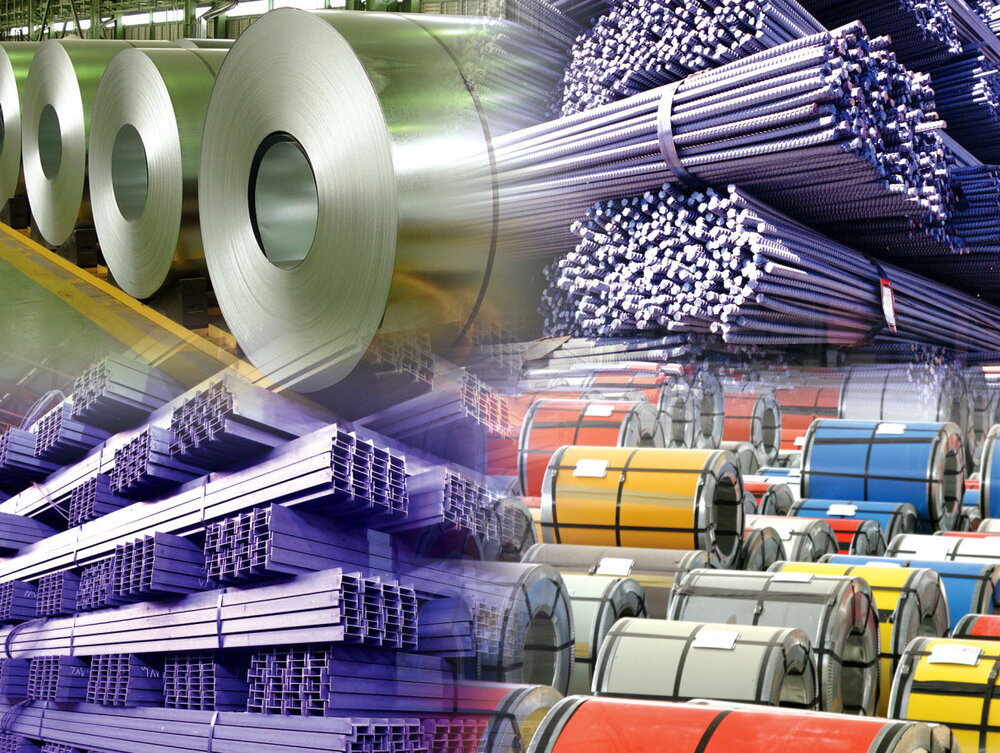
Salzgitter is regrouping its business activities, effective 1 April, Kallanish learns from the German company. Steelmaking and processing activities are to be reconstituted under the new “Steel Production” and “Steel Processing” business units, respectively, “in line with value-added and customer requirements”, Salzgitter states.
“The subsidiaries essentially participating in our SALCOS (SAlzgitter Low CO2 Steelmaking) programme are to be regrouped under the Steel Production business unit. The Steel Processing business unit will concentrate on the downstream links in the value chain and on customer processes,” explains chief executive Gunnar Groebler.
The Trading business unit, encompassing stockholding distribution and trading, remains a separate unit, as does the Technology unit with miscellaneous non-steel-related activities.
The existing structure separates by steel product group, with strip figuring under Salzgitter Flachstahl, tubes under Mannesmann, and plate together with sections in the Plate/Section unit.
The Steel Production unit will be headed by Ulrich Grethe, who has managed the Strip Steel unit for eight years. The Steel Processing Business Unit will be headed by Burkhard Becker, in addition to his function as Salzgitter chief financial officer.
Also, after almost 40 years with the Salzgitter Group, Volker Schult, head of the Trading Business Unit, will step down from his office on 31 December. His successor will be Sebastian Bross, who has been in charge of the Plate/Section unit.
Christian Koehl Germany

Spanish transport disruption impacts steel industry: Unesid
The Spanish steel sector has expressed concern over road transport disruption that has persisted since Monday and is seriously impacting the steel industry, Kallanish notes.
Most large domestic logistics companies stopped their services at the beginning of the week due to higher oil and gas prices. Transport associations are not accepting strike action and have called for dialogue with the government.
The disruption has had a bigger impact than expected, says Unesid. The situation is “affecting steel users and customers, as well as suppliers, which in many cases are SMEs who experience greater difficulty solving this kind of situation,” says the national steel association.
The road transport disruption is exacerbating the existing impact on the steel sector of costlier electricity and post-Covid-19 industry recovery issues, Unesid observes.
“The Spanish economy, and in particular the steel industry, need a quick solution to this problem so that a situation that is already tremendously delicate, as a result of the energy crisis and the war in Ukraine, does not worsen,” the association concludes.
Todor Kirkov Bulgaria
Energy crisis pushes Megasa to advance Seixal maintenance
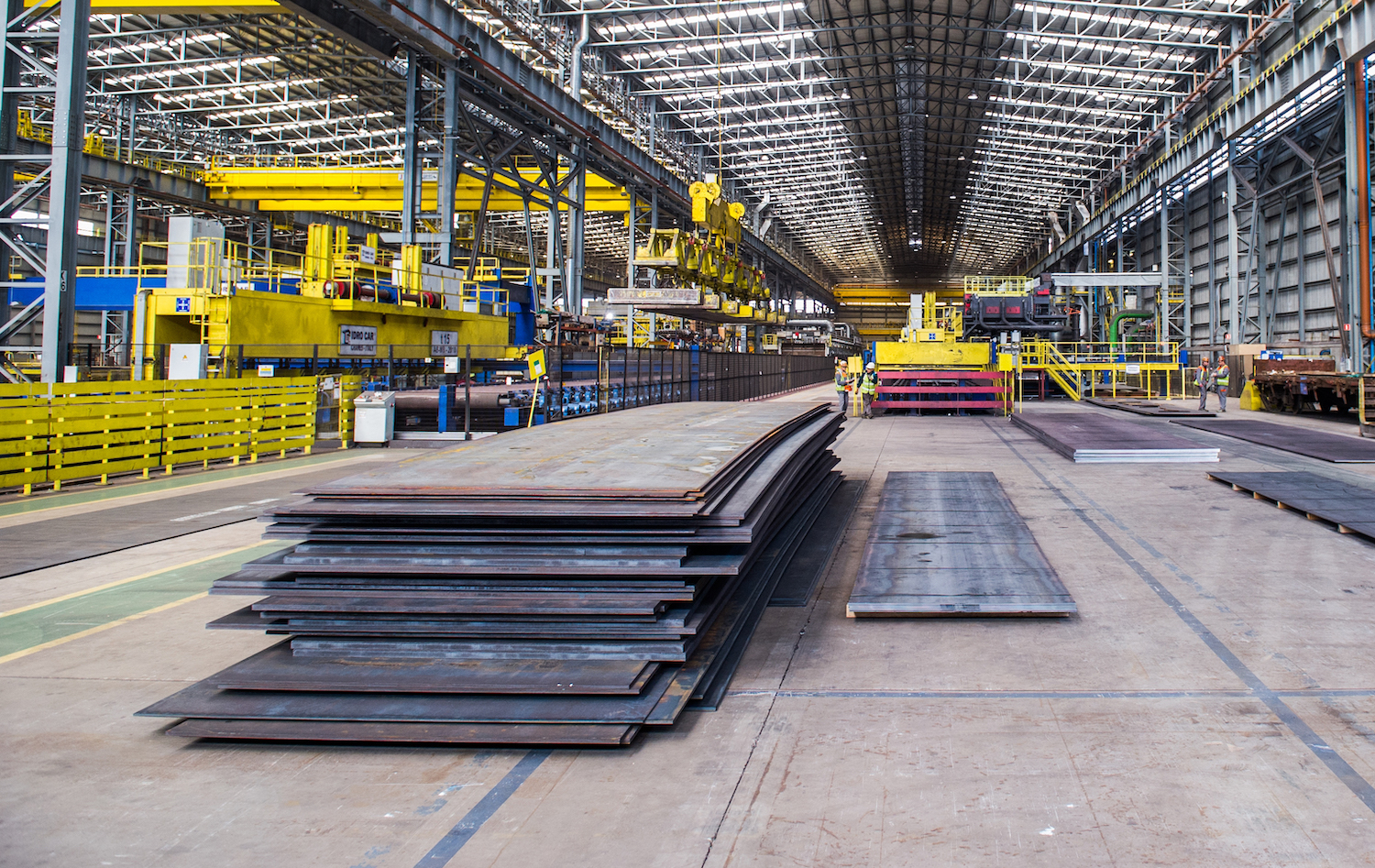
Portuguese long steel producer SN Seixal, part of Grupo Megasa, says it is starting annual maintenance work. This was initially scheduled for the summer but was brought forward due to the forced stoppage of production on high energy costs, Kallanish learns.
Megasa stopped operating the SN Seixal and SN Maia plants on 5 March. The two facilities are the largest consumers of electricity and gas in Portugal.
It is understood that the production shutdown will have no impact on the workforce as most employees have been granted vacation.
“The worsening of the energy crisis caused by the war in Ukraine and the consequent strong impact on the prices of electricity and natural gas led Megasa to suspend the steel activity in Seixal and Maia as it was economically unviable,” comments Megasa. Rolling lines will continue to run normally as the company claims to have enough billet in stock.
Megasa proposed to the Portuguese government the adoption of extraordinary measures for the contracting of energy. These include distributing the energy acquired by the Supplier of Last Resort (CUR) to producers of the special regime and energy-intensive consumers.
“With the support of national and European institutions and using mechanisms such as the one proposed, Megasa considers it possible to maintain its activity, which represents 700 direct jobs, 3,500 indirect jobs and exports equivalent to €1 billion per year,” the firm comments.
The Seixal and Maia operations produce wire rod, rebar and welded mesh.
Todor Kirkov Bulgaria

Ukraine eyes scrapping military equipment for steelmaking
The Ukrainian association of secondary metals, UAVtormet, says it is studying the rollout of equipment to process military hardware into ferrous scrap amid Russia’s invasion of Ukraine, Kallanish notes.
“We are already studying processing technologies that will be presented to the members and partners of our association,” says UAVtormet. The association refers to a video of a German company that specialises in dismantling military equipment for scrap.
Earlier, Interpipe Vtormet chairman Valentin Makarenko noted that ferrous scrap in Ukraine is a strategic raw material. “Of course, this [destroyed or seized military equipment] is metal, this is ferrous scrap, and we have noted all the time that in Ukraine there has always been a very difficult situation with this raw material,” Makarenko said.
“If equipment is no longer suitable for use – cars, armoured personnel carriers, equipment of some other composition – then this is already scrap metal,” he added. “An individual can turn in such a tank and other used equipment for scrapping and receive money.” Before the war, one tonne of scrap for delivery cost UAH 9,000 ($303), he explained.
According to the General Staff of the Armed Forces of Ukraine, as of 15 March, Russian military losses amounted to more than 404 tanks and 1,279 armoured combat vehicles, as well as other equipment.
Ukrainian enterprises reduced exports of ferrous scrap in January by 70.4% on-year to 5,690 tonnes, while in December about 68,170t of scrap were exported (see Kallanish passim).
In December 2021, Ukraine’s parliament decided to increase the duty on the export of ferrous scrap to €180/tonne ($199). Ukrainian mills have long complained there is insufficient domestic scrap supply to meet their needs.
Before the war, national steel association Ukrmetallurgprom predicted that Ukrainian steelmakers will consume about 3.84 million tonnes of ferrous scrap in 2022. Metinvest estimated its need for scrap this year at about 1.9mt.
Svetoslav Abrossimov Bulgaria
Thyssenkrupp suspends steel unit spin-off, profit forecast
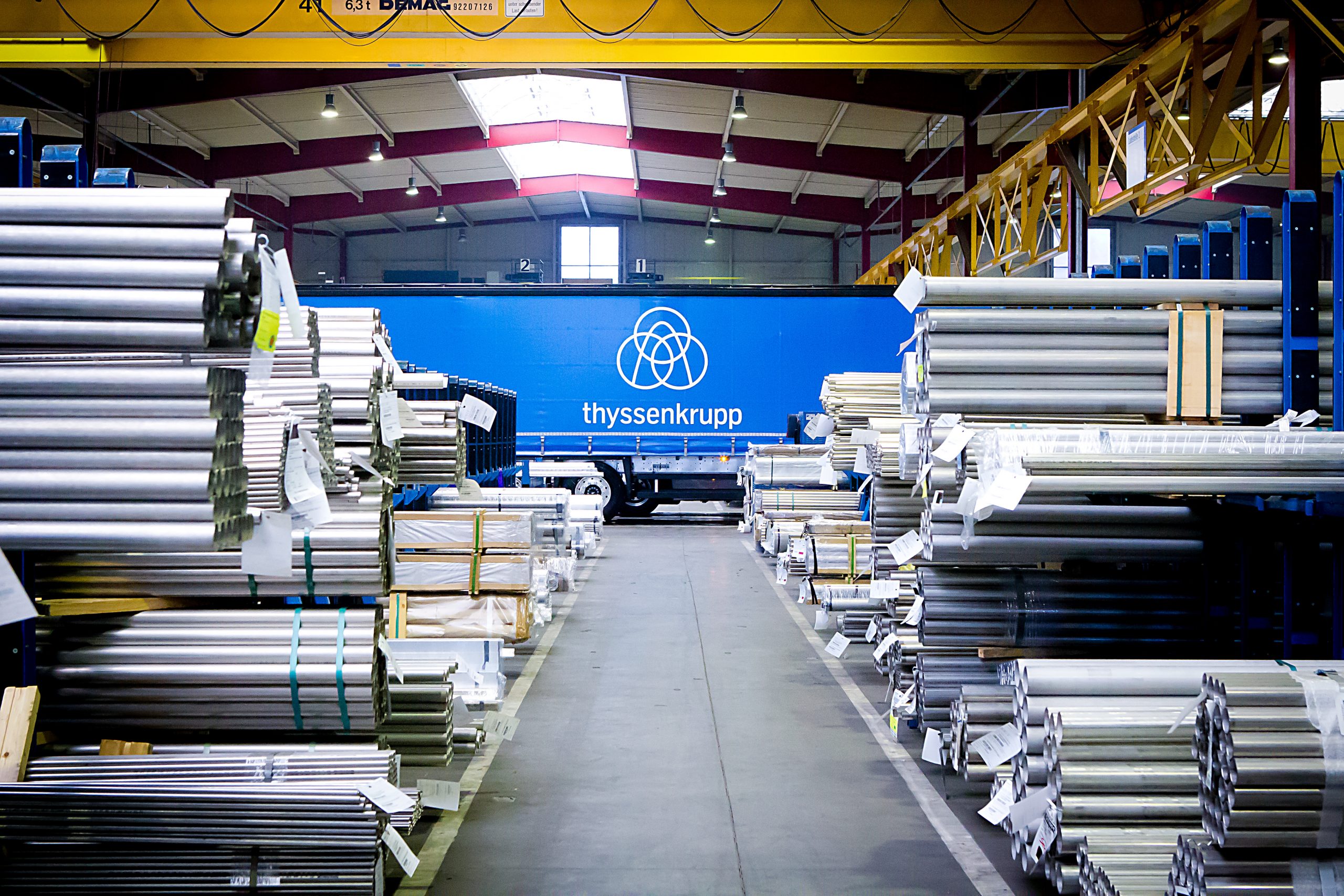
Against the background of the war in the Ukraine, thyssenkrupp is putting on hold the plan to spin-off its steel business into a standalone unit, Kallanish notes.
The plan to create an entity separate from the listed thyssenkrupp AG was confirmed earlier this year, although executives could not provide a timetable for the process. Now, “implementing the stand-alone solution in this current unstable environment is not possible,” says chief executive Martina Merz. “We cannot yet foresee how the war and the business environment will continue to develop and we are unable to influence this.”
The group has also suspended its profit forecast for the 2021/2022 fiscal year, which runs from October 2021 through September 2022, in particular due to rising raw material prices. It earlier said it was expecting a net income of at least €1 billion ($1.1 billion) on an adjusted Ebit from €1.5 billion to 1.8 billion. It has not provided new forecast figures.
Although the group’s sales in Russia and Ukraine are negligible, at significantly less than 1% of total sales, executives assume that business performance will be impacted by the far-reaching macroeconomic and geopolitical consequences of the war.
Until the start of the war, business development at thyssenkrupp AG in the current quarter was going according to plan. In March, initial negative effects occurred primarily in the steel and automotive supply businesses, it notes.
Christian Koehl Germany

CIS disruption raises prices, climate policy doubts: JSW
Jastrzebska Spolka Weglowa (JSW) says coal and coke supply disruption from the CIS will positively impact demand for its products, while high prices will improve its earnings. The energy crisis could lead to changes in the EU’s climate policy, which could benefit the company’s operations in the medium term.
Given the uncertainty, it is impossible to predict how long the high coal price levels will last, Europe’s largest coking coal miner adds.
As a result of war in Ukraine, coking coal prices have beaten previous all-time highs by $200/tonne, with hard coking coal noted at $660/t, PCI at $650/t and semi-soft at $575/t, as of 8 March. This has been exacerbated by floods on Australia’s east coast, which have paralysed freight activity there.
Coke prices are rising but more slowly than coking coal, with Chinese CSR 64/62 coke noted at $658/t.
The war in Ukraine has not directly impacted JSW’s operations so far. The firm has a contract to supply a Polish company with coke that is shipped to the Ukrainian market, but that supply has been redirected to other markets amid the war, Kallanish notes.
However, there are certain risks of JSW’s business being impacted. One is broken or disrupted supply chains, which could result in limited availability from Ukraine and Russia of raw materials that are indispensable for steelmakers and coke producers. Another is rising energy costs as a result of restricted gas and coal supply from Russia. The third is logistical disruption at ports resulting from increased seaborne imports of raw materials, such as iron ore.
JSW increased merchant coking coal sales 10% on-year in 2021 to 6.9 million tonnes, while coke sales were flat at 3.6mt (see separate story).
Adam Smith Germany

Paris goals put 10% of BF-BOF steel capacity at risk of being stranded by 2030: TransitionZero
High-cost producers of steel via the conventional blast furnace (BF) and basic oxygen (BOF) routes may be forced to rationalize production in a Paris-aligned world, with 132 million mt/year of capacity in Japan, Germany, China, Italy and the US at risk of becoming stranded assets, according to a report by climate analytics not-for-profit TransitionZero published March 17.
“In an economically rational Paris-aligned world — where conventional unabated BF-BOF producers are forced to rationalize output — 10% or 132 million mt/year of conventional BF-BOF production from Japan, Germany, China, Italy and the US is outside a net-zero carbon budget by 2030,” the report said.
According to TransitionZero’s Global Steel Cost Tracker (GSCT), the production cost of 132 million mt/year between now and 2030 is $1.1 trillion per year, based on 2015-2021 average costs.
“These production costs could prove conservative, given the spike in commodity and high electricity prices from Russia’s invasion of Ukraine,” it noted.
By 2040 the percentage outside the carbon budget climbs to nearly 40%, with Japan, Germany, Italy and the US being the most impacted. The amount of conventional BF-BOF production outside the budget by 2050 increases to 514 million mt/year, with the remaining production still in operation likely to have been equipped with carbon capture and storage technology.
In the IEA’s net-zero emissions scenario, emissions from steel will have to decline by two-thirds by 2040. The steel industry emitted around 3.6 billion mt of CO2 in 2020, with BF-BOF production responsible for most of this.
“We focus exclusively on conventional BF-BOF production because this process route is responsible for most direct carbon emissions from steel,” the analysts explained. “Our model optimizes for an economically rational net-zero aligned world. Substantial amounts of steel are traded globally, meaning steel is a trade-exposed industry. The cost of steel production is an important factor in keeping a steel-producing country or a particular steel plant competitive in such an international market. As such, we assume the highest cost producers are forced to rationalize production first.”
TransitionZero is a climate analytics not-for-profit. They created GSCT, Global Steel Cost Tracker, an open data project that estimates the plant production costs of BF, BOF and electric arc furnace (EAF) steel production. The cost estimates are broken down by raw materials, energy, labor, and other costs.
— Annalisa Villa

New passenger car registrations in EU down in Feb on supply chain disruptions
New passenger car registrations in Europe continued to fall in February, as manufacturers face supply chain disruptions, according to data released by European automobile manufacturers’ association ACEA.
After having registered a new historic low in January, new car registration dropped by 6.7% in February year on year to 719,465 units sold across the EU, marking the weakest result in terms of volumes for the month of February since records began.
The four key markets in the region posted mixed results. Italy and France recorded double-digit losses (down 23% and 13% respectively), while Spain and Germany saw growth (rising 6.6% and 3.2% respectively).
In January and February, total registrations of new cars in the EU declined by 6.4% compared with the same period last year. Again, looking at the four largest markets, Italy saw the largest drop (down 21%), followed by France (down 16%). On the other hand, markets in both Germany (up 5.6%) and Spain (up 4.2%) continued to expand.
The situation in in Ukraine is leading to production disruption and higher cost inflation, according to automakers and industry analysts. German car maker BMW said March 16 that it expects the supply chain issues — in particular the shortage of semiconductor supply — not to ease before the second half of 2022.
— Annalisa Villa
Italian steel output down in February due to high energy costs
Steel production dropped again for the second month in a row in February in Italy, Europe’s second largest steel producer, as the sharp rise in energy costs weighed on volumes, latest data released by the country’s steel producer federation, Federacciai, showed.
Last month, crude steel production fell 2% year on year to 2.04 million mt, with major domestic steelmakers having to temporarily stop production for at least a week and work in on again/off again mode for few more days due to the high costs.
The production of long steel products dropped 0.2% in February to 1.18 million mt year on year, while flat production fell 1% to 888,000 mt, the data showed.
Around 80% of Italian production — equivalent to 24 million mt — is produced by electric arc furnaces. Energy is the second biggest cost for steel producers after scrap for the most electro-intensive producers, representing about 20% of steel mills’ costs.
— Annalisa Villa