


Vanilla Steel joins EUROMETAL as associate member

We are pleased to inform you that Vanilla Steel joined today as Associate Member of EUROMETAL.
Vanilla Steel is the European Marketplace for metals that helps to simplify the sales and procurement process of prime and excess material.
For more information, please visit Vanilla Steel at vanillasteel.com

The disproportionate impact of war in Ukraine on German automakers
The war in Ukraine has lead to plant closures across Germany and a likely loss of around 150k units in March alone.

By the beginning of March this year, following Russia’s invasion of Ukraine, almost all automotive production in the two warring countries had come to a complete standstill.
In normal times, Russia is the third-largest European Light Vehicle producer (behind Germany and Spain), manufacturing just under 1.5 million units in 2021. So, closures on the current scale (amounting to over 90% of the country’s Light Vehicle capacity) are having a profound impact on regional volumes. Disruption in Ukraine, with its small Light Vehicle assembly operation — just 7,000 units were built last year — has only a limited regional volume impact.
By way of overspill, shortages of components sourced from Russia and Ukraine are affecting build in other markets across the region and will continue to do so. However, as highlighted in the chart below which shows announced plant closures in Europe (excluding Russia and Ukraine) due to the war, it is striking that most shutdowns are in plants operated by German OEMs. In March alone, OEM announcements and our estimates lead us to believe that German automakers will lose just under 150,000 units of output (against our volume benchmark). So, what is driving these closures?
Europe (excluding Russia and Ukraine) — Announced Automotive Plant Closures for March 2022:

*Source: LMC Automotive Disruption Tracker
The key to understanding the impact on German OEMs is that while they are the most prolific car producers in the region and despite products being labelled with ‘Made in Germany’ every vehicle contains hundreds of components sourced from markets to the east. A quick glance at the table below makes it apparent that the underlying reason for the overweight impact on German automakers is their reliance on a cluster of wiring harness suppliers in Ukraine.

Can this be remedied? Yes, the prognosis is good, with supply re-sourcing activity now well underway. Indeed, VW Group, the worst affected by this disruption, has already announced that it is increasingly sourcing affected components from plants in Romania and Hungary as well as some from outside of Europe to offset the shortfall in Ukraine. Amazingly, several Ukrainian suppliers are continuing to produce in small volumes, although the sustainability of this supply remains a risk. Nevertheless, the disruption to German output due to wiring harness shortages seems increasingly likely to recede in April.

EU buyers hold back from HRC purchases on full credit lines, doubts on price trend
European buyers have been holding back from making deals for hot-rolled coil because their credit lines have been full, due to record-high prices and doubts regarding the sustainability of the current price trend, sources told Fastmarkets on Friday March 25.Only a few deals for limited volumes of coil have been heard in the market. More buyers were reported to be looking for material from distributors’ stocks in order to get necessary volumes faster.
Record-high prices for flat steel in the EU resulted in full credit lines at buyers, limiting their purchasing ability. As a result, buyers preferred not to book big volumes from domestic mills and have also been avoiding imported material, despite its competitive prices.
Overseas suppliers offering HRC to Europe at about €100-200 ($110-220) per tonne below domestic prices failed to create significant buyer interest. A majority of import offers have been heard for material from India or East Asia, and lead times were therefore long. Combined with still-high import prices and uncertainty over the price uptrend, this kept European buyers away from making deals.
European mills have either withdrawn their offers from the market or have been offering second- or third-quarter-rolling HRC.
Some sources said that the producers had been planning another offer price rise this week but changed their minds. This made some buyers believe that the current price level could not be maintained in the long run.
The majority of European distributors have sufficient stocks of flat steel and they have been making deals only for smaller tonnages of specific coil grades to fill gaps in specifications.
In the meantime, high electricity and gas costs, and shortages of raw materials and semi-finished steel products due to the Russia-Ukraine war, have made producers adjust their output.
Sources said that mills in Eastern Europe were the most exposed to the effects of the war because they previously relied on raw materials supplies from Ukraine and Russia. More producers have been looking for import slab, particularly from China, India and Brazil, to replace missing raw material, sources said.
Fastmarkets calculated its daily steel HRC index, domestic, exw Northern Europe, at €1,406.25 ($1,545.54) per tonne on March 25, up by just €1.70 per tonne from €1,404.55 per tonne on March 24.
The index was up by €2.68 per tonne week on week and by €436.25 per tonne month on month.
The calculation was based on deals heard at €1,400 per tonne ex-works and achievable prices estimated by market sources at €1,400-1,430 per tonne ex-works.
Fastmarkets calculated its daily steel HRC index, domestic, exw Italy, at €1,390.00 per tonne on March 25, down by just €2.39 per tonne from €1,392.39 per tonne on March 24.
The index was up by €30.00 per tonne week on week and by €490.00 per tonne month on month.
The calculation was based on achievable prices reported at €1,380-1,400 per tonne ex-works.
Turkey-origin HRC was sold to Southern Europe at $1,240-1,300 per tonne fob this week, sources said. This price would net back to about $1,310-1,370 per tonne cfr, but no more details had been reported by the time of publication.
Published by: Maria Tanatar


Warum Stahl-Recycling immer wichtiger wird und welche Auswirkungen der Ukraine-Krieg hat
Interview mit Herrn Dipl.-Ing. Thomas Junker, Hauptgeschäftsführer BDSV
marketsteel: Herr Junker, am 16.-17.02.2022 fand die Handelsblatt Tagung 2022 „Zukunft Stahl“ statt. Wie bewerten Sie die Beiträge und Diskussionen der Tagung, insbesondere was die Bedeutung des Themas Einsatz von Recyclingrohstoffen in der Stahlherstellung betrifft?
Thomas Junker: Im Gegensatz zu den vorherigen Handelsblatt-Jahrestagungen „Zukunft Stahl“ war die Stimmung diesmal insgesamt optimistischer. Ich hatte das Gefühl eine ganze Branche macht sich daran, den Klimawandel entgegenzutreten.
Für uns als Stahlrecyclingbranche war es erfreulich zu hören, dass sich die Stahlhersteller inzwischen alle im Rahmen der Transformation intensiv mit dem Einsatz von Recyclingmaterial beschäftigen. Das Thema hat sich zum Überraschungsthema der Tagung entwickelt, so auch das Fazit der Veranstaltungsmoderation am Ende des ersten Veranstaltungstages. Sehr positiv fanden wir auch, dass die Vertreterin der Georgsmarienhütte Holding GmbH, einem Elektroofenbetreiber, ein beindruckendes Plädoyer für den Schrotteinsatz gesprochen hat.
Darüber hinaus hat der Vortrag von Prof. Dr. Frank Pothen vom Forschungsinstitut Fraunhofer IMW zur Studie „Schrottbonus Konkret“ Lösungsvorschläge aufgezeigt, wie Anreize für den Recyclateinsatz durch die Zuteilung kostenloser Zertifikate im EU-ETS geschaffen werden können. Wie die Tagung gezeigt hat, ist dies ein wichtiges Thema für alle Stahlhersteller, da das bisher geplante Auslaufen der Zuteilung kostenloser Zertifikate eine deutliche Steigerung der Produktionskosten mit sich bringen wird. Insofern ist der Zeitpunkt jetzt genau richtig, über unseren Vorschlag zu diskutieren.
marketsteel: Bleiben wir beim Thema „Verankerung des Schrottbonus im EU-ETS und CBAM“. Können Sie uns Ihren Vorschlag etwas genauer erläutern?
Thomas Junker: Ein wesentliches Ergebnis der von der BDSV beauftragten Studie „Schrottbonus Konkret“ ist, dass die für den Zeitraum 2021-2030 geplante 4. Phase des EU-ETS erhebliche Regulierungslücken aufweist, die zu einer Asymmetrie der Rohstoffversorgung führen. Mangels Auflistung in Anhang I der entsprechenden EU-Richtlinie unterliegen der Steinkohle-, Eisenerz- und NE-Metallerz-Bergbau nicht dem EU-ETS. Hierdurch wird der Recyclingrohstoff Stahlschrott gegenüber Primärrohstoffen wie Eisenerz, Steinkohle und NE-Metallerz benachteiligt. Dasselbe gilt auch für Rohstoffimporte aus Drittländern, die im Carbon Border Adjustment Mechanismus (CBAM) geregelt werden sollen.
Somit werden die ökologischen Belastungen aus der Erzgewinnung in Europa bisher nicht berücksichtigt. Sie sind als negative externe Effekte und Kosten für Umwelt und Gesellschaft nicht internalisiert, wie der Volkswirt es ausdrücken würde. Beim Einsatz von Stahl- und Edelstahlschrott fallen diese externen Kosten, die wir in der Studie „Schrottbonus“ quantifiziert haben, hingegen nicht an. Um die anspruchsvollen Ziele des „European Greendeal“ und „Fit-for-55“ zu erreichen, sprechen wir uns ganz klar dafür aus, den Schrottbonus in die Preismechanismen von EU-ETS und CBAM mit aufzunehmen.
Dadurch würde der bisherige und noch zu steigernde Einsatz von klimafreundlichem Stahl- und Edelstahl-Recyclingmaterial in der Stahlproduktion in Europa honoriert werden. Derzeit würden noch bestehende Fehlallokationen zu Gunsten von Primärrohstoffen beseitigt und die erforderlichen Anreize für eine nachhaltige Stahlproduktion gesetzt werden.
In diesem Zusammenhang möchte ich auch darauf hinweisen, dass die Förderung des Einsatzes von Recyclingmaterialen unter dem Stichwort „geschlossene Kreislaufwirtschaft“ mit großer Berechtigung eine klare Zielsetzung des EU-„Green-Deal“ ist.
Bezüglich der Umsetzung unseres Vorschlags stehen wir mit der EU-Kommission und dem europäischen Recyclingverband EuRIC in engem Austausch.
marketsteel: Hat der Krieg in der Ukraine Auswirkungen auf die deutsche Stahlrecyclingbranche? Können Sie schon abschätzen, wie sich die Situation auf die Märkte auswirken wird und welche Folgen mögliche Sanktionen haben werden?
Thomas Junker: Seit dem 24.02.2022 hat sich die Situation mit dem Angriff Russlands auf die Ukraine dramatisch verschärft. Dies sorgt für weitere Unsicherheiten, insbesondere in den Märkten für Rohstoffe und Energie. Russland und die Ukraine zählen zu den wichtigsten Roheisenlieferanten der USA (etwa 61% der US-Importe stammen aus dieser Region). Verschärft wir die Situation dadurch, dass auch der drittwichtigste Roheisenlieferant Brasilien derzeit Lieferprobleme hat. Wir erwarten deshalb, dass sich das Interesse der US-Verbraucher stärker auf Stahl-Recyclingmaterial, und hier insbesondere auf Neuschrotte, konzentrieren wird. Dieses Material ist ebenfalls knapp und wird aktuell sehr stark nachgefragt.
Derzeit ist noch unklar, wie sich die von der internationalen Gemeinschaft angekündigten Sanktionen auf die wirtschaftliche Entwicklung auswirken werden. Als Folge der Annexion der Krim durch Russland und die damit verbundenen Sanktionen gegen Russland im Jahr 2014 wurden beispielsweise die Gießereien und der Maschinenbau in Deutschland stark in Mitleidenschaft gezogen.
 Besonders betroffen ist die Stahlrecyclingbranche – wie auch andere energieintensive Branchen – von den ohnehin schon sehr hohen Energiekosten in Deutschland. Die Stromkosten sind als Reaktion auf den Angriff Russlands auf die Ukraine innerhalb eines Tages um etwa 15 % gestiegen. Um die Wirtschaftlichkeit und damit die Überlebensfähigkeit der Branche mittel- bis langfristig abzusichern, brauchen wir planbare Energiekosten, die uns im europäischen und im weltweiten Wettbewerb bestehen lassen. Durch den Krieg in der Ukraine ist die zumindest noch mittelfristig notwendige Versorgung mit Erdöl, Erdgas und Steinkohle stark gefährdet und muss unter Umständen kurzfristig ersetzt werden. Die Bundesregierung sollte deshalb ihr Vorgehen in Bezug auf die Energiewende umgehend anpassen und in eine pragmatische und schnelle Umsetzung bringen.
Es kommt hinzu, dass die EU immer schärfere gesetzliche Umweltvorschriften für unsere Mitgliedsunternehmen verabschiedet, die zusätzlich in der nationalen Gesetzgebung verschärft werden. Dies bringt insbesondere kleine und mittelständische Unternehmen an die Grenze des Leistbaren.
Auch das Thema Lkw-Fahrermangel, mit dem sehr viele unserer Mitgliedsunternehmen konfrontiert sind, wird durch den Kriegsausbruch in der Ukraine zusätzlich belastet. Da viele der in Deutschland tätigen ukrainischen Lkw-Fahrer Reservisten sind, werden sie derzeit zur Verteidigung ihres Heimatlandes dorthin zurückbeordert.
Mehr Informationen: BDSV

Aperam’s alloy surcharges skyrocket
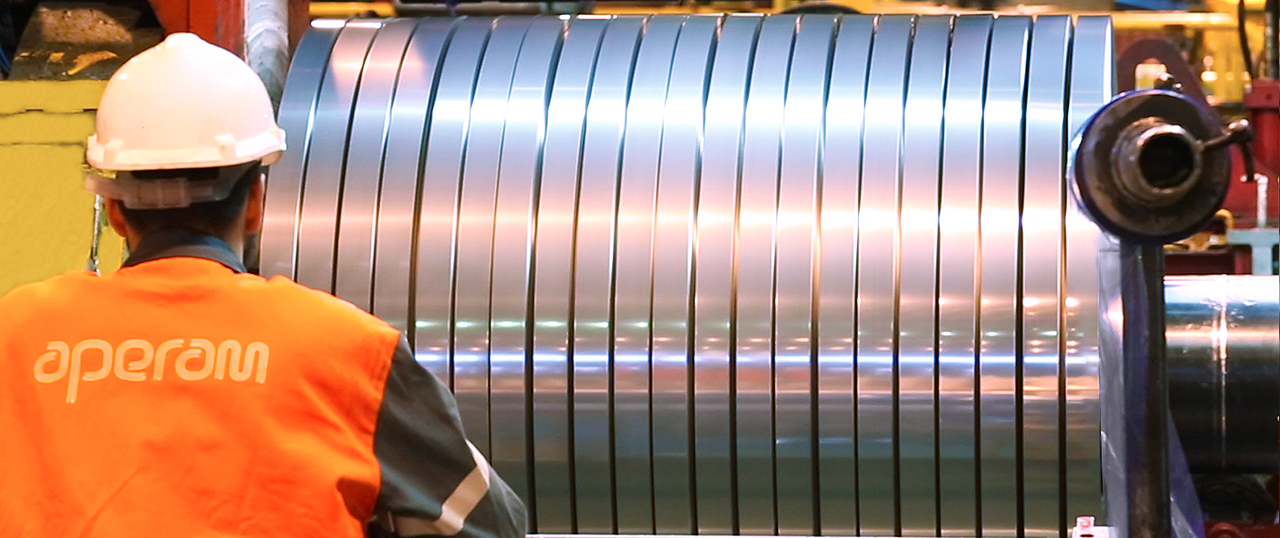
French stainless steel producer Aperam has increased its April alloy surcharges for its austenitic range of flat stainless steels for Europe by over €600/tonne ($661) on average versus March, Kallanish notes.
The surcharge for grade 304 (1.4301) has gone up from €2,682/t of March to €3,282/t effective 1 April. For grade 316 it has increased from €3,995/t to €4,817/t next month. Grade 309S, a heat-resistant stainless steel used in high-temperature applications, has also seen its value increase from €3,652/t to €4,531/t for April. The surcharge for the most popular ferritic grade, 409 has gone up from €949/t in March to €1,071/t in April, the company reveals.
Offers for nickel cash buyers reached $37,200/t on 24 March, Kallanish notes.
European stainless steel hot and cold rolled coil prices remain firm amid continued uncertainty in the market. Outokumpu has also increased its surcharges for April. The figure for grade 304 (1.4301) is €3,251/t effective 1 April. According to the formula applied by all steelmakers to calculate coil prices, €3,251/t will be added to the current base price of €1,800/t. This would give a new value for CRC of over €5,000/t delivered, a price considered unacceptable by buyers. Sources say there is currently no clear price for stainless CRC or HRC. European CRC sales earlier this month ranged from €4,200/tonne to over €4,400/t delivered depending on the month of delivery. Mills were quoting May lead times at the beginning of March and some were not accepting new orders. Throughout Europe steelmakers are reducing or stopping production (see Kallanish 22 March).
Natalia Capra France


Zaporizhstal partially resumes production, eyes future shipments
Ukrainian flat steel producer Zaporizhstal, part of Metinvest, has partially resumed operation of its cold rolling shop, the company tells Kallanish.
The decision to partially resume work was facilitated by the controlled military situation in Zaporozhye, the enterprise claims.
Skin-pass mills 1700-1 and 1700-2, as well as slitting unit No. 5, were put into operation in the cold-rolling shop. The machines process cold-rolled products at the redistribution of the shop after a hot shutdown of the plant, and produce finished products.
In addition, the area for packaging and shipment of finished products has been partially restored. Now the workers of the shop are focused on the preparation and shipment of hot-rolled and cold-rolled steel to Ukrainian consumers and abroad, the plant says.
“We can start up fully and restore our capacity after logistical restrictions are resolved, but due to hostilities, the plant cannot ship products by ports,” Zaporizhstal says. “In addition, there are problems with the supply of critical types of ferroalloys and sulphuric acid, coal for the resumption of coke production. We need help in resolving logistical issues from the state.”
On 2 March, Metinvest suspended production at its enterprises in the Zaporizhzhia region due to the Russian invasion of Ukraine (see Kallanish passim). Zaporizhkoks and Zaporizhstal have switched to hot conservation mode.
In 2021, Zaporizhstal produced 4.5mt of pig iron, up by only 0.1% on-year. Steel production decreased by 0.1% to 3.8mt, while rolled steel production remained level on-year at 3.2mt.
Earlier, Metinvest suspended production at its Mariupol-based Ilyich and Azovstal plants following the invasion. The company also declared force majeure.
ArcelorMittal Kryvyi Rih (AMKR) continues iron ore mining activity for the future resumption of steelmaking. AMKR previously also declared force majeure and idled its blast furnaces.
Ukrainian pipemaker Interpipe and DMZ have suspended production due to the invasion.
Seamless stainless pipe producer Centravis resumed single-shift production, but faces logistics problems with its shipments.
Pellet producer Ferrexpo continues to produce and ship product by rail to customers in Europe.
Svetoslav Abrossimov Bulgaria
European scrap in lull, sources forecast increases
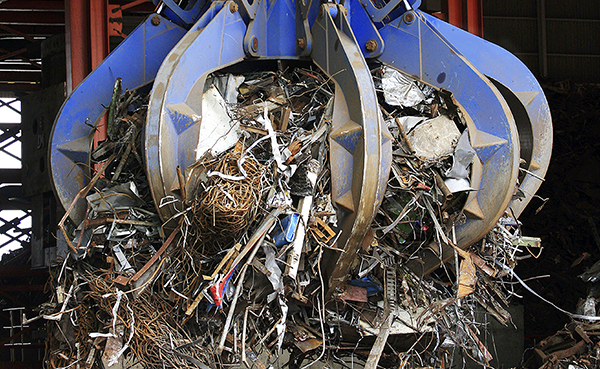
The European scrap market is going through a generalised lull, sources in Italy, France and Germany report. According to last week’s events in the international scrap market, forecasts for April are of another possibly slight increase on all grades.
The market quiet is caused by a wait-and-see attitude as players await some better international visibility. However, with all raw materials increasing, some sellers dare to forecast a €20/tonne ($22/t) hike, particularly for those automotive grades such as new arisings high E8 and the high E40 quality currently in short supply.
The March scrap market in Europe has been two-tier with prices increasing by €90-100/t in France and Germany, by over €100/t in Eastern European countries and only by €50-60/t on average in Italy. If Italian values were previously the highest in Europe in February, they are now lower compared to France and Germany.
This month French scrap prices have reached €570-580/t delivered for the E8 mixed quality and over €600/t delivered for packs of E8. E1C, a cheaper grade also in high demand, was transacted at €490-500/t delivered, while E40 was sold this month at €540-545/t delivered. E3 was also sold at €540-550/t delivered, sources suggest.
German values for March are in line with French with E1C sold at €490-500/t delivered, E8 also at €580/t delivered, over €600/t for packs of E8 and €530/t delivered on average for demolition grade E3. E40 was paid €540-550/t delivered, Kallanish notes.
Italian mills have this month requested less E8, lamenting high prices. They paid for the mixed E8 grade €520-530/t delivered and €540 for packs of E8. Domestic old thick scrap E3 remains at €480-495/t delivered. The lower E1 grade is at €440-470/t delivered depending on quality. E40 is paid between €530-560/t delivered also depending on quality.
In April, European sellers see E8 mixed grade in Europe reach €600/t delivered.
Natalia Capra France
LME scrap contracts see strong gains, trading volumes dip
Near-term scrap and rebar futures contracts on the London Metal Exchange saw strong gains over the week to March 24, while the trading volumes dipped on the week.
March contract was up $15/mt at $639.50/mt on March 24, while the April contract gained $32.50/mt to $670/mt, according to Platts assessments from S&P Global Commodity Insights. The May contract jumped $40/mt to $660/mt, while the June contract increased $47.50/mt to $647/mt.
The contango structure over the March-April portion of the forward curve strengthened, suggesting that futures traders on March 24 continued to expect physical scrap prices to gain in the immediate near-term.
The backwardation over the April-June portion of the curve softened on the week.
Spot prices for physical imports of premium heavy melting scrap 1/2 (80:20) increased $4.50/mt week on week to $657.50/mt CFR Turkey on March 24.
Turkish mills extended their absence from the market, while market sources during the week expected the next deals to be booked at higher levels.
“The Turkish mills are quiet, they’ve not communicated much, except that their domestic [finished steel] market is slow, and the export side is running well,” a Baltic recycler said.
“I think the US sellers will come back higher. They’ll look for $670-$675/mt CFR for 80:20,” one Turkish mill source noted.
Weekly LME scrap futures trading volumes over the week to March 24 totaled 38,110 mt, down from 74,250 mt last week.
Near-term rebar futures contracts also saw strong gains over the week to March 24, in line with scrap.
March contract was up $20/mt week on week at $924.50/mt, while the April contract jumped $56/mt to $980/mt, according to Platts assessments from S&P Global. The May contract increased $15.50/mt to $945.50/mt, while the June contract rose $61/mt to $930.50/mt.
The contango over the March-April portion of the forward curve strengthened over the week, suggesting that futures traders still expect prices to see significant gains in the immediate near-term.
The contango over the April-May portion of the curve reverted to backwardation on the week, while the backwardation over the May to June portion of the curve was less firm.
Turkish physical rebar export prices increased $25/mt on the week to $970/mt FOB March 24, as market sources reported multiple fresh deals to various European countries at elevated levels during the week. However, some market sources noted that export destinations outside Europe might not accept such high prices for possible deals.
One UK trader estimated current market price for Turkish exported rebars at over $980/mt FOB, and with current rebar prices in Germany, it would be possible for European buyers to even buy rebars from Turkey at $1,000/mt FOB inclusive of the 25% safeguard duty.
“Plus, outlook for European delivered prices for rebar, going forward is further upside to over Eur1,300/mt,” he said, adding, “There are plenty of reasons for a European trader to buy Turkish rebar at $1,000/mt FOB.”
Rebar futures weekly trading volumes in the week on the London Metal Exchange totaled 12,950 mt March 24, down from 40,800 mt the previous week.
The daily outright spread between Turkish export rebar and import scrap was assessed at $312.50/mt March 24, up $20.50/mt week on week to a record high.
Elsewhere, Indian scrap futures, which settles basis the Platts CFR Nhava Sheva shredded scrap assessment, traded 180 mt by March 24, down from 330 mt traded last week. The contract has seen a total volume of 4,110 mt traded since its launch in late July 2021.
— Rabia Arif, Viral Shah


Isdemir’s new blast furnace nears completion, to be Turkey’s largest
The new blast furnace at Turkey’s largest integrated steelmaker, Isdemir in southern Turkey, which will have the largest output capacity in the country (7,900 mt/day), has neared completion, with the successful assembly of the BF shell on March 23.
“We are pleased to have achieved an important milestone today in the construction of a new blast furnace for Isdemir by completion of the blast furnace shell assembly,” said Ekon Industry Construction, which is running the project.
This is set to be Turkey’s largest BF with a capacity of 2.8 million mt/year, it added.
The new Isdemir furnace has 3,587 cubic meters of inner volume and is expected to be blown in within this year.
The total liquid steel output capacity of Isdemir will reach 6.3 million mt/year upon the completion of the project.
“This will contribute to the Turkish economy by reducing foreign dependency in the steel product market,” parent company Oyak Maden Metalurji Group said.
The group is also renovating one of the BFs at its Eregli works (Erdemir), northern Turkey, which will also raise the capacity of Erdemir.
Erdemir produces hot-rolled, cold-rolled and galvanized coils, plate and tinplate, while Isdemir produces billet, wire rod and hot-rolled coils. The current combined crude steel production capacity is 9.1 million mt/year.
— Cenk Can