


New Kaltenbach.Solutions innovation and test center in operation

In order to reliably meet the increased demand for digital solutions to implement the goals of Industry 4.0, Kaltenbach.Solutions GmbH has moved into new premises near Düsseldorf. Here, the hardware components for the universally applicable digital measuring device BoosterBOX are developed, tested and configured. The innovation and test center can produce around 5,000 measuring devices annually for customers in the manufacturing industry.
First and foremost, creativity and innovation are needed to solve the pressing problems of the present. Throughout the millennia, it has been true that the discovery of new methods and tools initiates the great developmental steps of mankind. Valentin Kaltenbach’s family of entrepreneurs has been living this philosophy for generations for the benefit of its customers. Five years ago, the mechanical engineering graduate founded Kaltenbach.Solutions GmbH exclusively for the implementation of Industrie 4.0. His goal is to use the tools of digitization to sustainably increase the performance of machines in the manufacturing industry. This goes hand in hand with the careful use of limited resources such as operating resources, energy consumption and employees.
In order to continue to exist on the market as a leading provider of digital solutions in the future, it became necessary to expand the company’s capacities in the area of Research & Development. At the beginning of the year, the Kaltenbach.Solutions test and innovation center therefore moved to larger premises near Düsseldorf. Here, the hardware components for the universally applicable digital measuring device BoosterBOX 4.0 are developed, tested and configured. These include IoT gateways, communication modules, measurement and sensor modules, and automatic configuration and test stations. The new site is designed for the production of 5,000 BoosterBOXes per year. Due to the growing demand for electronic components, investments have already been made in recent months to establish reliable supply chains.
This ensures that all components are available to meet the rapidly growing demand for digital solutions for the processing industry.

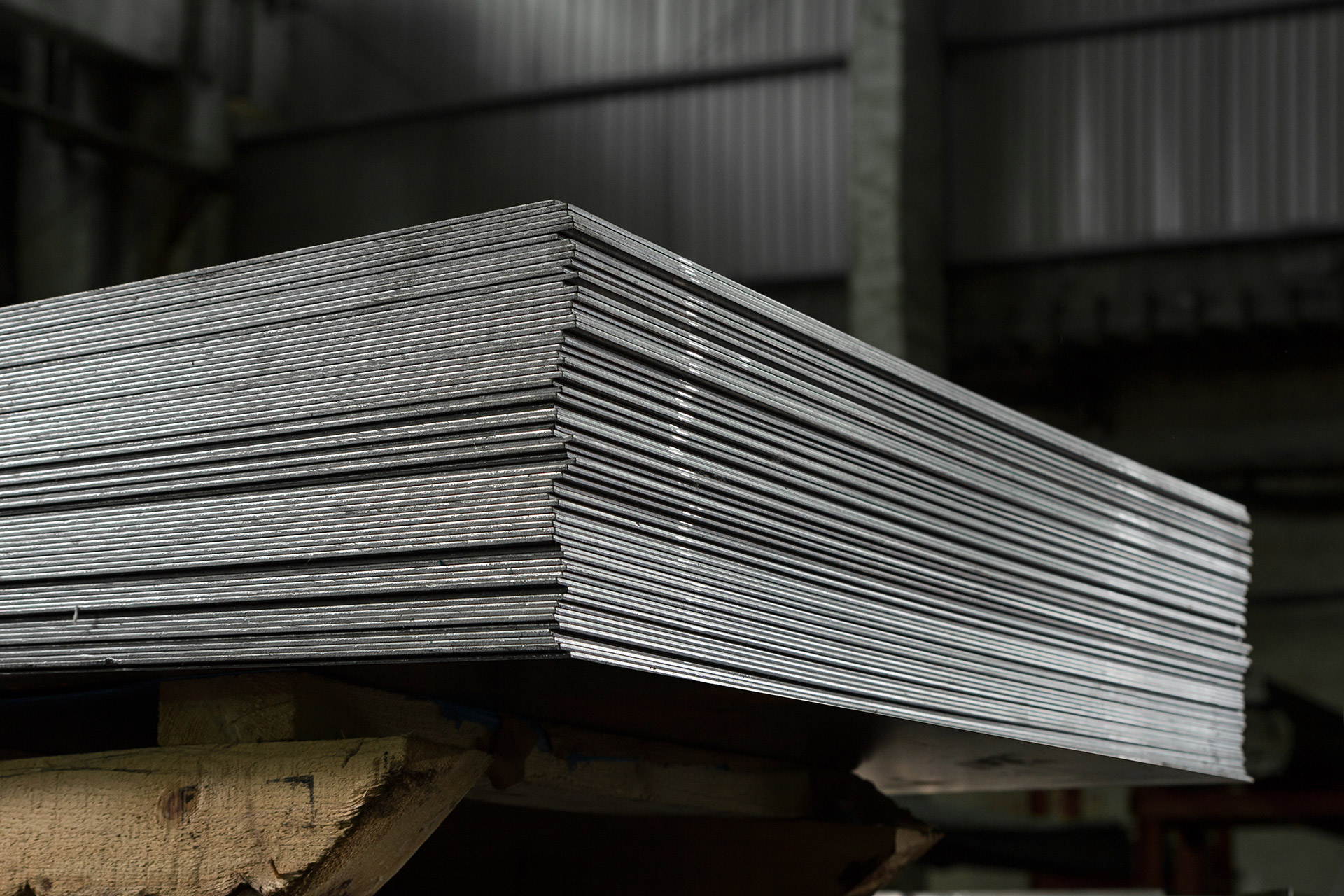
Turkey’s February slab arrivals soar, all from Russia
Turkey’s slab imports increased again in February, after the January rise, reflecting Turkish flat steel producers’ return to restocking after booking a large – around 200,000-tonne – quantity of Russian slab last October.
Turkish producers returned to restocking around December, when slab prices fell sharply in response to much lower-priced bids, and in expectation of the removal of the Russian ferrous export duty from 1 January. Offer prices were consequently down $100/tonne. The reduction was also supported by softening flat steel segment prices globally.
The February-arrived slab was booked at prices below $600/t fob Black Sea, around $100/t down on-month, with the lowest level registered by Kallanish at $585/t fob in early January. In addition to Russian slab, Turkey also booked at least one lot of Brazilian material, for March/April arrival, also severely down in price due to the US flats price fall in December. An earlier, October-booked lot of Brazilian material arrived in January.
Amid falling prices, a large proportion of Russian slab was also booked by China at the end of the fourth quarter of 2021. This pushed traditional buyers like Turkey and Italy to restock and eventually pushed prices up again starting in January.
From $580-585/t fob Black Sea – $610-615/t cfr Turkey – in early January, the price of slab rose again to $730-750/t cfr Turkey in early February, peaking in early to mid-March at $850-900/t cfr Turkey.
Financial sanctions on Russia and Ukraine’s production halt amid the former’s invasion of the latter resulted in very few bookings at the time. Buyers in non-sanctioning areas – Turkey and Asia – pushed for much lower prices again, and achieved them (see Kallanish passim). Various Asian-origin material has also become available in the Mediterranean, including Chinese, although Turkey is understood to still be seeking Russian slab, at lower prices.
Turkish February slab arrivals were all of Russian origin and totalled 208,077t. Russian-origin sourcing alone was up 21.7% on-month and ten times up on-year. However, overall February slab imports were down 20.9% on-month but up 92% on-year, Turkish Statistical Institute (TUIK) data show. Two-month imports of 471,333t were up 68.6% on-year.


Italian plate market quietens on lower import prices
The Italian plate market is reported to have lost momentum since the beginning of April after the high sales volumes registered by both producers and distributors in March. Domestic contracted prices remain at high levels, but they have lost the €2,000/tonne ($2,172/t) high point of the range for S275 grade seen at end-March, sources tell Kallanish.
Sales activity is becoming quiet, mostly due to the competitive import offers reaching Italian buyers. Both domestic and Far East-origin heavy plate prices are now softening, and European buyers are booking imported material that is significantly less expensive than domestic plate.
In the Italian market, mills are quoting S275 grade at €1,900/t ex-works, while 355 grade is €50/t more expensive. Contract prices this month for S275 are at between €1,750-1,900/t ex-works, sources suggest. Demand for premium 355 grade is robust, but this grade is in short supply. Because of the Ukraine war, the high-quality slab needed to produce 355 is less available and very expensive.
Meanwhile, some offers of S275 are quoted from the Far East at €1,300-1,380/t cif Italy for small volumes, and at €1,400-1,480/t cif for premium grade 355. Some buyers have purchased 275 plate from this origin at €1,300/t cif, but only limited tonnages. Offers for Indian-origin 275 plate are also at €1,300/t cif, but the 25% safeguard duty has to be added on top, for material that arrives after quarterly quotas expire.
As of 5 April, the remaining second-quarter EU quota availability for Indian HS code 7208 51 20 00, 7208 51 91 00, 7208 51 98 00 and 7208 52 91 00 plate was only 46,000 tonnes. The availability for Indian HS code 7208 52 10 00 and 7208 52 99 00 plate was however almost 189,000t.
Italian producers are quoting end-June and July lead times.
Natalia Capra France
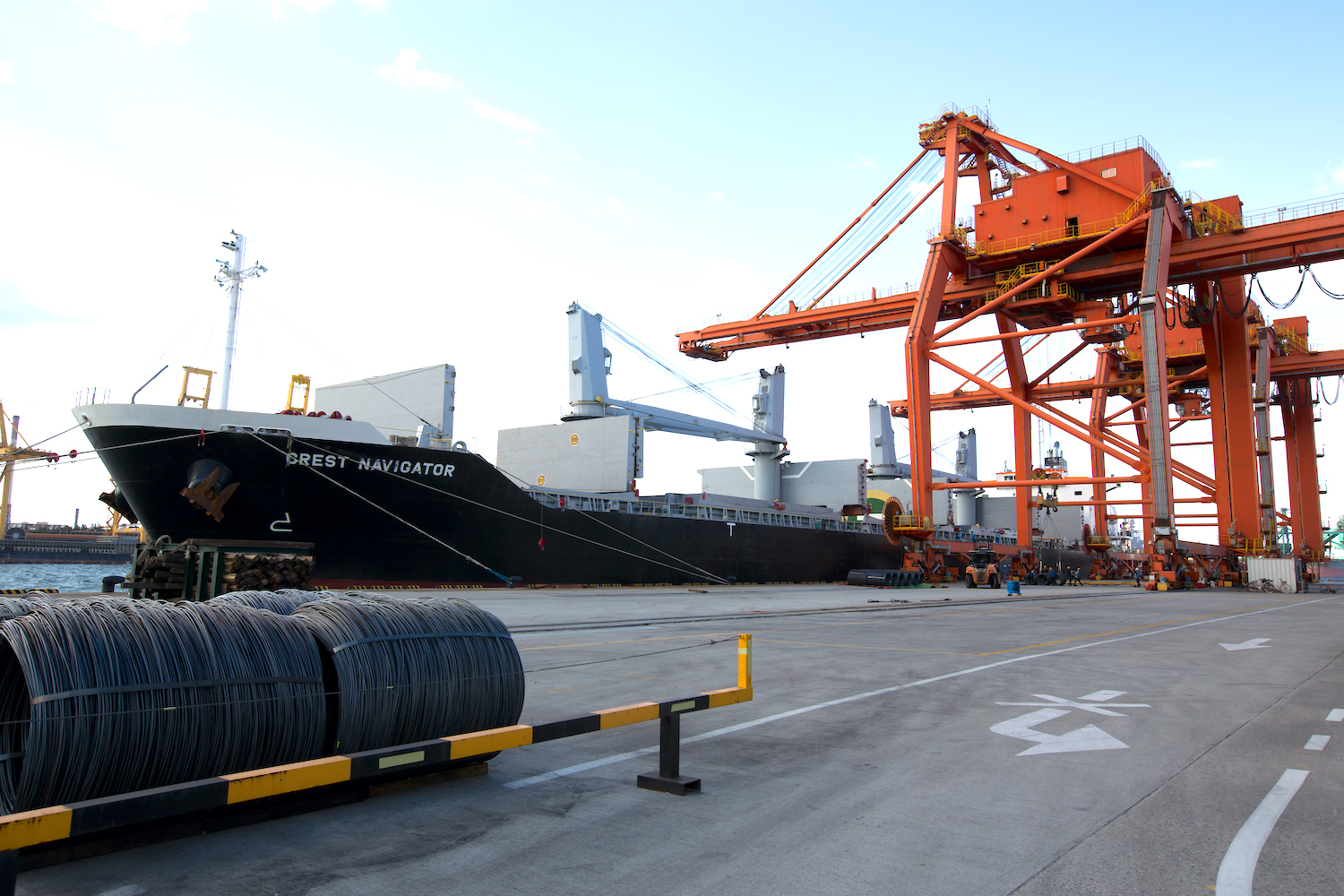
Metinvest maintains some Ukraine exports, ensures output at EU, UK mills
Ukraine-based mining and steelmaking company Metinvest is maintaining normal operations at its re-rolling plants in the UK and EU and is present in the export market with long products, CEO Yuriy Ryzhenkov told S&P Global Commodity Insights in an interview on April 7.
Metinvest’s re-rolling production sites in the EU and the UK include a shapes and bar mill (Promet Steel) in Bulgaria, two flat-rolling mills in Italy (Trametal and Ferriera Valsider) and a plate-rolling mill (Spartan UK) in England.
Semi-finished products for those plants were normally supplied directly from Metinvest’s steelmaking base in Ukraine but due to the disruptions caused by the Russian invasion, only billet deliveries from Ukraine to Bulgaria are currently possible, while slab feedstock for the flat-rolling mills is being sourced from third parties, Ryzhenkov said.
Promet Steel remains a rolling mill based on billet supplied from Metinvest’s own billet producer Kamet Steel (formely Dneprovsky Iron & Steel Works or DMK).
Kamet Steel is located in Kamianske in the Dnipropetrovsk region, where steelmaking operations continue without disruption. Therefore, Promet Steel’s billet requirements at 40,000 mt/month, have been fully satisfied internally. The deliveries from Ukraine to Bulgaria are going by rail, inland waterways (barge) and sea (using Black Sea ports in Romania and Bulgaria).
Ryzhenkov noted that by keeping Kamet Steel working, Metinvest remains present in export markets, with billet, rebar, wire rod and other finished long products. The company can sell up to 100,000 mt of billet per month. Although the access to Ukrainian Black Sea ports is blocked by the presence of Russian military in southern Ukraine, the company is using the Black Sea port of Constanta in Romania, Baltic port of Swinoujscie in Poland, as well as railway and barges on the Danube to deliver goods to export markets.
Contrary to billet, slab shipments from Ukraine to the EU ceased following the idling of the two integrated steel production plants, Azovstal and Ilyich Steel, located in war-torn Mariupol. Ryzhenkov explained that the group’s flat steel re-rollers in the EU had sufficient stocks of slab to maintain production until mid-April. Then the mills would pause production and restart in early May to work on slabs purchased from China and Indonesia. The company is also considering Brazilian slabs.
— Wojtek Laskowski
