


Mariupol plants sustain further damage, control unclear
Metinvest’s steel plants in Mariupol have suffered further damage as a result of the fighting between Ukrainian and Russian military forces in the besieged city, the company told Kallanish on Friday.
Earlier on Friday, Russian Ministry of Defence representative Igor Konashenkov claimed that Moscow’s forces and units of the self-proclaimed Donetsk Peoples Republic had completely seized Metinvest’s Ilyich Steelworks in Mariupol.
“The status of Metinvest’s production facilities located in Mariupol, and Avdiivka coke plant, has not changed significantly – they remain in hot conservation mode,” the enterprise said. “At the same time, assets in Avdiivka and Mariupol are reported to have suffered further damage as a result of the fighting in those cities. Until the active phase of the Russian military aggression is stopped and reliable channels of communication with the plants are not established, it is impossible to assess its impact on the group’s enterprises.”
In March, Metinvest suspended production at Mariupol-based Ilyich and Azovstal following the outbreak of war, and declared force majeure (see Kallanish passim).
At the beginning of April, Metinvest flat steelmaker subsidiary Zaporizhstal restarted two of its blast furnaces after an idle period due to the war. The plant plans to produce 65,000 tonnes of pig iron in April, ramping up to 150,000-170,000t in May. Production at sister firms Zaporizhkoks, Zaporizhvognetriv and ZLMZ was partially restored earlier.
In March alone, Metinvest subsidiary Kametstal was Ukraine’s only mill to produce at pre-war volumes and is now operating at approximately 80% of its capacity.
Metinvest’s iron ore and coking coal assets in Ukraine are operating at approximately 60% utilisation, providing sufficient raw material for Kametstal. The rest is currently being exported. In addition, the Pokrovskoye mine and Metinvest’s assets abroad continue to work.
Metinvest plans to allocate 900t of steel free of charge for the manufacture of approximately 80,000 units of body armour for the Ukrainian army. In addition, the company has produced about 50,000 anti-tank hedgehogs and 20,000 studded chains.
Most Ukrainian steelmakers have resumed production since the start of April despite the war continuing.
Svetoslav Abrossimov Bulgaria


Van Leeuwen cashes in on shortages in 2021
Van Leeuwen Pipe and Tube Group says it achieved excellent sales and net profit figures in 2021, positively influenced by improving market demand and higher sales prices.
When disruptions in the global supply chain led to material shortages during the year, the Dutch tubes distributor was able to continue to supply customers thanks to a strong inventory and sourcing network, it says. Revenue amounted to €1,431 million ($1,547m), after €1,178m in 2020. The operating result came to €79m, up from €15m, and net result rose to €64m from previously €9m.
At the beginning of 2021, economic conditions were more favourable than expected, Kallanish hears from the company. The recovering economy then led to major supply disruptions and material shortages, while prices and delivery times increased rapidly. After the summer, shortages diminished, and the company even observed a minor price decrease for welded pipe. Due to very rapidly increasing energy prices, prices however later increased again, especially for seamless pipe, Van Leeuwen reports.
Van Leeuwen says it also profited from the extra strength it gained with the acquisition of Benteler Distribution at the end of 2019.
Christian Koehl Germany
Bowim boosts flats sales, anticipates procurement re-routing cost
The redirection of supply chains following the outbreak of war in Ukraine and subsequent sanctions on Russia will be neither easy nor cheap, and will take time, says Polish distributor Bowim. The redistribution of Russia’s EU safeguard quotas to other producers is however a positive step.
In 2021 Bowim’s direct trade with Russia, Ukraine and Belarus amounted to a 0.5% share in overall procurement and 0.4% in overall sales. The firm also traded indirectly with these countries through companies registered elsewhere or whose beneficiaries fall under EU sanctions – this business accounted for a 25% share in overall procurement, Bowim says in its 2021 annual report.
Countries such as Turkey, China and India, as well as those not dependent on supply of semi-finished products from countries involved in the war will be the biggest beneficiaries of the EU’s ban on Russian and Belarussian steel, it adds. The resulting increased cost of procurement further exacerbates the unprecedented rise in prices of gas, coking coal and carbon emissions.
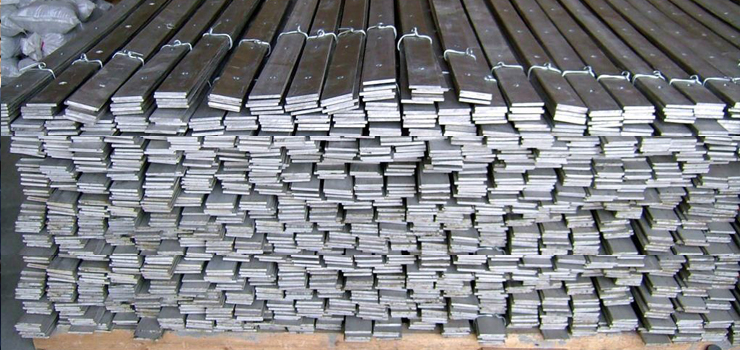
Bowim reported a 6% on-year increase in consolidated shipments in 2021 to 539,121 tonnes, with flat products taking a notably larger share than the previous year and rebar figuring less in overall deliveries, Kallanish notes.
Flat product sales rose 11% last year to 205,208t, with pipe sales down 2% to 96,210t and rebar shipments down 15% to 75,687t. The steel structures segment took a 28% share in sales versus 24% the previous year, at the expense of the trading segment which saw share drop to 15% from 19%.
Bowim’s consolidated revenue surged 87% in 2021 to PLN 2.26 billion ($527.3 million), while net profit ballooned almost nine-fold to PLN 153.3m.
Adam Smith Germany
Slow sales plague Italian longs market
Slow sales and an uneventful market are clouding Italian long products sales in April. While this is a seasonally slower month due to the Easter and 25 April bank holidays, the market seems to have stopped absorbing price increases.
Demand is said to be slow for rebar, merchant bar and wire rod. Sources who spoke to Kallanish however say that March was a record month for sales and, despite April being much slower, March-April sales combined have increased compared to the same period in 2021. Some distributors also say their sales are much slower and no new orders are coming in.
For the moment, merchant bar prices remain at €800-850/tonne ($872-927/t) base ex-works, mostly stable compared to the previous week. Including size extras, domestic contracts are hovering at €1,220-1,270/t ex-works.
Meanwhile, a stable market is reported for sections, for which values also remain flat. The first category of sections remains at €1,500-1,540/t ex-works, including size extras. Limited availability continues to persist for both merchant bar and beams.
Natalia Capra France
Microchip shortage continues to impact Turkish vehicle output
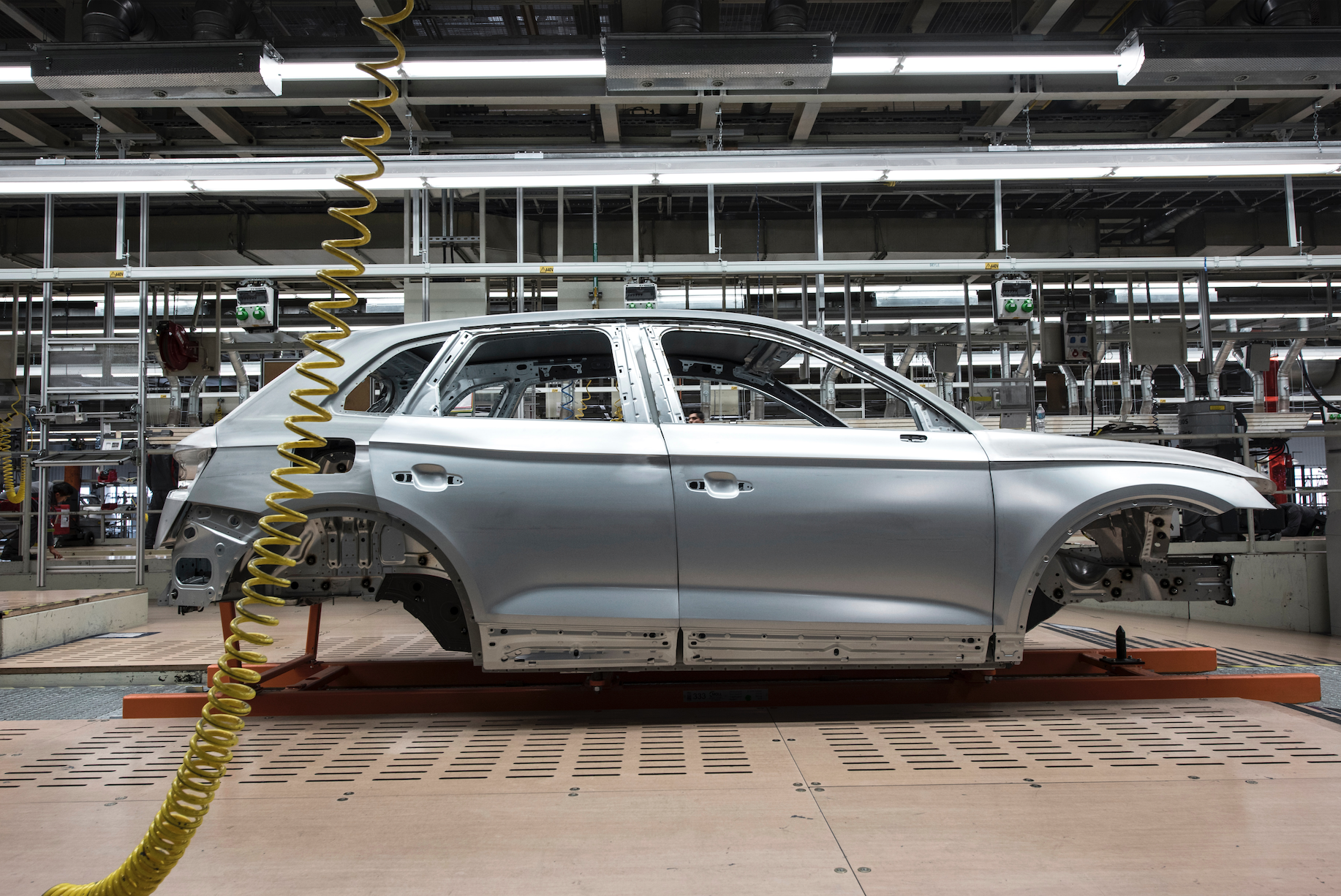
As the microchip shortage that hit Turkey’s automotive output in 2021 continues in the first half of 2022, one of Turkey’s major automakers, Oyak Renault, has re-paused output for seven days at most of its production departments as of April 18.
Oyak Renault recently paused output for 10 days as of March 25 for the same reason, while Turkey’s other major auto producer, Toyota, also suspended production at its Turkish plant for five days as of March 7, as previously reported by S&P Global Commodity Insights.
These decisions follow output cuts by major producers throughout 2021 and in the first quarter of 2022.
Turkey’s total vehicle production fell 12% on year to 302,730 units in Q1 in this environment, while automobile output declined 21.5% to 166,363 units, according to the Turkish Automotive Manufacturers’ Association (OSD) data.
Bursa-based Oyak Renault is a joint venture between France’s Renault Group and Turkey’s Oyak, parent company of Turkey’s largest integrated steel producer Erdemir.
These stoppages have also been affecting the sector’s steel demand, sources said.
Oyak Renault has 360,000 units/year of automobile production capacity and 750,000 units/year of motor production capacity.
Ongoing microchip shortages could continue to affect automotive output in Turkey in the coming months, as the global shortage is expected to continue albeit at a diminishing pace throughout 2022, according to industry reports.
— Cenk Can
