

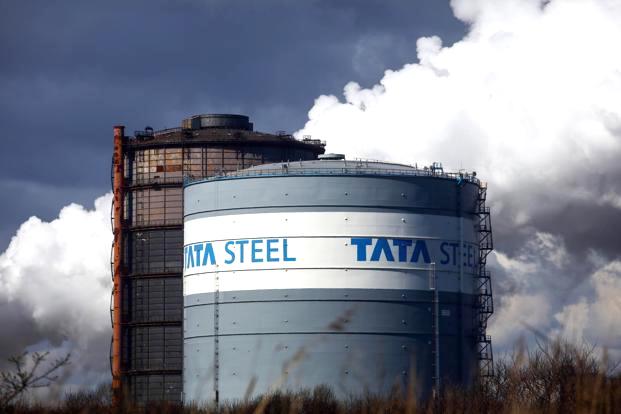
Slitter line enables Tata Steel Hartlepool site processing
Tata Steel is investing into a new slitter line at its Hartlepool tube mill to process coils of steel delivered from its Port Talbot steelmaking site. Currently, wide steel slabs are slit in Port Talbot before being rolled and sent to Hartlepool to be turned into steel tubes.
The project is expected to take more than a year to complete and is the second major investment announced this year, with Tata Steel also investing into replacing one of the two cold-formed sections mills at its Corby site (see Kallanish passim).
“This project will allow us to bring a vital process on site, which in turn will free up thousands of tonnes of capacity at the Port Talbot site,” says Tata Steel Hartlepool works manager Andrew Ward. “This will improve our efficiency and reduce overall CO2 emissions from our steel processing as well as reducing the total costs across the business.”
The Hartlepool unit has a 200,000 tonnes/year capacity of steel tube used for applications such as agricultural machinery, sports stadiums, steel-framed buildings and the energy sector.
Adam Smith Poland


Hybrit inaugurates cavern to store fossil-free hydrogen
Hybrit, the carbon-free ironmaking joint venture between SSAB, LKAB and Vattenfall, has announced the inauguration of a rock cavern storage facility for fossil-free hydrogen, Kallanish notes.
The storage facility is the first of its kind in the world and marks the start of the two-year test period of the site, the partners say.
“Producing fossil-free hydrogen gas when there is a lot of electricity, for example when it is very windy, and using stored hydrogen gas when the electricity system is under strain, will ensure a steady production of sponge iron, the raw material behind fossil-free steel,” a Hybrit reelease explains.
The pilot plant has a size of 100 cubic metres. At a later stage, a full-scale hydrogen gas storage facility measuring 100,000 to 120,000 cubic metres may be required, in which case it will be able to store up to 100 GWh of electricity converted to hydrogen gas, which is sufficient to supply a full-sized sponge iron factory for three to four days.
Emanuele Norsa Italy

Lotter group adds processor, keeps investing
Germany’s Lotter group, which is mainly active in rebar bending and distribution. has taken over Hochberger Stahl-Service Center Gmbh (HSS), a steel processing shop offering flame-cutting, milling, sand-blasting, and related services.
HSS is located in Pleidelsheim, part of Ludwigsburg in southwestern Germany, where Lotter is headquartered. It employs 20 people and supplies the mechanical engineering industry, among others. Its takeover will be effective 30 June, Kallanish learns from Lotter.
Another subsidiary also located in Pleidelsheim, Hagelauer Dewald, started operating a new sawing centre with high-bay warehouse at the beginning of the year. The group also reports the commissioning of a new automatic sawing/drilling machine at its headquarters, supplied by Kaltenbach.
In the latest edition of its customer magazine, the company warns of potential shortages of reinforcing steels due to the war between Ukraine and Russia. The two countries have now dropped out as suppliers of scrap and wire rod, while energy costs keep surging for EAF mills, Lotter notes.
Lotter encompasses ten sites with steel operations plus several shops for tools, ironware, fittings, construction elements, and liquid gas.
Christian Koehl Germany

EU HRC producers deliberate discounts on demand woes
A few German mills prepared to give substantial discounts June 14 alongside sliding offers in the Italian HRC market, with sources hearing mixed prospects from core industries.
HRC in Northern Europe was down Eur5/mt June 14 to be assessed at Eur930/mt ex-works Ruhr. In South Europe, prices were also on a slide, down Eur20/mt at Eur850/mt EXW Italy.
Offers were heard on the day at sub-Eur900/mt, with prices in the market cited in a broad range of Eur880-950/mt EXW Northern Europe. Offers from one Northern mill at Eur880/mt EXW were allegedly driven lower by higher exposure to the automotive decline, with most mills continuing to resist pricing below Eur900/mt.
Deals in the Italian market were heard at Eur850/mt EXW Italy, though buyers were heard already targeting Eur800/mt EXW for the next round of negotiations.
Sources talked about minimal demand across the market — citing high inventory levels and logistical issues in depleting stocks.
“There’s too much material in the market at the moment for any real purchasing activity,” said a distributor source. “Panic buying post war, as well as logistical issues with imports, are making it harder to reduce stocks — we still have material arriving through July to September.”
While market participants agreed distributor restocking activity was scarce, there were mixed expectations for demand from core industries — the automotive and construction sectors.
One distributor source said prices from one mill had actually increased, in opposition to the downtrend seen across flat steel products in recent weeks. The source said the mill had cited “strong development” from the automotive and construction industries as a core factor, but disagreed due to its own perception of relevant demand.
“Automotive is canceling orders and we’re seeing similar decline in the construction industry,” said the source. “Some projects have been pushed into next year, and they aren’t engaging new projects upon concluding old ones as they traditionally would.”
Another distributor source saw the same decline from the construction sector, though said automotive held strong prospects for the post summer period.
“Construction is dropping dramatically, but automotive does seem to be quite strong given heavy vehicle demand and a relaxation in semiconductor shortages.”
Automotive negotiations for Q3 and H2 were yet to conclude, with mills attempting to keep prices at H1 levels — around Eur1,050/mt EXW — according to a mill source. Mills were said to be in a stronger position than in previous negotiations, with OEMs setting a pattern of declining to take reserved volumes on real consumption.
Multiple sources said mills were “desperate” for orders — or at least needing to fill near-term orderbooks — with German mills apparently ready to accept substantial discounts on firm bids.
As current production levels contrast with muted demand, sources expected mills to announce production cuts — a service center source gave insight into the potential absence of announcements.
“Demand isn’t really dead, it’s just that everyone has too much stock,” said the source. “Mills won’t shut down facilities as when stocks do deplete, they could be caught out and miss opportunities if production doesn’t restart smoothly.”
— Benjamin Steven, Maria Tanatar
