


Tata Steel Nederland offers carbon footprint reduction to customers
Tata Steel Nederland said July 12 it has launched an incentive for customers to reduce carbon footprint up to 100% through Zeremis Carbon Lite advancement, as it works toward transforming operations to produce greener steel.
The launch of Zeremis Carbon Lite will see the company meet a growing demand for low-CO2 steel by consumer facing industries, Tata Steel said in a statement.
Zeremis Carbon Lite offers a 30% reduction in CO2 intensity benchmarked against the European average for steel products, for example hot-rolled coil or cold-rolled coil. “The launch of Zeremis Carbon Lite is an important step since passing on our savings to our customers, helping us to accelerate our transformation to become a more sustainable steel producer,” Tata Steel Nederland Chairman Hans van den Berg said.
The lower CO2 intensity is based on CO2 savings realized within Tata Steel Nederland since 2018 and is certified by independent assurance expert DNV.
Tata Steel targets a CO2 emission reduction of at least 30% by 2030 – when it commissions its first DRI installation – and to emit 75% less CO2 around 2035, the company said in a statement.
“We firmly believe green steel is the future. We will be making steel in a different way before 2030, with less impact on our immediate surroundings and neighbors,” van den Berg said.
Platts assessed hot-rolled coil in Northern Europe at Eur855/mt ex-works Ruhr July 12 up Eur5/mt since July 11, according to data from S&P Global Commodity Insights.
The HRC price has stabilized after several months of downwards trend. This falling price trend in Europe since late March is seen to have come to an end due to a change of approach by domestic mills that stopped giving discounts to stimulate buying and instead started to reduce production to balance supply and demand, market sources said.
Steel demand from the automotive industry has been below usual levels, with continuing component shortages limiting production.
— Catherine Brown

UK Steel urges government to provide policy conditions for decarbonization
Steelmakers’ association UK Steel has called on the UK government to continue ongoing conversations to achieve parity in electricity costs between domestic steelmakers and their European Union counterparts, introduce a carbon border adjustment mechanism and support the industry’s decarbonization by buying low-carbon emissions steel, the association’s director general said July 12.
Speaking following the launch in London of the association’s report “Net Zero Steel: a vision for the future of UK steel production,” Gareth Stace told S&P Global Commodity Insights that despite current changes in government, a consultation with government on the costs of renewable energy for the sector is expected to occur “any day now.” Network costs will be discussed and possibly reviewed as a next step.
This follows successful consultations between the energy intensive sector and government on carbon costs earlier in the year, Stace said.
Net-zero steel production — involving greater use of electric arc furnaces, blast furnaces equipped with carbon capture, utilization and storage technology and hydrogen production — will be considerably more electricity-intensive than traditional steel production, according to the “Net Zero Steel” report.
“EAFs require three times more grid electricity to produce the same volume of steel as a blast furnace,” UK Steel says in the report. It is seen therefore essential to achieve parity of electricity prices and energy efficiency funding this year if the government’s decarbonization targets for the sector are to be met, retaining the sector’s international competitiveness at the same time.
There are two key targets for the UK steel sector, the report points out: the Climate Change Committee’s recommendation in its 6th Carbon Budget for 2033-37 that all ore-based steelmaking should be near zero emissions by 2035; and secondly, the government’s 2050 net-zero target, which could require the steel sector to reduce its emissions by over 95%.
Govt may decide on CBAM ‘in autumn’
A decision on a CBAM may meanwhile be taken by the UK’s new government as soon as this autumn, Stace said.
According to the decarbonization timetable drawn up by the report, a CBAM or product standards need to be implemented in the UK from 2026, along with “green” public procurement and carbon pricing for targets to be met.
Creating a ‘green’ steel market
Government involvement will be crucial in creating and establishing a market for low-carbon emissions steel, but not by interfering in pricing, as it is expected the market will find its own price levels, according to Stace.
“We hope the government will support the market by public procurement of steel,” he said. “This could be by it saying it will only buy a certain type of steel.”
Stace noted, however, that any blast furnaces not already using CCUS by the time this kind of procurement occurs could find it difficult to comply with the requirements.
Mike Thompson, chief economist of the Climate Change Committee, an independent statutory body established to advise the UK government, said during the launch event the government recognizes that decarbonization will involve higher costs and steel prices and that a level playing field needs to be created so that these costs can be passed on “to be spread throughout the economy.”
“But to get the public on our side we have to minimize costs,” he added.
Thompson also noted that CCUS or CCS may not be the cheapest way to decarbonize. However, these may still be the best solution for the UK blast furnaces operated by Tata Steel UK and British Steel – which together produce 96% of the UK steel sector’s greenhouse gas emissions – and so should still be used, he maintained.
Against scrap export curbs
Improved scrap utilization and quality was highlighted in the “Net Zero” report as another priority from 2022 to help decarbonize the UK steel industry. The UK currently exports more than 8 million mt of its steel scrap arisings of more than 11 million mt/year. However UK Steel – unlike some other industry quarters – declared itself against scrap export curbs at the event.
Frank Aaskov, UK Steel’s energy & climate change policy manager, said that the UK, as “a free-trading nation” was unlikely to introduce “draconian measures” such as taxing scrap exports, even though these have recently been adopted by some other nations. Rather, he said, the industry should implement better scrap sorting techniques to improve overall availability of higher-quality scrap.
Stace reinforced this idea, adding that to limit scrap exports would be “a non-market way” and that UK steelmakers would prefer to work more closely with scrap processors to improve local availability.
Steelmaker sources present at the event indicated that given continuing world overcapacity, it is highly unlikely that the UK will boost its steelmaking capacity in the foreseeable future.
The UK steel industry currently produces around 7 million mt/year of steel, and is both a significant exporter and importer. Around 45% of its production is exported: it therefore imports around 60% of its steel products requirement of around 11 million mt/year, according to UK Steel.
— Diana Kinch

EU HRC prices inch up on slow demand revival, production cuts
Domestic hot-rolled coil prices inched up across Europe on July 12 as buyers gradually started restocking and as mills cut output.
Platts assessed HRC in Northern Europe at Eur855/mt ex-works Ruhr July 12, up by Eur5 day on day, according to S&P Global Commodity Insights data.
A producer reported deals settled between German mills and buyers at Eur850/mt ex-works Ruhr and a transaction for HRC from other Northern European steelmaker at the equivalent of Eur850-860/mt ex-works. Another source reported deals at the equivalent of Eur855/mt ex-works.
Tradable value was reported at Eur850-860/mt ex-works Ruhr/Northern Europe.
One steelmaker was reported to have moved its HRC offers up to Eur890-900/mt ex-works Northern Europe, and market sources expected that other producers would follow.
Northern European buyers were expected to start restocking for September by the end of July. Although demand had not jumped, market sources noted that more buyers have been interested in making deals.
“Demand is not booming, but it is visibly better as buyers realized that the prices have reached bottom,” a producer said.
“The market seems to reach the lowest price at which the buyers realized that they would not get lower prices,” another source said. “If prices moved down further the mills would have been in trouble due to high costs.”
Some European steelmakers, including HBIS Serbia, Acciaierie d’Italia and ArcelorMittal Dunkirk in France, have planned blast furnace stoppages in July-August to balance supply and demand. Italian electric-arc furnace-based producer Arvedi also planned to fully stop its Cremona mill for the month of August. ArcelorMittal Bremen in Germany has introduced short-time work.
Other steelmakers were reported to operate at minimum production rates and plan longer summer maintenances.
The reduction of flat steel output supported the domestic prices, sources said.
In addition, car manufacturers were reported to show a higher interest in flat steel, according to some market participants.
HRC in Southern Europe was assessed at Eur775/mt ex-works Italy July 12, also up by Eur5 day on day.
Official offers have been reported at Eur800/mt ex-works Italy, and achievable prices have been evaluated by market sources at Eur750-800/mt ex-works Italy. A source reported an offer of HRC at Eur750/mt ex-works, but the information was not widely confirmed.
Unlike distributors in Germany, Italian buyers planned to wait until late August-early September for restocking, following the traditional market cycle, sources said.
“Stocks in Italy are not as high as those in Germany,” a trader said. “So the fact that Italian buyers prefer to wait might result in a problem in September due to effects from production cuts.”
— Maria Tanatar

Steelmaker ArcelorMittal confirms Dunkirk blast furnace halted from July 12
A 1.5 million mt capacity blast furnace at ArcelorMittal’s Dunkirk, France, steelworks is being idled July 12, following a run down of operations, a company spokesperson said.
The furnace is being shut due to weak market conditions, S&P Global Commodity Insights previously reported. The closure will leave hot metal capacity of 5.7 million mt/year operational at the site.
The furnace’s expected restart date has not yet been announced.
European steelmakers Acciaierie d’Italia and HBIS Serbia have announced other blast furnace closures in recent days.
Platts assessed hot-rolled coil in Northern Europe at Eur850/mt ex-works Ruhr July 11, stable since July 6, according to data from S&P Global.
The HRC price has stabilized after several months of downtrend. The falling price trend in Europe since late March is seen to have come to an end due to a change of approach by domestic mills that stopped giving discounts to stimulate buying and instead started reducing production to balance supply and demand, market sources said.
Steel demand from the automotive industry has been below usual levels, with continuing component shortages limiting production.
— Diana Kinch

Italian domestic steel scrap prices drop on high mill stocks, weak demand
Italian domestic ferrous scrap prices have dropped by €100-105 ($101-106) per tonne compared with June because steelmakers have good scrap inventories, due to weak demand for finished steel products, market participants told Fastmarkets on Tuesday July 12.
With prices being very low, in the opinion of scrap sellers, some dealers decided to stop deliveries to mills, and to demand an increase in the mills’ purchasing prices, the sources said.
Some Italian scrap traders were trying to offer material to India and to Turkey, which sets the tone in scrap pricing. But with the Middle Eastern country out of the market for the Islamic Eid al-Adha holiday, there was consequently no clarity in the market about future prices, and foreign buyers’ activity was muted, sources said.
“The recent increase in import scrap values in Turkey has no effect on the situation in the domestic scrap prices in Italy,” a seller-side source said.
“Lot of scrap dealers are ready to sell, but mills are not interested in buying. Now, with very low prices, we work on ‘open contracts’ without fixed quantities of supply,” one Italian scrap trader said.
“The Italian domestic [steel scrap] market has died,” another seller-side market participant said. “Steel mills’ [scrap] stocks are sufficient. Mills will be closed [for summer holidays and maintenance] from the last week of July until the end of August, so some have already stopped receiving scrap now [and will not start again until] the end of August.”
Another trading source added that “some mills will be closed for maintenance from Friday.”
Meanwhile, prices for steel reinforcing bar (rebar), domestic, exw Italy, continued to fall, with material on offer at €810-875 ($818-883) per tonne exw on June 6, down by €30 per tonne week-on-week and by €80-120 per tonne month-on-month, due to weak trading and sluggish demand.
As a result, Fastmarkets’ latest price assessment for steel scrap, E3 old thick scrap, domestic, delivered mill, Italy, was €240-250 per tonne on July 12, down by €100-105 per tonne from €345-350 per tonne on June 15.
The price assessment for steel scrap, E40 shredded, delivered to mill, Italy, was €260 per tonne on the same day, down by €100 per tonne from €360 per tonne in the same comparison.
And the corresponding price assessment for steel scrap, E8 thin new production steel scrap, domestic, delivered mill, Italy, was €250-270 per tonne on July 12, down by €100 per tonne from €350-370 per tonne on June 15.
Published by: Elina Virchenko

Marcegaglia enters steelmaking with Outokumpu longs division acquisition
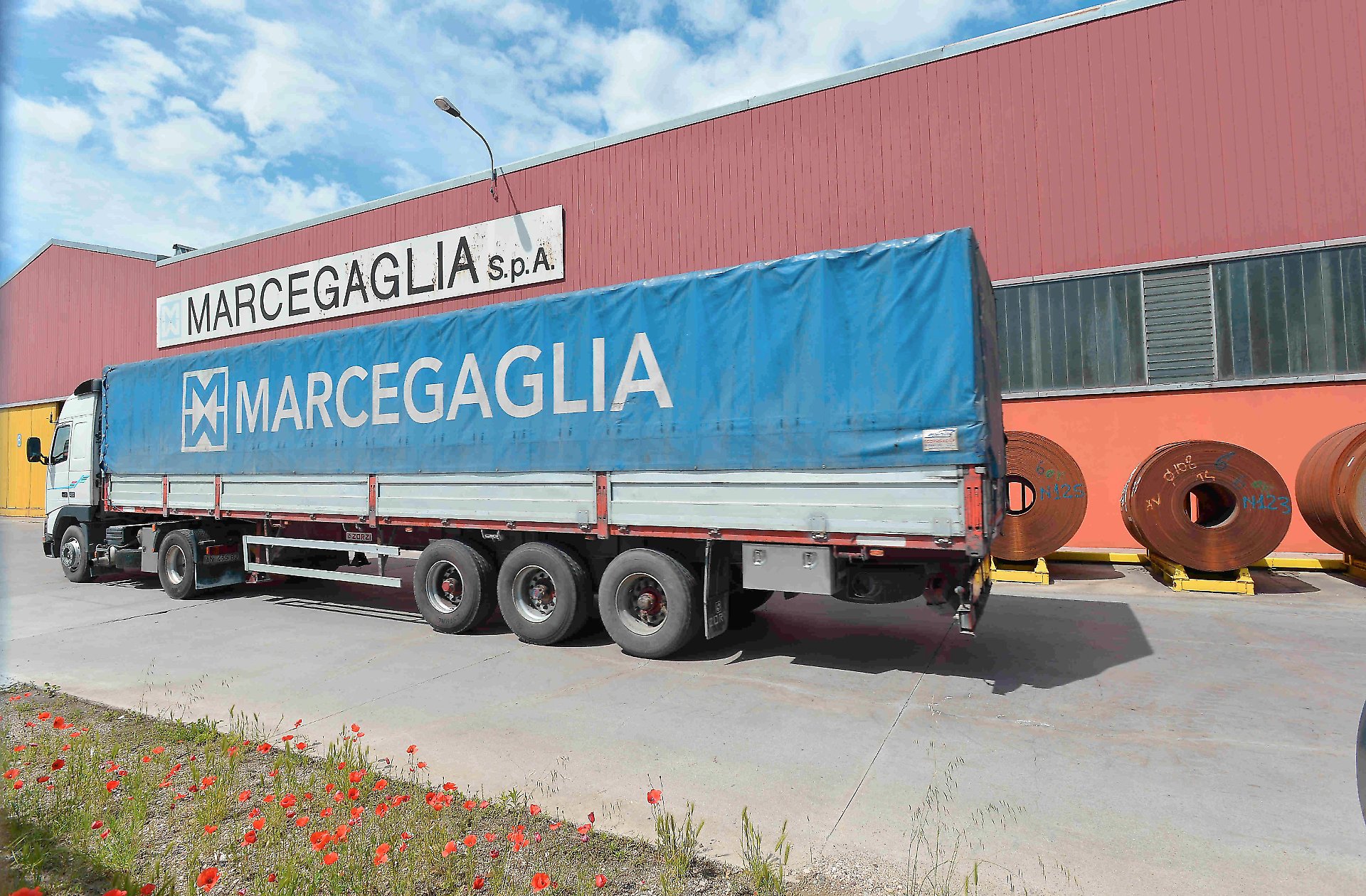
Italian re-roller Marcegaglia has agreed to acquire Outokumpu’s Long Products division for €228 million ($228.1m). The transaction, which represents Marcegaglia’s first foray into steelmaking, should be completed by the end of the year.
The deal includes an electric arc furnace mill for specialty steels, a wire rod rolling plant and bar production plant in Sheffield, UK, a bar production plant in Richburg, US, and a wire rod mill in Fagersta, Sweden. The transaction does not include Outokumpu Long Products AB operations in Degerfors and Storfors, Sweden.
In 2021, the Long Products division achieved revenue of €810m, with Ebitda of €47m. It employs about 700 workers.
Marcegaglia, one of the world’s largest steel processing companies, is therefore taking its first step towards becoming a steel producer, thanks to a partial upstream integration of its specialty steel re-rolling business. President Antonio Marcegaglia tells Kallanish the move is aimed at boosting its special steels business production range, shortening the supply chain, and reaching international markets in Europe and North America with a competitive product offering.
Outokumpu now intends to focus on its core business of flat stainless steel products. The sales generated by Long Products accounted for approximately 8% of the Outokumpu Group’s revenue in 2021.

Decarbonisation needs net-zero market, production support: UK Steel
To support steelmaking decarbonisation and prevent offshoring, the UK government must create a net-zero steel market, using measures such as a Carbon Border Adjustment Mechanism (CBAM), as well as provide direct support for net-zero production. So says UK Steel.
The net-zero steel market approach is similar to the automotive market, where the government has intervened to ban the sale of new internal combustion vehicles from 2030. Policy recommendations include CBAM, product standards, and green public procurement.
The direct net-zero steel production support mirrors the approach taken for the power sector, where renewable energy generators are provided with a guaranteed price via a levy on energy consumers. Examples of this include co-investment in significant asset and infrastructure changes before the end of their natural lifespan, R&D funding, and support for hydrogen production and infrastructure, UK Steel says in a new report on its vision for the steel industry’s net-zero transition.
There are significant growth opportunities, with UK demand for finished steel forecasted to grow from 9.4 million tonnes in 2015 to 11mt in 2030. This represents a 6.8mt/£3.8 billion ($4.49 billion) a year opportunity for the UK industry, UK Steel observes in the report sent to Kallanish.
However, producing steel with net-zero emissions is significantly more expensive than traditional alternatives. “The cost of emitting carbon has not yet been internalised within the cost of steel and prevents companies from investing in decarbonisation because there is no method of receiving a return on the additional CAPEX and OPEX … required,” UK Steel points out.
The steel sector has two key targets. One is the government’s 2050 Net Zero target, which could require the steel sector to reduce its emissions by over 95%. The other is the Climate Change Committee’s 6th Carbon Budget for 2033-37, which includes a recommendation for all ore-based steelmaking to be near zero emission by 2035.
There are two main technology routes available with a decarbonisation target of 2035: electrification and CCUS. Both can be implemented by 2035 or even sooner if the right policy framework and investment support are in place. Immediate policy requirements are parity of industrial electricity prices, energy efficiency funding, improved scrap utilisation and quality, and R&D funding. CBAM, green public procurement and carbon pricing should then be implemented from 2026.
For the sector to further decarbonise beyond 2035, technologies such as hydrogen-based steelmaking would need to become a feasible option, UK Steel concludes.
Adam Smith Poland

Italian coil market shows recovery signs
While some Italian coil producers are halting sales this week, others are beginning to say prices may increase. This is mainly due to lower production and several stoppages in Italy starting from next week until the last week of August.
Against the backdrop of the downturn in flat steel products in Europe, coil prices seem to have reached bottom. Italian hot rolled coil values are stable week-on-week but demand remains subdued, market participants tell Kallanish.
In Italy, Acciaierie d’Italia, the joint venture between ArcelorMittal and state-owned Invitalia, is shutting down blast furnace no.2 and restarting it at the end of August. Arvedi will also idle production starting next week, although the company has refused to comment.
Over the past two days, however, the Italian market has become more dynamic, as large buyers seem to be returning to a buying mood. Optimism is slowly spreading and if mills hike offers, sources believe they will be successful in stopping the drop in sales prices.
Service centres have not increased their HRC purchases, but some demand is being registered for hot-dipped galvanised coil, although for the usual small tonnages. Italian HRC contracts remain at €750-780/tonne ($700.4-780.5) base ex-works, with lead times of end-July. HDG values start at €900/t base ex-works but this price is also sometimes offered delivered, sources suggest.
Natalia Capra France