


UK says antidumping measures on rebar from China should be removed
The UK government has proposed that the antidumping measures on rebar from China are removed to meet demand from the construction industry.
In its initial findings, the UK’s Trade Remedies Authority has proposed July 13 that existing antidumping measures on imports of Steel Concrete Reinforcement Bars, also called High Fatigue Performance rebar, from China should be revoked.
Keeping them “would not be in the economic interests of the UK” due to high demand and the fall in supply from Russia, Belarus and Ukraine in the meantime, according to the TRA.
HFP rebars are mainly used in the construction industry. The industry has been rebounding since the pandemic.
In 2020-21, 27% of total rebar imports came from Belarus, Russia and Ukraine. These imports are likely to drop substantially due to the Russian invasion of Ukraine and the resulting sanctions.
The antidumping measures were imposed back in July 2016 by the European Commission when the UK was still a part of the EU. This is the transitioned measure that was subject to the TRA’s transition review.
The EC allowed the EU measure to expire on July 29, 2021, without review.
“We have a duty to weigh up the impact of dumping on UK producers against the broader effects on the UK economy of imposing tariffs,” TRA Chief Executive Oliver Griffiths said.
“Our judgement is that the impact on the British economy of higher prices would significantly outweigh the impact on the sole UK producer of rebar of removing tariffs on Chinese imports,” he said.
Following the July 13 publication, there will be a 30-day period in which interested parties can comment on the report. The TRA will then consider and produce a Final Recommendation, which will be sent to the Secretary of State for International Trade who will make the final decision on whether to uphold the TRA’s recommendation.
UK Steel reaction
UK Steel, the association that represents the country’s steel producers, told S&P Global Commodity Insights July 7 that it will present “concrete evidence to Government and the TRA demonstrating that it would be an unforgivable error to uphold such a recommendation that would cause huge damage to UK steel industry.”
The association said the UK rebar market is amply supplied both from domestic production as well as from imports, half of which are from the EU, but also a wide array of other origins including Turkey, Algeria and India, “so it is truly bewildering as to how the TRA concluded that UK supply would be constrained but for dumped steel from China.”
China is currently exempt from safeguards on rebar as it is considered a developing country whose exports to the UK fall below the 3% threshold, a reason why it was important to keep the antidumping measures in place on this product, according to the association.
The main rebar producer in the UK is Celsa UK and Liberty Steel UK also makes rebar, but both only started producing from the end of 2020, whereas the injury period for this investigation was since 2017. Thus, they were not fully considered for the purposes of this review, UK Steel told S&P Global.
In 2021, the UK imported 35% of its rebar from Portugal, 14% from Spain, 13% Russia, 11% from Algeria and 9% from Turkey, according to UK Steel data. China used to be one of the main rebar exporters before the introduction of the measures in 2016, but after 2016 import volumes from China have clearly dropped.
UK HFP rebar imports:
(all tariff codes listed in the measure taken at an 8 digit level)
| 2014 | 2015 | 2016 | 2017 | 2018 | 2019 | 2020 | 2021 | |
| Imports from China (mt) | 262,105 | 372,659 | 1,285 | 959 | 1,974 | 6,832 | 5,203 | 223 |
| Total rebar imports (mt) | 551,559 | 590,370 | 390,006 | 422,976 | 491,250 | 449,061 | 329,505 | 143,966 |
| Rebar imports from China as % of total imports | 47.52% | 63.12% | 0.33% | 0.23% | 0.40% | 1.52% | 1.58% | 0.15% |
Source: UK Trade Data (HMRC)
China accounts for 78% of global rebar production and just 2% of its spare rebar capacity could meet the entirety of the UK’s demand requirements, at a time when Chinese domestic steel demand is weakening, according to UK Steel.
China rebar futures hit lows
In China, the most actively traded October rebar contract on the Shanghai Futures Exchange was at Yuan 3,910/mt ($581/mt) on July 12, down Yuan 286/mt from July 8, according to the Platts assessment by S&P Global. The price hit a low of Yuan 3,891/mt during the trading session — the lowest since December 2020.
In the seaborne rebar market, most participants were holding a wait-and-see stance after China rebar futures hit a 19-month low amid high warehouse stock levels in Hong Kong and Singapore.
Platts assessed the 16-32 mm BS4449 Grade 500 rebar price down $10/mt at $639/mt CFR Southeast Asia, while Chinese export 16-20 mm diameter BS500B grade rebar slipped $10/mt to $628/mt FOB China from July 8, according to data from S&P Global.
— Annalisa Villa

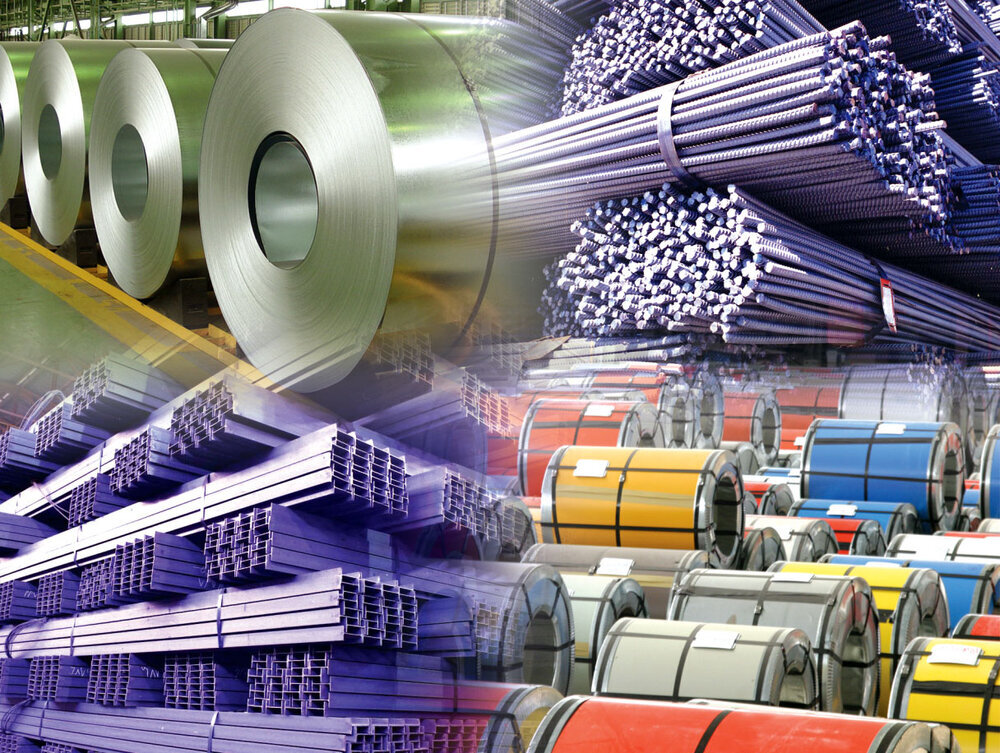
EU long steel demand remains weak, but mills target hikes
European domestic steel sections prices remained largely stable week on week, as buyers held back from booking orders amid slow end-user demand, sources said.
Platts’ European medium sections price (category 1, S235 JR) assessment was at Eur1,200/mt delivered July 13, unchanged week on week.
One large European mill was heard by multiple buyers to target a minimum Eur60/mt hike on long steel prices amid rising energy costs and ferrous scrap prices.
In Northern Europe, the Platts July assessment for domestic shredded scrap was at Eur360/mt delivered to the mill July 11, down sharply from Eur397.50/mt in June but up from expectations of Eur290-300/mt delivered in early July.
“We are in a wait-and-see mode [before buying] to see end-user demand as there are holidays now in Belgium and next week in the Netherlands,” a Benelux-based distributor said, citing a lowest workable level at Eur1,180/mt delivered for medium sections, up from Eur1,150/mt delivered one week earlier.
A second Benelux-based distributor cited a slightly higher workable level at Eur1,180-1,200/mt delivered.
One European mill source said around Eur1,200/mt delivered was now workable, following recent sales around Eur1,150-1,180/mt delivered.
“I believe prices have bottomed out and that stocks levels are low, but while there is some uncertainty on demand, I think there will be some buying activity,” the mill source added.
A second European mill source cited lower medium sections offers at Eur1,240-1,250/mt delivered, down from 1,250-1,300/mt delivered July 6.
“We see the same low demand and negative sentiment — I’m not sure when demand will return, but buyers are underestimating the reduction in the number of offers when they return as the mill stoppages will be massive,” the second mill source said.
Multiple producers reported upcoming summer maintenance stoppages of varying lengths, including as long as seven weeks, and further capacity utilization reductions in order to mitigate the hike in energy costs. Low water levels on key steel trading waterways such as the Rhine may also affect mill capacity utilization rates, as barges carrying key raw materials cannot be loaded to capacity, sources said.
Elsewhere, Northwest European domestic rebar prices also softened in the week to July 13.
The assessment of Platts’ TSI Northwest Europe Rebar was down Eur5/mt to Eur1,015/mt ex-works July 13.
German mills were heard to offer rebar at Eur1,020/mt EXW, while a French mill was heard to offer around Eur1,010/mt delivered Benelux, down week on week from Eur1,045/mt delivered July 6, but up Eur985-990/mt delivered July 7-8.
Import rebar offers to Europe were heard at Eur830-850/mt CFR from Turkey for the EU tariff-free import quota, but buyers were heard to not be so keen to book so far forward, with the euro-US dollar exchange rate also reducing the attractiveness of imports. Offers from Algeria were also heard at a similar price range of Eur830-850/mt CFR.
Platts assessed the euro at $1.0086 at 4:30 pm London time July 13, up from $1.0070 July 12.
An Italian mill was expected to raise domestic rebar prices by around Eur40/mt higher to Eur900/mt EXW Italy July 14, sources said.
Platts’ assessment for Southern European shredded scrap was at Eur350/mt delivered to the mill July 11, down sharply from Eur400/mt delivered in July. However, Italian mill sources cited higher prices July 12, with shredded scrap rising to Eur370-380/mt delivered.
— Viral Shah, Maria Tanatar

Northern European HRC prices stable, market awaits restocking
Domestic prices for hot-rolled coil in Northern Europe were stable on July 13 as market activity remained low with restocking expected by end-July.
Platts assessed HRC in Northern Europe at Eur855/mt ex-works Ruhr July 13, stable day on day, according to S&P Global Commodity Insights data.
Four buyers and one steelmaker reported tradable value for domestic HRC at Eur850-860/mt ex-works Ruhr.
One of the buyers also reported a deal settled at Eur850/mt ex-works Ruhr and said that a Northern European producer has increased offers to Eur900/mt ex-works Northern Europe.
Anticipated restocking combined with production cuts implemented by EU steelmakers and some revival of steel consumption by carmakers are likely to support the prices. Some market sources, however, questioned the extent of the demand recovery.
“Demand is better, but it is moving up from such a low point that it is hardly going to reach normal rates this year,” a Northern European distributor said.
“Market activity remains weak at the moment, any improvement is slow, and expected restocking has not started yet,” a producer said.
Other sources, however, believed that taking into account reduced steel output, longer summer maintenance of steelmakers and equipment stoppages, the buyers will have to restock for September no later than the end of July, supporting domestic price recovery.
In addition, interest in imported HRC was limited due to long lead times.
Deals for HRC from Asia were heard at Eur770-780/mt CFR Antwerp.
HRC in Southern Europe was assessed at Eur780/mt ex-works Italy July 13, up Eur5 day on day.
Italian steelmakers were offering HRC at Eur800/mt ex-works, with buyers estimating achievable prices at Eur770-790/mt ex-works.
— Maria Tanatar

European cold-rolled, hot-dipped galvanized coil prices fall on low demand
Domestic prices for cold-rolled and hot-dipped galvanized coil moved down in Europe in the week ended July 13 due to limited demand.
Platts assessed CRC in Northern Europe at Eur950/mt ex-works Ruhr and assessed HDG in the region at Eur1,015/mt ex-works Ruhr, down Eur25 and Eur5 on the week, respectively, according to S&P Global Commodity Insights data.
Market sources estimated achievable prices for CRC at Eur940-970/mt ex-works Ruhr.
One source also said that if a producer got an opportunity to sell 5,000 mt, prices could move down to around Eur900/mt ex-works.
Domestic HRC prices have been heard in a wide range from Eur980/mt ex-works Northern Europe to Eur1,050/mt ex-works Northern Europe.
A producer said that a deal for HDG has been settled at Eur1,000/mt delivered Northern Europe, the equivalent of Eur980/mt ex-works. Another trader confirmed the price as a tradable value.
Another steelmaker reported a transaction at Eur1,025/mt ex-works Northern Europe and estimated achievable prices at Eur1,020-1,050/mt ex-works.
Tradable values were estimated within a Eur1,020-1,060/mt ex-works range by three sources.
Trading activity remained muted despite anticipation that restocking would start in July. Production cuts across Europe, as well as some reported demand recovery from the automotive industry, was expected to support domestic downstream coil prices.
“Automotive industry is definitely doing better, they have enough components to produce cars so they need steel. At least now,” a German source said. “But the recovery will not bring demand anywhere close to normal level, unfortunately.”
Offers of imported CRC in Northern Europe have been heard at Eur850/mt CFR Antwerp.
In South Europe, Platts assessed CRC at Eur885/mt ex-works Italy July 13, down by Eur15 week on week. HDG was assessed at Eur915/mt ex-works Southern Europe, down by Eur5 week on week.
Tradable values for domestic CRC have been heard at Eur880-890/mt ex-works Italy, while HDG was heard at Eur900-930/mt ex-works Italy.
— Maria Tanatar
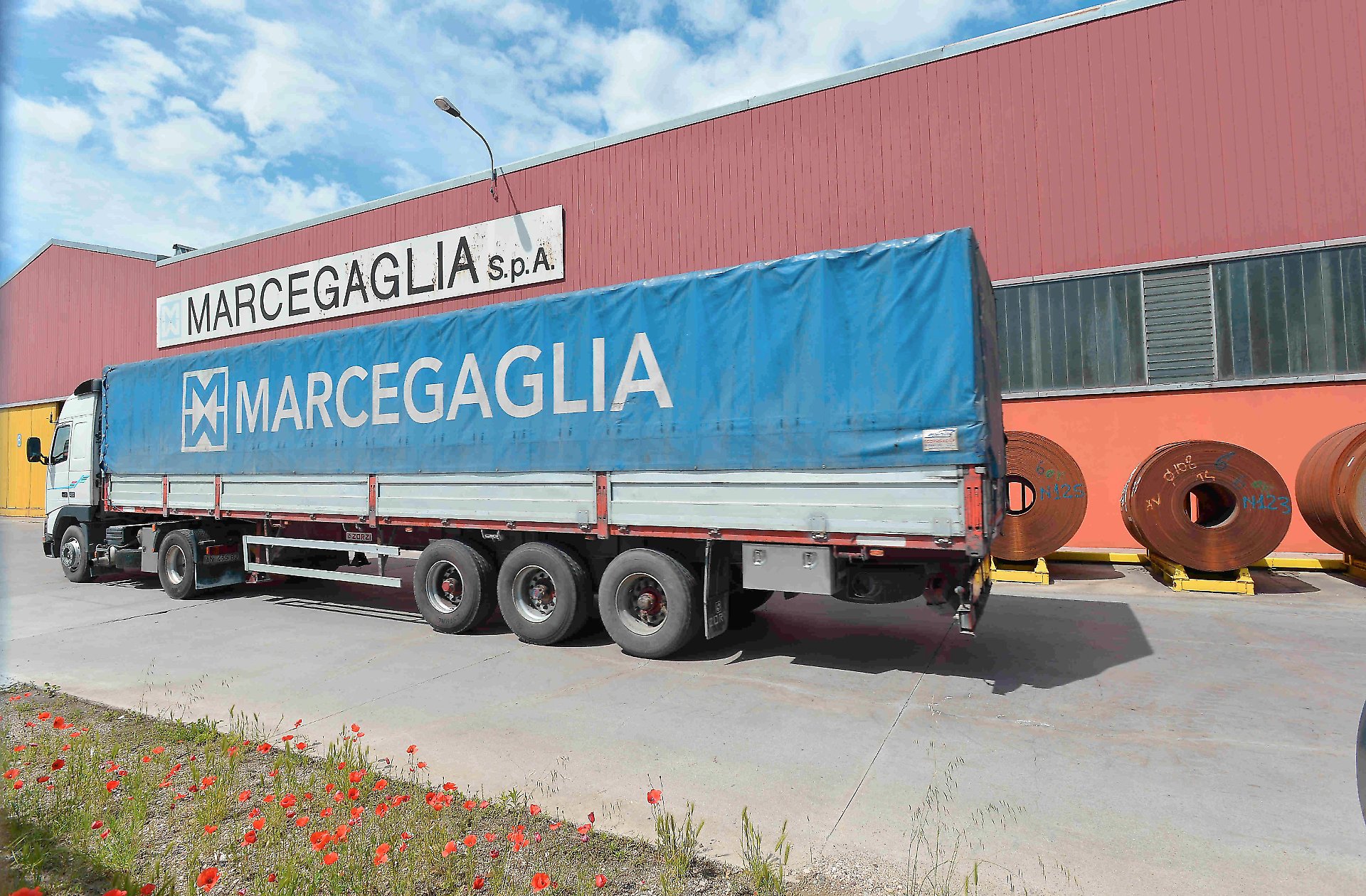
Italian re-roller Marcegaglia enters crude steel market with Outokumpu stainless longs buy
Re-roller Marcegaglia Group has agreed to acquire most of the stainless-steel long products division of Finnish steelmaker Outokumpu, the two companies said in a statement July 13, in the Italian group’s first foray into producing crude steel.
The transaction will see Marcegaglia take over Outokumpu’s 450,000 mt/year electric arc furnace mill for specialty steels in Sheffield, UK, as well as a wire rod rolling plant and bar production facility at the same site. It will also take on a US bar production plant in Richburg, South Carolina, and wire rod hot rolling and drawn wire production assets in Fagersta, Sweden.
The Eur228 million ($228.48 million) deal does not include Outokumpu Long Products AB operations in Degerfors and Storfors, Sweden, which will continue operations under Outokumpu, which will evaluate their future, the Finnish group said.
The parties expect to complete the transaction by the end of this year, following clearance from competition authorities.
“Thanks to this important transformational investment, our group further strengthens its special steels business through two strategic lines,” Antonio and Emma Marcegaglia, respective president and vice president of Marcegaglia, said in the statement. “The first concerns stainless steel flat products, where a partial upstream integration of the value chain is achieved with a view to shortening and stabilizing supply chains; the second one, significantly expanding the production of long stainless-steel products and further enriching the range of products and types of steels. The operation is further aimed at consolidating our position in international markets by acquiring additional market share in both Europe and North America.”
For the first time in its history, Marcegaglia is investing in primary steel production while Outokumpu will now focus on its core business of flat stainless steel products.
“This divestment marks the accomplishment of the turnaround program for the long products business in the past two years…The sale is a natural step for Outokumpu in line with our strategy to focus on our core business, stainless steel flat products,” Heikki Malinen, President and CEO at Outokumpu, said.
Long products sales accounted for approximately 8% of Outokumpu’s Eur810 million of sales in 2021.
Investment bank Jefferies said it viewed the transaction as positive as it completes the exit of a non-core business at an attractive multiple (4.9 times 2021 adjusted EBITDA) considering the entire stainless complex over-earned in 2021.
Monthly alloy surcharges on nickel-bearing stainless steel products in Europe moved lower for the second successive month in July as nickel prices retreated from an unprecedented price spike in March. Outokumpu’s alloy surcharge for 304-grade cold drawn bars stood at Eur4,723/mt for July, down from Eur5,224/mt in June and from Eur5,485/mt in May
— Annalisa Villa
European steel hollow sections prices stable with HRC costs at ‘rock bottom’
Prices for steel hollow sections in Northern and Southern Europe were stable in the week to Wednesday July 13, with market sources believing there could be limited restocking of the product at the end of the month.
Fastmarkets’ weekly price assessment for steel sections (medium), domestic, delivered Northern Europe, was €1,140-1,200 ($1,144-1,204) per tonne on Wednesday, stable week on week.
Traders believed that costs for hot-rolled coil, the feedstock for sections production, have reached rock-bottom and they expected the HRC market to stabilize this month.
Fastmarkets’ daily calculation of its steel hot-rolled coil index, domestic, exw Northern Europe, was €851.25 per tonne on Wednesday, up by €5 per tonne from €846.25 per tonne a week earlier.
This has led to increased sections trading activity this week, with the potential for some limited re-stocking at the end of July.
One trader hoped that the flattening of market levels for HRC would lead to more stable sections prices, so that distributors could start to restock.
“I think stock levels are really low, so it is necessary that we start buying,” the trader said. “With uncertain price levels in the past few weeks, it was impossible to buy. Now, it seems that there is more stability.”
Another trader said that business activity was nil this week, with nothing changing week on week. “Mills are calling [and using social media] and emails, desperate for orders,” he added.
Many mills have stopped or cut their production activity due to the seasonal summer slowdown, but sources shared concerns that such shutdowns and output reductions may last longer, and even into this year’s fourth quarter.
Fastmarkets’ weekly price assessment for steel sections (medium), domestic, delivered Southern Europe, was €1,140-1,180 per tonne on Wednesday, unchanged from one week earlier.
Market sources also expressed concerns about the possibility of Russian natural gas supplies to Germany being cut off permanently after the Baltic Sea pipeline Nord Stream 1 was shut down for 10 days for annual maintenance work.
One market participant said that if Russia’s state gas supplier, Gazprom, did not reopen the pipeline it would create a huge problem for electric-arc furnace-based and basic oxygen furnace-based mills that rely on natural gas.
“Some producers might be able to switch over directly to electricity, or maybe to oil,” he said, “but most producers are absolutely hanging on gas production. They can’t switch over in a very short time – this will need time to rebuild. This will take years.”
The restart of the Nord Stream 1 pipeline was scheduled for July 21.
Published by: Holly Chant


Market eyes post-summer restocking, reduced Russian supply: Irepas
Long products demand has disappeared almost everywhere and prices are down, forcing mills to curb output, with the market unlikely to improve in July or August, according to the International Rebar Exporters and Producers Association (Irepas). Given the low inventories, however, buyers will need to restock at some point, probably end-August or early September.
“It has become very complicated nowadays to use the word global when talking about the global long steel products market. It seems like there are different globes,” Irepas says in its July short-range outlook seen by Kallanish. “Steel mills in China are barely making money, while volumes are being suppressed both politically and by business decisions.”
In the EU, however, demand has rebounded amid the risk of energy shortages in the fourth quarter and is higher than usual in the holiday season. EU demand and prices are probably higher than anywhere else, but safeguard measures are preventing necessary imports. Other areas in the world have a big cost advantage as steel products are much lower in price and are giving benefit also to downstream industry and investors, Irepas observes.
US demand is also firm but rebar prices, which have until now held their ground, are expected to come down. “With the expectation that all prices will come down, future sales have become impossible,” Irepas says. Import cost prices have meanwhile started to go up in parallel with scrap prices. “In short, the US has become an even more difficult market for imports. Naturally, domestic mills with faster deliveries dominate the market,” it adds.
Although scrap prices have rebounded, meanwhile, the market remains very quiet.
“The low inventory levels in the market keep steel mills’ hopes alive for the fourth quarter, in addition to the news that Russian mills have reduced their export volumes due to their very strong local currency. Prices have started to move from very low and unhealthy levels to more sustainable levels,” Irepas concludes.
Adam Smith Poland


German car production keeps increasing
Output of passenger cars by German carmakers has increased notably, Kallanish learns from industry association VDA.
At 302,500 units, June brought a 19% output increase over the corresponding month of 2021, and was the consecutive month to see a year-on-year increase. This is an apparent change in trend, as production in January-June, at 1,685,800 units, was still 3% below the first six months of 2021.
VDA does not state if the recent rebound can be attributed to increased activity related to better supply of semiconductors. The recent increase is hardly surprising if seen against a base effect of very low activity last year, due to both the coronavirus plus the shortage of semiconductors.
VDA therefore suggests to take the pre-Covid year of 2019 as a comparison, and now the figure gets inverted: June 2022 is still 19% below June 2019, and the first half of 2022 is a considerable 32% below H1 2019.
Still, the recent uptick in production could anticipate a trend not yet registered in domestic sales of new cars. At 224,600 in June, new registrations were 18% below June 2021, and 33% below June 2019.
Christian Koehl Germany

Tata Europe launches low-CO2 ‘Zeremis’ steel
Tata Steel Nederland has launched “Zeremis Carbon Lite”, a steel offer with an allocated carbon footprint reduction of up to 100%, Kallanish learns.
The lower CO2 intensity is based on CO2 savings realised within Tata Steel Nederland since 2018 and is certified by independent assurance expert DNV, Tata notes. With the new product, the company says it meets a growing demand for low-CO2 steel, for instance by consumer-facing industries such as automotive, packaging and white goods.
“We see an increasing interest in more environmentally-friendly produced steel in the markets we serve. This is most keen in our consumer-facing customers,” says Tata Steel Nederland chief executive Hans van den Berg.
The initial offering of Zeremis Carbon Lite is a 30% reduction in CO2 intensity benchmarked against the European average for steel products, for example hot rolled coil or cold rolled coil. If customers have higher CO2 emission reduction targets, additional CO2 reduction certificates can be allocated to ensure these targets are met. This even includes CO2 neutral targets, the company claims.
The independent assurance by DNV is designed to ensure that Tata Steel’s methodology used to calculate CO2 emission savings is robust, and that the CO2 emission savings are calculated and allocated in an appropriate way. DNV performed a limited assurance engagement in accordance with the International Standard on Assurance Engagements 3000, Tata says.
Christian Koehl Germany