


Will Germany’s likely PHEV grant removal hasten the demise of this technology in Europe?
PHEVs continue to have a part to play in Europe’s roadmap to zero-emission vehicle sales, but one that looks likely to shrink from next year

It looks increasingly likely that revisions to Germany’s government grants for the purchase of a plug-in car will result in the abolition of the plug-in hybrid (PHEV) grant from the start of 2023. At present this is worth a maximum of €6,750. To qualify for this amount, cars need to have a homologated electric-only range of 60km and should have a net list price of no more than €40,000. The grant is made up of €4,500 from the government plus a €2,250 contribution from the carmaker. PHEVs costing between €40,000 and €65,000 can receive a maximum grant of €5,625.
This allowance, along with an even more valuable BEV grant, was part of a significantly boosted support package introduced at the onset of the COVID-19 pandemic as a measure to both maintain car demand and skew it towards environmentally friendly vehicles. The resulting dramatic shift in PHEV demand can be seen in the chart below.

The number of PHEV models available on the German market has steadily grown from an average of 25 in the years 2017 to 2019, to 52 in 2020 and reached the figure of 80 in 2021 which is the figure today. This represents a huge investment in technology for the sector with the German brands being overweight on the share of total sales. In 2021 they accounted for 60% of all PHEVs sold in the country, at 182,000 units. PHEV sales in Germany, driven by the high mix of premium vehicles and the attractive incentives, made up one-third of the million PHEV sales that took place Europe-wide in 2021.
So not only is the German PHEV segment particularly important to German brands, but it is also fundamental to developing critical mass for this technology across the whole region. Were it to collapse, the rules of the game would change, and not only would investment in new PHEV models decline (or even stop), but existing models could see their lifecycle shortened as sales volumes fall below economic levels.
Supported by incentives, focused on the premium end of the market, and able to achieve good CO2 ratings, PHEVs have fallen into the tranche of vehicles that have tended to be prioritised during the semiconductor chip crisis as they commanded strong price premia and returned good profits for carmakers while helping keep down average emissions. But as normality gradually returns to the component supply chain and the inexorable shift to BEV-only platforms continues, PHEVs will inevitably be squeezed. That they have a transitory nature has always been the view of LMC, and our Europe-wide PHEV forecast indicates that PHEV demand is at, or close to, peak share and will slowly decline over time, eventually becoming redundant or being forced out of existence by ZEV regulation from 2030 onward, depending on the market concerned.
Germany isn’t the only market to reduce its support for PHEVs and focus on zero-emission vehicles. The UK did the same several years ago, as did Ireland from the start of this year. Elsewhere, PHEV grants tend to be significantly smaller than those available for BEVs and are generally seen as low-hanging fruit as governments look to roll back expenditure on support for vehicles fitted with plug-in technologies as they become commonplace.
So, we’ll be trimming our Germany PHEV forecast for the next update and will be likely setting a steeper decline curve for PHEVs across Europe. This isn’t just because the biggest market for PHEVs is changing the rules, but also because manufacturing price pressure on PHEVs and BEVs is only going in one direction as battery material costs escalate. This is pertinent, as gone are the days when PHEV batteries were a fraction of the size of BEV batteries. To fulfil electric range requirements, they have had to be fitted with batteries up to 30kWh in capacity. Not so long ago this might be seen as a typical BEV battery size. The increased production costs for PHEVs only make them more susceptible to any downward shift in the incentive framework that currently helps to support their market position.
Members of the German government arguing in favour of the PHEV grant removal claim that PHEVs are established in the market and no longer need the grant. We’re not convinced about that. The best-selling PHEV model in 2021 in Germany was Ford’s Kuga. The Kuga has a list price starting from €43,500 depending on trim level. The PHEV grant of up to €5,625 represents 13% of that figure and removing it must, in our view, have a significant impact on the addressable audience for the Kuga PHEV. For large premium vehicles, the grant is less important as a share of the list price, but much of the market lies in the €40,000 to €65,000 range. Even a €65,000 vehicle will be facing a 9% price increase when the grant is removed.
PHEVs continue to have a part to play in Europe’s roadmap to zero-emission vehicle sales, but one that looks likely to shrink from next year.
AL BEDWELL, DIRECTOR, GLOBAL POWERTRAIN 28 JULY 2022

Tata Steel revamps Trostre annealing line
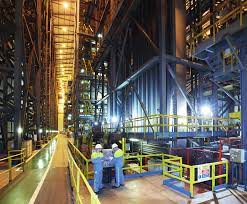
Tata Steel has upgraded the Continuous Annealing Process Line (CAPL) at its Trostre plant in Wales for £6 million ($7.3m), allowing it to run faster and for longer, removing a key bottleneck, the steelmaker says.
The CAPL, which processes 70% of the plant’s output, softens the strip steels before they go on to be made into cans for food, petfood, aerosols and paint. The revamp, carried out by Danieli, replaced all the drives with a state-of-the-art new system.
“Since the line was commissioned, our shift production teams using the new control systems have responded with their usual passion and expertise by breaking the shift record twice in a short space of time. The shift and daily records are now constantly in their sights,” Trostre works manager Joe Gallacher says in a note seen by Kallanish.
Adam Smith Poland


Some German rebar benders return to speculating
As rebar prices have corrected to realistic levels over the past two months, some distributors in Germany are seen jumping the gun with lowering their offers faster than the mills.
Distributors betting on falling prices is a familiar game in Germany in relatively normal cycles, but appears questionable amid the current geopolitical and economic turmoil. In June, base prices from domestic mills were still at around €900/tonne ($918), translating to €1,165/t delivered, but have since fallen by another €100-150.
According to one manager, some benders on the sell side started offering material, cut and bent, for prices at between €1,100/t and €1,200/t already in June. “It is like it used to be over the years,” one manager describes his impression to Kallanish. “They bank on prices falling, want to utilise their production, and outsell the material they bought at friendlier prices at the end of last year,” he believes.
Meanwhile, some German mills are nearing the €1,000/t threshold with their latest prices. The lowest German value is reported by a southwestern observer at “just above €1,000 delivered”, which points to a base price of €835/t, undercutting the €850/t cited even by many big buyers.
Christian Koehl Germany
Inflation slows demand, gas shortages threaten Europe: ArcelorMittal
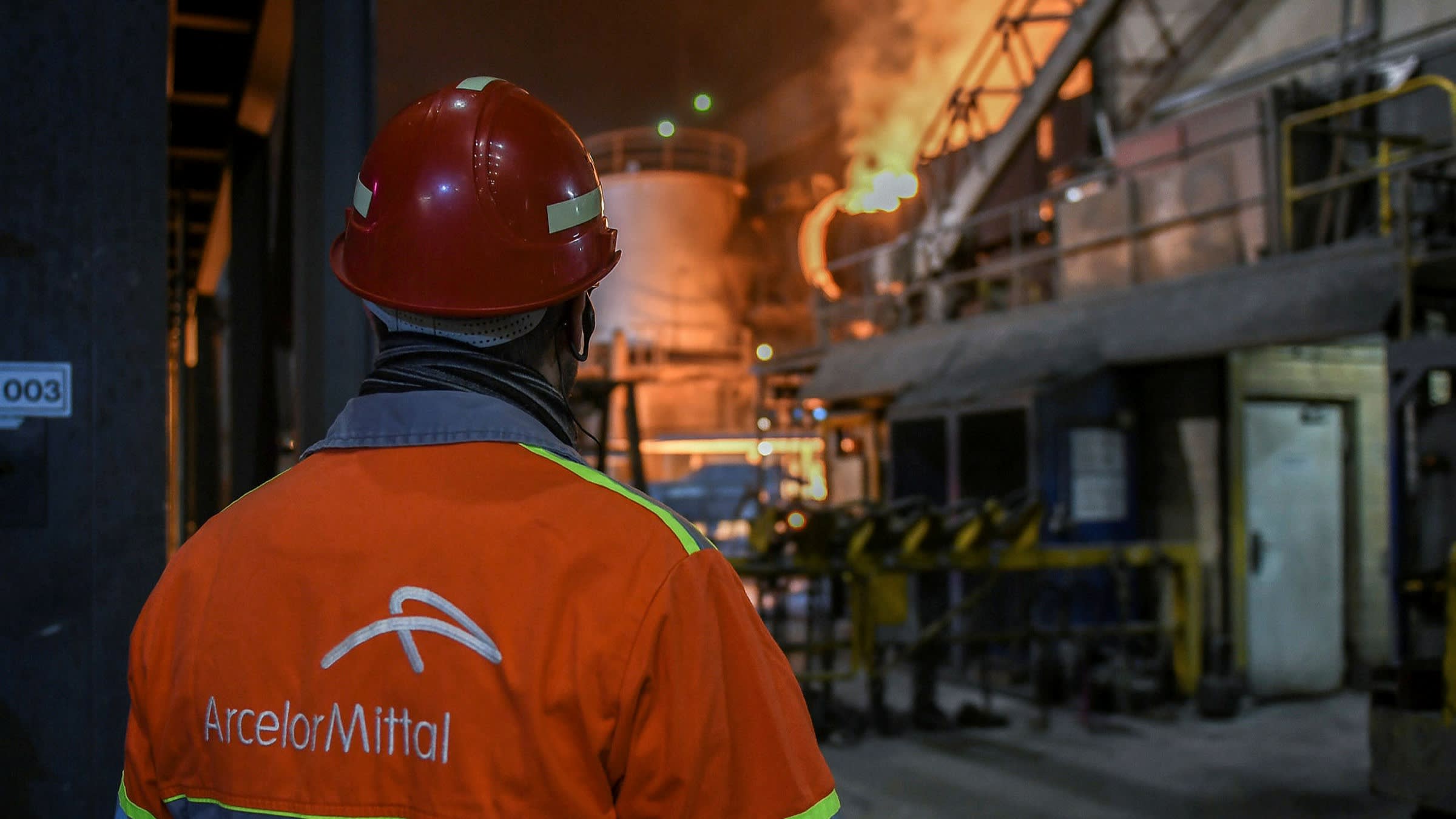
ArcelorMittal says building inflationary pressure is hampering consumer and business confidence, leading to a slowdown in real demand, which has been exacerbated by destocking activity. Potential energy supply restrictions present a clear but still uncertain risk to European economic activity.
The slowdown has resulted in apparent demand falling below real demand levels, with customers in wait-and-see mode ahead of a seasonally weak Q3. Steel prices have meanwhile declined faster than raw materials, leading to a normalisation of spreads, the steelmaking group observes.
The gas supply risks and Covid-19 lockdowns in China present downside risks to ArcelorMittal’s forecasts published in Q1, Kallanish notes. The firm says it is in a strong position to navigate the gas situation given its predominantly blast furnace-based capacity across multiple sites in nine EU countries.
ArcelorMittal saw steel shipments fall 11% on-year in the second quarter to 14.4 million tonnes. These were also down 6% on Q1. This was primarily due to the impact of the Ukraine war and weaker European demand (see separate story).
Adam Smith Poland

Northwest European rebar buyers go for imports
Import offers for rebar have gained attraction among northwest European buyers, with increasing transactions being reported.
“From Algeria, you will get a decent range of bar material of various sizes delivered to your doorstep for €800/tonne [$816], I was told,” a manager of a big German distributor relates. His company also has connections with Algeria and is contemplating an import deal, he tells Kallanish. Orders placed now are expected to be delivered in October/November, he adds.
While this demands more patience than the 2-3 weeks of lead time for straight bar from domestic mills, some buyers feel more at ease with the assumed modest margin of €10-20/t offered by Algerian mills. Against that, they believe German mills are still trying to maintain unsustainable profit levels. One other buyer says his company decided to boycott German mills in June for their price levels that were still at €1,150/t delivered – on base prices of around €900.
German mills have since conceded another €100-150, but Turkish material can still be obtained for €100 less, according to the buyer. “Some [Turkish] offers are easily under €800 cif Rotterdam,” he states.
According to the first manager, not many German benders are prone to buying from imports. Lately, Oman has become another source option in the Middle East. Oman’s products are licensed for Germany, and at least one big bender group recently ordered from there. The manager also tested the water recently “but we could not yet find an accord on the price”, he observes.
Buyers also point at EU origins like Poland and Italy as alternatives. According to an Austrian source, offers from Italian mills recently stood at €825/t delivered Austria, when the Italian domestic ex-works price, including size extras, was still below €800. An attempt by mills to lift to €850 “did not succeed for lack of demand”, he says, but this may have changed with the latest defiant hike attempts in Italy.
Christian Koehl Germany

European downstream flat steel prices stabilize in slow market
European cold-rolled and hot-dipped galvanized coil prices were largely unchanged in the week ended July 27, with very little trading in the market, Fastmarkets heard. European buyers showed little interest in purchasing CRC or HDG due to still-high stocks.
Stockholders and steel-service centers were mainly focused on selling off devaluing stocks rather than buying more tonnages, Fastmarkets heard.
Fastmarkets’ weekly price assessment for steel cold-rolled coil, domestic, exw Northern Europe remained at €950 ($964) per tonne on Wednesday, unchanged from last week.
Producers in the region estimated the workable price level at €950-980 per tonne exw, while buyers were reluctant to pay higher than €950 per tonne exw, Fastmarkets heard.
Fastmarkets’ weekly price assessment for steel cold-rolled coil, domestic, exw Southern Europe was €870-880 per tonne on Wednesday, also stable week on week.
The assessment was a reflection of deals, the lower end of offers and market sources’ estimation of achievable prices.
Transactions were rare in Italy’s market during the reported week, sources said.
Some CRC offers from Indonesia were reported to Southern Europe at €815-830 per tonne cfr during the week, but no fresh transactions were heard. India-origin CRC was available to the region at €830-840 per tonne cfr.
Sources were cautiously optimistic about the post-holiday prospects for downstream flat steel due to likely automotive demand recovery.
Some large car makers in Germany have announced plans to increase production in September, although automotive output is unlikely to return to pre-pandemic levels in the mid-term, sources said.
“I think we can say there is likely to be some normalization [of automotive production] in the fourth quarter of 2022, but all forecasts are very unreliable because, let’s not forget, we have a war going on the middle of Europe [in Russia’s invasion of Ukraine],” a trading source in Belgium said.
Fastmarkets’ weekly price assessment for steel hot-dipped galvanized coil, domestic, exw Northern Europe was unchanged week on week at €1,000-1,020 per tonne on Wednesday.
Some transactions for limited tonnages were reported in Germany at the lower end of the price range during the week.
Fastmarkets’ corresponding weekly price assessment for steel hot-dipped galvanized coil, domestic, exw Southern Europe was €880-890 per tonne on Wednesday, also stable week on week.
Published by: Julia Bolotova

Buyers accept higher rebar prices in Italy, Spain amid surging energy costs
Price ranges for steel rebar widened upward in Spain and Italy in the week ended Wednesday July 27. Energy cost surges, combined with continuing uncertainty around potential energy shortages in the fourth quarter, have made customers more willing to accept higher prices, sources said. Increased demand, in part because of customers re-stocking before mills close for maintenance work over summer, contributed to buyers accepting the higher prices, thus reversing the price downtrend for rebar in Southern Europe.
Italy
Demand remained good in Italy, with some buyers stocking up before the summer holidays begin in August.
Fastmarkets’ price assessment for steel reinforcing bar (rebar), domestic, exw Italy, was €860-910 ($873-924) per tonne on Wednesday, widening upward by €30 per tonne from €860-880 per tonne the previous week.
Although demand was still solid, significant uncertainty remained, Fastmarkets heard.
“Buying is still good this week, but it’s going to decrease day-by-day,” one source said.
The same source, however, said that there was a chance that buyers would continue to re-stock before August closures, in order to avoid new price increases in September.
Potential energy cost rises continued to create uncertainty and fear among mills.
“Rising energy costs will have a big effect on rebar prices,” one market participant told Fastmarkets. “Producers are worried about gas and energy prices in September.”
With that persistent uncertainty, mills were unwilling to accept large-volume orders over longer time periods, Fastmarkets heard.
As a result of this, combined with relatively sluggish demand, some flat steel producers across Europe decided to cut production even more than they would in normal circumstances.
Arvedi in Cremona, for example, will pause all operations through August while Acciaierie d’Italia in Taranto has already paused one of its four blast furnaces, Fastmarket heard.
This reduced production may lead to cost increases across steel products, one source said.
The energy rationing measures proposed by the European Commission on July 20 would add further upward pressure to energy prices, forcing mills to increase prices and potentially cut production, sources told Fastmarkets.
Emergency legislation, intended to protect countries from the possibility of Russia using its control over gas supplies to exert political pressure over the coming months, would enable the European Commission to impose 15% binding gas consumption restrictions on EU countries over the next two years.
Spain
Buyers in Spain have become more accepting of price rises amid surging input costs, Fastmarkets heard.
Fastmarkets’ price assessment for steel reinforcing bar (rebar), domestic, delivered Spain, was €780-810 per tonne on Wednesday, widening upward by €10 per tonne from €780-800 per tonne the previous week.
Demand remained solid with customers re-stocking before maintenance stoppages, Fastmarkets heard.
Spanish mills have begun to raise their prices to compensate for increasing energy costs, sources also told Fastmarkets.
Falling international scrap costs since mid-April have been a major factor in the decline in the rebar market. Scrap prices jumped in early July but corrected in the week to July 27.
Fastmarkets’ daily calculation of the index for steel scrap, HMS 1&2 (80:20 mix), North Europe origin, cfr Turkey, was $351.19 per tonne on July 27, down week-on-week from $382.50 per tonne.
Published by: India-Inés Levy

Stellantis H1 global battery EV sales up 50% on year
Automaker Stellantis’s battery electric vehicle sales rose 50% year on year to 136,000 units in the first half of 2022 due to accelerating sales of low emission vehicles, the company said July 28.
The company was ranked second in BEV sales and LEV sales in the EU market, as well as third in the US LEV market, it said, adding its BEV offering included 20 models, with 28 more to be released through 2024.
To support BEV production, Stellantis said it had confirmed locations for five gigafactories — three in Europe and two in North America — through partnerships with Automotive Cells Company, Samsung SDI and LG Energy Solutions.
Stellantis also secured battery metal supply through agreements for low-carbon lithium hydroxide with Vulcan Energy in Europe and Controlled Thermal Resources in North America.
Higher EV demand has boosted prices of battery raw materials, with Platts seaborne lithium hydroxide assessment up 137% since the start of 2022 to $75,000/mt CIF North Asia on July 27, S&P Global Commodity Insights data showed.
Total shipments down 7.5%
Despite strong BEV sales, Stellantis’s overall consolidated shipments in H1 fell 7.5% year on year to 2.9 million units, mainly due to the impact of unfilled semiconductor orders, it said.
In Enlarged Europe, its largest market, H1 shipments fell 18% to 1.4 million vehicles, primarily due to the semiconductor shortage, although that was partly offset by demand for new vehicles, Stellantis said.
North America shipments were up 9.85% to 959,000 units, due to strong demand for the new Wagoneer/Grand Wagoneer Grand Cherokee L and Chrysler Pacifica, as well as a mid-cycle refresh of the Jeep Compass, it said.
H1 shipments to South America slipped 4.95% to 403,000 units, while consolidated shipments to the Middle East and Africa was steady year n year at 138,000 units.
Shipments to China, India and the Asia Pacific region were up 1.6% to 62,000 units, while shipments of Maserati were down 5.6% to 10,200 vehicles.
Outlook cut further
The automaker lowered its 2022 outlook for Enlarged Europe and North America, with the former now expected to fall 12%, from the previous 2% fall, and the latter to drop 8%, rather than be stable, as expected at the end of Q1.
It also lowered the outlook for South America, where it now expected 2022 shipments to be stable.
At the start of the year, all three regions had initially been expected to grow 3% in 2022.
Outlook for all other regions remained unchanged, India and Asia Pacific to see a 5% increase, and China and the Middle East and Africa forecast to be stable.
— Jacqueline Holman

Acerinox Q2 stainless steel output drops 8% on year
Spanish stainless steel group Acerinox’s secnd quarter melt shop output fell 8% year on year to 601,000 mt as demand for inventory building slowed into the third quarter, the company reported July 28.
The company said it also expects lower activity in Q3 due to seasonality and ongoing lockdowns in Asia, which had impacted cold-rolled production from its Malaysian Bahru Stainless division.
However, its global cold rolling output was up 4% year on year in Q2 to 416,000 mt and longs production was flat at 61,000 mt, the company said, leading to a record EBITDA of Eur523 million ($533 million) on sales of Eur2.5 billion and a revaluation of inventories.
Acerinox operates plants in Spain, Kentucky, US, South Africa and Malaysia with a combined melt shop capacity of 4.5 million mt/year, as well as high performance alloy facilities in Germany, which produced 44,000 mt in the first half of 2022.
Its US subsidiary, Kentucky-based North American Stainless, ran at full capacity in H1, while its Spanish operations at Cadiz reached “satisfactory” levels, it said, following interruptions in Q1 caused by a transport strike and record high energy prices.
Looking forward, Acerinox said it has observed a decline in orders from distributors which had rebuilt stocks depleted at the end of 2020, although its order book coupled with stable pricing in the US market meant it was optimistic for Q3.
However, the Russia-Ukraine conflict could cause more energy price issues and there were also doubts about energy supply in Germany.
Platts assessed domestic CRC prices in Northern Europe at Eur955/mt ex-works Ruhr July 27, down 10.75% since the start of 2022, according to S&P Global Commodity Insights.
— Gianluca Baratti
Thyssenkrupp supplies CO2-reduced steel to Germany’s Gebhardt-Stahl
German steelmaker Thyssenkrupp’s steel and aluminum processing company thyssenkrupp Materials Processing Europe has supplied customized, CO2-reduced slit strip to steel profile and reinforcements maker Gebhardt-Stahl, it said July 28.
The CO2-reduced product was made by thyssenkrupp Steel Europe using bluemint steel.
Bluemint — characterized by a high proportion of recycled material — is significant for construction as it demonstrates a reduction in CO2 emissions of over 60% due to modified input materials, according to the producer.
CO2 emissions calculator
thyssenkrupp Materials Processing Europe also informed about the launch of new product carbon footprint calculator in the July 28 statement.
The calculator helps estimate the exact CO2 emissions of each article and transformation of the material showing all steps from production to storage, processing and delivery to the customer in terms of greenhouse gas impact.
The calculation model, which thyssenkrupp Materials Processing Europe claims is unique in the market, has been certified by international classification society DNV and is being used for the first time in the delivery to Gebhardt-Stahl.
With the new transparency across the entire supply chain and data from the calculations, Gebhardt-Stahl customers will have exact initial values for their own product carbon footprint calculations, Marcus Wohl, CEO of thyssenkrupp Materials Processing Europe, said in the statement.
“As a partner to the construction industry, we are increasingly focusing on CO2-reduced steels for our profiles, which in further processing contribute to climate-friendly house construction,” said Gebhardt-Stahl’s Managing Director Dirk Thorner in the statement.
Gebhardt-Stahl makes profiles and accessories for air conditioning and ventilation, reinforcing profiles for window and door systems, fence and vineyard posts, and a wide range of profiles for other applications.
The construction and building sector releases 38% of global CO2 emissions, and to unlock the climate protecting potential of house construction, the choice of materials should be considered more responsibly, and not just the use of energy, according to the statement by thyssenkrupp Materials Processing Europe.
— Ekaterina Bouckley