


Eisen-Fischer invests in bending equipment
German rebar bender and distributor Eisen-Fischer is in the process of finalising a larger investment spree at its site in Diez in the state of Hesse.
Eisen-Fischer Group consists of 13 locations, most of them for sanitary, construction and D-I-Y products, with three sites specialising in steel distribution. A couple of years ago, the group decided to have its Diez site concentrate on rebar processing and distribution, and moved the miscellaneous other rolled steel products to the affiliates in Bad Hersfeld and Erfurt.
The installation of new and additional equipment began in 2020. Now, the site has three times the space for rebar processing and storage it used to have previously. All fuel-driven stir-up bending machines have since been replaced for new ones with electric servo motors, also with an eye on environmentally sensible operation, site director Markus Wagenbach tells Kallanish.
The company is still waiting for the delivery of a double-bending system of the Permatic type from German engineering company Pendax, which specialises in rebar processing equipment.
With a higher degree of automation, such machines require only one instead of three operators like a conventional machine. Wagenbach notes the decision in favour of a Permatic was made partly because of the difficulty of recruiting staff. Also, some of the conventional machines were fed with coil, while the Permatic can work all from bars, so that the more expensive and scarcer coil material can be saved for other purposes.
With a total of 13 processing machines and seven cranes, the firm will be able to produce 3,000 tonnes/month. On a storage space of 10,000m², it can store 5,000t of straight and coiled rebar, plus 2,500t of wire mesh.
Christian Koehl Germany


Australian miners welcome proposed reform to ensure economical net-zero roadmap
The Australian mining industry welcomed on 18 August the federal government’s proposed safeguard mechanism reform to help industry to reduce emissions, Kallanish reports.
The government is consulting on options to reform the safeguard mechanism to deliver Australia’s target to become net-zero in 2050. The consultation closes on 20 September.
The idea is to strengthen the country’s competitiveness in a decarbonising global economy by gradually reducing emissions limits (baselines), introducing credits for facilities that emit less than their baseline, and providing tailored treatment to emissions-intensive, trade-exposed (EITE) facilities.
According to Tania Constable, ceo of the Minerals Council of Australia (MCA), the mining industry is looking forward to a roadmap to net-zero that is orderly and not disruptive.
“Policy reform should not drive businesses to reduced production or closure due to an inability to compete with competitor countries who are not implementing strict emissions constraints on their export industries,” she adds.
The mining sector (including energy commodities) accounted for 69% of the country’s exports revenues in FY22. In addition, public coffers have received AUD 254 billion ($176.64m) in taxes and royalties from the industry, showing how relevant it is for its economy.
“It’s vital that Australia’s export industries continue to thrive and remain internationally competitive,” says Constable, noting that the industry “recognises the need to reduce emissions globally, nationally and at the sites and facilities driving Australia’s resources industry.”
She argues the transition must reflect technology readiness and costs and that mining is making “great progress” in decarbonising. If restrictions are too harsh, emissions will be shifted overseas to jurisdictions less strict, which would be neither sustainable nor real emissions reduction, the ceo concludes.
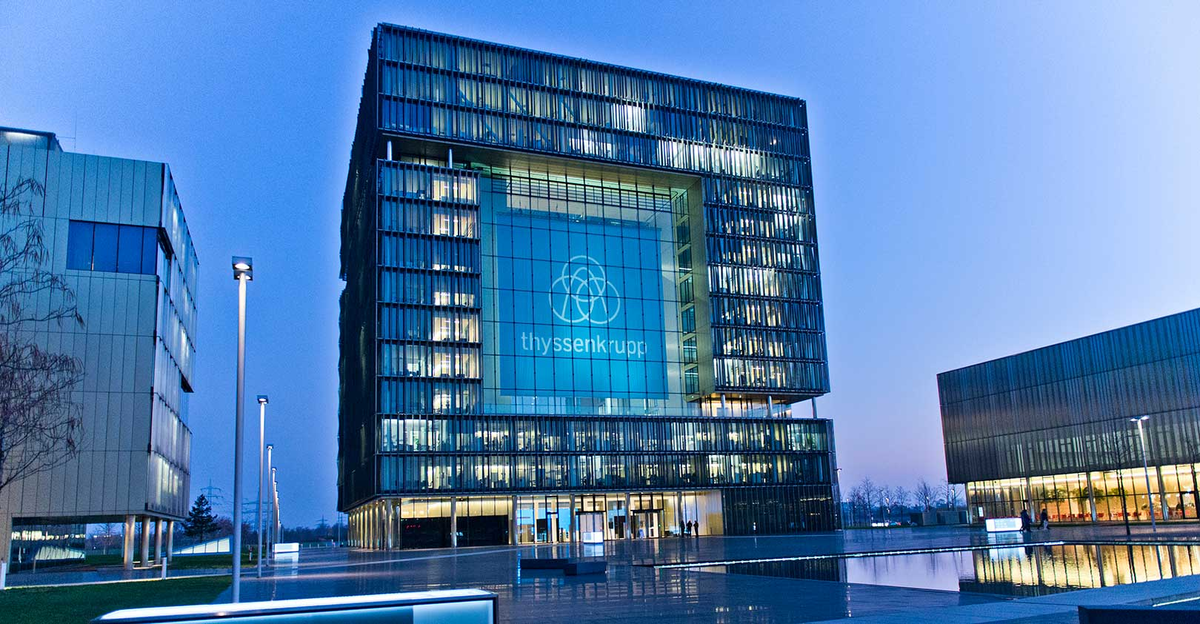
Thyssenkrupp Schulte offers lifecycle assessment for components
Thyssenkrupp Schulte, part of thyssenkrupp Materials Services, has launched an offer to support customers on their way to greater sustainability.
Under the “greenability” label, Germany’s leading distributor in terms of locations has developed two new solutions for analysis and calculation of carbon footprint.
For a fee, the “greenability carbon tracking” variant gives customers full transparency on the carbon footprint of their purchased finished or semi-finished parts and components, Kallanish hears. In the so-called “cradle to gate plus end of life” approach, both the procurement process and the entire supply chain are examined. The data collected is supplemented in a TÜV-certified process with information from licensed databases, the company notes.
Customers who want to go one step further can select the “greenability carbon compensation” option. Here, the calculated CO2 footprint is compensated. For this purpose, the customer selects an independently verified compensation project in which the sum of the consumed CO2 value is invested. The parts and components may subsequently be designated as “climate neutral” and bear the corresponding greenability label, tk Schulte says.
Christian Koehl Germany

Northern European wire rod market remains stagnated
Northern European wire rod prices have remained flat again this week due to low demand and higher energy costs in Europe.
“Summer holidays and traditional maintenance at plants also continue to lead to low demand from steelmakers,” a buyer from the Netherlands tells Kallanish. “I expect prices to go up in the next 2-3 months, but mills will probably reduce the used capacities amid high production costs.”
Domestic transaction prices for drawing-quality wire rod are at €870/tonne ($881/t) ex-works and mesh is at €850/t, sources say.
Producers are asking for €860/t ex-works, on average, for mesh-quality rod.
“Imports from countries outside the EU continue to influence the market and such offers are reported at around €790/t cfr,” another merchant notes. “Scrap prices are climbing again and not expected to drop soon.” This will also put pressure on the market, he adds.
Scrap values in Germany increased slightly so far in August. Old thick scrap sort 3 was at €350/t, while the price for new scrap sort 2/8 was at €360/t. In Austria, scrap prices are also up: old thick scrap sort 3 is at €350/t and new scrap sort 2/8 at €365/t (see Kallanish passim).
Most northern European wire rod market participants expect the market to be stable in the next few weeks. Some expect that the extremely low river water levels in Germany and other parts of Europe could impact raw materials deliveries this month and maybe spill into September.
Svetoslav Abrossimov Bulgaria
Italian rebar prices widen upward; Spanish market holds steady
Seasonal steel mill closures resulted in minimal activity in the rebar market in Southern Europe in the week to Wednesday August 17, sources told Fastmarkets.
In Italy, local mills had increased their offer prices prior to the August maintenance closures. Buyers, forecasting surges in prices heading into the fourth quarter because of the energy crisis, have accepted these higher levels, sources added.
As a result, Fastmarkets has adjusted its price assessment for Italian rebar upward.
Italy
Rebar demand in Italy had picked up in mid-July, with buyers stocking up small volumes ahead of the August summer holidays. But activity dropped off over the summer season. Despite this, local mills have maintained high prices because buyers expect prices to move upward in September, Fastmarkets heard.
Fastmarkets’ weekly price assessment for steel reinforcing bar (rebar) domestic, exw Italy, was €860-934 ($875-950) per tonne on Wednesday, widening upward by €24 per tonne from €860-910 per tonne on August 10.
While prices are likely to remain stable throughout August, potential energy costs heading into the fourth quarter could sharply drive up prices, market sources told Fastmarkets.
Energy rationing, as proposed by the European Commission on July 20, could push up energy prices.
On August 5 the European Commission approved a plan, encouraging EU countries to voluntarily reduce gas consumption by at least 15% between August 2022 and March 2023.
While there is no evidence that countries will self-impose energy restrictions, if this did happen, energy prices would rise. This in turn would force mills to increase prices, Fastmarkets heard.
With a potential global recession on the horizon, consumption levels heading into the next quarter remains uncertain. If the economy constricts, end-user demand could drop off across several key segments.
If demand drops but input costs surge, mills may be forced to extend production cuts considerably, market sources said.
Spain
Mill maintenance closures resulted in minimal activity in the Spanish rebar market this past week, Fastmarkets heard.
Fastmarkets’ weekly price assessment for steel reinforcing bar (rebar), domestic, delivered, Spain, was €780-810 per tonne on Wednesday, unchanged since July 27.
In July, demand increased as buyers re-stocked before the summer season. However, market activity has since dropped, sources told Fastmarkets.
Prices are likely to remain stable until September, sources added.
Sliding international scrap costs since mid-April have also affected the price direction of rebar. After jumping in early July, scrap prices had retreated by the second half of July. In early August, they started to rise again.
Fastmarkets’ daily calculation of the index for steel scrap, HMS 1&2 (80:20 mix), North Europe origin, cfr Turkey, was $394.07 per tonne on Wednesday, up from $387.81 per tonne on August 10.
Published by: India-Inés Levy


Sluggish demand for European HRC amid summer closures, persistent overstocking
Trading activity in the European hot-rolled coil market remained subdued on Thursday August 18 with buyers increasingly pessimistic about low demand heading into the fourth quarter because of persistent overstocking among buyers and depressed end-user consumption, Fastmarkets heard.
Fastmarkets calculated its daily steel HRC index, domestic, ex-works Northern Europe, at €751.67 ($764.58) per tonne on Thursday, down by just €5.83 per tonne from €757.50 per tonne on Wednesday.
The latest calculation of the index is down by €42.08 per tonne week on week and by €99.58 per tonne month on month.
Market sources estimated achievable prices at €750-770 per tonne exw on Thursday.
Mills, despite offering discounts, contended with low volumes traded because of high inventories among buyers, Fastmarkets heard.
Market activity remained quiet, as would be expected during the low season, with buyers delaying large-volume orders until September, by which time there was expected to be more clarity around price trends. Some small-volume orders were achieved, however.
A pessimistic outlook regarding post-holiday prospects persisted, with some sources not expecting the traditional revival of trade in September. Mills remained unlikely to restart in September with the offer prices they initially planned, one market participant said. Continued low demand could create downward pressure on prices.
A gloomy outlook persisted in regard to whether demand from the automotive industry would pick up in the fourth quarter. With a possible recession looming, fears around sliding consumption continued to create uncertainty, Fastmarkets heard.
Fastmarkets’ calculation of its daily steel HRC index, domestic, exw Italy, was €740.00 per tonne on Thursday, down by €3.75 per tonne from €743.75 per tonne the day before.
The latest calculation of the Italian index is down by €31.00 per tonne week on week and by €30.00 per tonne month on month.
The calculation was based on buyers’ estimates of achievable prices reported at €720-750 per tonne exw.
As a result of summer maintenance closures, there was minimal trading activity, Fastmarkets heard.
Buyers were postponing their restocking activity until September in order to more accurately assess key trends such as energy cost increases and possible low consumption levels, sources told Fastmarkets.
Imports
Demand for overseas coil was also subdued in the week to Thursday.
Offers of Turkish HRC imports were reported at €690-700 per tonne cfr Antwerp.
Overall, demand among domestic buyers for imports remained low.
“In general, EU buyers are not very interested in overseas HRC bookings for the time being, due to long lead times and little difference with the domestic HRC prices in Europe,” a market participant said.
Published by: India-Inés Levy

EU HRC prices stable as market doubts September salvation
The European hot-rolled coil market remained uncertain on price direction Aug. 18, given rising input costs in a quiet market environment.
Platts assessed hot-rolled coil in Northern Europe stable Aug. 18 at Eur750/mt ex-works Ruhr.
Distributor sources reported tradable value at Eur750/mt ex-works Ruhr, though the market was heard as extremely quiet given the ongoing holiday period. Offers were heard on a range of Eur750-800/mt ex-works Ruhr, though market participants did not interpret this as indicative of an uptrend.
A strong wait-and-see sentiment was identified as the market moved into late August, with only a few weeks left before the traditional restocking period in September.
However, stockholders continued to report high stock levels due to prebooked and incoming import material — as well as poor end-user demand — meaning that most deny intention to restock substantially for the remainder of the year.
“We have no problems getting stock anywhere,” a distributor said. “Our sales are picking up a bit and inventories are going down to the point we can look at replenishment, but not for this year, to be honest.”
Price direction is very uncertain, with poor demand and rising production costs pushing the market on both sides. Some mills were heard as offering with the condition that prices could include variable extras on energy costs at time of delivery, but this was not agreed on by buyers or widespread in the market on the day.
“It’s very quiet at the moment,” another distributor source said. “Everyone’s waiting for something to happen, be that a price rise or further decline. There’s been some attempts to put something on the table in terms of base price increases or extras for energy or transport, but this was more to gauge reception from buyers than it was any attempt to lead the market in an upward direction.”
Given ongoing uncertainties in the market and recent devaluation of material, buyers were heard as requiring firm offer prices in negotiations — resistant to flexible surcharges to absorb mill costs downstream.
The Italian market remained silent, with tradable value indications continuing to surround Eur720/mt ex-works Italy — the unchanged Platts assessment on the day.
— Benjamin Steven, Maria Tanatar
