


Dalbeler: Turkish producers another victim of Russo-Ukrainian conflict
“Russian steel (both semis and [finished] products) is being sold at such prices that paralyse all market dynamics here in Turkey,” Ugur Dalbeler, chief executive of Colakoglu and vice president of the Turkish Steel Exporters’ Association (CIB) tells Kallanish.
Speaking after a letter from the US deputy secretary of the Treasury to the Turkish Industry and Business Association (TUSAID) warned of the possibility of sanctions for companies working with Russian material earlier this week, Dalbeler stated that “Turkish steel producers became another victim of the current Russian-Ukrainian conflict … Russian steelmakers are extremely limited in export options with Turkey the only option left in this part of the world, forcing producers to offer at prices way below the market level, with huge dumping margins, making Turkish mills impossible to compete.”
This is forcing Turkish producers to reduce output, to the extent that October and November is looking likely for substantial production stoppages, as steel output in Turkey already dropped over 13% in June and 21% in July, as Russian mills seem to have no bottom to their prices, he says.
Due to their ties with the US and EU, some Turkish companies decided not to get involved with Russian imports in order not to lose these markets, while some are hesitant. This limits Russian exporters’ options, forcing them to reduce prices further.
“For example, Russian slab prices are at the same levels as the US or EU shredded scrap prices and lower than pig iron prices, HRC prices are the same level as Russian billet pirces, but cheaper than Turkish billet prices, and we know that these levels are way below their domestic prices,” Dalbeler explains.
But the Turkish steel producers’ troubles with Russian ties do not stop here. While some countries, like Canada, are already declaring that they will not allow imports of rebars rolled from Russian billet, more such investigations are likely to spring up. But Turkey has been dependent on Russian feedstock historically, and with around 7 million tonnes of Russian and Ukrainian feedstocks not being possible to obtain, Turkey is forced to look for alternative options, which are further away and expensive.
“It is another handicap for Turkey in the international market besides cut-throat competition it faces in the domestic market. Turkish steel producers today became another victim of the current Russo-Ukrainian conflict,” he concludes.


Rebar imports into EU become tricky
Although there are attractive offers from overseas rebar buyers to European customers, some of these might be deceptive in a way not all buyers are aware of, a German observer warns.
One issue is the certification of the rebar product for use in construction according to the regulations of the target countries.
“Quite recently I came across an offer from the western Balkans which claimed to be licensed for Germany through a bureau in Turkey,” which is virtually worthless, according to the observer, himself a buyer of rebar.
Such licenses can only be issued by material testing agencies that are certified by the Deutsches Institut für Bautechnik in Berlin. These agencies pay regular visits to foreign mills to take samples which they take to their laboratories for examination, he explains to Kallanish. The agencies are often public offices linked to universities, like the Technische Universität München, testing the rebar according to the German construction standard DIN 488.
When approved, the mills add a rolling label that is encoded in the ribbing of the rebar, giving information of its origin.
“The technicians know about such details, but not all buyers do,” he says.
Christian Koehl Germany
Low rivers fail to worry German mills
The drought that has made Germany’s rivers drop to critical levels has not yet put the biggest mill groups in alarm mode. Statements on the matter sent to Kallanish upon request keep a factual tone that does not suggest immediate worry.
“So far, there has been no impairment of production at any of our mills that would be attributed to low water levels,” says ArcelorMittal, owner of four big mills in various parts of the country. It confirms that ships cannot be fully charged, which “influences logistics processes, for example for raw materials,” but gives no information of the degree.
The same applies to thyssenkrupp Steel. The company has set up a task force which “observes the Rhine levels continuously and has taken several measures,” but it does not detail which ones. It notes that its raw “materials supplies are secured,” and so is the delivery of outgoing coils, which are transported by train or by truck.
Salzgitter AG in central Germany has the advantage of the country’s largest artificial waterway, the Midland Canal, which can keep a steady level. It states that it will inform its customers and suppliers individually if interruptions are foreseeable.
For Swiss Steel with the four German mills of its Deutsche Edelstahlwerke unit, the main raw material is scrap, delivered by truck and occasionally by rail. Regarding international delivery, “we switched outgoing transports of containers with our products to the western ports of Antwerp and Rotterdam to trucks weeks ago so as not to jeopardise our shipments,” a spokesman states.
Christian Koehl Germany

New purchases are increasing northern European rod prices
Northern European wire rod prices have started to increase this week due to new purchases and despite higher energy costs in Europe. Some sources say they expect more new orders from customers.
“The market is starting to revive after the past weeks of stagnation,” a buyer from the Netherlands tells Kallanish. “The prices for mesh have increased by €25/tonne ($24.97/t) and steel mills are starting to purchase new volumes.”
Domestic transaction prices for drawing-quality wire rod are at €880/t ($879/t) ex-works and mesh is at €875/t, sources say.
Producers are asking for €890/t ex-works, on average, for mesh-quality rod.
“The extremely low river water levels in Germany and other parts of Europe are impacting raw materials deliveries,” another merchant notes. “This is a disaster for the market and will probably continue next month, which will influence the prices. Imports from countries outside the EU so far have stopped to influence the market.”
However, scrap prices are also climbing again and not expected to drop soon and will also put pressure on the market, he adds.
Scrap values in Germany increased slightly so far in August. Old thick scrap sort 3 was at €350/t, while the price for new scrap sort 2/8 was at €360/t. In Austria, scrap prices are also up: old thick scrap sort 3 is at €350/t and new scrap sort 2/8 at €365/t (see Kallanish passim).
Most northern European wire rod market participants expect that prices will continue to increase in the next few weeks, because mills are starting to restock.
Svetoslav Abrossimov Bulgaria
Turkish pipe quotes mostly stable amid numerous uncertainties
Turkish pipe producers are keeping their prices unchanged from last week. However, uncertainties are seen mounting in the market following the US’ warning to Turkish companies working with sanctioned Russian companies.
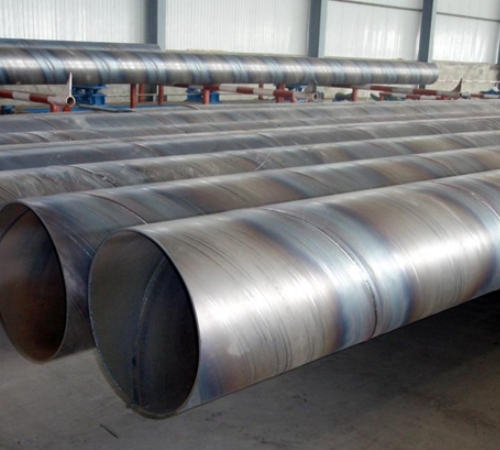
Pipemakers’ offers for electric resistance welded (ERW) pipe made from S235-grade hot rolled coil were seen on Thursday mostly at $660-680/tonne fob Turkey theoretical weight, though higher and lower prices are also available from some producers.
Although there are top-up tonnage inquiries from the EU for the October quota term, demand is yet to be sufficient and producers’ order books are quite weak. Despite the weaker euro, European buyers are continuing to buy Turkish material due to numerous problems in their domestic market.
A few sales were heard to the EU and the UK this week.
Besides weak demand, Turkish pipe producers are seen suffering from financing problems as well as uncertainty following the US’ warning to Turkish companies working with sanctioned Russian companies, as Turkish pipe producers are major consumers of Russian HRC.
A Turkish pipe producer tells Kallanish: “We are trying to understand the situation, but it created great apprehension in the market. The US is an important market for Turkish pipes.”
In Turkey’s domestic market, stockists are seen offering discounts at around $30/t over offer prices to generate some cash amid weak demand, meanwhile.
Turkish HRC producers’ offers in the domestic market were seen at $640-660/t ex-works on Thursday, unchanged from last week, although discounts are available for the buyers that have previously bought at higher prices.
Burcak Alpman Turkey

Eurofer forecasts decline in steel-use sectors for 2022 but revival next year
Apparent steel consumption in the European Union is expected to decline in 2022, because of weak performance by key steel-using sectors, but to recover in 2023, European steel association Eurofer said in its third-quarter outlook report on Wednesday August 24.
The disruptions to global supply chains created by Russia’s unprovoked war against Ukraine, and the looming energy crisis in Europe, were expected to take a toll on the steel sector in the region.
Notably, steel consumption was expected to drop by 1.7% in 2022, Eurofer said in the report published on its website. But this would be followed by a 5.6% recovery in 2023.
But this outlook remained uncertain due to the economic and political difficulties resulting from the war. These included the uncontrollable increase in energy prices, which were likely to have serious effects on demand from steel-using sectors until at least the end of 2022, Eurofer said.
For example, in July this year, average electricity prices in Italy were around €400 ($398) per MWh, up from about €271 per MWh in June and sharply up from €103 per MWh in July 2021, according to local energy service company Gestore dei Mercati Energetici (GME).
And during the week ended August 21, average electricity prices in Italy surpassed €500 per MWh.
Steel-using sector outlook
Overall steel-using sector output in Europe was expected to rise by only 1.1.% in 2022. This year’s figure has been revised downward from an expected 2% in Eurofer’s previous outlook.
Growth in steel-using sector output, however, was forecast to accelerate moderately in 2023, showing a 2.2% increase.
Automotive
After a slump by 20.4% in 2020 due to the effects of the Covid-19 pandemic, in 2021 automotive output rebounded, but only by 3.4%.
Output from the automotive industry was expected show a 0.5% decline in 2022. This would mean that the automotive industry’s output would remain below pre-pandemic levels.
The global components shortage, rising costs for energy and shipping, and subdued consumer demand, were likely to continue to affect the automotive sector until at least the end of 2022.
Steel prices in the EU have been falling continuously since April 2022 amid chronic overstocking and slow end-user demand.
Fastmarkets calculated its daily steel hot-rolled coil index, domestic, ex-works Northern Europe, at €720.00 ($716.52) per tonne on August 24, down by €2.40 per tonne day on day.
The latest calculation of the index was down by €37.50 per tonne week on week and by €135.00 per tonne month on month.
Output by the automotive sector was expected to rebound by 4.9% in 2023, but only if supply chain issues and global uncertainty were to ease substantially.
Construction
The outlook for construction output appeared more optimistic. In general, the sector is more resilient to economic shocks, Fastmarkets understands.
EU construction output was set to rebound by 5.3% in 2022, revised upward from 2.3% in the previous outlook, and to keep growing moderately in 2023 by 0.6%.
Disruptions along the supply chain and the overall deterioration of the economic and industrial outlook started to affect the sector from February 2022, when Russia launched its war on Ukraine, with consumer confidence declining from then onward, Eurofer said.
Overall construction activity should continue to grow at a low rate, mainly thanks to government-funded schemes, with the civil engineering sub-sector expected to provide the strongest contribution to the construction sector’s performance.
Published by: Julia Bolotova


European HRC price remains stable; price downtrend forecast amid depressed demand
Trading activity in the European steel hot-rolled coil market remained depressed on Thursday August 25 with participants forecasting a further downtrend in the market.
Sluggish demand could persist or even worsen heading into the fourth quarter, market sources said, due to overstocking and reduced end-user consumption. Customers were forecasting further price drops, and a wait-and-see attitude persisted.
Fastmarkets calculated its daily steel HRC index, domestic, ex-works Northern Europe, at €720.00 ($716.52) per tonne on Thursday, unchanged from the previous day.
The latest calculation of the index is down by €31.67 per tonne week on week and down by €137.00 per tonne month on month.
A transaction for HRC in Northern Europe was heard at €710 per tonne exw for a small tonnage.
Most buyers estimated the workable price for HRC in the region to be €710-750 per tonne exw.
Mills, despite attempting to raise prices because of increased energy costs, faced sluggish demand due to persistent overstocking among buyers, Fastmarkets heard.
While many areas in Northern Europe have returned to work after summer maintenance closures, market activity remained quiet. A buyer told Fastmarkets that many customers were waiting for prices to drop further.
“The market is difficult at the moment because everyone is trying to prolong their summer vacations, so they don’t have to make decisions,” A second market source told Fastmarkets. “Big industries sign annual or six-month contracts, so the important consideration for them is delivery times.”
The same source noted how mills cannot target high prices, despite their best attempts to do so, because of rising input costs such as energy. Instead, the direction of the price has always been, and will continue to be, dictated by the forces of supply and demand.
A fall in actual demand may well result in a fall in prices, regardless of fundamentals.
A third market source told Fastmarkets if these conditions were to continue, mills could have to cut down significantly on production.
Fastmarkets’ calculation of its daily steel HRC index, domestic, exw Italy, was €705.00 per tonne on Thursday, also unchanged from the previous day.
The latest calculation of the Italian index is down by €35 per tonne week on week and down by €75 per tonne month on month.
The calculation was based on buyers’ estimates of achievable prices reported at €700-710 per tonne exw.
As a result of summer maintenance closures, there was minimal trading activity, Fastmarkets heard.
Demand remained sluggish due to overstocking and a wait-and-see attitude among buyers. Customers have delayed restocking until September to gain greater clarity around future consumption levels, sources told Fastmarkets.
Imports
Demand for overseas coil remained sluggish in the week to Thursday.
Buyers in Northern Europe estimated the tradeable price for overseas coil at €650-670 per tonne cfr.
Long delivery times continued to be a factor driving the low levels of transactions in the import market, Fastmarkets heard. With some customers forecasting depressed end-user consumption, they were reluctant to submit orders for stock which could take many months to arrive, by which time it could be over-priced, or there may be no demand for it.
Published by: India-Inés Levy

Danieli Corus to carry out repair work at Tata Steel UK’s Port Talbot steelworks
Tata Steel UK has chosen Netherlands-based engineering firm Danieli Corus to carry out repair works at its Port Talbot steelworks in South Wales, Danieli said late Aug. 24.
The repair work includes the hot blast system stove 11 at blast furnace no. 4 and stove 13 at blast furnace no. 5, which heat blast air.
If these stoves underperform, they consume more gas or require higher quantities of coke in the furnace, increasing costs.
“The hot blast stoves at both blast furnaces at Tata Steel’s Port Talbot works have achieved very long campaign lives with the support of multiple life-extension repairs, the most recent of which was the repair of stove 10 of blast furnace No. 4,” Danieli said.
Tata Steel UK has a designed steelmaking capacity of 5 million mt/year, and it produces around 3.5 million mt/year.
Platts assessed the weekly UK hot-rolled coil price at GBP800/mt DDP West Midlands June 24, down 3.6% from the start of 2022.
Platts is part of S&P Global Commodity Insights.
— Jacqueline Holman


EU HRC prices stable in slow market; mills expected to raise offers
Domestic hot-rolled coil prices in the EU remained stable Aug. 25 in a slow market, but steelmakers were expected to increase offers soon.
A big European producer was reported to notify its customers that current coil offers will remain valid through Aug. 26, a few sources said.
One trader said the new offers were likely to increase by Eur100/mt. Other market participants also expected steelmakers to attempt to increase prices to cover rising energy costs.
Latest offers from the producer in Northern Europe have been reported at Eur750/mt delivered.
Offers from various Northern European producers have been reported at Eur700-750/mt ex-works.
Latest deals, however, have been settled at about Eur700/mt ex-works Ruhr. And market sources estimated tradable value at Eur700-750/mt ex-works Ruhr.
Platts assessed hot-rolled coil in Northern Europe unchanged day on day at Eur700/mt ex-works Ruhr Aug. 25.
European steelmakers face sharp rises in energy costs, and the current price for HRC has been reported to be close to the cost level. But the price rise would be challenging because of weak demand from distributors and end-consumers.
European distributors had bought significant volumes in March this year in fear that Russia’s attack on Ukraine would result in a steel shortage and, therefore, a sharp price rise. Although coil prices had jumped in Europe in March, the recovery was short-lived and left distributors with high stocks of expensive material. As a result, buyers preferred to focus on destocking and limited their purchases to minimum, buying only required specifications.
Although flat steel demand from the automotive industry was expected to recover in the second half of the year, the revival might not be enough to change the situation in the market.
“The industry is going down, I feel,” a German distributor said. “Basically, the private consumption is quite low. People keep their money in order to have it for additional energy costs and other payments. Means the situation of the mills didn´t change at the end of the day. That what automotive is using more, the industry is using less. Stocks also, I guess, are still on a good level, not too much, but enough under consideration of the demand.”
Steelmakers across Europe have already reduced output to match with lower demand. Few mills have stopped equipment, others just reduced shifts. The effort, however, was not enough to change the trend in the market.
Some market sources said they believed that further and more drastic production cuts were needed to trigger a coil price recovery. Steelmakers, however, have cited high costs and the long periods required for a blast furnace stoppages, and no new equipment shutdowns have been heard.
— Maria Tanatar, Benjamin Steven

BRAZIL STEEL CONGRESS: Participants voice moderate optimism, green steel opportunities
The economic agenda and long-term opportunities dominated discussions as top executives gathered in Sao Paulo for the Aço Brasil Congress 2022 Aug. 23-24.
Representatives of the national steel industry saw good prospects for the sector even though they said the current and medium-term market scenarios were volatile, unstable and uncertain. There is an urgent need for measures related to competitiveness, including the reduction of the “Brazil Cost” and greater public and private efforts toward energy transition and decarbonization, they said.
Market, economic development
In the last 10 years, the Brazilian steel sector has invested more than Real 158 billion in new and expanded installations and is investing another Real 52 billion between 2022 and 2026. The initiatives are hoped to increase the country’s per capita steel consumption, which has been stagnant at 100-120 kg/year for a decade.
“The indicator of steel consumption per inhabitant is monitored by the UN because it is directly related to the economic performance of countries. Doubling up is a bold goal. Last year was an unusual year. We need public policies to reach these numbers,” said Gerdau CEO Gustavo Werneck.
Sergio Leite, chairman of the board of Usiminas, said increasing steel consumption is dependent upon the country’s GDP growth and heavy investment in infrastructure.
“Civil construction is another lever, and we have an important deficit in the country. Finally, the automotive sector has the potential to become an export hub,” he added.
For Marco Polo de Mello Lopes, the executive president of Aço Brasil Institute, the production idle rate proves that the problem in the industry is not one of supply, but of demand.
“We need to export to improve the level of capacity utilization, which today is 68% or 69% and everyone knows that it should be above 80%,” he said.
“This year [2022], even if we see a drop in the apparent consumption of steel, we will have one of the three or four best years of the last decade.”
Short-, long-term challenges
The Brazilian automotive industry, which uses 24% of steel consumed in the country, experienced 40 days of inactivity year to date, with 24 plants halted, according to Marcio Leite, the president of Anfavea.
“We are brothers, we have situations in common. The automotive and steel sectors are experiencing the most disruptive moment in history since their creations,” he said.
For him, the sector faces its biggest challenge with the issue of the global shortage of semiconductors. Leite sees the scarcity of this material as an opportunity for production in Brazil, as the country has the machinery and equipment necessary for its development.
The raising of vehicle prices in the past years was harmful as it contributed to the aging of the country’s vehicle fleet, with people beginning to buy more used and old cars than new ones — going against Brazil’s decarbonization goals, he said.
Moreover, he sees emerging markets as Brazil far from having the necessary structure to support a strong adoption of electric cars, but there are opportunities to focus on exports instead.
“Brazil is the seventh largest producer of vehicles, eighth in consumption, but the 30th in exports.”
Jorge Gerdau, the chairman of Gerdau’s board of directors, said the “Brazil Cost” represented 16.2% of the cost of domestically-produced steel. This ultimately harms the export-competitiveness of the material, mainly because in other countries this cost can reach almost zero.
In terms of infrastructure, while the logistics cost from the Southeast to the Northeast is around $100/mt, Chinese suppliers can ship steel to Brazil at $20/mt freight cost.
The Aço Brasil Institute brings together 12 local business groups that manage 31 production plants in 10 Brazilian states. The annual billing of the sector is close to Real 200 billion, with around Real 40 billion paid in taxes.
Decarbonization, energy transition
“Until now, the industrial and steel sectors have paid a good part of a bill that was not ours. And the numbers show that the national steel industry accounts for 0.15% of global carbon emissions,” Gerdau’s Werneck said.
He calculated that it would cost $40/mt for decarbonizing the Brazilian steel industry.
“In 30 years, we will have an annual cost to the sector of Real 7 billion. The math is not accurate. The balance sheet of companies does not pay for this.”
For Leite, the biggest global challenge at present is energy security, with a search for surplus and cheap renewable energy — an area in which Brazil has taken the lead with the expansion of solar and wind sources and with the potential for offshore wind energy.
Marcelo Chara, Ternium’s CEO in Brazil, also sees greater use of natural gas as a potential transitory solution for decarbonizing the steel industry — if there were infrastructure/ducts developed for distribution of the associated natural gas from subsalt fields.
In addition, he sees potential for duplicating the use of scrap in steel production.
Wieland Gurlit, senior partner at McKinsey & Co., said other mechanisms such as a Carbon Border Adjustment Mechanism may arise in other regions.
Brazil has the opportunity to produce key raw materials that will be in high value and high demand for the steel decarbonization: green HBI, green pig iron and green biocarbon.
“Even under optimistic assumptions on Green H2 availability in Europe, offshoring DRI/HBI production to Brazil would be likely more economic,” Gurlit said.
— Mayara Baggio