


Italian crude steel output plummets
Italian crude steel output fell again significantly in July after a series of declines seen since the beginning of the year, according to data issued by local steelmakers association Federacciai.
Last month, crude steel production declined by as much as 27.1% year-on-year to 1.6 million tonnes, and by 7.3% on-year over the first seven months of 2022 to 13.8mt, Kallanish notes.
Italian flat steel production also tumbled in July, by 17.3% to 796,000t, and by 5.2% in January-July to 6.2mt. Longs output decreased last month by as much as 30.5% to 888,000t, and by 9% in the first seven months to 7.6mt, Federacciai says.
Crude steel output in 2021 rose by 19.8% on-year to 24.4mt.
Some Italian producers are not resuming production after longer-than-usual maintenance stoppages in August. All flats and longs steelmakers are heavily reducing output to address the issue of overcapacity and low demand, but also to cut current unsustainable energy bills (see Kallanish 30 August newsletter).
Natalia Capra France


H2 Green Steel secures funding, pre-sells 60% volumes
H2 Green Steel is securing a total of €190 million ($190m) in the first close of the series B equity financing from a selected group of investors, Kallanish notes. The firm says this shows strong support for the venture.
The equity round was co-led by new investors AMF, GIC and Schaeffler, alongside existing investor Altor Fund V. Also participating in the equity raise is new investor Swedbank Robur Alternative Equity, while existing shareholders Vargas, Kingspan, FAM, Marcegaglia, IMAS Foundation, Cristina Stenbeck and Daniel Ek continue to support the company with additional equity funding.
“This financing milestone is a real statement of confidence in H2 Green Steel. Despite the uncertainty in global markets, a venture like ours, with both a strong business case and a strong sustainable purpose, is clearly attractive to investors. This financing round has allowed us to combine leading industrial companies and global financial institutions, with investors with a strong Swedish participation, creating the investor-base that will set us up for success,” says H2 Green Steel chief executive Henrik Henriksson.
H2 Green Steel says it has pre-sold about 60% of its initial volumes to customers ranging from steel service centres to pipemakers, and passenger vehicles and heavy commercial vehicles, as well as whitegoods and construction products manufacturers.
Schaeffler already has a commercial partnership with H2 Green Steel. Its chief operating officer, Andreas Schick, says: “Securing supply chains and making them more sustainable is a top priority for Schaeffler. We are proud to be an investor and a strategic technology partner for H2 Green Steel. Together we will contribute to decarbonising supply chains. Through its participation, Schaeffler secures its long-term supply of green strip steel and significantly strengthens its network in this crucial material area.”
Adam Smith Poland

Study finds German steel production most sustainable
In an international comparison, the steel industry in Germany has the lowest risks for sustainability along its supply and value chains, claims national steel federation WV Stahl.
The federation commissioned economic research institute IW Consult to analyse the sustainability of the steel value chain in Germany and the largest competitor countries along four central UN goals – Sustainable Development Goals (SDGs).
“The study shows that steel production in Germany has a high degree of compliance with the selected UN goals,” says Hans Jürgen Kerkhoff, president of the federation. “This enables its customers to offer sustainable products.” Conversely, importing steel from overseas would be detrimental to sustainability, Kallanish understands.
Using the example of the CO2 footprint of central customer industries, IW Consult comes up with some concrete figures. If the domestic mechanical engineering industry had to replace its steel deliveries from Germany completely with China-origin imports, CO2 emissions in the value chain would increase by 13 million tonnes. In the automotive industry, the CO2 increase would be 8.4mt.
In IW’s table of major steel producing nations, Germany also fares best in the parameters of labour rights, sustainable waste management, and corruption/corporate governance. Other countries with relative positive performances are Japan, the USA and South Korea. Relatively poor performance in terms of sustainability was identified for China, India, Turkey and Russia.
WV Stahl highlights the high topicality of the findings in the current economic environment, “especially against the background of the transformation of the steel industry towards climate neutrality and the crisis on the energy markets”, says Kerkhoff.
Christian Koehl Germany
Acerinox applies temporary layoff scheme in Spain
Spanish-headquartered stainless steel producer Acerinox will implement a temporary lay-off scheme for the workforce at its Cádiz unit, Kallanish learns from the company’s employee council.
The decision comes amid high energy costs in Spain, which are making production costlier.
“Acerinox will apply a Temporary Employment Regulation system (ERTE) to the workers of the Los Barrios plant for up to 15 days from 1 September,” workers’ representatives say. The temporary lay-off scheme includes the entire workforce of the steel mill, hot rolling and hot annealing, except for personnel that provide services in the port terminal. The scheme will allow for staff to be adapted to existing production demand at all times.
Acerinox will pay a partial supplement of up to 85% to its workforce to limit the possible decrease in wages during the time not worked, the employee council confirms.
Todor Kirkov Bulgaria

Mills shun railways despite German transport bottlenecks
Germany and its neighbouring countries are suffering from a month-long draught with only sparse rain, which has rendered river water levels in some areas nearly too low for shipping. To make things worse, railways are not very popular as an alternative for transportation of large loads, some observers say.
Swiss Steel, for example, receives scrap for its electric arc furnaces by truck, “and every now and then by train”, it says. For outgoing transports of finished products from its German and Swiss mills – finished special bar bound mostly for export – it does use ships, on the Rhine River to reach Antwerp and Rotterdam. Lately, however, it has increasingly switched these transports to truck by road.
“We are using 100% trucks now, because the railways are a: not reliable, and b: lacking the capacity,” a spokesman tells Kallanish. He adds that “for commercial/industrial transports, railways keep lagging far behind the service they have for private passengers, sadly”. He says this hurdle applies to many industries, meaning the competition for trucks has become more severe.
It may not apply to mills with larger and heavier loads that have traditionally depended on railways for decades. This would be the case for coil mills with big loads of large diameters, often bound for inland destinations. “Our coils are mainly sent by train, and, to a lesser degree, by truck, but not much by ship,” thyssenkrupp says.
Christian Koehl Germany
ArcelorMittal delays Spanish coil mill restart
ArcelorMittal tells Kallanish it has not resumed operations this week at its Acería Compacta de Bizkaia (ACB) plant in Sestao, northern Spain.
The site was halted in mid-August for maintenance, but the forecast for lower demand has prompted the steelmaker to delay the resumption of activities. There is currently no date for the restart of operations, ArcelorMittal says.
“ACB has not restarted for now due to adverse market conditions, such as low demand and sales prices, and high imports from outside the EU,” the company explains. “Energy costs are indeed important for an EAF-based steelmaking plant like Sestao, but this is not the determining factor in this case.”
ACB is one of the first plants in southern Europe that ArcelorMittal stops when it decides to reduce production rate. Temporary stoppages have been common at the plant in recent years due to relatively easy maintenance when it is shut down, as well as a simple restart procedure. ArcelorMittal is expected to continue with this policy in the short term, experts observe.
ACB produces hot rolled and pickled coil through the EAF route.
Meanwhile, ArcelorMittal expects to advance on social dialogue with workforce representatives in September aimed at agreeing a foundation for ArcelorMittal Sestao’s furure upgrade, the steelmaker explains.
Todor Kirkov Bulgaria
Automotive – Are European inventories looking healthy?
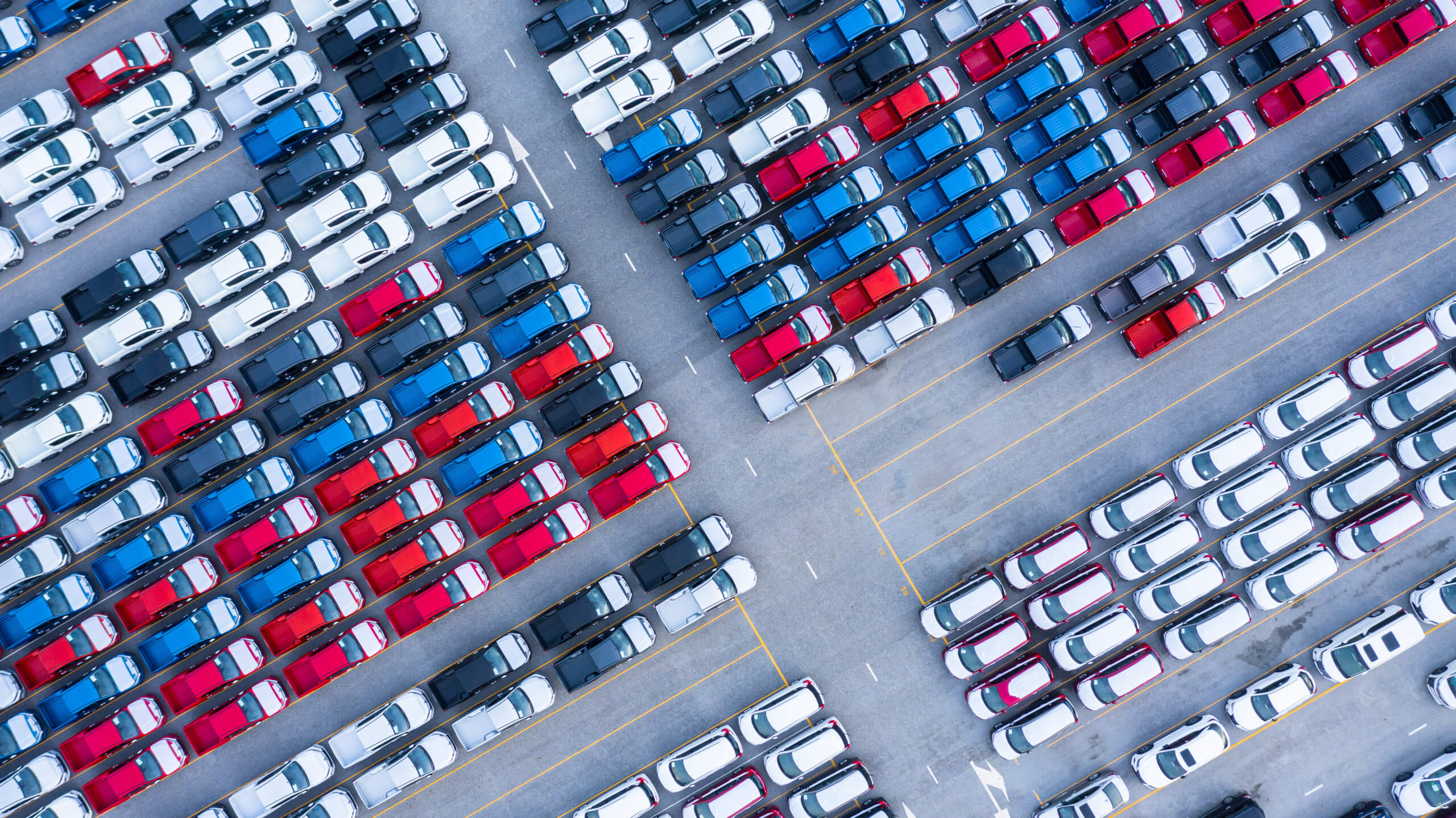
Stock movements are a critical component in understanding the likely evolution of production volumes, so are inventories in Europe healthy?

While inventory figures are not publicly available in Europe, recent events have highlighted that stock movements are a critical component when it comes to understanding the likely evolution of production volumes.
Following the Lehman Brothers collapse in 2008, OEMs were immediately faced with crashing market volumes. They responded by slashing output to minimise unplanned or unrequired stocks. But the scale of the crisis was such that this response proved to be too slow, leaving European OEMs sitting on circa one million Light Vehicles by the close of 2008, all of which were stuck in the supply chain and surplus to requirements.
Of course, such shocks are not uncommon. Following the German reunification boom in 1990, the European market crashed in 1993.
More recently, with the outbreak of the COVID-19 pandemic and the ensuing lockdowns, European OEMs saw days’ supply rocket to over 115 days in the first quarter of 2020. An ideal level for European days’ supply is around 60 days, meaning that the region was overstocked by 55 days!

Currently, European Days’ Supply is tracking at 60 days, our benchmark level of where the sector would like to reside.
But let’s not kid ourselves. European OEMs have been forced to trim build significantly, while incoming orders have slowed as both have been impacted by the chip shortage. Oddly enough, European Days’ Supply appears to be within the normal range because we are in an unusual position where both the flow of build and the flow of orders are being impacted at the same time and consequently, we have what might be considered a unique set of circumstances. Indeed, if the flow of orders had been in line with broader macroeconomic drivers, then the ‘real’ Days’ Supply situation in Europe was probably circa 40 days’ supply, rather than the 60 days which we report.
But there is some good news – European inventories have essentially been flat since the start of the year, and this contrasts with destocking of -1.7m cars suffered during the first three quarters of last year (itself worse than that suffered under the Lehman Brothers episode). We are looking for a recovery in Q4 but at +370k this would still be far from an exceptional performance.
So, unlike the Lehman Brothers-induced recession of 2008/9, the sector is in a much healthier position to respond to the market if supply difficulties ease. Much, therefore, rests on how the war in Ukraine and COVID-19 restrictions in China unfold.

ARTHUR MAHER, DIRECTOR OF RESEARCH

EIB backs Finnish Tapojarvi to reduce carbon emissions in steel
The European Investment Bank said Aug. 20 that it has financially backed Finnish mining services specialist Tapojarvi with a Eur 18 million ($18 million) loan to reduce the environmental footprint of the steel industry.
The funds, backed by a guarantee from the European Fund for Strategic Investments, will cover Tapojarvi’s investment in a novel slag processing and valorization plant located in Umbria, Italy, the EIB said.
Tapojarvi is a family-owned Finnish mid-cap company founded in 1955 that specializes in handling, processing and recycling services for the mining and steel industry.
The project would also include the initial testing and ramp-up phases to convert slag into valuable byproducts and reduce landfilling.
This would require the deployment of advanced manufacturing technologies compliant with industry 4.0 principles, being interconnection, decentralization, technical assistance, information transparency, as well as the introduction of innovative recycled products mainly for construction use, and the reduction in usage of raw materials, the bank said.
“Operations like the one signed with Tapojarvi are essential to support the shift toward a more circular and sustainable economy as they contribute to reducing the environmental footprint of stainless-steel plants via the recovery of valuable raw materials,” EIB Vice President Gelsomina Vigliotti said in a statement.
“Circular economy is a key instrument to fight climate change and reduce businesses’ dependency on imports from third parties,” Vigliotti said.
“The Tapojarvi project in Italy is a second-generation eco-innovative slag processing plant based on more than 15 years of experience in slag processing and productization in Finland. Tapojarvi will continue its internationalization and expand the slag processing and productization to other European countries,” Tapojarvi Italia CEO Martti Kaikkonen said.
— Filip Warwick


Sweden’s H2 Green Steel secures Eur190 million funding for fossil-free steel project
Sweden’s H2 Green Steel said Aug. 30 it has secured a total of Eur190 million ($191 million) in funding through its series B equity financing round, it said in a statement Aug. 29.
H2 Green Steel is developing a green hydrogen powered steel plant in Boden, northern Sweden, which will have an initial production of 2.5 million mt/year from 2025, potentially increasing to 5 million mt/year by 2030.
After its launch in February 2021 and the close of its series A equity round, the company secured a 14 TWh agreement for renewable electricity and initiated ground works and construction.
It has now pre-sold 60% of its initial volumes to customers across a range of industries, from passenger vehicles and white goods to steel trading clients, as end-users are stepping up green transition efforts boosting demand for decarbonized steel.
“Despite the uncertainty in global markets, a venture like ours, with both a strong business case and a strong sustainable purpose, is clearly attractive to investors,” H2 Green Steel CEO Henrik Henriksson said in a statement.
— Ekaterina Bouckley

UK to keep existing antidumping measures on cold-rolled flat steel from Russia, China
The UK government has approved the Trade Remedies Authority’s recommendation that existing antidumping measures on cold-rolled flat steel from Russia and China be kept for another five years, the government said Aug. 30.
The TRA’s recommendation that the existing measures should be kept to protect the UK’s industry was initially made in March after a review that started in April 2021.
The recommendation was then opened for comments, and the TRA made a final recommendation, which has now been accepted by the Secretary of State for International Trade Anne-Marie Trevelyan.
“As part of its assessment, the TRA found that extending the antidumping measure for a further five years would be in the economic interest of the UK,” the government said, adding that the TRA had also found that cold-rolled flat steel from China and Russia would likely be dumped in the UK if the measure was removed, causing injury to UK producers.
The UK chose to maintain some of the EU’s trade remedy measures after Brexit and in December 2020 the then Secretary of State for International Trade Liz Truss chose these measures to be reviewed by an independent body to determine whether they should be varied or revoked in the UK.
According to the TRA, the UK’s cold-rolled flat steel market is 40%-50% supplied by domestic material, with imports supplying the remainder.
Cold-rolled flat steel is mostly sold through steel service centers and used in the auto industry and in domestic appliances, as well as other goods.
The TRA said that, while it had identified 50-100 downstream customers in the UK, which had a combined turnover of GBP 685 million ($801.15 million), the industry was vulnerable, due to raw material prices, the coronavirus pandemic, long-term economic trends, and energy costs.
Platts assessed the CRC ex-works Ruhr price at Eur825/mt Aug. 26, down 22.9% since the start of 2022, according to S&P Global Commodity Insights.
— Jacqueline Holman