

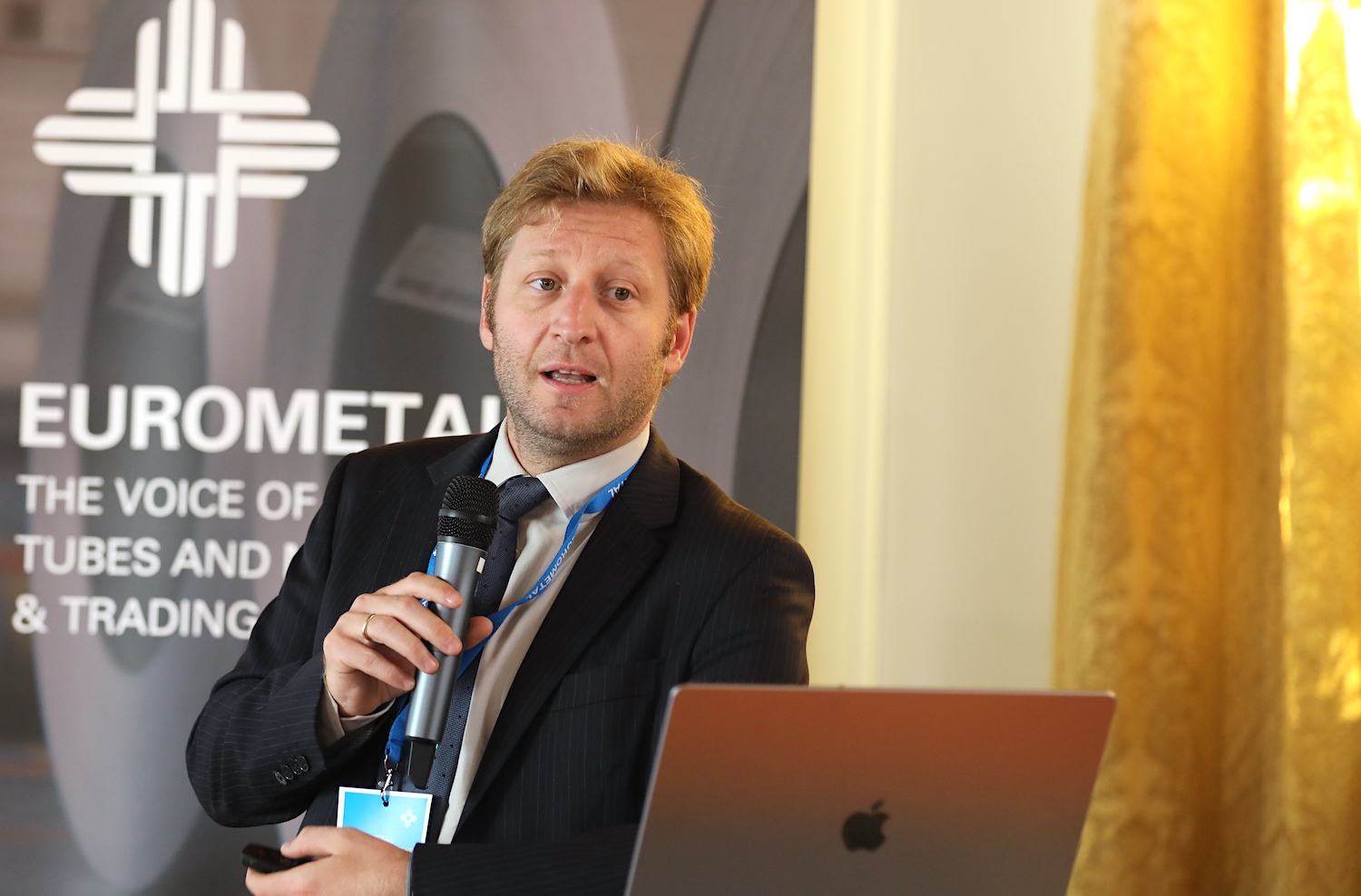
EUROMETAL: a Milano il punto di vista della distribuzione
Scenario assai complicato quello descritto nel “Regional Meeting Southern Europe”
MILANO – È uno scenario assai complicato quello descritto dai partecipanti al “Regional Meeting Southern Europe” di EUROMETAL, tenutosi oggi 15 settembre a Milano. Paolo Sangoi, presidente di Assofermet Acciai, ha aperto i lavori parlando di «momento eccezionale nella storia» a causa di problemi quali l’impatto del prezzo dell’energia sulla produzione industriale, l’aumento dell’inflazione e il suo influsso negativo sui consumi e la sempre più agguerrita concorrenza dei fornitori asiatici. In questo contesto difficile, ha detto, «dobbiamo lavorare insieme per minimizzare i margini di errore negli impegni di tutti i giorni» ed è importante che la distribuzione goda di eccellente salute per poter fare da “cuscinetto” tra produttori e utilizzatori finali con volumi e margini operativi soddisfacenti.
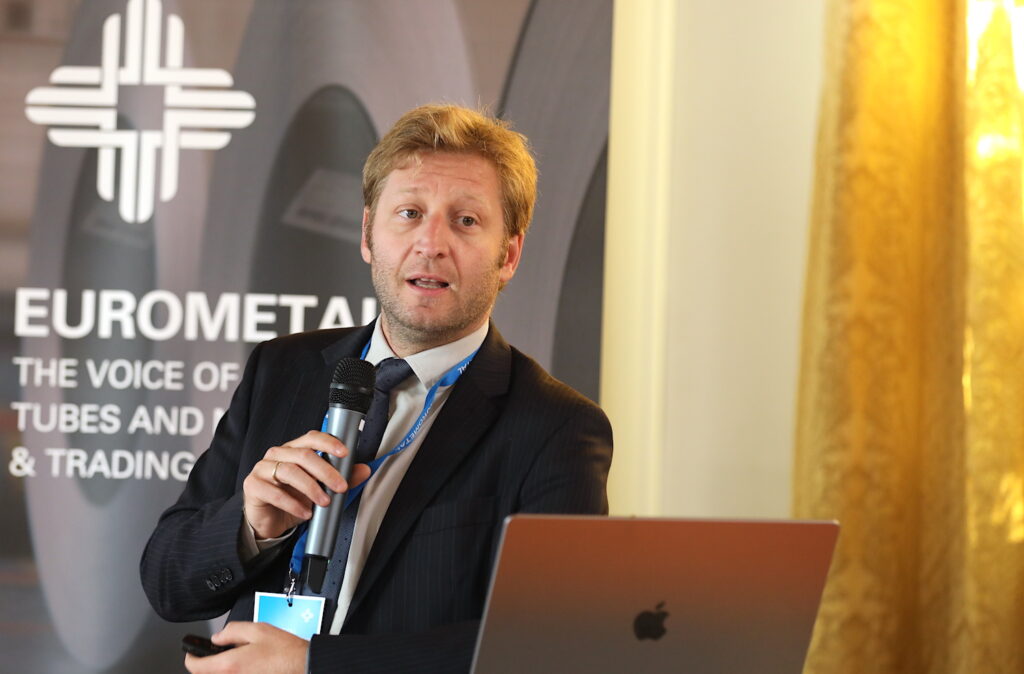
La prima parte del convegno ha ospitato presentazioni come quella di Emanuele Norsa (Kallanish), che ha fatto il punto sull’andamento del mercato europeo e mondiale dell’acciaio, sottolineando come la Cina continui ad avere un impatto estremamente importante sul resto del mondo. Nel Paese sono calate nella prima parte dell’anno la produzione di acciaio, il consumo apparente e la domanda finale, e le previsioni sono di un ulteriore peggioramento nei prossimi mesi. Esaminando l’andamento delle materie prime per la siderurgia e dei principali prodotti finiti, Norsa ha rimarcato la differenza tra minerale ferroso e rottame, con il prezzo del secondo che resta più alto della media del 2021, al contrario di quello dell’iron ore che dovrebbe chiudere l’anno su livelli nettamente inferiori. Parlando di prodotti finiti, mentre i coils a caldo soffrono a causa soprattutto della crisi dell’automotive, il tondo gode del sentiment relativamente positivo che si registra nel settore delle costruzioni. Guardando al futuro, mentre è difficile che la domanda di prodotti piani cresca in modo significativo entro fine anno, con il sentiment dei consumatori che rimarrà debole a causa dell’inflazione, Norsa ha affermato di sperare in un miglioramento della situazione dall’inizio del prossimo anno, grazie a un aumento dei consumi, come da ultime previsioni di Eurofer.
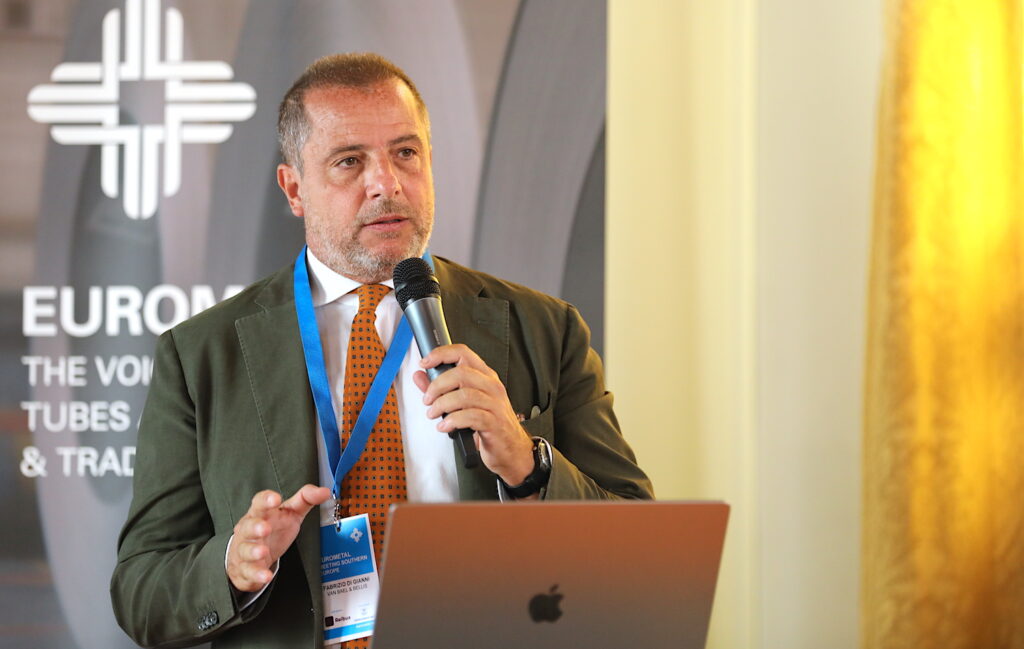
In seguito, Fabrizio Di Gianni (Van Bael & Bellis) ha ripercorso le tappe che hanno portato alle attuali misure di salvaguardia in Ue ed elencato le dispute commerciali in corso. Il legale di Van Bael & Bellis ha affermato che il numero di cause commerciali è diminuito dall’entrata in vigore della salvaguardia e che questo tornerebbe a crescere qualora la stessa salvaguardia dovesse essere revocata. Sono quindi intervenuti Lara Stoyanova (Argus) e Andrea Gabrielli (Gruppo Gabrielli) per parlare rispettivamente dell’evoluzione dei prezzi dei prodotti piani in Italia e delle opportunità e dei rischi per i centri di servizio italiani. Entrambi hanno ricordato come i prezzi dei coils a caldo, dagli oltre 1.300 €/t di marzo/aprile, siano successivamente diminuiti fino toccare livelli inferiori a quelli pre-bellici a giugno. Da agosto è emerso sempre più fortemente il problema dell’esplosione dei costi, in particolare energetici, che ha portato a sempre maggiori tagli di produzione e a un conseguente incremento delle quotazioni dei prodotti finiti, seppur lieve a causa della domanda debole. Allo stesso tempo, tuttavia, si è assistito a un aumento delle offerte da Paesi terzi a prezzi competitivi. Queste, pur generando un interesse non troppo significativo – a causa di complicazioni logistiche e lunghi tempi di consegna – stanno influendo negativamente sul sentiment degli operatori del Vecchio Continente.
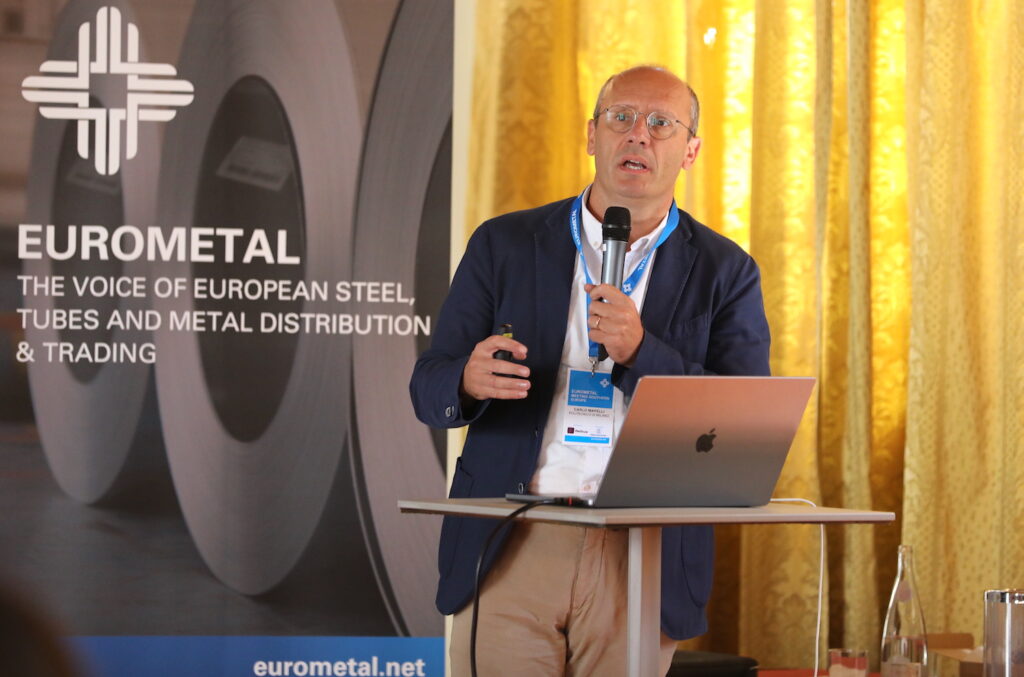
Dopo un intervento di Carlo Mapelli (Politecnico di Milano) con una presentazione sui nuovi processi di produzione dell’acciaio nell’ottica della riduzione delle emissioni, è stato il momento di una tavola rotonda alla quale hanno partecipato Tommaso Sandrini (San Polo Lamiere), Cesare Viganò (ArcelorMittal CLN), José Rufino (Semimetais) e Lorenzo Biagi (Marcegaglia). Tutti hanno concordato sul fatto che la domanda di piani difficilmente aumenterà entro la fine di quest’anno e che a livello europeo si andrà incontro a ulteriori operazioni di destoccaggio. Quanto al 2023, hanno detto di aspettarsi un anno estremamente sfidante dopo un 2022 complessivamente buono. «Come centri servizi dovremo iniziare a pensare a breve a quanto e da dove acquistare nel primo trimestre – ha affermato Rufino –. Penso che la maggior parte di noi abbia quasi finito di destoccare. Nel frattempo, credo che i tagli alla produzione non siano finiti». Questi, ha affermato Viganò, «dovrebbero continuare fino a che il mercato non sarà in equilibrio». Anche Sandrini si è detto «pessimista per varie ragioni: ci sono molti squilibri e anche nel nostro business stiamo gestendo un maggior numero di rischi rispetto al passato. Dovremo far attenzione a gestire ogni elemento nella nostra attività quotidiana. In una prospettiva globale, penso che l’approccio sarà cauto, ad oggi non condivido l’outlook di Eurofer secondo cui avremo una domanda in espansione».
di Stefano Gennari


Acciaio, anche la distribuzione in attesa di decisioni europee sull’energia
È uno scenario complicato quello che è stato descritto dai partecipanti al “Regional Meeting Southern Europe” di EUROMETAL che si è tenuto a Milano il 15 settembre 2022.
Dopo un 2022 complessivamente buono, la distribuzione si aspetta un 2023 molto sfidante.
L’impatto dei prezzi dell’energia sulla produzione, l’aumento dell’inflazione e il suo influsso negativo sui consumi, le distorsioni di mercato dovute alla Salvaguardia sono alcune delle principali problematiche che il settore si trova ad affrontare.
siderweb ne ha discusso con Paolo Sangoi, presidente di Assofermet Acciai.
di Stefano Gennari
EU emergency measures on energy prices unlikely to stop output cuts: Eurofer
European steel industry association Eurofer believes that emergency measures proposed for implementation in the EU did not have targets high enough, nor timeframes quick enough, to bring down energy prices and to uphold the European steel industry’s competitiveness in the global markets, it said on Thursday September 15.
“The European market is being flooded by cheaper imports from third countries that are subject to only a fraction of the energy costs that EU steel producers have to bear,” Eurofer director general Axel Eggert said.
On September 14, the EU proposed the following measure to combat high energy prices:
- A reduction by at least 5% in gross electricity consumption during the peak price hours, to reduce overall electricity consumption by at least 10% from now until March 31, 2023.
- A temporary revenue cap of €180 ($180) per MWh until the same date, intended to recover excess revenues from electricity generators with lower marginal costs, such as renewables and nuclear power. Such measures were estimated to be able to generate around €117 billion ($116.85 billion) to support electricity consumers exposed to high prices.
- An exceptional solidarity contribution from companies in the oil, gas, coal and refinery sectors, which have benefited from surplus profits arising from the energy crisis “to ensure that the whole energy sector pays its fair share in these difficult times.” This would be calculated at a rate of at least 33% and applied to 2022 profits, which showed an increase of more than 20% over the average profits of the previous three years. This would complement the temporary revenue cap on “inframarginal” technologies and could bring in around €25 billion of public revenue.
Eurofer believed, however, that these measures were not be able to immediately secure affordable energy supplies for energy-intensive steel industry users. There must be “immediate, more ambitious and more industry-targeted measures to bring down energy prices and costs for industries exposed to fierce global competition,” the association said.
“Unfortunately, these measures are unlikely to stop the current trend of production curtailments and temporary lay-offs,” Eggert said.
“Without swift action, these could become permanent,” he added, “and the EU would jeopardize the resilience of its domestic steel sector, a strategic asset for the EU’s own autonomy, and depended on by key downstream sectors such as the automotive, construction, mechanical engineering, defense, health, sanitary and renewable energy equipment sectors.”
Published by: Elina Virchenko

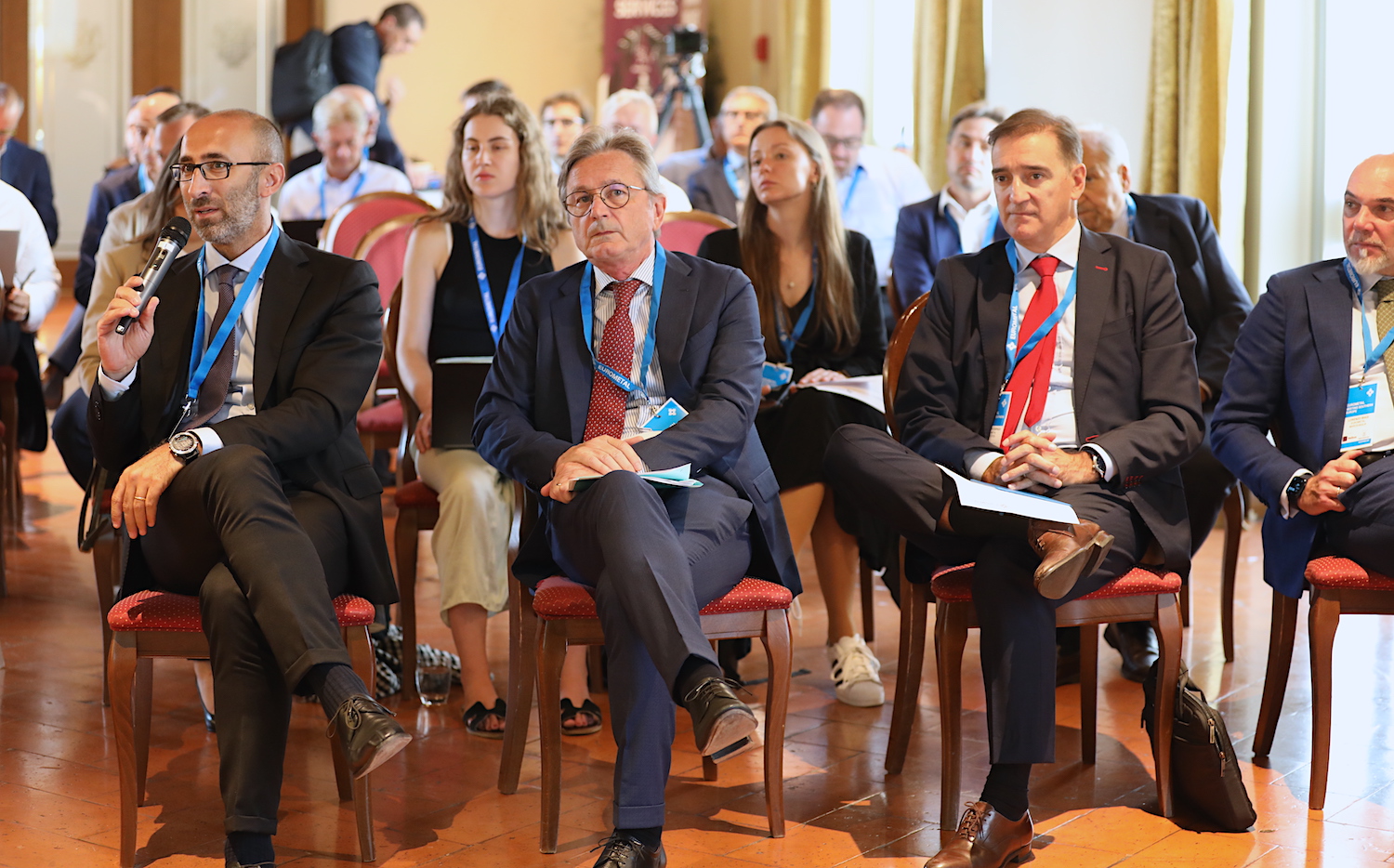
EUROMETAL Meeting debated energy crisis and EU looming recession in Milan
Latest EUROMETAL meeting of Distributors and Steel Service Centers from Southern Europe was convened in Milano on 15. september 2022.
Of the 61 registered, 56 steel professionals were present from Italy, Spain, Portugal, Switzerland, France, Austria, Belgium and Netherlands.
You can find here some of the press articles resulting from this meeting:
- Cost of sustainability will limit European green steel aspirations
- European steel demand unlikely to rebound in 2023, Eurometal meeting hears
- ArcelorMittal holds firm coil offers for November: sources
- ArcelorMittal cuts EU HRC offer by €40/t
- EU steelmakers’ output cuts need to continue: distributors
- Italy’s Arvedi to temporarily halt EAFs on high energy costs, low demand
This event was organized in collaboration with Assofermet, the Italian association of distributors and steel service centers.

Van Leeuwen switches to solar power
A solar panel installation with a 5-megawatt peak capacity was put into operation at Van Leeuwen Pipe and Tube Group in Zwijndrecht, the Netherlands.
With solar panels covering a total area of 23,500m2, the company will be able to provide green energy to all its branches in the Netherlands and Belgium, Kallanish hears. In addition, it will return sufficient power to the grid for 300 households in the Netherlands.
The solar photovoltaic installation is part of the sustainability strategy at Van Leeuwen, with several steps already taken. Examples are replacing the lighting in the warehouses by LED and reducing the use of natural gas by over 60%. In the Netherlands, the Van Leeuwen trucks have started running on HVO100 fuel, making the distribution CO2 neutral. In various other branches in Europe too, projects have been launched to install solar panels on the roofs.
The official ceremony in Zwijndrecht was performed by the former Prime Minister of the Netherlands, Jan Peter Balkenende.
Christian Koehl Germany

Acciaierie d’Italia ramps up production
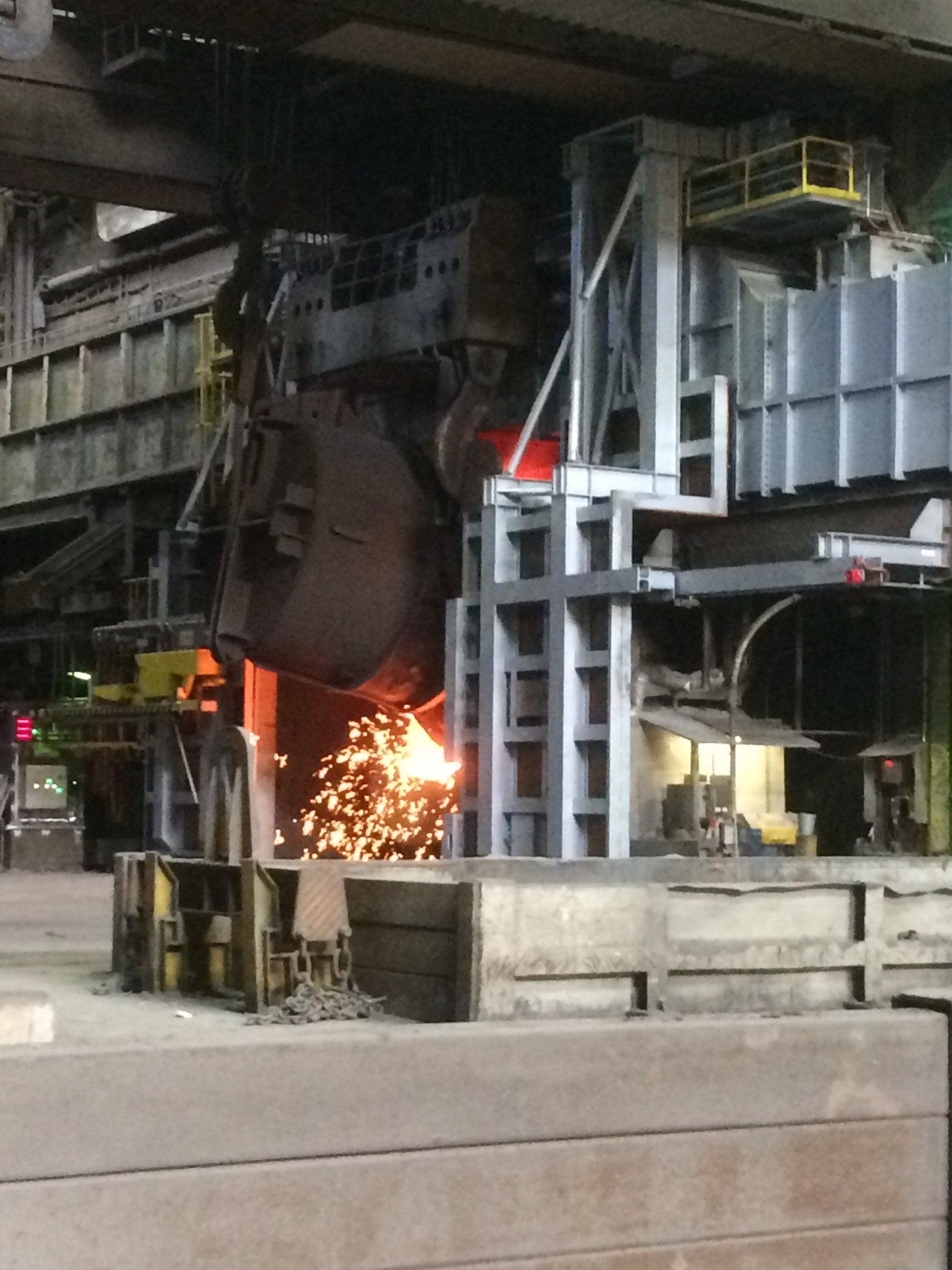
Acciaierie d’Italia, the joint venture between ArcelorMittal and state-owned Invitalia, is gradually increasing production after earlier mothballing equipment at its Taranto steelmaking facility to address the current unsustainable costs of energy.
This week, some equipment in the cold area is now restarting and shifts are being added, sources close to the company tell Kallanish.
At the end of 2021, the steelmaker mothballed blast furnace no.4 because of a technical issue. This followed the restart of BFs no.1 and 4 in October. The latter was idled for about seven months and the company spent €70 million ($69m) on upgrade works. The steelmaker, formerly known as Ilva, mothballed blast furnace no.2 last month amid the downturn in prices and demand in the global coil market. At present, Taranto continues to work using two BFs.
Meanwhile, the USB unions are threatening strikes to protest against the use of temporary layoffs that are set to affect about 2,500 workers at Taranto. The scheme expires in March 2023, Kallanish understands. The Italian government however is mulling an extra two months’ layoff scheme based on the current crisis in energy-intensive sectors such as steel.
Natalia Capra France

French rebar demand remains weak, prices stable
French rebar activity remains weak, with demand unreliable but prices stable. Relatively small sales volumes are reported in September as the sector has yet not properly resumed after the August summer break, sources tell Kallanish.
Buyers are only purchasing between 2,000-3,000 tonnes per order and less from distributors. Consumers’ confidence is said to be low, and uncertainty is slowing the private residential construction market. According to distributors, new projects are being put off and construction firms may not be willing to absorb any more price hikes.
Some slightly lower-priced material sales are reported in France from Spanish and Italian producers. Domestic rebar contracts are stable on August at an average of €950/tonne ($947) ex-works including size extras. They have a low point of the range at €850-900/t and a high point of the range at €1,100/t ex-works depending on client and tonnage, sources suggest.
French scrap this month is stable compared to August but scrap merchants are lamenting lower sales volumes. French flat and long steelmakers are implementing production halts due to the high cost of energy. Production plans however change by the day according to the daily levels of gas and electricity, Kallanish notes.
According to l’Institut National de la Statistique et des Études Économiques (Insee), sentiment among French construction companies improved in August compared to July. However, although their outlook for the next three months of activity has improved, companies’ opinion of the past three months’ activity has deteriorated. Companies continue to face supply difficulties and will limit their production capacity (see Kallanish 5 September).
Natalia Capra France

Cost of sustainability will limit European green steel aspirations
Bearish trends in the steel markets, combined with the difficulty and cost of developing sustainable technologies, presented significant challenges to the European steelmaking sector, an industry conference has heard.
Professor Carlo Mapelli, of the mechanical engineering department at Milan Polytechnic in Italy, was speaking at the conference held in Milan, on September 14-15, by regional steel industry association EUROMETAL. He discussed the significant obstacles faced by European steelmakers in their attempts to make their businesses more sustainable.
In view of the steel industry’s carbon dioxide reduction goals for 2030 and 2050, many mills were planning to implement more sustainable practices and processes. The goal by 2030 was to reduce carbon emissions by 50%, while by 2050 the target was to become completely carbon-neutral.
The steelmaking industry emits 2.8 billion tonnes of CO2 every year, approximately 5-6% of global emissions, Prof Mapelli said. There is thus significant pressure on the industry to become more sustainable.
Green hydrogen, for example, can be used as a reductant substitute in the production of direct-reduced iron, and is often cited as an effective, low-carbon alternative.
SSAB, LKAB and Vattenfall joint venture Hybrit started the first pilot plant for the production of fossil-free sponge iron inaugurated on August 30, 2020.
But Prof Mapelli said that using hydrogen as a reductant is inefficient in terms of sustainability because of the large amount of water it uses to produce the hydrogen. He also highlighted other concerns with the process, including the risks involved in the safe transport of hydrogen, its storage, and the extent of land use involved.
Mapelli discussed other alternatives, including exploitation of biomass as a more renewable option, and electro-splitting of iron ore, although he thought that this was less realistic as a long-term solution.
And while developing technologies which are genuinely sustainable appeared to be complex, expecting buyers to pay high premiums for green steel was a separate problem.
Some downstream industry sectors, such as the automotive industry, could pay these high premiums and pass costs on to consumers, especially during times of high demand and economic growth, Fastmarkets heard. But many industries may not see enough value in paying the premiums.
Furthermore, investing in such technologies represented a sizable financial risk for companies. Prof Mapelli said that the cost of constructing a photovoltaic power station was around €8 billion ($7.99 billion).
With interest rates rising and potential stagflation on the horizon, it was less likely that companies would have the extensive capital required to invest in untested technologies and expensive processes when returns were by no means guaranteed – at least, in the short term.
Furthermore, considering forecasts for a further downtrend in end-user consumption and a possible worsening recession, it was unlikely that buyers would pay huge premiums for steel when there was so little demand.
The bearish nature of the forecast was discussed at great length during the EUROMETAL conference.
The consequences of Russia’s invasion of Ukraine demonstrated the vulnerability of Europe’s over-reliance on Russia for energy. Some countries have had to step back from their sustainability goals to prioritize the constricted supplies of electricity and gas.
Despite plans to phase out coal-fired power generation by 2038, for example, Germany has reopened two such power stations throughout August to save gas.
Given the poor outlook, sustainability and green steel may have to take a back seat until economic forecasts become more optimistic and the energy situation stabilizes.
And it may be some time before alternatives emerge which are cost-efficient as well as genuinely sustainable on all major fronts.
Published by: India-Inés Levy
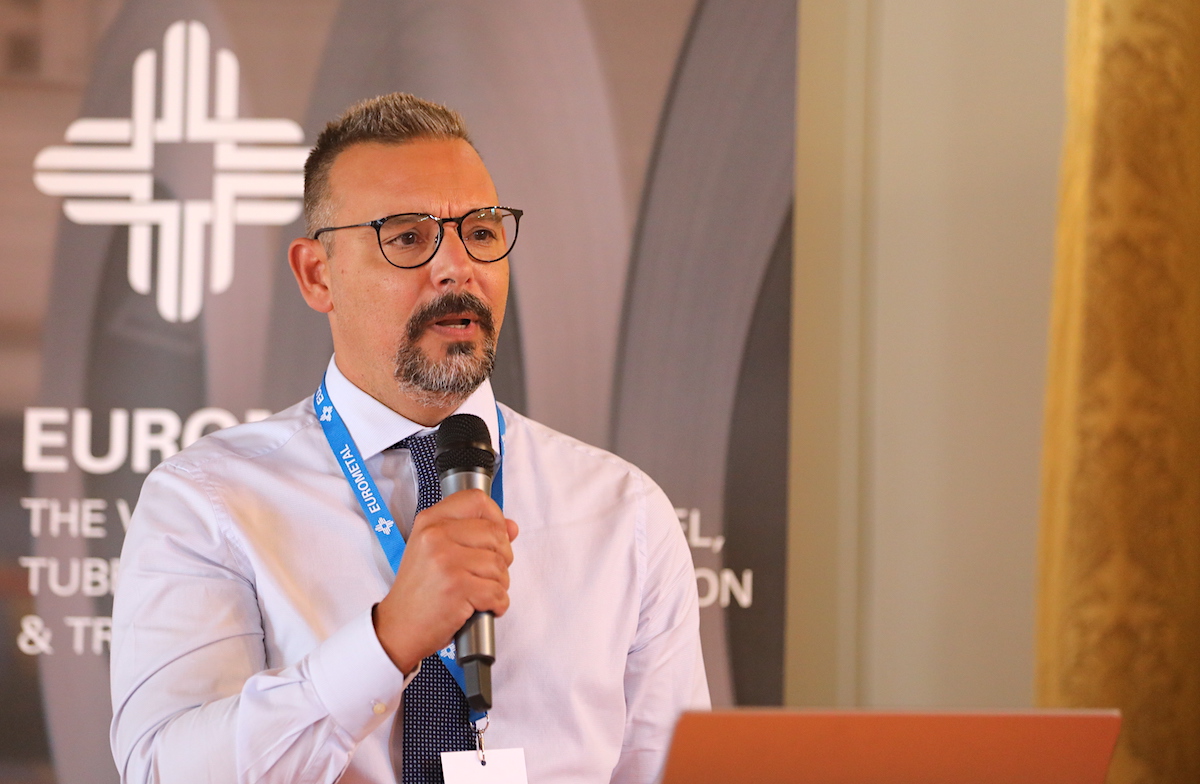
European steel demand unlikely to rebound in 2023, Eurometal meeting hears
European steel distributors expected a difficult year for business in 2023 because of worries about consumption, the energy crisis, and a looming recession in Europe, market sources said during EUROMETAL’s regional meeting in Milan, Italy, on September 14-15.
The disruptions to global supply chains created by Russia’s unprovoked war against Ukraine, and the resulting energy crisis in Europe, were expected to take a toll on the steel sector in the area, the regional steel industry association’s meeting was told.
Fellow European steel association Eurofer expected steel consumption among the 27 EU member nations to drop by 1.7% in 2022. But this would be followed by a 5.6% recovery in 2023, it said.
The region’s steel distributors, however, had doubts about there being a steel consumption recovery in 2023, Fastmarkets heard.
Imbalance in steel market
Russia’s war against Ukraine has rattled the global steel markets, and caused a wave of a panic-buying during February-March. That pushed prices for flat and long steel to new historic peaks and broke records set in summer 2021.
For example, Fastmarkets’ calculation of its daily steel hot-rolled coil index, domestic, exw Northern Europe, averaged €1,278.50 ($1,276.91) per tonne in March 2022, up by €326.49 per tonne from €952.01 per tonne in February and up by €489.60 per tonne from €788.90 per tonne in March 2021.
But since April 2022, HRC prices in Europe have been falling non-stop amid slowing end-user demand and the overstocking that resulted from the earlier panic-buying.
“Steel sales during the second half of [2022] have been much lower than anyone would expect, so distributors still have quite large stocks [of flat steel products],” a distributor in southern Europe said. “In fact, steel sales in July 2022, which is traditionally a good-selling month for the sector, were even weaker than in July 2020 [the Covid-19 pandemic year].”
Eurometal’s stock index for flat steel service centers in the EU was 107 in June 2022, compared with 71 in June 2021. The index uses the 2018 average as its 100-point basis.
More production cuts expected
European steel producers have started to make massive cuts to output this month, with ArcelorMittal in the lead, idling five blast furnaces across its European assets recently.
“[But] more steelmakers need to cut output in order to stabilize the prices [for flat steel products],” another source said.
The chronic overstocking and weak demand from end-user sectors meant that more production cuts were needed to balance supply and demand, market sources said.
“Production cuts at [European] mills were announced too late. The situation [with steel demand] was already clear in May,” an Italy-based distributor said. “Further production cuts should be implemented until supply and demand are in balance.”
Sources agreed that the effect of the current production cuts on the European steel prices were still uncertain, and they expected more European mills to curtail their output to balance the market.
Energy prices to be main price driver
Despite weak demand for steel in Europe, the producers have been pushing for higher prices for both flat and long steel products recently, seeking €50-100 per tonne increases to account for the rises in costs.
“It is a cost-driven price increase, not demand-driven, so it will be extremely difficult to achieve it in transactions,” another trading source said.
For example, in July 2022, the average wholesale price of electricity in Germany exceeded €315 ($315) per MWh, nearly four times the price in July 2021.
During August, the price for energy in the nation surpassed €500 per MWh for the first time in history, sources told Fastmarkets.
Energy prices in Europe were expected to remain high in the long run due to the uncertainty in the market and the risk of further disruptions to Russian gas supplies to the EU.
“The year 2023 will be a year of low demand and high costs,” another distributor said.
Import pressure on European prices
Recently, the gap between overseas and domestic HRC prices in Europe has been enormously wide. Consequently, European market participants have suggested that the arrival of cheaper imported HRC in Europe might constrain the potential price growth early in 2023.
Notably, if more output cuts were to be implemented in the autumn of 2022, by the first quarter of 2023 European mills might reach a point when the balance between supply and demand was restored. So producers might try to implement price rises.
But if the European market were to be flooded by cheaper overseas-origin coil, a price rise would be quite hard to achieve.
Notably, Asian suppliers were currently offering HRC for delivery early in the first quarter of 2023 at €680-700 per tonne cfr to Italy, while that country’s mills have been offering HRC to the domestic market at €800 per tonne exw this month.
Published by: Julia Bolotova
ArcelorMittal holds firm coil offers for November: sources
Sources in the market confirm this week that ArcelorMittal is holding firm its offers for coil products to be delivered in November.
At the end of August, the company raised its offers on the back of higher energy costs. The move, followed by other steelmakers, stopped the downward trend of coil prices in Europe, but a firm recovery is yet to be seen.
New offers for November are at €810/tonne ex-works for hot rolled coil and €910-930/t for hot-dip galvanized coil.
Sources at this week’s EUROMETAL meeting in Milan attended by Kallanish confirmed that expectations for the fourth quarter are for coil prices to show some recovery after the current stabilisation. Sentiment in the market remains weak due to low apparent steel demand across Europe but distributors and service centres agree price levels need to recover following the latest spike in energy costs and output reductions by steelmakers.
Emanuele Norsa Italy