


French rebar market drags on gloomy sentiment
French rebar activity remains relatively weak, with slow demand from larger and smaller buyers. They continue to purchase small tonnages but at stable prices, sources tell Kallanish.
Domestic production is patchy with steelmakers alternating between stoppages and restarts each week. Production plans are changing according to daily supply of gas and electricity.
Sentiment however is gloomy throughout Europe. As sales activity has not properly restarted after the August maintenance stoppages, sellers and buyers are beginning to believe there will be a significant price and demand decline in October, and the market will go through a standoff. Uncertainty is causing weakness in the French construction sector, which continues to be plagued by high prices and slow private residential apartment sales.
Some sources reject the idea of a market deadlock in France. They believe the situation of demand and sales volumes will continue to be slow until the end of the year, with buyers purchasing some 1,000-2,000 tonnes of rebar per order.
French domestic rebar contracts are stable on August at an average of €900-920/tonne ($877-898) ex-works including size extras. The low point of the range is pegged at €850/t and high point of the range at €950-1,000/t, depending on client and tonnage, sources suggest. Some slightly lower-priced material sales are being reported, particularly in southern France, from Spanish and Italian producers.
Rebar market players in Germany and Austria also point to a drastic slowdown in home construction. A recent purchasing round saw transactions at rebar base prices of around €750/t. Mills then lifted offers to €800-840/t, although observers say these are hypothetical, as long as nobody is buying. The next purchasing round will be for production in October/November (see Kallanish passim).
In Italy, rebar prices are beginning to recede due to poor domestic sales volumes, and are pegged at €680-700/t base ex-works.
Natalia Capra France


Moody’s metals and mining outlook turns negative
Moody’s outlook for the global metals and mining sector has turned negative, reflecting expectations that aggregate Ebitda will contract for the largest companies during the coming 12 months.
Steel prices remain above historical averages, but their recent plunge will significantly reduce steelmakers’ Ebitda and cash flow, the credit rating agency says.
Prices have softened due to supply-chain disruptions reducing global demand; Covid-related lockdowns and weaker residential construction reducing consumption in China; and inflationary cost pressures and higher interest rates weighing on sentiment and economic growth.
“Higher costs will likely keep prices above historical averages in some regions but may not keep profit margins at an elevated level. That is because producers are investing in ultra-low emissions upgrades and less-polluting production technologies, consuming more scrap and less-polluting metallics which could result in higher prices for these materials, and incurring increased carbon and higher energy costs,” Moody’s says in a report sent to Kallanish.
Significant capacity additions will also increase competition in the US and could lead to further price declines, it adds.
Iron ore producers’ Ebitda will meanwhile weaken with prices. Prices will remain in the lower half of Moody’s medium-term price sensitivity range of $80-125/tonne during the coming 12 months. Weakness in global steel production, particularly in China, and seasonally higher production volumes in Australia and Brazil will squeeze prices and, consequently, Ebitda for major iron ore producers, the agency observes.
In contrast to most base metals, iron ore inventories are increasing and premiums for higher quality iron ore are narrowing, an indication of surplus in the main markets.
“Metallurgical coal producers’ earnings, while also remaining elevated, will decline more than thermal producers’. That is because prices have already fallen materially from record levels as end-market demand weakens from the steel sector, particularly in China because of the country’s property-market slowdown,” Moody’s concludes.
Adam Smith Poland

Schuler aims to tackle increasing metalforming cyber attacks
Schuler says it has developed various solutions for effective protection against cyberattacks, Kallanish hears from the German sheet press equipment maker, a subsidiary of plantbuilder Andritz. This comes amid increasing cyber attack cases at metalworking companies, it says.
The system has been developed with partner company Otorio and will be marketed under the name “Cyber Security Check” against theft, damage, and production downtime.
Schuler and Otorio are offering to initially conduct an inventory of equipment and the entire production network, with an eye on holes for malicious software, viruses, incorrectly configured firewalls, and outdated operating systems. Gaps in the security situation are identified and then the risks are prioritised according to their impact on business processes as well as other components, Schuler explains.
A minimum level of appropriate precautions is now required by many insurance companies and also lawmakers, and failure to implement this may lead to hefty fines, Schuler notes.
Christian Koehl Germany
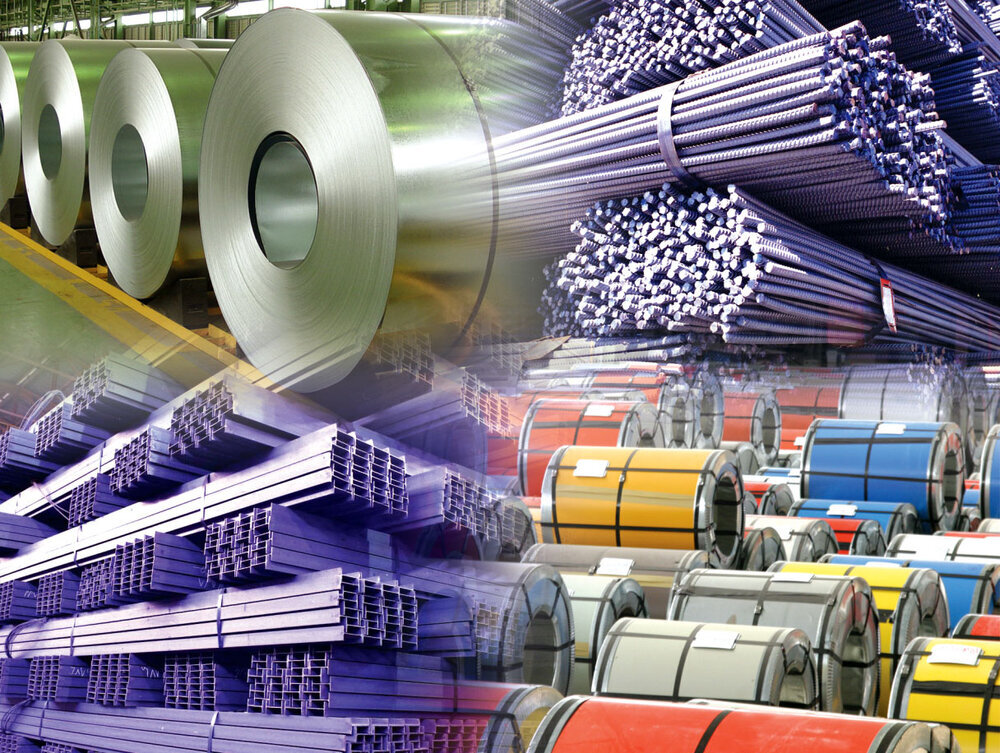
Italian stainless flats sales improve slightly, uncertainty remains
Some sales activity for Italian stainless steel coils, sheets and tubes is resuming in September after a long period of market weakness, sources in the sector tell Kallanish.
While most service centres and re-rollers report some improved sales, however, some sources believe this may only be the result of a seasonal effect. July and August were very weak months and coil buyers continue to order very little. As stocks remain high, sources do not expect a demand rebound in October as uncertainty and high prices continue to slow market activity.
France, Italy and Spain continue to drag compared to a slightly more dynamic Germany. Stainless flat products and tube stocks are said to be reducing in Germany, but this changes according to each distributor.
Despite the negative sentiment, the feeling in Italy is that the fall in prices of coil and its derivatives has ended thanks to the multiple production stoppages across European steelmakers. The situation remains particularly complicated for laser and decoration pipes, for which demand continues to be in a deadlock. Tube prices lost a further €200/tonne ($195) in September.
Despite some improvement in flats sales being registered in all European countries this month, “there is fear of losing orders, and uncertainty”, a source comments. Service centres continue to order as few coils as possible and are now receiving material bought earlier at very high prices.
Stainless cold rolled coil in Italy is below the level of €3,000/t, at about €2,850-2,950/t. Hot rolled coil is at about €2,500-2,650/t delivered, sources suggest. For October delivery, steelmakers are not quoting, but they are expected to push up values.
Natalia Capra France

EU coil supply-demand balance remains elusive amid stoppages
Numerous European coil mills have reduced their output, idling blast furnaces here and rolling mills there, but a resulting market supply shortage that would lift prices is yet to be felt.
Inventories at stockholders and consumers are still very full, according to sources in various countries. “Mills have taken the necessary measures, but the output volumes are still not in balance with the low demand,” a Dutch buyer tells Kallanish. A manager of an Austrian service centre concurs, voicing the impression that mills are still vying for volumes to utilise the reduced capacities.
However, a Benelux service centre manager sees light on the horizon. “The reduction of output will lead to longer lead times, and that’s when distributors will get nervous,” he cautions. He argues that distributors and big consumers will anticipate stretching delivery times, “and they will start replenishing to avoid shortages, and prices will rise alongside”.
Sources so far agree in that they do not see prices sinking below summer levels any more. For hot rolled coil, this means a current price range of €750-800/tonne ($732-781) ex-works in the Benelux, Germany and Austria. With similar price levels currently in Italy, Austria’s price advantage over Germany has temporarily disappeared.
The premium of cold rolled coil over HRC is at €80-100/t, while that of galvanized coil will be between €100 and €135. Within these ranges, prices differ quite a bit from one mill to another, the Austrian manager notes.
Christian Koehl Germany

H2 Green Steel partners with Greeniron H2 for iron waste recycling
Sweden’s H2 Green Steel said Sept. 23 that it has partnered with Greeniron H2 to achieve further emissions reduction and increased circularity in the former’s plant at Boden in Northern Sweden.
Greeniron H2 is a Swedish startup focused on cost efficient CO2-free reduction of metal oxides to pure metals. Its hydrogen-based CO2-reduction process will be used to recycle iron residuals and waste from H2 Green Steel’s operations.
Greeniron H2 will place its furnaces on H2 Green Steel’s site in Boden, where residuals such as oxidized scale and waste materials from the production will be collected and refined with green hydrogen through Greeniron H2’s patented process. Up to 150,000 mt of waste and residuals will be collected and recycled every year, and the output will comprise value metals that can be cycled back into the steelmaking process.
The agreement between the two aims to set a model steel plant for the future by addressing the circularity of iron materials.
H2 Green Steel is developing a green hydrogen powered steel plant in Boden, northern Sweden, which will have an initial production of 2.5 million mt/year from 2025, potentially increasing to 5 million mt/year by 2030.
— Ekaterina Bouckley


EU HRC prices stable in slow market, more production cuts expected
European domestic prices for hot-rolled coil remained stable on Sept. 23 due to limited trading activity caused by distributors’ high stocks and slow demand from end consumers.
In addition, high production costs have restricted steelmakers’ ability to give discounts.
Reduced production rates and some equipment stoppages implemented by European producers, including ArcelorMittal, Arvedi and Liberty Steel, have not been sufficient to balance reduced supply and demand. Market participants expected that more steelmakers would choose to stop equipment to support domestic prices.
“It is only a matter of time before we will see more capacity shutdowns, as demand is weak and it will take time before distributors manage to decrease their coil stocks,” a Northern Europe-based source said.
Meanwhile, a steelmaker said that, with each furnace stopped, supply and demand get closer to a balance.
“I think that mills will stop more meltshops and more producers will choose to temporarily idle rolling capacities,” the steelmaker said.
Platts assessed hot-rolled coil in Northwest Europe at Eur735/mt ex-works Ruhr on Sept. 23, unchanged day on day.
German mills have held prices for buyers within the country at Eur750-760/mt ex-works Ruhr minimum. However, some mills have been trading in other European countries at Eur700-730/mt ex-works Ruhr.
Such strategy allowed the mills to protect prices in Germany and also not to cause further drops in other countries. Taking into the account the delivery costs, the prices have been close to those available from local mills, sources said.
Platts assessed hot-rolled coil in southern Europe stable on day at Eur750/mt ex-works Italy Sept. 23. The assessment was based on offers and achievable prices heard at Eur740-780/mt ex-works Italy.
Platts assessed South European imported HRC at Eur710/mt CIF on Sept. 23, unchanged on the day.
The majority of the market sources reported offers for HRC from Asia and Turkey, including anti-dumping duties, at Eur700-730/mt CIF Italy. One source, however, said that Far East mills have reduced offers to Eur670-680/mt CIF Italy. The information has not been widely confirmed in the market.
Platts is part of S&P Global Commodity Insights.
— Maria Tanatar
LME scrap contracts see gains, near-term backwardation shifts into soft contango
Near-term scrap futures contracts on the London Metal Exchange saw gains over the week to Sept. 22, while weekly trading volumes decreased.
Platts, part of S&P Global Commodity Insights, assessed the September contract up $2.50/mt week on week at $360.50/mt, while the October contract jumped $14/mt to $361/mt. The November contract gained $8/mt to $360/mt, while the December contract rose $3.50/mt week on week to $358.50/mt.
The backwardation over the September-October portion of the curve shifted into a soft contango, suggesting some futures traders expect scrap prices to strengthen slightly in the physical market in the near term.
The October-December portion of the forward curve shifted into backwardation, suggesting expectations of slightly softening prices into the fourth quarter.
Spot prices for physical imports of premium heavy melting scrap 1/2 (80:20) increased $1/mt week on week to $350/mt CFR Turkey on Sept. 22, following a fresh Baltic-origin deal. Turkish mills were aiming for lower levels for scrap imports, while sellers sought higher prices.
Despite the relatively low volume of domestic finished steel sales and continued soft demand in Turkey, deepsea recyclers pushed for sharply higher CFR Turkey prices, amid anticipation of some Turkish mill restocking, and alternative bulk cargo demand to Asia and Latin America.
“All we can say with any amount of certitude is that the downtrend is most likely over, [but] we can’t yet predict a stronger market,” one EU recycler said.
Weekly LME scrap futures trading volumes over the week to Sept. 22 totaled 53,110 mt, down from 100,470 mt for the week ended Sept. 15.
Near-term rebar futures contracts also saw strong gains over the week to Sept. 22.
Platts assessed the September contract up $8/mt week on week at $669.50/mt, while the October contract jumped $24.50/mt to $670/mt. The November contract rose $14.50/mt to $661.50/mt, while the December contract increased $17/mt week on week to $660.50/mt.
The near-term backwardation over the September-October portion of the forward curve shifted into a soft contango, suggesting that futures traders expect prices in the physical market to remain firm in the near term.
The backwardation over the October-December portion of the forward curve strengthened, suggesting expectations of a downward price trend for rebar in the physical market into the fourth quarter, albeit still at elevated levels.
Turkish physical rebar export prices gained $5/mt week on week to $675/mt FOB on Sept. 22, as Turkish mills raised offers while scrap supply tightened. Sources also reported some small volume sales to Israel and Yemen.
Some domestic rebar sales were also heard, amid restocking prior to an expected weakening in the Turkish lira following the Turkish central bank’s decision to cut benchmark interest rates by 100 basis points to 12% on Sept. 22, despite inflation running at a 24-year high.
One Iskenderun mill source sold 2,000-3,000 mt at $700/mt ex-works Sept. 21. Sources also reported domestic rebar sales totaling around 40,000 mt at $685-$690/mt ex-works.
Rebar futures weekly trading volumes in the week on the London Metal Exchange totaled 25,460 mt, up from 16,470 mt in the week ending Sept. 15.
The daily outright spread between Turkish export rebar and import scrap was assessed at $325/mt Sept. 22, up $4/mt week on week.
Elsewhere, the LME Indian shredded scrap contract, which settles basis the Platts CFR Nhava Sheva shredded scrap assessment, traded 150 mt on week to Sept. 15. The contract has seen a total volume of 7,410 mt traded since its launch in late July 2021.
— Rabia Arif, Viral Shah

Tata Steel, Hardt Hyperloop partner on low carbon steel to reduce transport emissions
Tata Steel and Hardt Hyperloop have signed a contract to use Tata’s low carbon steel product Zeremis Carbon Lite in the Hardt Hyperloop high-speed, sustainable transportation system in a bid to reduce energy consumption and transport emissions, Tata said Sept.23.
The official supply agreement has been officially signed after Tata announced the delivery of the first batch of the new steel product made for Hyperloop in July.
The companies will now field test the first tubes made using the certified low-carbon steel in the European Hyperloop Center in Groningen, the Netherlands, Tata added.
Tata joined forces with steelmaker POSCO in 2020 to work on development of steel grades customized for building strong, lightweight spirally welded pipes for Hyperloop that can withstand an internal low air pressure with sufficient rigidity.
The ultimate goal of the collaboration is to achieve a 50% weight reduction compared with conventional tube technology, which Tat said it aims to achieve by developing new steel qualities and creating new pipe designs.
“The hyperloop technology is more environmentally friendly than flying or driving, as it requires much less energy and thus almost no CO2 per kilometer traveled,” Tata Steel Nederland’s head of Marketing Engineering, Huib Simon, said in statement.
Hyperloop uses 10x less energy than road transportation or aviation, and the shift to this technology will allow for the saving of 1 billion mt of CO2 emissions annually by the mid-century, according to Hardt.
— Ekaterina Bouckley

UK steel sector urges government to stop imports of Russia-origin processed steel
UK steel sector entities are pressing for tighter sanctions against imports of Russia-origin steel that may have been processed in third countries, according to participants at the first UK Steel Forum in London Sept. 22.
The UK has sanctioned imports of both Russian finished steel and semis due to Russian’s invasion of Ukraine. There is a full ban on imports of Russian finished steel, while semis are subject to a 35% tariff.
The European Union has meanwhile applied a ban on imports of finished steel products from Russia, but does not currently sanction imports of Russian semis. However, EU authorities are now looking at measures to block slab imports from Russia following requests from steelmakers in the region, market sources told S&P Global Commodity Insights this week.
UK-based steel stockholder sources present at the UK Steel Forum — organized by groups including steelmakers’ association UK Steel, and International Steel Trade Association ISTA — said that Russian semis are entering countries including Germany, Belgium and France for processing and potential onwards shipment, including to the UK.
“What we are asking for is that the UK’s sanctions are implemented in a way that does not allow indirect imports from third countries to circumvent the existing sanctions by applying them to all steel that has been melted and poured in Russia,” said Chrysa Glystra, UK Steel’s trade & economics policy manager during the event.
Platts reported Sept. 22 that NLMK is the only slab exporter from Russia still active in the EU market despite global sanctions following Russia’s invasion of Ukraine in February. NLMK has focused on slab delivered to its own coil and plate rolling mills in Belgium, France, Denmark and Italy and some external sales to Central European buyers.
NLMK Belgium Holdings — which includes assets in Belgium, France and Italy — is a joint venture with NLMK Group and the Belgian state-owned SOGEPA holding 49% stake each while the remaining 2% are treasury shares.
Loopholes
“The unevenness of measures means that there are loopholes allowing circumvention of the UK’s sanctions and rendering them less effective,” UK Steel said in an information document published in August. “This is because the processing of any semi-finished product in a third country will always confer origin. This allows for Russian material to be re-rolled in the EU or Turkey and then this can be exported as EU or Turkish origin material into the UK circumventing both the ban and the 35% tariff.”
While the UK has not imported any slab from Russia in the last two years and has never imported any Russian billets and blooms, recent import statistics indicate that there could be as much as 500,000 mt/year of hot rolled coil imported into the UK from Russian slab rolled elsewhere, according to data published by UK Steel. In the case of cold rolled, galvanized and hollow sections, the UK could potentially be importing more than 1 million mt/year of material rolled elsewhere from Russian hot rolled coil, the steel association said.
“This is of major concern both as a matter of principle but also for the damaging consequences it has on the UK market,” the document stated. Some of this material may be entering the UK at prices below EU averages, and could even end up in public projects, it noted.
Platts assessed hot-rolled coil in Northwest Europe at Eur735/mt ($712.30/mt) ex-works Ruhr Sept. 23, unchanged on day, amid limited trading activity and high stocks at distributors, S&P Global data showed.

Steve Andrews, commercial manager of the UK-based International Steel Statistics Bureau, noted at the UK Steel Forum that “Russia’s semis exports are still going strong,” this year, following its exports of 15.86 million mt of semis in 2021, which accounted for nearly half the county’s total steel product exports volume of 32.54 million mt. Turkey was and continues to be the largest single buyer.
Turkey’s imports of slab from Russia more than doubled on year in January-May 2022, jumping to 922,000 mt from 354,000 mt, while imports of Russian slab to China surged to 553,000 mt from 126,000mt. Imports of Russian slab, billets and blooms to Taiwan meanwhile more than doubled in the period, to 221,000 mt from 92,000 mt, according to ISSB data.

Gabriele Coppo, partner with Brussels-based law firm Van Bael & Bellis, told the Forum he believed that further discussions on sanctions need to occur internationally. This could help avoid the circumvention of existing sanctions due to the processing and reexporting of Russian steel slabs by countries including India and China.
“Everything has changed in traditional supply chains,” Coppo said.
— Diana Kinch