

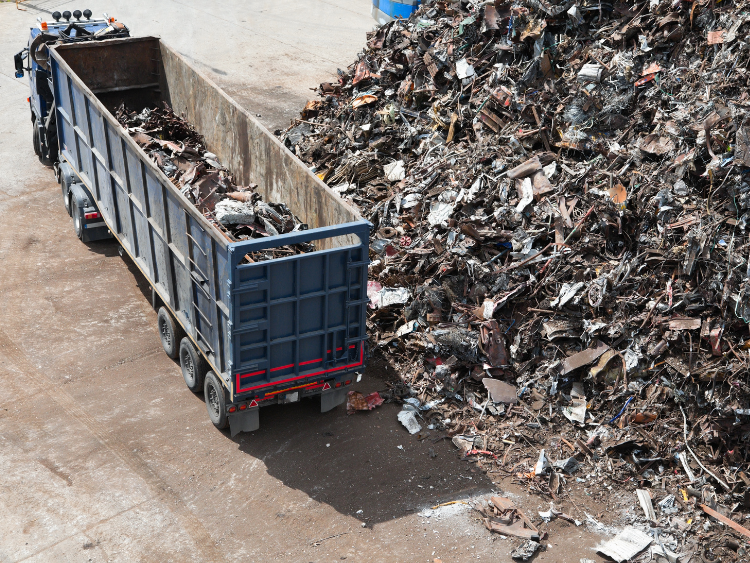
Assofermet: Italian scrap prices make an unexpected recovery
The month of October in Italy was characterized by an unexpected recovery in Italian scrap prices and decent demand in the market, Assofermet, the association representing Italian distributors of scrap, raw materials and steel products, writes in its latest press release.“The fall in the price of gas with consequent lower costs for all energy-intensive companies has created favorable conditions for a recovery in steel production,” writes the association, adding, “We’re talking about an overall increase of about €20/mt [in Italian scrap prices], but we must pay attention to the precariousness of the Italian economic trend, which lacks certainty.
“Considering, however, that the availability of scrap produced is 50 percent lower than in previous years, a new price reduction seems difficult to forecast even in the event of a contraction in demand,” Assofermet stated.
In the international ferrous scrap segment, October was characterized by a rather slow market without any significant movements, Assofermet noted. In Turkey, the scrap market was stable overall with a moderate but steady reduction in prices, while the Asian markets, particularly India, provided an alternative for the major scrap exporters in the first part of the month. In Europe, demand was steady, albeit weak, and the price difference of around €30-40/mt between the French and German markets and the Italian market, where prices were lower, continued. In Belgium and northern Europe, on the other hand, production cuts are expected, which will have an impact on scrap prices.
In the stainless steel scrap segment, the European market recorded an upturn in purchases in the first part of October, although not yet at a very high level, “continuing without further changes with stable prices and not particularly interesting demand”.
Purchases increased at the beginning of November, followed by a reduction in exports to the Asian continent, particularly India, which remains a large buyer but at reduced price levels.
In Italy, on the other hand, purchases by the big players resumed with slightly rising prices.
A further drop characterized the price of pig iron: overall demand and availability are good and there is still a diversity of quotations according to the country of origin and the producer.
Price and demand stability were confirmed in October in the hematite pig iron market. “The November scenario,” writes Assofermet, “appears positive at the moment, albeit with due caution, also thanks to some glimmer of an easing in the pressure on energy costs”.


Pessimistic outlook inhibits Northern Europe rebar market
Low consumption levels and a wait-and-see attitude among buyers resulted in prices widening downwards in the Northern European rebar market in the week ending Wednesday November 16.
While some market participants forecast demand improving in 2023, other sources said they expect it to fall while the local economy constricts further amid a worsening recession.
Fastmarkets’ weekly price assessment for steel reinforcing bar (rebar), domestic, delivered Northern Europe was €785-830 ($814-860) per tonne on Wednesday down by €20 per tonne from €785-850 per tonne last week.
Weak demand and minimal trading activity pressured prices downward in the Northern European rebar market.
Mills are not disclosing prices unless buyers are actively in the market to restock – a bid to resist pressuring prices lower still, sources said.
“Overall demand is very slow, and sentiment is very subdued. We believe customers must start buying at some point though we don’t know when this will be,” one producer source said.
“Prices are under pressure again. There are relatively few transactions occurring, so it is difficult to measure the real achievable price,” another trader source said. “Mills are hesitant about putting out numbers especially if you are not willing to buy to avoid consistent pressuring prices downwards.”
One trader source in the region forecast the construction industry to grow by 1.5% in 2023 based on applications already approved and projects that are due to begin soon.
“The residential construction sector is expanding due to the need for more housing. Civil engineering is increasing, and the non-residential sector is also robust,” the source said. “I don’t know where all the pessimism is coming from.”
But he conceded that there were many variables that could affect the health of construction industry next year, including exchange rates, interest rates and geopolitical tensions.
International scrap prices affect the price of all long steel products. Scrap prices have been relatively stable through October and early November.
Fastmarkets’ daily calculation of the index for steel scrap, HMS 1&2 (80:20 mix), North Europe origin, cfr Turkey was $334.00 per tonne on November 16, down from $338.71 per tonne last week.
Published by: India-Inés Levy


European mills reduce HDG offers, struggle to compete with CRC imports
Prices for downstream flat steel products softened in Europe in the week to Wednesday November 16 amid slow demand and competition with imports, sources have told Fastmarkets.HDG
Market sources said that stock levels of hot-dipped galvanized coil (HDG) among European buyers was generally trending downward and that buyers would normally start bookings for January volumes around this time.
But the buyers would like to wait and see the price at its lowest point before restocking for the first quarter, Fastmarkets understands.
“We would like to book [HDG] when [the price] hits rock-bottom,” a trader in Italy said.
Italian mills have reduced their offer prices recently to spur buying activity, several sources said.
Notably, two distributor sources reported an offer price from one integrated mill in Italy at €750 ($777) per tonne ex-works for base HDG.
Official offers were ranging between €750 per tonne ex-works and €770 per tonne ex-works in the country.
Fastmarkets’ weekly price assessment for steel HDG, domestic, exw Southern Europe, was €750-770 per tonne on November 16, down by €40-50 per tonne from €800-810 per tonne the previous week.
The corresponding weekly price assessment for steel HDG, domestic, exw Northern Europe, was €750-770 per tonne on November 16, down by €40-50 per tonne from €790-820 per tonne seven days earlier.
CRC
Market sources said that most buyers still had sufficient stocks of cold-rolled coil and were not seeking tonnages. Weak order intake from the key consumer of the material, the automotive industry, was one of the main reasons for that.
But the European mills could not really be flexible with CRC offers due to their high production costs. Notably, batch annealing – the most common production route for CRC – was very energy-intensive, according to market sources. Official offers of CRC from European producers were consequently rare.
“The European mills are totally out of the game for CRC. They cannot really compete with imports,” a trader in Italy said.
Fastmarkets’ weekly price assessment for steel CRC, domestic, exw Northern Europe, was €750-760 per tonne on Wednesday, narrowing downward by €10 per tonne from €750-770 per tonne seven days earlier.
The assessment was a reflection of offers and buyers’ estimates of achievable prices. Also, bookings of small tonnages of CRC were reported within the range during the assessment week by both buyers and producers.
Fastmarkets’ weekly price assessment for steel cold-rolled coil, domestic, exw Southern Europe, was €750-770 per tonne on Wednesday, down by just €10 per tonne from €760-780 per tonne a week before.
Apart from the weak demand and overstocking, CRC prices in Southern Europe were also under downward pressure from competitive overseas offers, sources said.
Notably, import CRC offers to Italy from Southeast Asia were heard at €655-670 per tonne CFR recently for late-first-quarter delivery material.
Fastmarkets’ price assessment for steel cold-rolled coil, import, cfr main port Southern Europe, was €655-670 per tonne on November 16, down by €30 per tonne from €685-700 per tonne seven days before.
Published by: Julia Bolotova

Steel hollow section prices in Europe fall in response to oversupply, weak demand
Steel hollow section prices continued lower in the week to Wednesday November 16, with stock material “overflooding” the market due to low demand, sources said.
Fastmarkets’ weekly price assessment for steel sections (medium) domestic, delivered Northern Europe was €900-950 ($933- 985) per tonne on Wednesday, widening downward by €60 per tonne from €900-1,010 per tonne a week earlier.
Cheaper material from overfilled inventories has been undercutting freshly produced hollow sections against a backdrop of weak demand and high energy costs, one trader in Germany said.
Due to limited hand-to-mouth purchases so far in the fourth quarter, distributors have been focused on destocking, with many waiting for prices to flatten out before buying, sources said.
“I don’t think much [trading activity] will happen before the holiday season,” the same trader from Germany said. “Traders may wait a few weeks, then close everything [for Christmas] and start fresh in the second week of January.”
The market participant was doubtful about the prospects for a complete recovery until after 2023 given the global energy crisis and weak demand.
Fastmarkets’ weekly price assessment for steel sections (medium) domestic, delivered Southern Europe was €900-950 per tonne on Wednesday, widening downward by €30 per tonne week on week from €900-980 per tonne.
Safeguarding quotas have been hurting business, sources also said. Customers that typically buy from European producers are looking to import material from outside the region after finding it difficult to get preferred delivery times for European products, including hollow sections.
“In Europe you are not getting [the product] and if you are getting material from other countries you can’t pay for it because of safeguards or anti-dumping measures,” the trader said. “Europeans are killing their business themselves.”
Hollow sections imports are one of 26 steel products subject to the EU safeguarding quotas, which are set to remain in place until June 30, 2024, with quota volumes for the products increasing by 4% year on year.
Meanwhile, hot-rolled coil feedstock costs fell in the reporting week, with buyers increasingly questioning if HRC prices have reached a bottom.
Fastmarkets’ daily calculation of its steel hot-rolled coil index domestic, exw Northern Europe was €631.75 per tonne on Wednesday, down by €16.23 per tonne from €647.98 per tonne a week earlier.
Published by: Holly Chant

Liberty Steel reaches global debt restructuring agreement, still negotiating European debt
Steelmaker Liberty Steel, part of the GFG Alliance, has reached an agreement to restructure its global debt with some of its main creditors, although it is still negotiating debt restructuring for its European business, it said Nov. 15.
The group has signed a term sheet with parties responsible for the main creditors of Greensill Capital, Greensill Bank and Credit Suisse Asset Management, its Restructuring and Transformation Committee said in a statement, adding that this was “a major step in the group’s refinancing.”
However, it did not provide an amount for the debt restructuring.
Liberty and its largest creditor Greensill Bank were still negotiating a similar term sheet for the debt restructuring of the European steel businesses, it said.
“After several months of negotiations, we have now reached an agreement in principle that will provide recovery for the creditors and will significantly deleverage and de-risk Liberty,” Liberty Steel Group Chief Transformation Officer Jeffrey Kabel said.
“This is a major step forward in our restructuring and transformation and we will now work at pace with the creditors to prepare and execute the agreement,” he added.
The agreement would allow Liberty to further advance its low carbon “GREENSTEEL” strategy and its aim to become carbon neutral by 2030, the company said, although the agreement remained subject to documentation and internal approvals.
“All parties will now work to prepare and execute the agreement, providing Liberty with the platform to develop longer term sustainable financing,” it said.
Liberty Steel started to experience cash flow difficulties following the collapse of largest debt facility provider Greensill Capital in March 2021.
In June, Liberty reached a debt standstill agreement with Greensill Bank on debt facilities for its European business.
This came just after Citibank said it planned to pursue a winding-up order against three GFG Alliance companies due to alleged overdue payments worth a total of around $215.50 million. However, Liberty said Nov. 15 that, under the agreement, the parties had adjourned the winding up petitions against its entities.
Steel prices have been weak in the second half of 2022, with Platts, part of S&P Global Commodity Insights, assessing domestic HRC prices in Northern Europe at Eur625/mt ex-works Ruhr Nov. 14, down 32.2% since the start of 2022.
— Jacqueline Holman

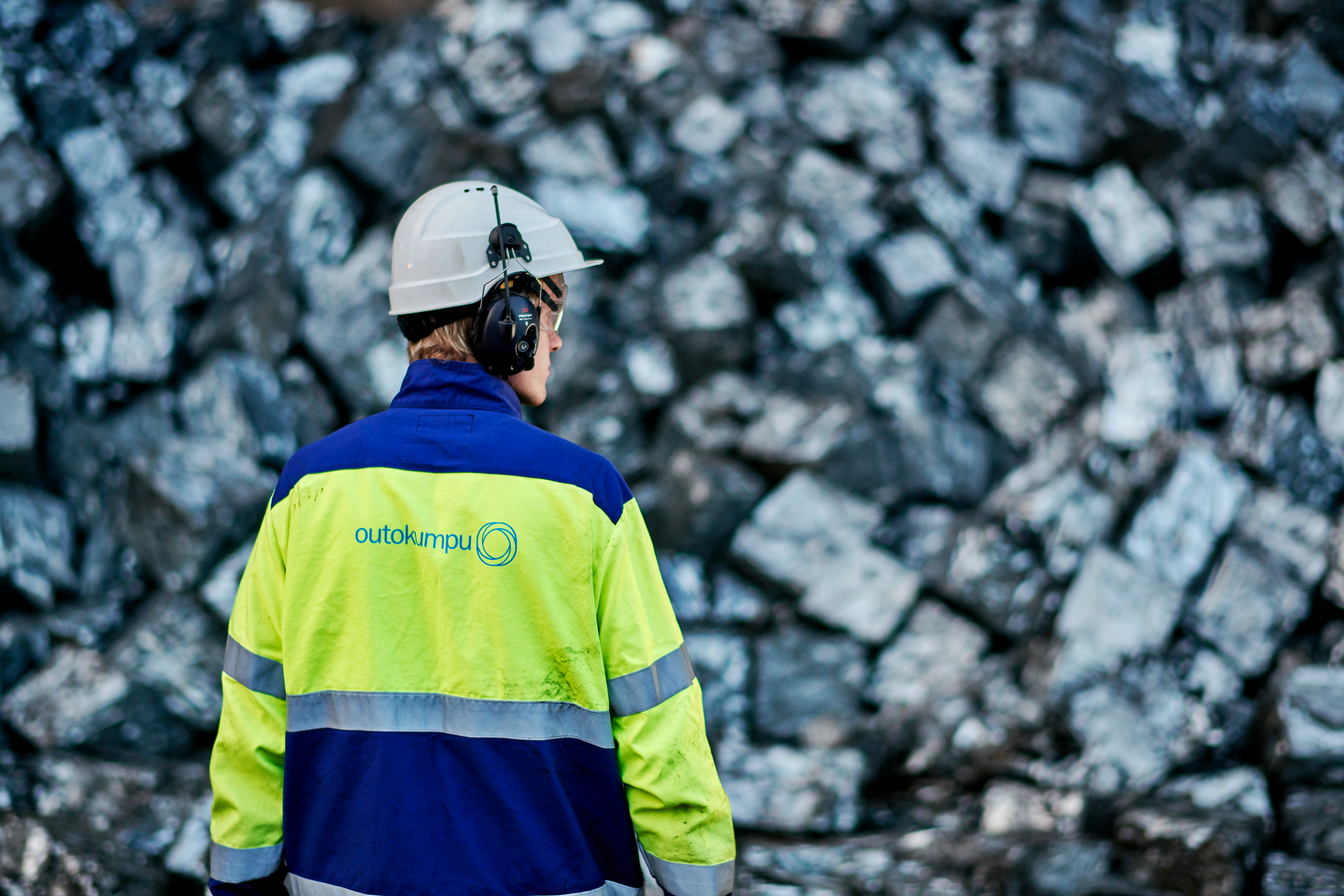
Outokumpu provides product carbon footprint data
Outokumpu has started providing for its customers specific carbon footprint data on products made at its European mills. The company is believed to be the first stainless steel supplier to provide such data, in a bid to help clients further reduce carbon emissions, Kallanish notes.
“When customers are paying more attention to cutting down emissions, they are asking more specific information about the carbon footprint for each product and solution,” says Stefan Erdmann, chief technology officer and group sustainability at Outokumpu. “We are happy to be the first stainless steel producer to provide the information for products produced in our mills in Europe. Now customers can utilise the data to calculate the product carbon footprints of their products and provide more sustainable solutions to the market.”
The model used by the company is based on continuous follow-up of production data. This also brings full transparency to the company’s carbon footprint reduction efforts.
“Today, many companies are calculating and reporting direct and indirect emissions, but there is a growing need to reduce all other indirect emissions from a company’s value chain. To calculate the complete CO2 emissions down the supply chain it is essential to know the CO2 impact of the pre-material – and that’s why the product-specific information is needed,” the company adds.
Emanuele Norsa Italy


Beltrame launches carbon-neutral steel
AFV Beltrame Group is launching its “Chalibria” carbon-neutral steel, for the upstream Scope 1, 2 and 3 emissions in the “cradle-to-gate” value chain, the Italian steelmaker’s business development head, Carlo Beltrame, tells Kallanish.
The project started two years ago following a three-step decarbonisation approach: measuring CO2 emissions, identifying actions and reducing emissions. This approach led to the definition of a decarbonisation plan that includes a list of new investments to be deployed across the group’s facilities in Italy, France, Switzerland and Romania by 2030.
“Chalibria is a way to show all our stakeholders our process … All our stakeholders will be able to gather information on the implementation of our strategic plan and see how much we reduce in line with our strategic roadmap all in open source, with simple internet access,” Beltrame says.
The calculation of the Scope 1+2+3 carbon footprint of Chalibria is verified by independent certification body RINA, in accordance with ISO14064-1. Chalibria’s carbon neutrality is achieved by offsetting CO2 emissions through the purchase of carbon credits on a voluntary basis, in line with the PAS2060 (specification for the demonstration of carbon neutrality) certification and verified by RINA.
Beltrame’s CO2 emissions are currently 75% below the emissions average for the steel industry and 15% below the European average of electric arc furnace players, Beltrame says. By 2030, the group’s decarbonisation plan targets to reduce 40% of Scope 1 and 2 emissions. The main projects of the decarbonisation plan are related to production efficiency, circular economy and green energy sourcing.
The steelmaker is revamping the main reheating furnaces of the rolling mills and enabling digital control systems to reduce the consumption of natural gas. It plans to employ heat recovery technology to generate electricity. In Italy, the group set up “Renewability” in 2022, a consortium of renewable energy consumers which aims to invest in the construction of solar power plants and supply the green electricity produced to each member.
In Romania, the group recently acquired the Combinatul de Oteluri Speciale (COS) Targoviste steelworks and is investing in a photovoltaic park. About €50 million ($52m) will be initially injected to reach a renewable capacity of 75MW. The steelmaker took over the Targoviste plant in March, aiming to become the local market rebar leader thanks to a major plant upgrade (see Kallanish passim).
In June, Targoviste restarted producing rebar and is now supplying the local construction sector. The mill has a meltshop that is currently being revamped and two rolling mills. Beltrame will build a brand-new meltshop and rolling mill facility for commissioning in two years.
The existing revamped equipment will be dedicated to production of a range of special steel complementary to production at Calarasi, the other Beltrame plant in Romania. In 2023, Targoviste should reach about 200,000 tonnes production of rebar, from the forecasted 55,000t in 2022. Romania’s rebar consumption is 600,000-700,000 t/year. The country imports construction steel from countries such as Bulgaria and Turkey.
Natalia Capra France
Italian plate prices decline
Italian plate prices are falling by some €50/tonne ($52) compared to last month due to slower demand. Compared to all other products, however, plate demand remains relatively resilient and producers will report good results this year, Kallanish learns from market participants.
Some sectors, such as renewable energy and infrastructure, continue to drive demand for large projects but distributors are reporting slow sales, with customers adopting a wait-and-see attitude.
Italian sellers are quoting December lead times. Contract prices are at €850-870/t ex-works for the basic S275 grade and about €900-930/t ex-works for the higher 355 grade, which remains in short supply.
Meanwhile, Russian slab prices fell from $485-500/t fob towards the end October to around $440-450/t fob Black/Baltic Seas last week, but demand was simply not there, even at these prices (see Kallanish passim).
In Italy, slab is being bought at $480-500/t cfr, sources say.
Natalia Capra France

EU’s Japan, Korea HRC imports could trigger probe
The jump in hot rolled coil imports into Europe from Japan and South Korea this year could trigger scrutiny by European authorities going forward, sources in the market explain.
The massive shift in trade flows following the Russian invasion of Ukraine in February has provoked a jump in Japanese- and South Korean-origin HRC imports, offsetting lower Russian- and Indian-origin sales, Kallanish notes.
According to Eurofer figures, EU imports of Japanese HRC could exceed 1 million tonnes in 2022. This is a massive jump considering that Japan supplied less than 100,000 t/year of HRC into the EU prior to 2021. As a result, Japan could end up being the second-largest supplier of HRC into the EU after Turkey.
South Korean supply of HRC should also close 2022 with volumes close to 900,000t, double what the country used to import into the continent.
It is possible this shift in import patterns could trigger an investigation by European authorities into potential anti-dumping measures. It is worth noting, nevertheless, that overall imports of HRC this year should be lower than the record level registered in 2021 of over 9.6mt.
In the fourth quarter, the pace of HRC import arrivals is slowing down. According to official figures, only 24% of safeguard quotas for HRC were used until 11 November. South Korea used 64% of quota, Turkey 17% and India only 5%.
Last year in mid-November, 45% of available import quotas for Q4 were already used, with Turkey and India exhausting their allocations.
Emanuele Norsa Italy