


EC slaps definitive AD duties up to 77.9% on chromium-coated steel from China, Brazil
The European Commission has imposed definitive anti-dumping duties of 30.7%-77.9% on imports of electrolytic chromium coated steel originating in China and Brazil, effective Nov. 16, according to a statement of the same date.
An investigation found that Chinese and Brazilian imports were being dumped on the EU market and were injurious to the EU industry, the EC said. The EU market share of the countries concerned for this product increased from 13.1% in 2018 to 15.4% in the investigation period, the EC said in a document.
Definitive dumping margins are expressed as a percentage of the cost, insurance and freight Union frontier price, duty unpaid.
The Commission will now impose duties ranging from Eur239 per mt to Eur607 per mt of ECCS imported, to defend the EU industry, which employs almost 1,000 people across France, Germany, Spain and Italy, from further injury from dumped imports, it said.
The products concerned are flat-rolled products of iron or non-alloy steel, plated or coated with chromium oxides or with chromium and chromium oxides originating in the China and Brazil, currently falling under CN codes 7210 50 00 and 7212 50 20, the EC said.
Imposition of the definitive duties had been widely expected after the EC announced in late May it was imposing provisional AD duty rates of 25% on the ECCS imported from China and Brazil after an investigation found that imports from the two countries undercut the EU industry’s prices.
Definitive anti-dumping duties of 30.7% will now be imposed on ECCS made by China’s Baoshan Iron & Steel Co.; of 53.9% on the product made by Handan Jintai Packing Material Co.; of 34.6% on product supplied by cooperating Chinese companies including GDH Zhongyue (Zhongshan) Tinplate Industry Co.; and Shougang Jingtang United Iron & Steel Co.; and of 77.9% on product supplied by all other Chinese companies.
Product from Brazil’s Companhia Siderurgica Nacional (CSN) will gain a definitive anti-dumping duty of 53.2%, the same as all other Brazilian companies.
The EC started its AD investigation into the imports on Sept. 24, 2021, following a complaint lodged by European Steel Association Eurofer, on behalf of ArcelorMittal Atlantique et Lorraine (France), ArcelorMittal Etxebarri (Spain); ThyssenKrupp Rasselstein (Germany) and Acciaierie d’Italia, representing some 85-95% of the production and sales of this product in the EU steel industry.
ECCS is used in a wide range of applications, typically for consumer and industrial packaging. It is most frequently used for food packaging but also as protective material for optical fiber protection or other electrical and electronic parts. The value of the EU ECCS market is almost Eur500 million.
The EC said the measures “underline the EU’s determination to use trade defence instruments fully to protect the EU ECCS industry from unfair trade practices which jeopardize its competitiveness.”
China, users, point to market changes
The EC further said that it had disagreed with statements received during the investigation from China and the China Iron and Steel Association CISA. These had argued that the EC’s report on the subject was “factually and legally flawed….misrepresentative, one-sided and out of touch with reality”, as well as “outdated”.
“Moreover, the fact that the Commission has issued country reports for a few selected countries raises concerns about most favoured nation (‘MFN’) treatment,” the Chinese government said in one statement.
S&P Global Commodity Insights has recently reported that overall exports of Brazilian steel products to Europe jumped 710% in the first half of 2022 to 909,828 mt, compared to 112,221 mt in H1 2021, filling the void left by regional suppliers Russia and Ukraine, according to data from national steel association Aço Brasil.
The EC document also noted that after final disclosure, CISA reiterated its claim that the Commission should assess the alleged high profitability achieved by ArcelorMittal and Thyssenkrupp after the investigation period. Furthermore, CISA as well as CANPACK, an EU-based user of the imported product, argued that the import prices from China and Brazil increased significantly after the investigation period and that this should be taken into account by the Commission.
However, the EC countered that “The market outlooks, price developments of imports as well as the alleged profitability of the Union producers achieved after the end of the investigation period referred to by CISA and CANPACK are irrelevant for the assessment of the injury suffered by the Union industry during the investigation period.”
The EC noted that following final disclosure of the case, Brazil’s CSN offered a price undertaking on September 13. Since that offer was received well after the deadline set by Article 8 of the basic Regulation, the Commission rejected it, it said.
— Diana Kinch


EU passenger car registrations rise 12% on year in October: ACEA

New passenger car registrations in the EU rose 12% year on year in October to 745,855 units, the third consecutive annual increase, according to European Automobile Manufacturers Association (ACEA) data released Nov. 17.
However, the volume was 5.3% lower than the previous month and nearly 290,000 units below the October 2019 pre-pandemic levels, ACEA said.
Total sales for the first 10 months of 2022 were 7.5 million units, down 8.1% year on year, the data showed.
The auto market has been facing supply issues due to the ongoing semiconductor shortage, which in turn has impacted production.
This has also somewhat impacted steel demand, with Platts, part of S&P Global Commodity Insights, assessing domestic HRC prices in Northern Europe at Eur625/mt ex-works Ruhr Nov. 16, 32% lower than it was at the start of 2022.
All three top European markets — Germany, France and Italy — saw year-in-year increases in October.
Largest EU car market Germany saw new car registrations increase almost 17% year on year to 208,642 units, although this was down 7.2% on the month.
German car registrations for the January-October period totaled 2.08 million units, down 5.5% on the year.
In second-largest market France, sales for the month rose 5.5% on the year, but fell 11% on the month to 124,981 units.
Car sales in Italy also climbed 15% on the year to 115,827 units, which was also up 4.4% from September to a four-month high.
January-October car sales in France totaled 1.24 million units, down 10% on the year, while sales in Italy dropped 14% to 1.09 million units.
In Spain, 65,966 units were sold in October, rising 12% on the year, but down 1.9% on the month, bringing the total for the January-October period to 666,247 units, down 5.8% year on year.
— Jacqueline Holman

China’s top 5 steelmakers on track to supply 34% of total output as industry consolidation continues
China’s steel industry consolidation has resulted in four deals to date in 2022, putting the five biggest producers on track to account for 34% of the country’s production, and the acquisition of smaller steelmakers by larger ones will continue to gain momentum in the coming years, steel mill sources said Nov. 14-17.
Industry consolidation will likely enable the sector to have a bigger influence on price settlements with raw material suppliers and downstream steel users, as well as to work in synergy to manage rising environmental protection costs stemming from China’s decarbonization ambitions, the sources said.
China’s largest steelmaker Baowu Group in early November gained approval from the State-owned Assets Supervision and Administration Commission to take a 51% stake in Xinyu Iron & Steel Group in Jiangxi province.
The move will boost Baowu’s crude steel output to over 130 million mt/year, taking it one step closer to its target of producing 200 million mt/year of crude steel by 2025. Baowu has also been working to take over Shandong Iron & Steel, which has a crude steel output of more than 28 million mt/year.
Jingye Group in northern Hebei province with crude steel production of almost 13 million mt/year signed an agreement in late October to take over Yuebei Iron & Steel, which has a capacity of around 2 million mt/year.
Taking over Yuebei Iron & Steel in southern Guangdong province will elevate Jingye from China’s 15th largest steelmaker to the 13th and expand its presence in the South China steel market.
Also in October, China’s third largest steelmaker Shagang Group reached an agreement with Fosun Group to purchase a majority stake in Shanghai-listed Nanjing Iron & Steel, which will take Shagang’s production capacity to more than 55 million mt/year, on par with the country’s second largest steelmaker Anshan Iron & Steel, or Ansteel.
However, Ansteel is likely to remain the larger producer as it has been working to acquire Lingyuan Iron & Steel Group since June, an acquisition that will raise its crude steel output to over 61 million mt/year from 55.65 million mt/year in 2021.
After the acquisitions by Baowu, Jingye, Ansteel and Shagang are completed, China’s five largest steelmakers will account for 34% of the country’s production, and its top 15 steelmakers 54%, up from 29% and 49% respectively in 2021.
Some mill sources believe that the top five steel producers would eventually contribute more than 40% of national production.
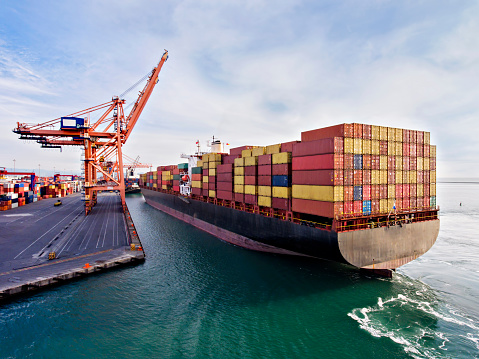
Slumping freight rates struggle to entice more containerized metal trade
The global trade for metals shipped in containers is being constrained by weak demand despite lower freight costs and higher availability of boxes compared with earlier in the year, sources have told Fastmarkets.
Shipping markets throughout 2021 were characterized by stronger demand causing an acute shortage of boxes, leading to a sharp rise in freight costs for metal market participants.
But the tide has changed dramatically in the second half of 2022, with global shipping giant Maersk noting last week that rising inflation has led to consumers spending less on “non-discretionary items such as furniture and home appliances.”
Container head haul and regional export volumes fell by 9.3% year on year in September, according to Container Trade Statistics, as quoted by key shipping industry body BIMCO. Volumes into North America fell by 20.6% year on year in the same month.
The benchmark Shanghai Containerized Freight Index (SCFI) fell to 1,443.29 points on Friday November 11, down by 135.92 points from a week earlier. The index, which has fallen consistently since the start of the year, was at 4,643.79 points in September 2021.
The SCFI is a key indicator based on the freight rate and volume of 12 container freight routes around the world, reflecting changes in global freight rates.
Effect on scrap metal markets
Empty containers are now piling up in port depots, according to various media reports, and although metal market participants are experiencing far greater ease in obtaining boxes, they are being prevented from taking full advantage of the situation by the low demand for metals.
“Last year, if buyers in Europe asked for non-ferrous scrap from the Middle East, there was no point discussing it, but now it is possible again,” a United Arab Emirates-based scrap exporter source told Fastmarkets on Tuesday.
Freight costs for a 20ft container of scrap from Dammam in Saudi Arabia to main EU ports have fallen to around $2,500-3,000 per box in recent weeks after having hit $8,000-10,000 per container last year, the exporter source said.
But in spite of the lower freight costs, the situation has not resulted in many more sales to the region because of poor demand for aluminium scrap in Europe, he added.
November shipment containers from Los Angeles and Long Beach in the US state of California to the Taiwanese port of Kaohsiung were quoted at $750 per 20ft container and $835 per 40ft container on Thursday. The price had risen above $1,000 per container earlier in the year, according to market sources. But Taiwanese steel scrap demand remains tepid amid weak local steel consumption.
“Steel order books everywhere are the worst I’ve seen in a very long time. It’s not easier with container rates coming down – it’s still not enough compared to bulk. In India, container rates are still much higher than bulk,” a US scrap exporter source said on Wednesday.
A second US exporter source said on the same day that dealing with containers was still a “mess” and less efficient than selling scrap in bulk.
A Taiwanese steel scrap trader said that his US scrap suppliers no longer have any problems in obtaining containers but inland transport costs in the US remain expensive.
A major Japanese scrap exporter said that the lower container freight costs have made steel scrap sales from Australia to Southeast Asia possible again, but low demand in Asia was limiting trade on the route.
Effect on ore markets
The lower freight costs have also reduced prices for ores, which are priced by the tonne and therefore transportation costs pay a larger role in overall costs.
Freight rates for South African miners of ore – such as manganese or chrome – exporting to China have fallen by around 46.49% over the second half of 2022 according to Fastmarkets’ assessments.
Freight rates for the Port Elizabeth, South Africa, to Tianjin, China, route were assessed at $29 per tonne on November 11, which is the lowest since January 2021.
Lower freight rates for South African ore producers selling on a CIF basis removes cost support from the market, according to sources.
And this also lowers the offer price point at which it is profitable for manganese ore sellers to truck material to ports. Trucking is used in addition to the volumes moved at lower cost by rail.
In this way, lower costs encourage manganese ore producers to increase the volumes they offer in the market even at a time that demand is weak and inventories are high, sources told Fastmarkets.
Fastmarkets’ manganese ore index 37% Mn, cif Tianjin was calculated at $3.98 per dry metric tonne unit (dmtu) on November 11, down by 1 cent from $3.99 per dmtu a week earlier. This is the lowest price for this material since December 2020.
Ore exports from South Africa are still recovering from October’s strike by logistics workers, as well as a derailment and berthing delays in Maputo, Mozambique, while road transportation is being hampered by poor weather.
Outlook for freight rates
There are mixed views on how container freight rates could develop over the coming months.
“The remaining congestion that helped to prop up the supply/demand balance should dissipate quickly. Liner operators will then be left with lower volumes than in 2019; a fleet that has grown 11.8% since then; an orderbook set to add 9.9% to the fleet in 2023; and poor prospects for the global economy,” Niels Rasmussen, chief shipping analyst at BIMCO, said.
Regulations to reduce the carbon intensity of large-volume shipping may reduce as much as 10% of the global fleet in 2023, but barring any major surprises, BIMCO expects to see “numerous laid-up ships or freight rates that continue to move quickly downwards, or both”, Rasmussen said.
“Some analysts are forecasting a hard landing for container shipping with rates continuing to slide in the coming weeks, potentially going below 2019 levels, before a rebound kicks in,” shipbrokers Banchero Costa said on November 8.
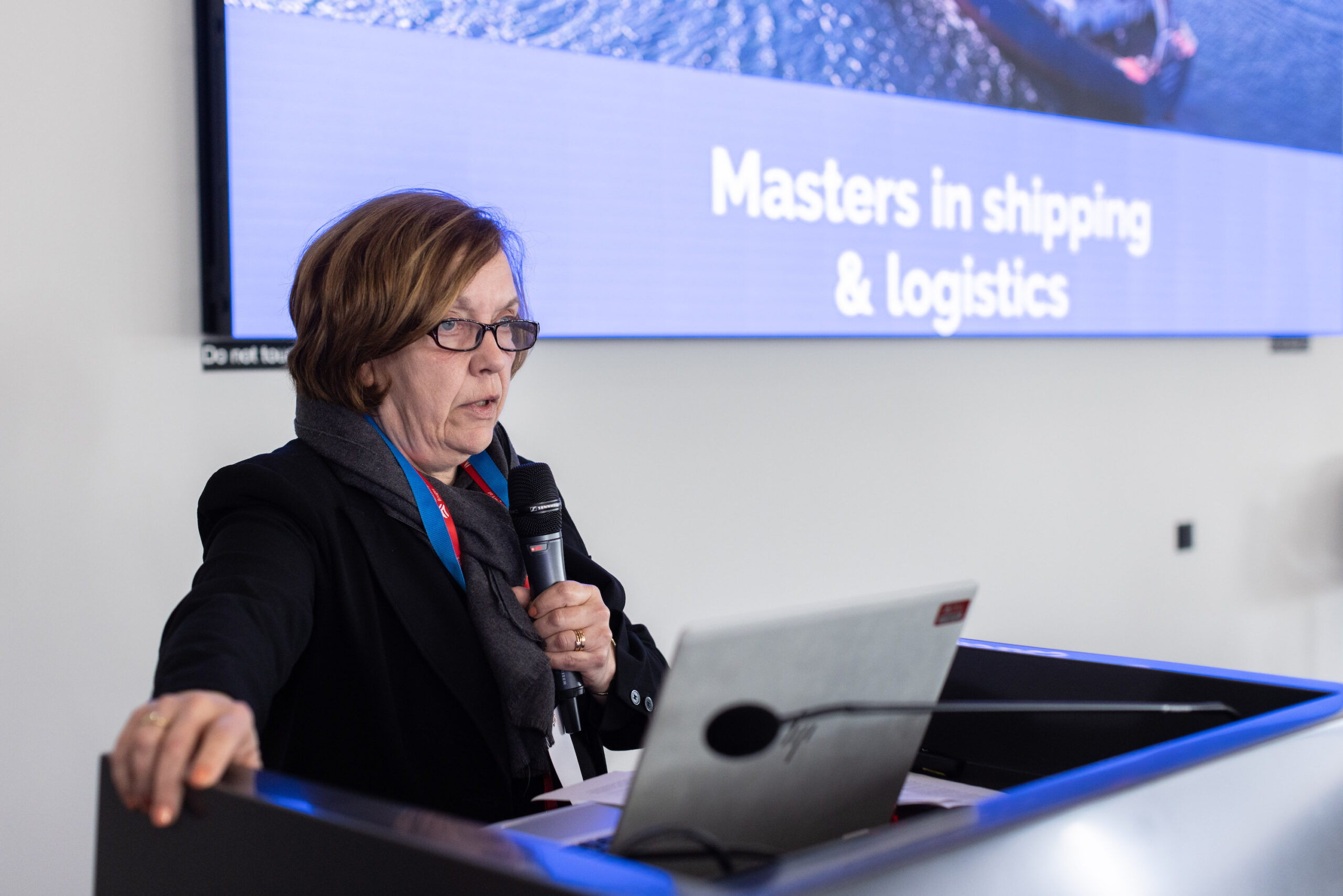
“During the period of high container rates and shortage of equipment, a good portion of cargo shifted back to break bulk shipments. But if the rates continue to crumble, I guess also we will see some of that cargo go back in containers again and that also the rates for conventional shipping will come under pressure,” Gina Swenters, executive director of shipowners Conti-lines Group, said at the EUROMETAL International Steel Trade Day in Antwerp last week.
Published by: Jon Stibbs, Lee Allen, Claire Patel-Campbell, Holly Chant


US, EU steelmakers form carbon reduction coalition
A coalition of steelmakers in the US and EU has formed in order to urge authorities to adopt more rigorous carbon emissions standards for steel production, Kallanish understands.
The Global Steel Climate Council (GSCC) consists of several leading steel manufacturers and groups throughout both the US and EU including Nucor, Steel Dynamics, Celsa Group, and the Steel Manufacturers Association.
“We have the technology to reduce carbon emissions in steel production by 70% today. The global industry needs to build on the innovation that has already led to cleaner steel production in the United States because the green and digital economies around the world are going to be built with steel, and the steel they are built with matters,” says Nucor chief executive Leon Topalian.
According to the GSCC, the new emissions standards negotiated between the US and EU should focus on the amount of carbon emissions being generated through steel production processes, rather than being based on how steel is being made. The coalition boasts that over 70% of US and 40% of EU steel is made using electric arc furnaces from recycled scrap.
“The GSCC single standard will encourage all producers to reduce their carbon emissions and create a level playing field for all manufacturers. The US-EU negotiations should not create a double standard and a slippery slope toward a dirtier environment. We can do better,” adds Steel Manufacturers Association president Philip Bell.
Zach Johnson USA


European Commission opens investigation into bulb flats
The European Commission has opened an anti-dumping investigation into imports of bulb flat bars from China and Turkey. The investigation was anticipated by a letter sent to interested parties, including the Turkish Steel Producers Association, TCUD.
The HS code of the product in question is 7216.50.91. The complaint was lodged by Spanish steelmaker Laminados Losal.
The final decision on the investigation is expected by the beginning of 2024, with provisional measures possibly announced in mid-2023, Kallanish notes.
Emanuele Norsa Italy

Celsa’s Rubiralta Rubio elected Eurofer president
Francesc Rubiralta Rubio has been elected president of Eurofer, the European steelmakers’ association. He takes over from Geert Van Poelvoorde who has been president since 2015, Kallanish notes.
Rubio will continue the successful leadership of Van Poelvoorde, having been a very active member of the board for 12 years. “At the same time, he will bring further momentum for accomplishing the ‘green steel revolution’, ensuring access to affordable, low-carbon energy and steel scrap – which is essential for the industry’s decarbonisation – while preserving the strategic autonomy of our sector, as we are now struggling with unbearable energy costs and new, massive import surges from third countries,” says Axel Eggert, director general of Eurofer.
Rubio has been chief executive and chairman of Celsa since 2010, taking over the role from his father. The Celsa Group is specialised in the production of long products using the EAF route. It is headquartered in Spain, with operations in various countries such as the UK, France, Poland and Norway. According to the group’s website, Celsa produces some 6.6 million tonnes/year of steel products, recycling over 7mt of scrap.
Emanuele Norsa Italy

Shifting trade flows challenge logistics, mills
Deviations in trade flows are challenging markets and spurring mills to maintain production discipline, speakers said at last week’s Eurometal International Steel Trade Day in Antwerp, attended by Kallanish.
Logistics companies increasingly “may have to go to countries with no previous relations, and we may have to pay an entrance fee for that, as they are not awaiting us”, said Gina Sventers of Conti-Lines. As an example of redirected trade flows, she pointed at the advantages for mills in the Middle East, with their lower costs for natural gas used in production. “One Far Eastern buyer in recent months bought half a million tonnes of rebar from GCC countries, which they normally used to buy from Turkey,” she said.
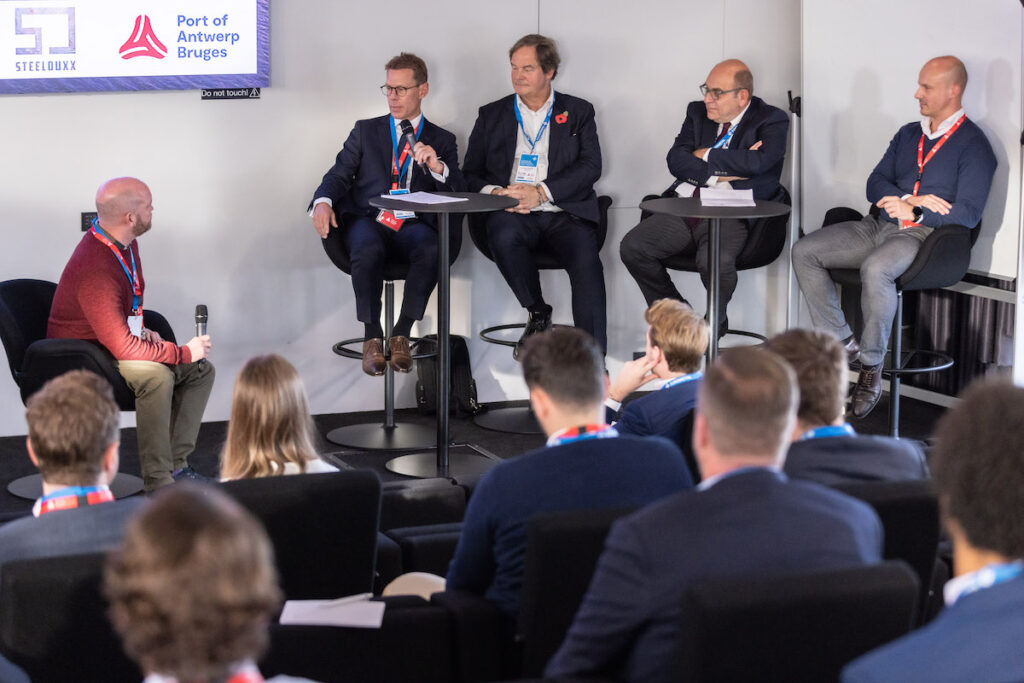
A Turkish observer, Tayfun Iseri of flat steel association Yisad, noted that mills “need to learn to cut production, rather than prices, when the market is low.” He cautioned that “the lower the prices, the more customers will wait for even lower prices.”
He recalled the market turmoil in 2015, when Chinese sellers exported a six-digit tonnage of coil to Europe. “They wasted us and themselves until their government stepped in and put an end to it,” he reiterated. “Back then, we sold coil below the price of billets.”
Christian Koehl Germany