


Bilstein contracts low-carbon steel from thyssenkrupp
German cold-roller group Bilstein has signed a letter of intent with both thyssenkrupp Steel Europe and its subsidiary thyssenkrupp Hohenlimburg for the supply of CO2-reduced “Bluemint Steel” from 2023.
On the basis of CO2-reduced wide strip directly from the Duisburg steelworks as well as “Precidur” precision strip made at Hohenlimburg, Bilstein intends to offer CO2-reduced cold-rolled products across its entire product range. Bilstein signed last month a similar supply deal with Swedish venture H2 Green Steel (see Kallanish 2 November).
According to tk Steel, volumes will increase gradually up to 2030, and from 2026 onwards will come from its direct reduction plants and melters in Duisburg, operated with green hydrogen and renewable electricity.
Bilstein manufactures products for highly demanding cold rolling applications in the automotive sector as well as the processing and toolmaking industries, for example in saws and tools, door fittings, coins or vehicle seats.
Christian Koehl Germany


Thyssenkrupp executive to head German steel federation
Bernhard Osburg, ceo of thyssenkrupp Steel, will be the new president of German steel federation Wirtschaftsvereinigung (WV) Stahl as of 1 January. He will be succeeding Hans Jürgen Kerkhoff, who is retiring at the end of this year.
Osburg will be honorary president of WV Stahl for two years, the federation tells Kallanish. The change marks a departure from the former separation of the honorary title and the full-time position, WV Stahl notes, but does not give a detailed explanation of the future personnel set-up.
Kerkhoff became WV Stahl’s second managing director in 2004, with Dieter Ameling as the president and first managing director. Since Ameling’s retirement, Kerkhoff has held both top positions. In its current announcement, WV Stahl does not comment on the position of the managing director.
This also is the first time that an executive from a member company has become the nominal president of the federation.
Christian Koehl Germany

AMP pushes back BF restart, unions express concern
ArcelorMittal Poland (AMP) trade unions have expressed concern that the steelmaker’s pushing back of the blast furnace no.3 restart at Dabrowa Gornicza could result in the unit being shut down for good.
At the turn of November and December, unions were informed that BF3, which was idled at the end of September due to deteriorating demand, would be restarted between 10 and 20 December. They have now been told this will happen in early January, but no date has been specified.
“It’s starting to resemble the situation at AMP’s Krakow works, which also saw the blast furnace restart pushed back a few times in 2020, before ultimately it was closed for good,” Lech Majchrzak, chairman of the Solidarnosc trade union at AMP, says in a note seen by Kallanish.
AMP says the market situation does not warrant the BF restart before year-end. Since the BF was idled, “we have been closely observing the market, the forecasts in terms of a possible rise in demand, the long-awaited improvement of European activity”, an AMP spokesperson says. “Unfortunately, this is not yet happening. And we do not see any signs of market recovery in the coming weeks. We still see that our order book continues to be at a level that remains below the minimum working point of two blast furnaces.”
“Regrettably, due to the mentioned reasons, we will not be able to restart the BF before the end of this year. We continue to be prepared for a restart of BF3; however, the exact date will depend on the market situation,” the spokesperson adds.
“This does not imply any changes to the commitments we have made related to the temporary stoppage. We continue to prepare a two BF operation and the BF3 will certainly be restarted before BF2 will be stopped for its modernisation,” she observes.
In early October, trade unions signed an agreement with the steelmaker that guaranteed BF3 will be restarted again in future and there will be no job losses as a result of the stoppage (see Kallanish passim). BF3 is to be restarted no later than when BF2 begins the shutdown process to carry out its long-awaited maintenance. This is most likely to happen next February or March. AMP management also confirmed it will strive to maintain the operation of both blast furnaces.
According to Majchrzak, because of the time required to restart and stabilise BF3 production, and then shut down BF2, the whole procedure has to be initiated by mid-January in order to be ready for March.
Adam Smith Poland

French rebar market resumes activity
The French rebar market is finally shaking off its long-lasting stagnation. Sellers in the north and south of the country report some restocking and an improved level of demand over the past week. Prices remain steady and some sources believe a slight uptick is possible in the coming days.
Like in November, in the south of the country, particularly, competitive import offers from Spain are being reported. November was a particularly slow month for sales but December is bringing some dynamism, with customers ordering material for January, Kallanish notes.
Including size extras, domestic contracts are concluding at an average of €720-730/tonne ($760-771) ex-works delivered, sources suggest. Sellers, also in Germany and Italy, are reporting higher order intake over the past ten days following a long period of slow sales. French buyers however remain cautious and do not believe demand for rebar will remain strong in January.
Meanwhile, French and Luxembourg domestic scrap prices are flat again in December after the stability seen in November. Some large merchants have lowered their scrap intake, but this is not pressuring availability as mill demand for scrap remains poor due to the European long steel downturn (see Kallanish 9 December).
Natalia Capra France

Northwest Europe coil shows meagre price recovery signs
Some initial signals are being seen for attempted price increases in Europe, north of the Alps, but they are still too weak to result in a rebound of coil prices.
According to a southern German manager, hikes of €50/tonne ($53) announced by a Czech mill for February rolling/delivery are actually meant seriously. “We would have ordered at January’s prices, but they [Czech supplier] refused,” he tells Kallanish. The hike would take the offer price from €630 to €680/t, he says.
This would be in support of the offer prices of northwestern mills, which have been held “above €650 for most of the time, give or take a tenner,” one buyer in North Rhine-Westphalia says. But while he has not bought for a long time, others did, and tell of deals well below that mark when a transaction came about.
The former manager confirms so, but finds that discounts are not granted as easily any more as they were a couple of weeks ago still. “I feel that a certain pride in the pricing is coming back,” he observes. Regarding the relatively clear increases that have been seen in Italy, he notes that the Italian market works by a different logic, largely due to the influence of imports. “Import prices rose two weeks ago, and the Italian mills followed up,” he comments.
Higher import prices are meanwhile also being registered in the north, and could have an influence. “Last week, some volumes were offered for Q2, and were sold very quickly, and now mills in Taiwan and Indonesia have gone up $20-40,” the NRW buyer says. This takes import prices close to the level of northwest EU mills, “which will then be encouraged to go up, too”, he predicts.
Christian Koehl Germany
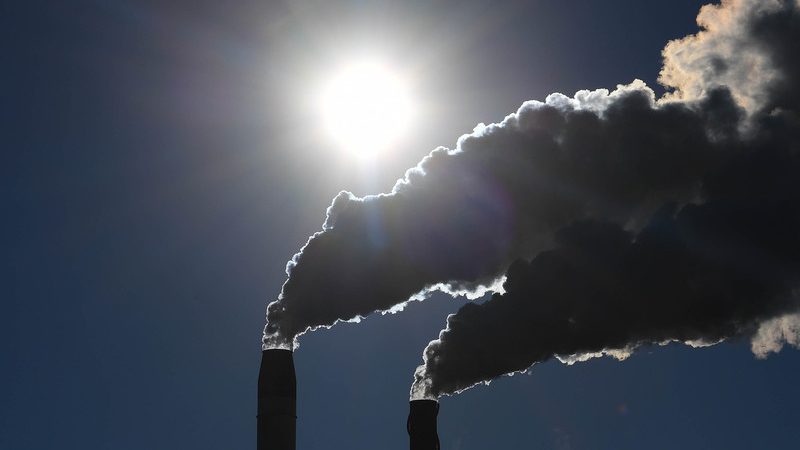
Tata Steel UK’s blast furnace improvement program aims to cut 160,000 mt of CO2
Tata Steel’s Port Talbot iron and steel works in South Wales, UK is implementing an improvement program for its blast furnaces, which will reduce the site’s carbon footprint by 160,000 mt/year, the company said Dec. 12.
This reduction is equivalent to the annual emissions from 100,000 cars or those from the energy used by 50,000 households, according to the company.
The two Port Talbot furnaces, which produces 3.6 million mt/year of liquid iron, are powered by high pressure blast air that is heated to over 1,100 degrees Celsius, it said.
Recycled on-site process gases — the blast furnace gases enriched with some coke oven gas and natural gas — will be used to heat the air in seven refractory brick-lined stoves, before it is injected into the blast furnaces, the company said.
As part of the improvement program, burners in three of the seven stoves are being upgraded with two new best available technology units, Tata said, adding that it would also be replacing many of the refractory bricks that store heat and make hot blast air.
The work is being carried out while the remaining operational stoves are in use, Tata said.
The upgrade work is due to make a significant difference to the mill’s carbon footprint, its energy costs and operational stability and efficiency, Tata Steel Project Manager Andrew McGregor said.
“Stoves are critical to the running of our blast furnaces,” McGregor said. “Any loss of efficiency in heating the air means we either have to use more gas than optimum, or replace that lost energy by using more metallurgical coke to chemically reduce the iron ore inside the furnaces.”
Tata Steel UK has a crude steel capacity of 5 million mt/year and aims to reduce its total CO2 emissions by 30% by 2030 and be a carbon-neutral steelmaker by 2045, in line with the UK’s ambition to be net-zero by 2050.
In November, Tata announced it was installing digital scanning technology at its no. 5 blast furnace at Port Talbot to reduce the amount of coke used in the furnace, assisting decarbonization, similar to the technology installed at the works’ no. 4 blast furnace in 2021.
In October, the company said it was cutting the energy use and the carbon footprint of the hot rolling mill at the plant by using laser technology at the site’s two slab re-heating furnaces.
Platts, part of S&P Global Commodity Insights, assessed the weekly UK hot-rolled coil price at GBP615/mt ($755.29/mt) DDP West Midlands Dec. 8, down 25.9% from the start of 2022.
— Ekaterina Bouckley


UK metal exports mostly increase on year in Oct: ONS
The UK saw exports of most metal categories rise in October 2022 on a year-on-year basis, with the EU27 remaining a major destination, according to non-seasonally adjusted figures published Dec. 12 by the Office for National Statistics.
Total exports of iron and steel for the month totaled GBP479 million ($588.7 million), rising 11.1% year on year, but down 2.4% month on month, according to the figures.
The UK’s largest iron and steel customer in October was the EU at GBP305 million, dropping 1.3% on the year and down 8.1% from September.
Main EU destinations were Ireland at GBP51.9 million and the Netherlands at GBP47.5 million.
Another major iron and steel destinations in October was the US at GBP62.9 million.
The UK’s exports of metal ores and scrap rose 2.8% on the year in October to GBP593 million, which was 1.2% lower than September’s volume, the data showed.
The largest destination of metal ores and scrap from the UK in October was the EU at GBP184 million, dropping 8.5% year on year, but up 3.4% from September, followed by India at GBP173.1 million.
Large EU destinations included Belgium at GBP57.35 million and Germany at GBP41.4 million.
Nonferrous exports up 42.6%
Exports of nonferrous metals also rose 42.6% on the year to GBP1.4 billion, although this dropped 34.1% month on month.
The largest taker of the UK’s nonferrous exports was the EU at GBP502 million, rising 61.9% year on year and up 4.8% from September. This included GBP200.8 million to Germany.
The UK also sent GBP270.4 million worth of nonferrous metals to India in October, down 3.4% year on year and falling 60.8% from September.
Other large nonferrous metal destinations during the month were GBP173.3 million to the US and GBP111.7 million to North Macedonia.
The UK also exported GBP676 million worth of miscellaneous metal manufactures in October, up 11.6% on the year and up 8.5% from September, of which GBP357 million went to the EU.
However, coal, coke and briquette exports for the month fell 6.7% year on year and were down 30% on the month to GBP14 million.
The ONS noted that it had excluded non-monetary gold and other precious metals in its statistics, due to gold movements tending to be large and highly volatile, distorting underlying trends.
Metal exports for the January-October period were higher year on year, with iron and steel exports totaling GBP4.97 billion, 29.7% higher on the year, the stats showed.
Coal, coke and briquette exports for the period rose 38.1% on the year to GBP156 million, while metal ores and scrap exports were 4.4% higher at GBP6.5 billion.
Nonferrous exports for the first ten months totaled GBP16.7 billion, up 24.5% year on year, while the UK exported GBP6.07 billion worth of miscellaneous metal manufactures, rising 12.1% on the year.
Iron and steel imports lower on year
The UK’s imports of iron and steel in October fell 11.1% year on year to GBP674 million, although this was up 18.2% from the previous month.
Imports came mostly from the EU at GBP408 million, up 7.7% year on year and rising 6% from September.
Major EU suppliers included Spain at GBP57.7 million, Germany at GBP53.8 million, the Netherlands at GBP49.3 million and Belgium at GBP44.5 million.
Turkey was another large iron and steel importers to the UK outside the EU28 in October at GBP86.1 million, the data showed.
Iron and steel imports for the January-October period rose 26.7% year on year to GBP7 billion.
The UK’s nonferrous metal imports in October edged 1.1% lower year on year to GBP1.15 billion, which was 24.4% higher month on month, according to the statistics.
The UK’s main nonferrous metal importer was the EU at GBP487 million, rising 21.4% year on year, but down 0.8% month on month.
Top EU suppliers were Germany at GBP131.05 million and Belgium at GBP103.4 million.
The UK also received GBP111 million worth of nonferrous metals from Switzerland and GBP166.3 million from South Africa in October.
Nonferrous metal imports for the January-October period dropped 19.9% year on year to GBP12.4 billion.
The country’s imports of metal ores and scrap totaled GBP407 million in October, climbing 13.1% year on year, but down 23.8% from September.
The metal ores and scrap were imported mostly from the EU at GBP180 million, jumping 73.1% on the year and up 10.4% month on month, with GBP110.1 million coming from Germany.
The UK’s metal ores and scrap imports for the January-October period fell 6.1% year on year to GBP4.5 billion.
Imports of coal, coke and briquettes for October totaled GBP219 million, up 87.2% year on year, but down 2.7% month on month, with South Africa the top supplier at GBP61.4 million, followed by Australia at GBP35.7 million.
This brought January-October imports of coal, coke and briquettes to GBP1.9 billion, climbing 139.3% year on year.
Imports of miscellaneous metal manufactures for the month totaled GBP1.2 billion, up 16.4% year on year and rising 6.9% from September. The January-October total was GBP11.8 billion, up 24.5% year on year.
— Jacqueline Holman
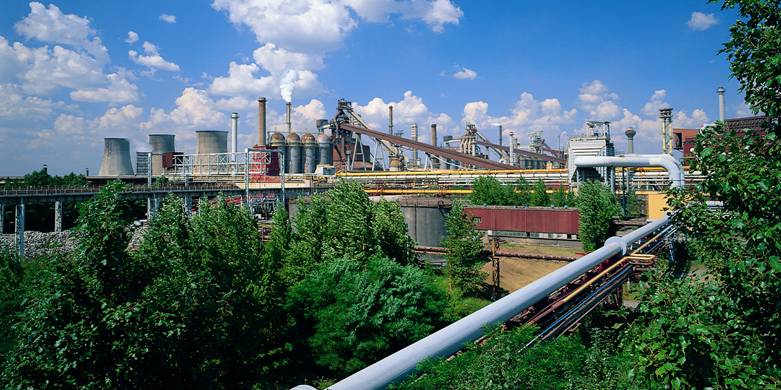
ArcelorMittal Poland postpones Dabrowa Górnicza BF restart amid still-weak market fundamentals
ArcelorMittal Poland has postponed the restart of its blast furnace (BF) No3 in Dabrowa Górnicza due to poor market fundamentals, Fastmarkets heard on Tuesday December 13.The company idled BF3 in September amid high costs and weak demand for steel products, Fastmarkets reported.
According to several market sources, the blast furnace was expected to be restarted in December, however ongoing weak steel demand, high production costs and high levels of steel imports into the EU have made the restart impossible this year, the company said.
“We have been closely observing the market, the forecasts in terms of a possible raise in demand, the long-awaited improvement of European activity. Unfortunately, this is not yet happening. And we do not see any signs of market recovery in the coming weeks. We still see that our order book continues to be at a level that remains below the minimum working point of two blast furnaces,” the company’s spokesperson told Fastmarkets.
“We continue to be prepared for a restart of BF3, however the exact date will depend on the market situation,” the spokesperson added.
The Dabrowa Górnicza site operates two BFs with a combined capacity of 2.7 million tonnes per year of pig iron. Only BF2 will remain operational at Dabrowa Górnicza before the end of 2022.
Dabrowa Górnicza steelworks has installed capacity to produce 5 million tpy of crude steel. The company can manufacture 3 million tpy of steel slab and about 3 million tpy of billet and bloom. Dabrowa Górnicza also produces merchant bars and long rails.
The site has also supplied slab to ArcelorMittal’s rolling mills in Krakow since 2020, when the company permanently shut down the hot area there.

Published by: Julia Bolotova

EC review may mean stronger safeguards against SE Asia steel imports, not early end: CORRECTION
The European Commission is unlikely to terminate the safeguard measures in force on steel product imports a year earlier than scheduled, European market sources told Fastmarkets on Friday December 2.On the contrary, restrictions could be strengthened against certain Southeast Asian nations following an announcement by the Commission that it will conduct a review of the safeguards.
The review was scheduled to be concluded no later than June 30, 2023, which would be the end of the current safeguard year. In the review, the Commission will consider the possibility of terminating the safeguard measures imposed on 26 steel product categories one year early.
It was also planning to update the list of developing countries that are exempt from the measures, according to a notice published in the EU Official Journal.
During the review, the Commission will decide whether the safeguard measures should be terminated by June 30 – one year earlier than the current planned expiry date. But market sources believe that option to be unlikely.
“European trade protectionism is on the rise, [while] the [steel] market is weak and oversupplied. I don’t see any reason why the Commission would terminate safeguard measures early. In fact, we expect [there to be] new anti-dumping cases,” a market source in Northern Europe told Fastmarkets.
Regarding countries that are exempt, no safeguard measure can be applied to a product originating in a developing country member of the World Trade Organization as long as that country’s share of the union’s total imports of the specific product does not exceed 3%.
Market sources have suggested that Vietnam could be added to the list of developing countries to which the safeguard measure are applied, notably for hot-rolled coil.
During the first nine months of 2022, Vietnam exported 335,834 tonnes of HRC to the EU, which represented 5.2% of total HRC imports into the bloc during that period, according to statistics from regional steel industry association Eurofer.
During the entire year of 2021, Vietnam exported 399,403 tonnes of HRC to the EU, according to Eurofer’s data.
In the latest safeguards review, Vietnam was included in the list of developing countries to which the safeguard measures were applied for imports of hot-dipped galvanized coil products.
Several sources have also suggested that the Commission might add individual quotas for some other Southeast Asian suppliers in light of the significant increase in HRC deliveries from that region to the EU so far in 2022.
With traditional volumes of HRC from Ukraine and Russia missing from the market due to Russia’s war on Ukraine, European buyers have started to import more steel from Southeast Asia recently, Eurofer statistics showed.
For example, hot-rolled flat steel imports from Japan to the EU amounted to 785,329 tonnes in January-September 2022, compared with 591,355 tonnes during the entire year of 2021. Deliveries from Vietnam, Taiwan and India have also increased in 2022.
Turkey, India, South Korea and Serbia currently have individual quotas for HRC imports into the EU.
Russia formerly had an individual quota but imports of Russia-origin finished steel products were banned in the EU in spring this year in response to the country’s military aggression against Ukraine.
In the version of this article first published on December 2, the first paragraph originally said “The European Commission is unlikely to terminate the safeguard measures in force on steel product imports from Southeast Asian countries a year earlier than scheduled, European market sources told Fastmarkets on Friday December 2.” That was not correct since safeguard measures are applied to all steel products of all origins outside the EU.
Published by: Julia Bolotova

European HRC producers refuse to give discounts for Q1 deliveries
European hot-rolled coil producers have been refusing to give discounts for first-quarter material, sources told Fastmarkets on Tuesday December 13.
Fastmarkets calculated its daily steel hot-rolled coil index domestic, exw Northern Europe at €635.71 ($669.66) per tonne on December 13, up by €2.78 from €632.93 per tonne on December 12.
The latest calculation of the index is up by €6.33 per tonne week on week but down by €9.29 per tonne month on month.
Most mills in the region were offering a firm minimum of €650 per tonne EXW for first-quarter delivery HRC, market participants said.
Transactions for limited volumes of HRC were, however, heard at €630-640 per tonne EXW in Germany and the Benelux area.
Trading in the spot market has remained limited, with many buyers still assessing the situation.
“There is still no clarity on the trend’s sustainability,” a trading source in Germany told Fastmarkets, adding, “besides, everyone is waiting for [a major European steelmaker] to announce a price increase.”
Demand from end-use sectors, including the automotive industry, has picked up a bit, with some volumes seen back in the market, sources said.
Buyers, however, said that passing any price rise downstream was still quite tricky.
“The demand [for HRC] is not bad,” a second trading source in Europe said. “End users are looking for volumes, but it is hard for us to create a margin.”
Fastmarkets’ calculation of its daily steel hot-rolled coil index domestic, exw Italy was €626.67 per tonne on Tuesday, down by just €0.83 per tonne from €627.50 per tonne on Monday.
The latest calculation of the index is also down by €0.83 per tonne week on week but up by €1.67 per tonne month on month.
The Italian market was quiet in the past several days, with deals rare, sources said.
“Italian mills left the market in the middle of last week [the week to December 9], apparently to reconsider offers,” a distributor in Italy said. “Their price idea [for HRC] is a minimum €650 per tonne EXW, but that’s something we cannot afford for the moment.”
“We are in the transition period right now,” a trading source in Italy said. “The mills in Italy dropped prices below €600 [per tonne EXW] in November and closed gaps in order books; now they are aiming for a rise, but it is going to be difficult.”
Italian mills were able to offer coil with February delivery, sources told Fastmarkets.
Buyers reported bids and estimates of achievable prices at €600-630 per tonne EXW on Tuesday.
Producers, however, were aiming higher, at €650 per tonne EXW and above.
Some overseas HRC suppliers were back in the market with some higher offers during the week.
Notably, South Korean mills were offering HRC with late first-quarter 2023 delivery to Italy at €640 per tonne CFR.
Japan-origin HRC was offered to the nation at €635 per tonne CFR.
And one Turkish mill offered HRC to Italy at around €655 per tonne CFR, duty included.
These offer levels were not, however, considered workable by European buyers given that they were in line with offers from European mills, and lead times were much longer.
Published by: Julia Bolotova