


EU ETS revision offers no solution for exports, raising concerns about carbon leakage
A revision of the EU Emission Trading System (ETS) offers no solution for exports, leaving market participants worried about carbon leakage, Fastmarkets heard on Monday December 19.
On Sunday December 18, Members of the European Parliament (MEPs)and EU governments agreed to the revision of the ETS, offering a number of solutions to prompt the uptake of new technologies to decarbonize the steel industry.
However, no solution was offered for the EU steel export industry, which is worth €45 billion, raising more concerns among European steel market participants.
European steel association Eurofer expressed concerns about the export markets.
“If no concrete solution is found by 2026, €45 billion steel exports are at existential threat, due to the exponentially increasing carbon price in the EU that has no equivalent in the domestic markets of our major trading partners. It is essential that EU institutions revert to this issue as soon as possible in the foreseen review process to deliver an effective measure,” Eurofer Director General Axel Eggert said on Monday.
European steel market sources are worried about the competitiveness of Europe-origin steel in overseas markets, claiming that free allocations should be preserved for exported steel products.
“The EU authorities yet again failed to suggest an adequate measure for steel exports. We should keep in mind that Europe is a pioneer in decarbonization. It will be hard for European mills to compete in overseas market while they are faced with carbon costs their competitors don’t have to pay. That will only lead to carbon leakage [an increase of emissions outside the EU because of EU climate policies],” a mill source in Northern Europe told Fastmarkets
“The steel sector reiterates its call on EU policymakers to find a solution for exports under the CBAM [Carbon Border Adjustment Mechanism], allowing for the continuation of free allocations for all exported products, while supporting the Council proposal on the free allocation phase-out trajectory for CBAM goods sold on the EU domestic market,” Eurofer said earlier this month.
The carbon permit price in the EU was around €90 per tonne in December 2022, up from around €70 per tonne in November 2022. EU carbon permits prices reached an all time high of €99.22 in August 2022.
In 2021, EU member states exported 18.4 million tonnes of carbon steel, slightly down from 18.8 million tonnes in 2020, according to Eurofer data. In the first ten months of 2022, steel exports from the bloc amounted to 13.2 million tonnes.
“We did attempt to export [hot-rolled coil] this year because of the weak domestic market, but we were unable to offer competitive prices, given high costs of production, including the energy and carbon costs,” a second EU mill told Fastmarkets.
ETS agreement recap
Under the newly-reached agreement, the phase-out of free allowances to industries in the ETS will start with a 2.50% cut in 2026. By 2030 free allocations will be cut nearly in half (down by 48.50%), while by 2034 the free carbon allowances will be completely eliminated.
CBAM, which MEPs and EU governments reached an agreement on last week, will start in 2026 and be fully phased in by 2034.
Emissions in the ETS sectors must be cut by 62% by 2030, compared to 2005, according to a European Parliament release, a massive rise from the previous target of 43%.
By 2025, the European Commission shall assess the risk of carbon leakage for goods produced in the EU intended for export to non-EU countries and, if needed, present a WTO-compliant legislative proposal to address this risk.
Markets sources again said that decision on exports is needed sooner, otherwise the European steelmakers would be unable to continue sell steel outside the bloc.
The European Parliament and the European Council will have to formally approve the agreement before it is implemented.
Published by: Julia Bolotova

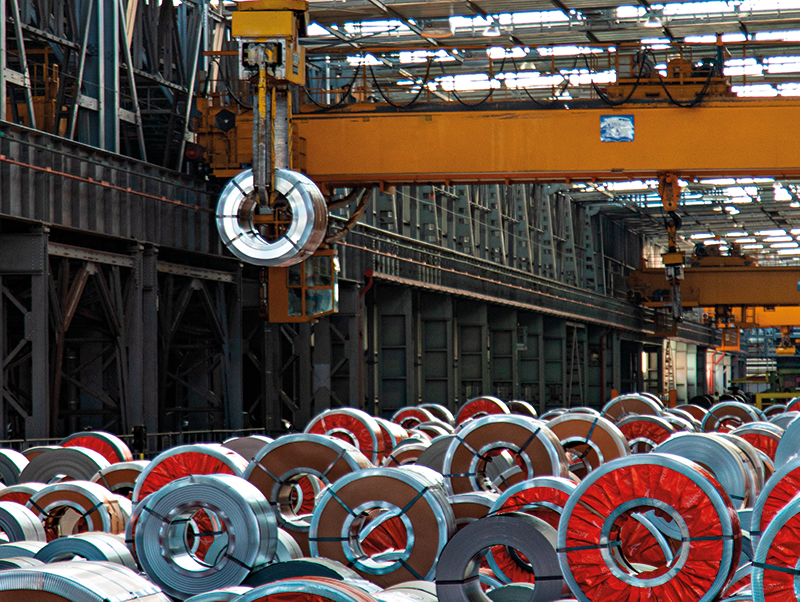
Acciaierie d’Italia in serious financial trouble, says minister
Acciaierie d’Italia (ADI), the joint venture formerly known as Ilva between ArcelorMittal and state financial body Invitalia, is going through “strong financial trouble and a serious production situation,” made in Italy minister Adolfo Urso has said during a Q&A session at the Senate in Rome.
The company has piled up several million in debt to some of its main suppliers, including large Italian energy companies Snam and Eni. The steelmakers’ output has collapsed from 10 million tonnes in 2005 to approximately 3mt this year, when the target of the industrial plan was to reach 6mt, Urso said. He pointed to the lack of a clear industrial plan to stop the company’s decline.
A source close to the company who spoke to Kallanish believes the steelmaker is at risk of bankruptcy unless the government injects the necessary funds to nationalise it. However, Urso repeated at the hearing what other ministries previously said – that the government does not intend to nationalise the steelmaker and, in order to save it, a clear industrial plan is urgently needed.
In November, workers in Taranto, ADI’s main steelmaking facility, went on strike to protest against the perceived lack of government support. They are calling for swift state intervention to nationalise the company. Amid a liquidity crisis, ADI’s management recently decided to suspend its use of contractors. This, on top of almost 3,000 workers being temporarily laid off, is putting in doubt production continuity. In 2021, ADI posted a turnover of €3.3 billion ($3.4 billion), up from €1.6 billion in 2020. Last year, the company produced 4.1mt of crude steel, an increase from 3.4mt in 2020 (see Kallanish passim).
ADI confirmed Urso’s speech to Kallanish but declined to comment.
Natalia Capra France


Spain’s car industry struggles towards pre-Covid performance
The economic uncertainty, high inflation, and costlier energy and raw materials have impacted Spain’s automotive sector this year, Kallanish notes. The microchip shortage has affected both production and sales and, although the situation is easing, their supply will remain among the main factors for the industry’s evolution in 2023, says carmakers’ association Asociación Nacional de Fabricantes de Automóviles y Camiones (Anfac).
Production is seen recovering by 100,000-150,000 vehicles or between 4-7% on-year in 2022 to 2.2 million units.
“The improvement in recent months, with cumulative growth of 2.8% up to October, and despite the numerous production cuts in the last quarter, have made the annual outlook improve,” Anfac explains. However, the shortage of certain essential components for the manufacture of vehicles, such as cables, aluminium, nickel or palladium, which come from Ukraine and Russia, together with the increase in energy costs have affected the pace of car production at large plants during the last quarter, the association confirms.
Spanish domestic sales should reach 830,000 units in 2022, a fall of 3% on-year and 34% less when compared to pre-Covid level in 2019. Light commercial vehicles purchases are seen reaching 118,000 units in 2022, or a 22% decrease y-o-y. The slowdown is mainly explained by the fall in production and a reduction in inventories, Anfac observes.
According to the association’s forecast, the microchip crisis will continue to persist throughout 2023, but with less impact than in previous years. “We expect an unfavourable scenario next year, mainly due to the impact of the expected economic recession. Despite the difficult situation, it is estimated that domestic sales will grow above 900,000 units, still well below pre-pandemic levels.
Todor Kirkov Bulgaria
European tube prices to increase
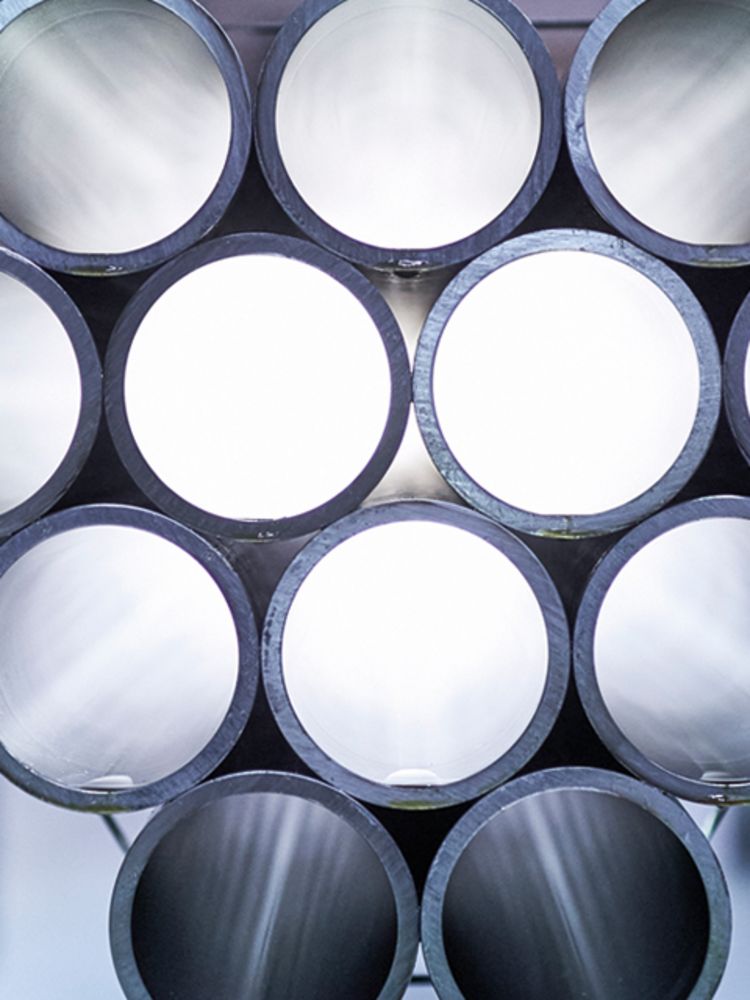
Welded tube values in Europe are set to increase, in line with higher contracts and quotes for hot rolled coils. Tube prices are said to have reached rock bottom with Italian re-rollers implementing price increases already for December and reducing discounts, re-rollers and distributors in Italy tell Kallanish.
The price fall for tubes has accelerated over the past three weeks bringing some values below sustainable levels. Over the past two weeks however, large buyers in Germany and other European countries have returned to purchasing from southern European re-rollers. From a situation of relative standstill, the European market is said to have become “dynamic” again.
The level of discounts in Italy reached some 38 points this month. Italian re-rollers intend to recover 4 points until 1 January. Each point of discount for those who use the discount system is equal to €13-14/tonne ($13.8-14.8) depending on product. This week discounts in Italy are already beginning to decline to 36-37 points. The objective is to start the year from 34 points of discounts on average, sources say.
Re-rollers see HRC prices continuing to increase in January. Sources say that next month sustainable prices for coils should reach the level of €700/t base ex-works in Europe. All increases for coils and derivatives however are seen happening in a gradual way. The market remains fragile with reduced downstream consumption and prudent purchasing, Kallanish notes.
Natalia Capra France

UK grants hydrogen-for-steel project funding
The UK government is backing two hydrogen-for-steelmaking projects with a new round of public funding announced, Kallanish reports.
The awards include £399,852 ($487,226) to E.ON UK CHP Ltd and £173,141 to Nanomox Ltd. The former, known as HYDESS Project, seeks to determine the feasibility of end-to-end hydrogen production, transport, and end-use in the steel manufacturing industry. The latter entails a feasibility study to produce hydrogen from steelmaking waste and use it as green fuel for steel production.
The innovative projects were selected as part of a £2.95 million round benefitting nine projects, under the £26m Industrial Hydrogen Accelerator Programme.
Nanomox intends to check the viability of its Oxidative Ionothermal Synthesis (OIS) technology, which uses green catalytic solvents at low temperatures to complete the direct oxidation of metals, to convert steelmaking waste into saleable materials for industrial use. Hydrogen is co-produced as part of the process, which could also produce zinc oxide from zinc/iron rich sludge – a legacy issue in the country. The UK is estimated to have roughly 6.7m tonnes of sludge stockpiled currently, with 90,000t produced annually.
Eventually, Nanomox plans to test the process at the Materials Processing Institute steelmaking pilot works using an OIS zinc removal pilot plan and facility for oxyhydrogen combustion and testing in 400-kilowatt burners. Subject to further funding approval, the company then would scale up to repeat waste sludge treatment and the use of hydrogen at 1.2-megawatt scale within an operational steel plant.
“Successful outcomes will reduce CO2 emissions of steel manufacturing whilst improving profitability and environmental credentials,” the company says. “The combination of mandated remediation of ongoing and legacy steelmaking waste, plus direct use of co-produced hydrogen offers a double benefit with significant cost and energy efficiencies.”
Meanwhile, the HYDESS Project led by E.ON in partnership with large scale steel manufacturers in the Sheffield area, seeks to establish feasibility of using H2 for fuelling steel reheat and heat treatment furnaces. The proposed proof of concept demo project would replace natural gas by green hydrogen produced at E.ON’s Blackburn Meadows biomass power station.
It will cover production, distribution and innovative use of hydrogen for different offtakers. There is also interest in monitoring the impact on product quality and on forging and heating processes; and the high-pressure hydrogen cylinders used to transport the hydrogen. If the consortium can scale the project with a larger electrolyser and delivery of hydrogen via pipeline, its scope in Sheffield can be expanded. Yet, the goal is for the project to become a blueprint for other sites across the country, the companies say.
Gabriela Farhangi UK

Colakoglu to reach 4.5 million mt HRC output capacity in Q1 2023: report
Major Turkish steelmaker Colakoglu aims to complete its project to increase hot-rolled coil production capacity by 50% to 4.5 million mt in the first quarter of 2023, according to its sustainability report published Dec. 15.
Colakoglu also aims to raise output of special steel grades like Interstitial Free steel, high-strength steels and stainless steels.
The company has been producing special grades of stainless sheet since October 2020, with its vacuum oxygen decarburization plant supplied by Primetals Technologies having achieved a record heat size of 298.2 mt in April and reaching a record carbon content of 5 ppm after decarburization.
Colakoglu operates an electric arc furnace mill in Dilovasi, which makes slabs for a hot rolling mill and billets for producing rebar.
It currently has a bar output capacity of 622,000 mt/year, and HRC production capacity of 3 million mt/year.
With projects ongoing at Colakoglu, Tosyali and Icdas, Turkey’s installed HRC output capacity is expected to exceed 25 million mt/year in a few years, reducing its need to import HRC, according to sources.
Platts, part of S&P Global Commodity Insights, assessed Turkish-domestic HRC at $650/mt FOB Dec. 9, down around $600/mt from mid-March prices.
— Cenk Can

Turkey welcomes WTO decision on US steel, aluminum duties
The Turkish Trade Ministry has welcomed the World Trade Organization panel’s Dec. 9 decision that US tariffs imposed on steel and aluminum imports were against the trade organization’s rules, saying the decision was in line with Turkey’s stand on the issue.
The Turkish ministry in a late Dec. 15 statement said that the decision proved that additional duties imposed by the US in March 2018 couldn’t be defended by national security reasons.
“The WTO decision, which is an important achievement for countries that are subject to these protection measures, is also ensuring that countries couldn’t impose these kinds of measures from now on by interpreting security reasons extensively,” the Turkish ministry said.
The US approach to the subject was harming the system’s trustworthiness, it said, adding that it would follow the upcoming appeal process closely.
A WTO panel on Dec. 9 determined that US steel and aluminum tariffs were inconsistent with international trade obligations and recommended that modifications be made.
The US did not intend to remove the Section 232 duties, Assistant US Trade Representative Adam Hodge had said after the WTO decision, adding that issues of national security could not be reviewed in WTO dispute settlements and that the WTO had no authority to second-guess the ability of a WTO member to respond to a wide range of threats to its security.
The US is expected to appeal against the WTO panel decision soon.
Former US President Donald Trump had imposed import duties of 25% on steel and 10% on aluminum against most countries in March 2018, arguing that the trade protection was needed for national security purposes.
Turkey’s hot-rolled coil exports to the US declined gradually after the Section 232 duties were imposed, especially in 2022, amid low demand.
According to the latest Turkish Statistical Institute data shared with S&P Global Commodity Insights, Turkey exported 6,800 mt of HRC to the US over January-October 2022, down 98% year on year.
Platts, part of S&P Global Commodity Insights, assessed Turkish-exported HRC at $640/mt FOB Dec. 9, down around $600/mt from mid-March prices. Platts assessed TSI Turkish HRC at $660/mt ex-works on Dec. 16, up $10/mt on the day.
— Cenk Can

EU plate prices start to rebound after multiple months of decline
Domestic prices for heavy plate in Europe started to recover in the week ended Dec. 16 after having bottomed out a week earlier.
High production costs have been the main reason behind the price rise in Italy, according to market sources.
Platts assessed Italian heavy plate up Eur20 week on week at Eur750/mt ex-works Italy on Dec. 16.
The assessment was based on spot deals reported at Eur750-Eur770/mt ex-works Italy, tradable values estimated by market sources at Eur720/mt ex-works Italy and offers for Italian material heard at Eur800/mt delivered Germany.
“Big buyers are gone from the market after they booked needed volumes a week ago and market is getting slower due to approaching Christmas holidays,” an Italy-based re-roller said. “But with current slab costs re-rollers will have to increase plate prices. We need prices of at least Eur800/mt ex-works to cover the costs.”
Platts assessed import slab prices in Italy at $575/mt CIF Italy Dec. 16, up $10 week on week.
A second source reported slab offers from India at $550/mt CIF Italy and a third source reported offers at $560-$570/mt CIF Italy.
Indicative offers from Brazil were heard at $580/mt CIF Italy and from Vietnam at $570-575/mt CIF Italy.
An Italy-based slab importer, however, said that new offers have moved up to $620-$630/mt CIF from India and to $650-$680/mt CIF from China.
Tradable value was also heard at $550-$600/mt CIF Italy.
Platts assessed heavy plate in Northern Europe up Eur25 week on week at Eur850/mt ex-works Ruhr on Dec. 16.
A Germany-based steelmaker was heard still giving discounts for limited volumes of excess material they needed to sell. Deals and offers were heard at Eur800-Eur850/mt ex-works Ruhr and Eur800-Eur850/mt delivered Ruhr from the mill. One source also said that the producer was offering sd355jr-grade plate at Eur925/mt delivered Germany. The discounted material, however, had been available only to some customers, according to market participants.
Another German mill, traditionally less involved in the spot market, maintained its plate offers above Eur1,000/mt ex-works Ruhr, a fifth source said.
Platts is part of S&P Global Commodity Insights.
— Maria Tanatar, Benjamin Steven
Steel trade case monitor for November 2022
Competition in the global steel markets remains fierce. Fastmarkets is therefore providing an update on potential, new, in-progress and closed anti-dumping (AD) and countervailing duty (CVD) cases; safeguards; and sanctions from around the world in November 2022.

Updated cases for November include:
1. The US issued affirmative preliminary anti-dumping determinations on hot-rolled steel from Japan and South Korea.
2. The US preliminary determination found that Turkey’s Celik Halat received countervailable subsidies during the period of review for pre-stressed concrete steel wire strand.
3. The EU may start new anti-dumping trade cases against imports of hot-rolled flat steel products because of persistently high import penetration into the EU market.
4. The US revoked Russia’s market economy status, meaning that the US can apply more stringent anti-dumping laws in any future anti-dumping/countervailing duty proceedings against Russia-origin imports.
5. The UAE approved a new policy, granting exemption from import duties to imported materials that do not exist locally, to encourage the consumption of locally produced materials.
6. The US determined that steel pipe and equipment manufacturer Hyundai RB and other companies, and non-individually examined, made sales of large diameter pipe (LDP) at prices below normal value; Hyundai Steel did not.
7. The EU imposed definitive AD duties on imports of electrolytic chromium coated steel (ECCS) originating in China and Brazil.
8. The EU initiated partial interim review of AD measures on imports of threaded tube or pipe cast fittings from China and Thailand.
9. India rolled back its export duties on steel and steelmaking raw materials.
10. The US decided that revocation of an AD order on finished carbon steel flanges from India, Italy and Spain, and a CVD order on similar materials from India, would lead to continuation of material injury to the US industry.
11. Brazil established a deadline for arguments to determine whether countervailing duties decided on in 2018 might finally be applied.
The case list includes updates only. For other continuing cases this year, see the updates for January, February to April, May to August, August, September and October.


Published by: Elina Virchenko
16 Dec 2022 @ 15:18 UTC

Marcegaglia buying UK stainless melt shop to bypass EU safeguards, anti-dumping, CBAM
Marcegaglia is purchasing Outokumpu’s long division, including a meltshop in the United Kingdom, to secure material that would otherwise be subject to European import duties via safeguarding measures, anti-dumping duties, and the carbon boarder adjustment mechanism (CBAM), a company source told Fastmarkets on Friday December 16.
On Wednesday, the European competition authorities approved the acquisition, which was originally announced on July 13. Outokumpu said it expected to complete the transaction ‘in the beginning of next year’ and that it was subject to the ‘customary closing conditions.’
Along with stainless steel bar rolling operations in Richburg in the United States, and a wire rod mill in Fagersta, Sweden, the purchase will include an electric-arc furnace (EAF) scrap melting facility and long product rolling operations in Sheffield, UK.
It will be the first time in its roughly 60-year existence the company has owned an operating melting shop, the source confirmed.
“There are two reasons [we’re buying the meltshop]. The first: we consume about 500,000 tonnes of [stainless steel] coil per year. In Sheffield, they can melt about 250,000 tonnes per year. It’s getting more and more difficult to import [to the EU]. There are safeguard measures, anti-dumping duties,” the source said.
There are also European Union safeguard import quotas for hot- and cold-rolled stainless flat products, for example coil, and for stainless wire rod, but there is no country-specific quota for the UK. Currently, the majority of stainless imports to the EU originate from Asia, with various country-specific quotas being quickly exhausted each quarter, resulting in duties being applied.
In addition, material from Asia is produced from nickel pig iron, the processing of which is carbon intensive.
“The second reason is environmental: materials with carbon [emissions] will be taxed soon [through CBAM], so we need an EAF to melt scrap instead,” the source said.
While facilities in Sheffield are currently used to produce only long stainless steel, the source confirmed that Marcegaglia intends to use the liquid steel produced to make both flats and longs.
Fastmarkets’ stainless steel cold-rolled sheet 2mm grade 304 transaction domestic, delivered North Europe was €3,100-3,200 ($3,298-3,405) per tonne on Friday December 16, narrowing downward by €50 from €3,100-3,250 per tonne one week prior.
Published by: Ross Yeo