


German rebar group Lotter adds bender
Lotter, one of Germany’s large distributors of rebar, sanitary equipment, and ironware, has extended its range of sites in a joint venture with local distributor and bender C. A. Weber Eisenhandel.
Effective 1 January, the latter will figure as Weber Stahlhandel, owned equally by Lotter group and the former owners of C. A. Weber. Located in Bad Kreuznach, Weber will retain its management, with Kai Lehmann as managing director, Kallanish learns from an announcement. The house employs a staff of 75 and buys some 15,000 tonnes of rebar per year. Weber is currently building a new 8,000 square-metre warehouse and production hall in nearby Rüdesheim.
For Lotter’s rebar activities, this will be the ninth site in the group, and marks a regional move, as Weber’s location in Rhineland-Palatinate is more north than Lotter’s other houses in southern Germany. The larger Lotter group, including sanitary and building equipment and miscellaneous ironware, achieves an annual revenue of €900 million ($949m) with some 2,000 employees. Its joint venture with Weber covers only the latter’s rebar activities.
Christian Koehl Germany


Italy approves rescue funds for Acciaierie d’Italia
With its new decree “Urgent Measures for Strategic National Installations,” the Italian government has approved the injection of €1 billion ($1.06 billion) into troubled steelmaker Acciaierie d’Italia (ADI), the joint venture formerly known as Ilva between ArcelorMittal and state financial body Invitalia, Kallanish learns from the government. A first cash injection of €680 million will be followed by a second €320m instalment. The funds will help Invitalia to become the majority shareholder in 2024.
Made in Italy minister Adolfo Urso told the Council of Ministers the new agreement between ADI’s shareholders ArcelorMittal and Invitalia provides for investments related to the industrial development of Taranto, the relaunch of the production site, with employment guarantees and production targets higher than those achieved by Acciaierie d’Italia in the last two years, the Presidency of the Council of Ministers says in a note obtained by Kallanish.
ADI is going through a strong liquidity crisis that is threatening its survival. The company has piled up several million in debt to some of its main suppliers, including large Italian energy companies Snam and Eni. Its output collapsed from 10 million tonnes in 2005 to approximately 3mt last year, when the target of the industrial plan was to reach 6mt.
Amid a liquidity crisis and several workers’ strikes in November and December, ADI’s management decided to suspend its use of contractors. This, on top of almost 3,000 workers being temporarily laid off, is putting in doubt production continuity. In 2021, ADI posted a turnover of €3.3 billion, up from €1.6 billion in 2020. In 2021, the company produced 4.1mt of crude steel, an increase from 3.4mt in 2020.
Natalia Capra France

Swedish steel production falls in November
In November 2022, a total of 344,000 tonnes of crude steel were produced in Sweden, Kallanish learns from national steel association Jernkontoret. This is 14.9% less than in the same month of 2021.
From January through November, 4.079 million tonnes of crude were produced, which marks a drop by 4.5% from the first 11 months of 2021. Back then, output had seen an on-year upsurge by 7.0% to 4.272mt, which meant a return to pre-crisis levels, Jernkontoret highlighted then.
The production statistics are compiled by Jernkontoret and are based on data from 11 steel producers in Sweden.
Christian Koehl Germany

Southeast Europe steel output decreases in November
Southeast Europe (SEE) crude steel production decreased in November compared with the same month of 2021, according to the latest worldsteel data monitored by Kallanish. Regional output amounted to 380,165 tonnes, down by 11.7% year-on-year.
Output was also less than in October, when SEE production was 385,700t (see Kallanish passim).
In January-November, regional production was at 4.34 million tonnes, down by 4.8% on-year.
Serbia was again the largest steel producer among the seven countries of SEE, which also include Bulgaria, Croatia, Slovenia, Bosnia, North Macedonia and Moldova.
Serbia’s production of crude steel totalled 1.57mt in January-November, up by 2.1%.
Second-largest producer in the region Bosnia and Herzegovina saw crude steel output at 820,000t, more 13.6% on-year.
Third-largest steel producer Slovenia saw eleven-month production drop by 6.7% to 565,243t.
Fourth-largest steel producer Moldova saw its crude steel output down by 0.3% on-year at 513,400t.
Fifth-largest Bulgaria’s production was 482,200t, down by 4.5%.
North Macedonia produced 232,374t, less by 8.8% on January-November 2021, and Croatia produced 154,532t, down by 2.3%.
Special steelmaker Slovenian Steel Group (SIJ) said earlier it anticipated a 40% reduction in production volumes in the fourth quarter due to extremely high energy costs and customers being unlikely to accept still higher steel prices (see Kallanish passim).
HBIS Group Serbia Iron & Steel’s production in January-September was stable and the firm has increased exports to the EU, despite the energy crisis and global logistical problems. In July, the plant nevertheless idled blast furnace No.1 at its Smederevo works due to low global demand for steel products (see Kallanish passim).
Svetoslav Abrossimov Bulgaria

Outokumpu completes Long Products division divestment to Marcegaglia
Outokumpu has completed the divestment of the majority of its long products division to Italian re-roller Marcegaglia, the Finnish steelmaker tells Kallanish.
Marcegaglia agreed last July to acquire Outokumpu’s Long Products division for €228 million ($243m). Last month, the European Commission and US competition authority approved the move.
“I want to thank the personnel in Sheffield, Richburg and Fagersta for our joint journey as part of Outokumpu. It makes us pleased that the new owner, Marcegaglia, is a responsible and committed owner to develop Long Products business even further. As for Outokumpu, we can now fully focus on our core business of stainless steel flat products and ferrochrome according to our strategy,” says Outokumpu chief executive Heikki Malinen.
Adam Smith Poland
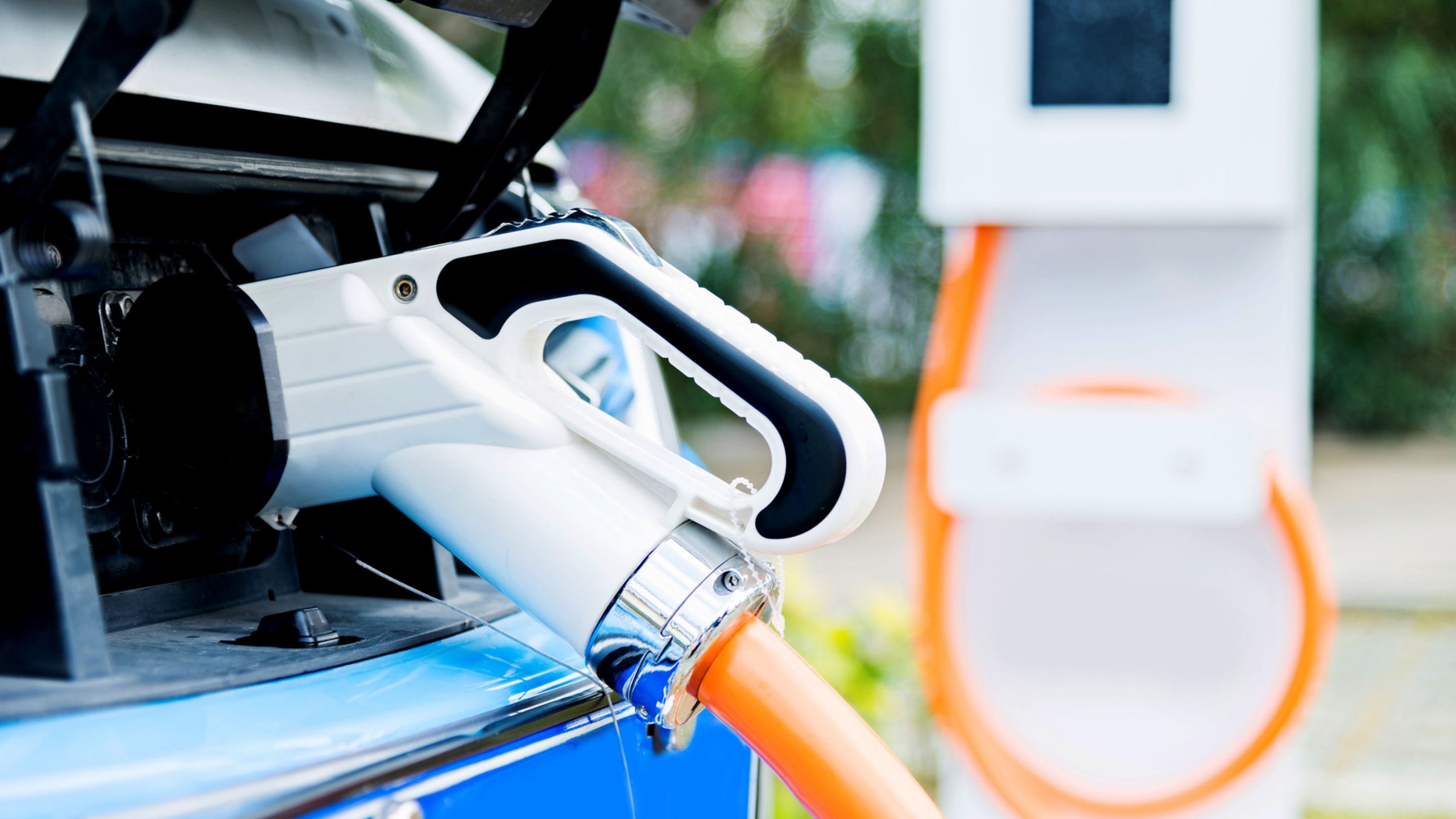
SPAIN DATA: Electric vehicle sales in 2022 rise 21%
Spanish electric vehicle sales in 2022 increased to 100,425 units, up 21% from 2021, although total vehicle sales declined 5%, according to figures published Jan. 2.
Fully electric vehicle sales were 52,224, up 32%, while hybrid vehicle sales increased 11% to 48,201, Spanish EV associations AEDIVE and GANVAM said.
The 2022 additions mean that around 325,000 EVs are currently on Spain’s roads, meaning the country is behind its target of 5 million EVs under its decarbonization plans for 2030, the groups said.
“The administration should put measures in place to accelerate this transition, such as financial incentives to make demand more dynamic and make efficient mobility a more affordable option,” they said.
The EV sales target for 2022 had been 120,000 units.
Increased demand for EVs has driven up battery metal prices; Platts, part of S&P Global Commodity Insights, assessed seaborne lithium carbonate and lithium hydroxide at $75,000/mt CIF North Asia and $81,300/mt CIF North Asia Jan. 3, up 124% and 156.5% year on year, respectively.
From Jan. 1, Spain plans to roll out a program to create low emission zones in all towns and cities with populations of more than 50,000, affecting 25 million people.
Meanwhile, total Spanish vehicle sales in 2022 fell 5% year on year to 814,000 units, due to rising fuel prices and inflation, according to figure from auto association ANFAC published Jan. 2.
The volume was below the forecast of 830,000 units, it said, with the group also expressing pessimism for 2023 due to supply chain bottlenecks and higher raw material prices, among other factors.
— Gianluca Baratti

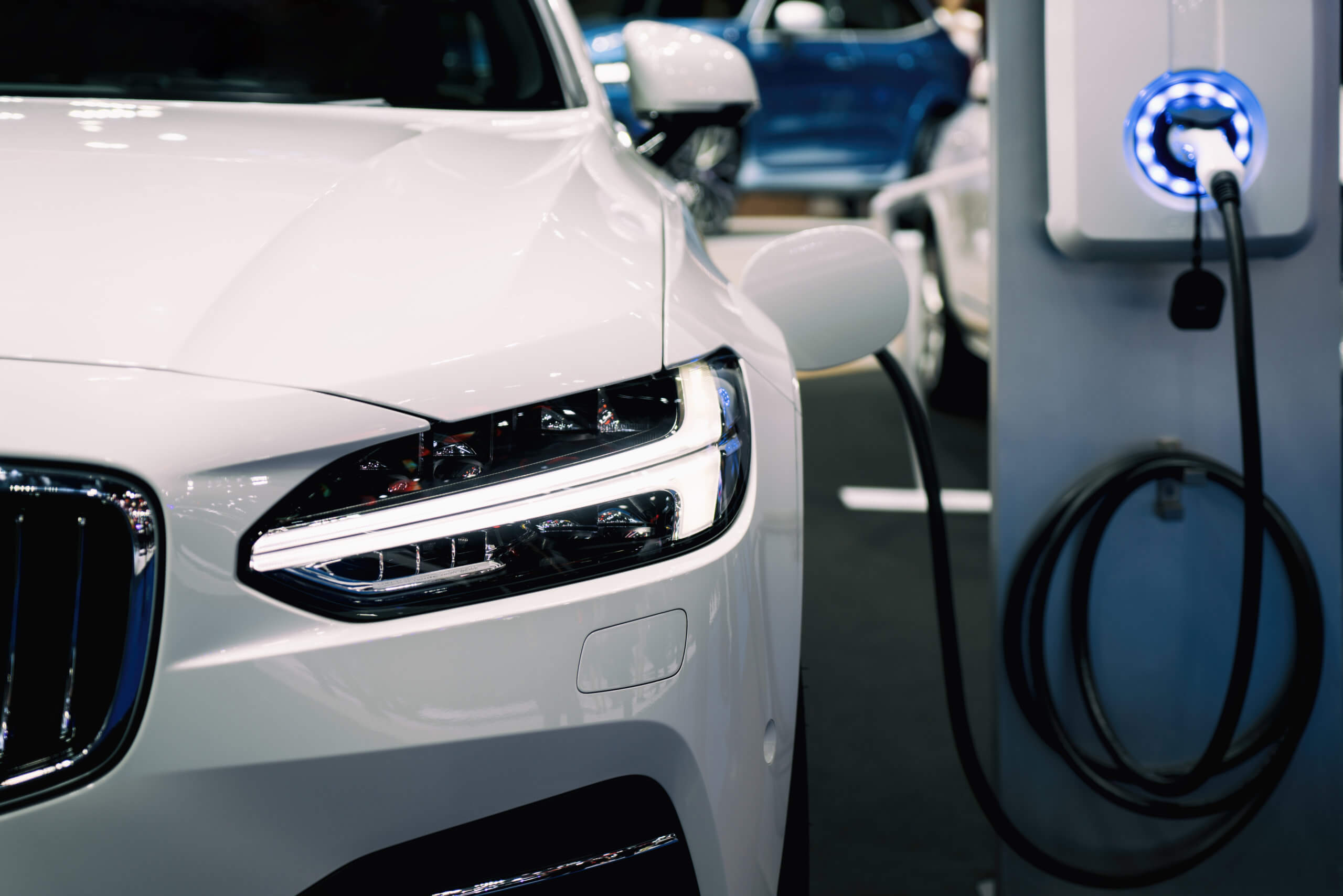
NORWAY DATA: 2022 EV sales rise 21.6% to record high: OFV
New zero-emission electric or hydrogen vehicle sales in Norway more than doubled year on year in December 2022 to a record monthly high of 32,713 units, bringing the full-year total to a record 138,285 units, up 21.6% from 2021, according to the latest data released Jan. 3 by the Norwegian Road Information Authority, or OFV.
The December volume was also more than double from November’s previous record monthly high of 15,915 units.
The December EV volume made up 82.8% of the month’s total new passenger car registrations, which at 39,497 units were also up 92.1% year on year and 102.4% higher than November and was also at a record high, the data showed.
Increased demand for EVs has driven up battery metal prices. Platts, part of S&P Global Commodity Insights, assessed seaborne lithium carbonate and lithium hydroxide at $75,000/mt CIF North Asia and $81,300/mt CIF North Asia Jan. 3, up 124% and 156.5% year on year, respectively.
“The car industry worked hard to get new cars registered and delivered before the new year – because then new and higher car taxes were expected, including a new weight tax and VAT on electric cars for the part of the price that exceeds NOK500,000 [$50,132.50],” OFV Director Øyvind Solberg Thorsen said in a statement.
“Almost 40,000 first-time registered new passenger cars in December alone, means that just over 22% of the entire year’s new car registrations were made during the last month of the year,” he added.
Total 2022 vehicle sales down 1.1% on year
Overall, total passenger vehicles sales slipped 1.1% year on year to 174,329 units in 2022, with EV’s making up 79.3% of the total share.
The overall passenger vehicle sales for the year were impacted by a new wave of COVID-19 and the Russia-Ukraine war causing major production and delivery challenges in 2022, Solberg Thorsen said, adding that few thought that the full-year volume would be so high, with higher interest rates and rising food and electricity prices also hitting consumers’ buying power.
Meanwhile, registrations of new hybrid cars in December dropped 38.5% year on year, but increased 12.4% from November to 3,293 units, the highest monthly volume since December 2021 and making up for 8.3% of the total sales.
Of these, 1,905 were rechargeable hybrids and 1,388 were not rechargeable.
Hybrid sales for the whole of 2022 totaled 24,321 units, down 49.3% year on year and making up 14% of the total passenger car sales, down from a 27.2% share in 2021.
December sales of petrol engine cars amounted to 2,503 units, or 6.3% of total new vehicle sales for the month, the highest level on record since S&P Global’s records began in 2020.
The monthly total was much higher than December 2021’s 686 units and up from 229 units in November.
Full-year petrol engine vehicle sales, however, dropped 16.4% year on year to 6,280 units, a 3.6% share of the overall total sales for the year
Sales of diesel engine cars in Norway in December also climbed 37.1% from a year ago and more than doubled from November’s four-month low to 987 units, a 2.5% share.
This brought total diesel engine vehicle sales for 2022 to 5,441 units, down 23.3% year on year and a 3.1% share of the total sales for the year.
According to S&P Global Commodity Insights analysts, Norway’s plug-in light duty EV sales are forecast to reach 200,520 units in 2025 and 206,800 in 2030.
Norway has been one of Europe’s front-runners in EV adoption, with its total 2021 light duty PEV sales ranking sixth in the world after China, Germany, the US, the UK, and France, according to S&P Global.
EV sales have been boosted by government incentives, including no purchase/import taxes, exemption from 25% VAT on purchase, reduced annual road tax, 50% toll road and ferry charges, cheaper municipal parking fees and access to bus lanes, among others.
— Jacqueline Holman

European HRC market monitors sustainability of price increases post-holidays
Market participants were said to be keeping a close watch on the flat steel market Jan. 3, assessing the sustainability of recent price increases post-holiday period.
Platts assessed hot-rolled coil in Northwest Europe up Eur5/mt on the day, at Eur685/mt ex-works Ruhr.
Market participants reported offers at Eur730-740/mt ex-works Northern Europe, expecting cheaper prices to disappear as the market proceeds through January.
That said, uncertainty remains as to whether buyers will accept higher prices, as some distributors continue to report a lack of supporting end-user demand that would incentivize higher purchasing costs.
Tradable value indications were received at Eur690-700/mt ex-works Northern Europe, from primarily trader sources, with most expecting this price level to increase in the near-term, especially for those that failed to restock in December.
“I think most are watching the market now to see if this price level will survive in January,” said a trader source.
When asked if buyers were ready to accept higher prices, another trader replied with cautious positivity, estimating prices of Eur700/mt ex-works as workable in the post-holiday market.
Platts is part of S&P Global Commodity Insights.
— Benjamin Steven

Blastr Green Steel to build low-carbon steel plant in Finland
Decarbonized steel supply developer Blastr Green Steel plans to construct a low-carbon steel plant and integrated hydrogen production facility in Finland, the company said in a statement Jan. 3.
Capable of producing approximately 2.5 million mt/year of hot and cold-rolled steel, the Eur4 billion plant ($4.2 billion) will be constructed on an existing industrial site in Inkoo, Southern Finland, owned by Nordic energy company Fortum.
Production is scheduled to begin by the end of 2026.
Utilizing hydrogen rather than traditional energy feedstocks such and coke and coal, Blastr aims to reduce carbon emissions at the plant by 4.6 million mt/year compared to conventional steel production methods.
In addition, the company also plans to procure a “significant share” of the plant’s power requirements from “directly or indirectly owned” wind farms.
“Finland is an ideal location for our project. It has an ambitious low-carbon target, supportive and predictable operating conditions for the green industry, fossil-free energy, and a highly qualified workforce,” said Blastr Green Steel CEO Hans Fredrik Wittusen.
“The ice-free deep-sea harbor enables efficient, low-carbon logistics all year round and close access to the European market,” he added.
More companies are investing in low carbon steel projects as global demand for low carbon steel is expected to increase from below 5 million mt/year of steel products in 2021 to 200 million mt/year in 2030, with European demand rising to nearly 40 million mt by then, driven by the automotive and construction sectors.
Platts, part of S&P Global Commodity Insights, assessed Northwest Europe hot-rolled coil at Eur680/mt ($716/mt) ex-works Ruhr on Dec. 30, unchanged on the day but down 34.4% since the start of 2022.
— Euan Sadden