


Weak demand stifles trading in Italy, Spain rebar markets
Slow demand was limiting trading activity in Southern Europe’s rebar markets in the week to Wednesday January 18, sources told Fastmarkets.Before the Christmas closures, steel mills successfully targeted higher prices, but the all-pervasive wait and see sentiment among buyers, coupled with weak demand, resulted in few trades taking place.
Some market participants told Fastmarkets there had been an increase in requests for material, but others said the market remained dormant.
Fastmarkets’ weekly price assessment for steel reinforcing bar (rebar) domestic, exw Italy was €810-860 ($876-930) per tonne on Wednesday, down by €10-25 per tonne from €835-870 per tonne.
The Italian rebar market has remained largely stable following the reopening after the Christmas/year-end holiday closures. And reduced energy costs and weak demand could put further downward pressure on prices, Fastmarkets understands.
“This week the market is still stable,” a buyer source said. “The market is flat, energy costs are at a 10-month low and scrap prices are stable.
“The market is still dormant, and demand is still on stand-by. Prices have fallen slightly, but we think [they] will probably fall a little bit further in the [near] future,” the buyer source added.
Other market participants, however, said there had been a slight pick-up in demand.
“The price for the steel rebar has dropped a little, [but over] the past 10 days there have been more requests for material,” a second buyer source said.
“I don’t know if this is a coincidence or if the trend will continue,” the source added.
International scrap prices affect the price of all long steel products and increased in early January, but have since dropped.
Fastmarkets’ daily calculation of the index for steel scrap, HMS 1&2 (80:20 mix), North Europe origin, cfr Turkey, was $401.60 per tonne on January 18, down from $414.22 per tonne week on week.
Spain
Demand picked up slightly in the Spanish rebar market in the week to Thursday, again after mills began to reopen.
“Buying has picked up along with scrap and buying has improved,” a Spanish market participant told Fastmarkets.
“General expectations are positive and another increase could be just around the corner,” the source added.
Fastmarkets’ weekly price assessment for steel reinforcing bar (rebar), domestic, delivered, Spain was €765-785 per tonne on Wednesday up by €25-35 per tonne from €730-760 per tonne.
Published by: India-Inés Levy


Germany’s Dillinger supplies steel plates to Liebherr for energy transition applications
Germany’s Dillinger is supplying high-strength steel for equipment manufacturer Liebherr’s HLC 295000 heavy lift crane for energy transition applications, the steel platemaker said in a Jan. 19 statement.
The steel being supplied is up to 220 mm thick, meeting special requirements for yield strength, impact strength, and specific properties related to plate thickness.
Liebherr’s largest-ever crane, with lifting height up to 175 meters and load capacity up to 5,000 mt, has uses including in dismantling disused offshore oil and gas production facilities, and the installation of foundations for offshore wind turbines, recently at the Arcadis Ost 1 wind farm off the island of Rügen, where Dillingen Group’s Steelwind Nordenham subsidiary supplied XXL monopiles for the wind farm.
The crane is located offshore, installed on the Orion, a purpose-built vessel belonging to the Belgian DEME Group.
Domestic prices for heavy plate increased in Europe in the week ended Jan. 13, supported by strong mill order books and seasonal demand revival.
Rerollers have had to aim for higher prices and are expected to continue attempts to move prices further due to high slab and energy costs, market sources said.
Platts, part of S&P Global Commodity Insights, assessed heavy plate in Northern Europe up Eur15 ($16.22) on the week at Eur940/mt ex-works Ruhr Jan. 13.
— Diana Kinch


UK distributors await return of HRC mills to market, pessimistic on increases
Offers were heard as largely withdrawn in the UK hot-rolled coil market Jan. 19, with mills expected to return week beginning 23 Jan. for second-quarter sales.
What material was available on the market was indicatively offered at GBP720-730/mt DDP West Midlands ex-Europe from a prime mill, according to market participants.
Bookings earlier in the week were reported at around GBP660-670/mt for limited tonnages. Cheaper material was heard as available in the high GBP600s from one European re-roller, but this price level is expected to disappear in the near-term as mills return to market.
Steelmakers are widely cited as having secured their orderbooks for the first quarter, now looking bullishly to the second quarter on reduced production and stronger bookings.
However, many in the hot-rolled coil markets see the increased demand as illusory – unsupported by end-user consumption, with some distributor stock levels sufficient to sustain until around March before resuming more substantial purchasing.
“The concerning thing for everyone right now is demand, and we don’t have any real confidence that things will be better than average at best,” said a stockholder source. “The mills are trying to add two and two and getting five – higher prices on a weak market doesn’t make sense and they’ll end up falling over each other to cut prices again later in the year as capacities come back online and stock levels fail to deplete.”
Platts assessed hot-rolled coil in the UK up GBP10/mt on week, at GBP680/mt DDP West Midlands.
Platts is part of S&P Global Commodity Insights.
— Benjamin Steven
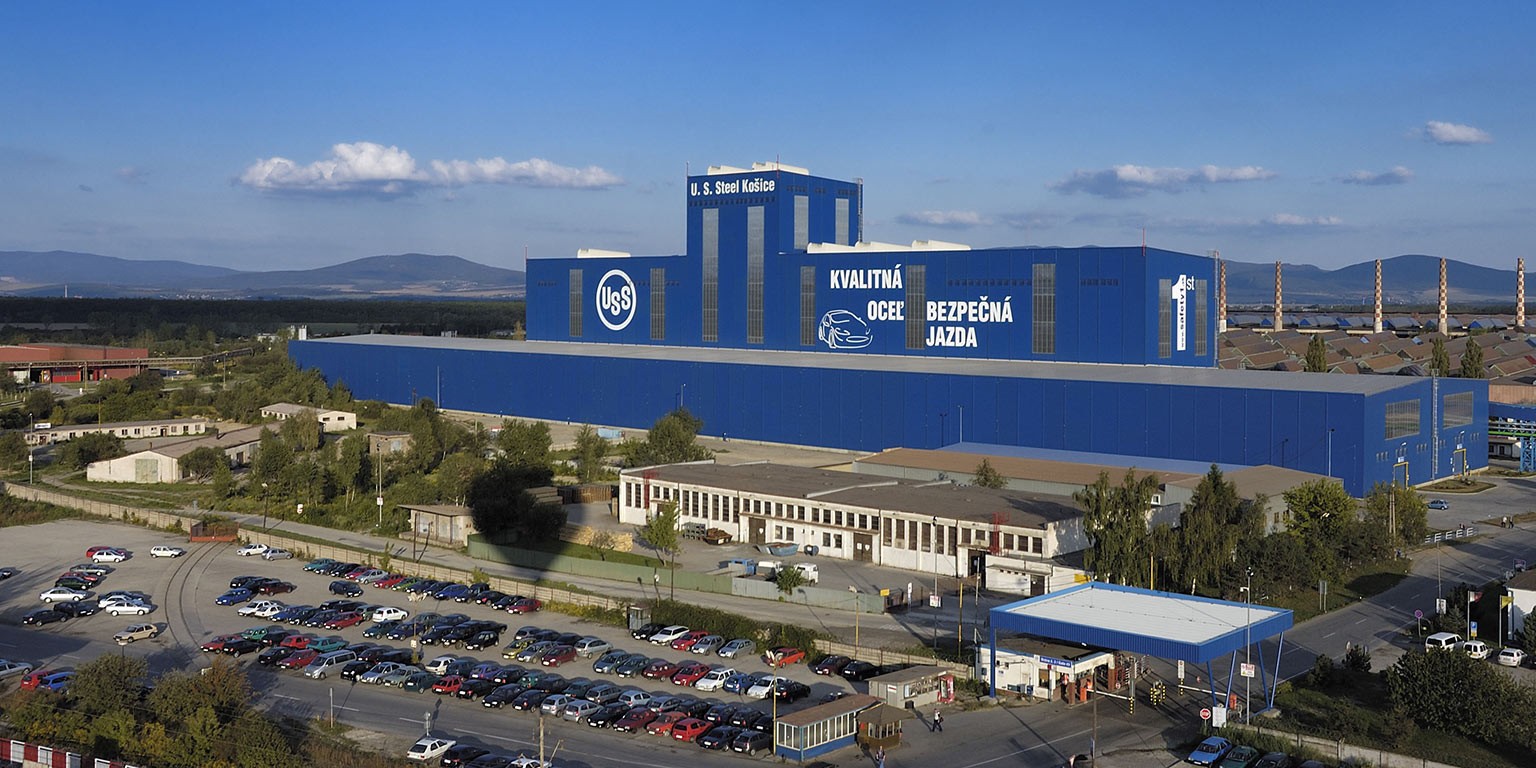
Slovakia’s US Steel Kosice restarts BF1
Slovakian steelmaker US Steel Kosice has restarted operations at its blast furnace 1, which was idled Dec. 2, a spokesperson for parent company US Steel told S&P Global Commodity Insights Jan. 19.
Operation restarted early January, they said, with a separate USSK spokesperson also confirming the return to operation and saying the company was operating two blast furnaces.
The company has three blast furnaces and a total crude steel production capacity of 4.5 million mt/year.
It had been planned that BF1 would return to operation in the first quarter of 2023 after it was idled due to high energy prices, low market demand and surging imports.
US Steel Kosice previously idled its BF2 on Sept. 4 for an initial 60 days, keeping BF1 and BF3 operational.
At the time, the company said the BF2 idling was a planned outage and it would continue to adjust maintenance schedules according to demand.
Neither spokesperson gave any other details about why BF1 had restarted operation and did not respond to questions about BF2’s restart.
However, a number of market participants said USSK would be restarting another blast furnace in February.
“US Steel Kosice approached us saying that they plan to restart a blast furnace in February, meaning that they will have more material,” a source at a Central European service center said.
“I think if all the mills start to restart the idled furnaces, we might forget about price rise. The demand is not strong enough to absorb additional volumes,” he said.
A European trader also said USSK planned to restart a BF in February, although said there was not much detail available. This was echoed by a third source.
Concerns are growing in the market that the increase of flat steel production rates might put an end to the bullish trend settled in the European coil market since mid-December.
A number of European steelmakers had idled a number of blast furnaces in the second half of 2022 in the attempt to prevent coil price downtrend.
USSK is not the only steelmaker returning blast furnaces to operation, with ArcelorMittal saying Jan. 18 it may restart the 4.5 million mt/year blast furnace A at its works in Gijon, Spain, at a reduced level in February.
Platts, part of S&P Global, assessed domestic HRC prices in Northern Europe at Eur740/mt ex-works Ruhr Jan. 18, down 20% since the start of 2022.
— Jacqueline Holman, Maria Tanatar

EU HRC producers withdraw offers as returning capacities threaten bullish trend
The majority of the European producers of hot-rolled coil withdrew offers from the market on Jan. 19, preparing to increase prices.
Concerns have been growing among buyers that a lack of demand recovery and the return of idles blast furnaces into operation could put an end to the upward trend settled in the European market since the middle of December.
Multiple market participants said that the steelmakers planned to target Eur800/mt ex-works Ruhr in Northwest Europe and similar prices in the rest of the EU.
Platts assessed hot-rolled coil in Northwest Europe stable at Eur740/mt ex-works Ruhr Jan. 19.
Market participants reported tradable value at Eur730-Eur760/mt ex-works Ruhr.
Trading activity has been limited, as buyers have preferred to avoid putting material in stocks and booked only minimum required volumes. Such an approach was caused by the concerns among buyers that the price rise might not be sustainable.
“The market lacks realistic price indications,” a service center said. “We try to buy bare needed minimum as I do not believe that the current price trend is sustainable.”
The coil price recovery has been mainly been driven by restocking and reduced availability. However, end user demand has not improved and the return of the volumes to the market threatens the bullish price trend.
A number of European steelmakers had stopped blast furnaces in 2022 in an attempt to balance supply and demand and therefore support the coil prices. In January, ArcelorMittal Spain and US Steel Kosice in Slovakia confirmed the return of the capacities, and as a result European buyers were concerned that the increased production would put an end to the price rise.
European steelmakers claimed that they had either fully booked the first quarter rolling coil or had limited volumes for March.
“Production increase it will be a price killer,” a trader said. “This bull run will not last enough to make a profit.”
Some market participants, however, believed that the lack of competitive import and balanced approach of the mills to capacity restart would still allow the coil price recovery.
“Prices will continue to rise despite stable demand,” a Germany-based distributor said. “Mills return capacities with caution, so they should not disrupt the positive trend.”
Platts assessed domestic prices for hot-rolled coil in South Europe at Eur730/mt ex-works Italy on Jan. 19, up Eur10 on the day. The assessment was based on achievable prices heard at Eur730-Eur740/mt ex-works Italy.
Platts is part of S&P Global Commodity Insights.
— Maria Tanatar

Italy’s crude steel output falls in 2022
Italian crude steel output fell by 11.5% year-on-year in 2022 to 21.6 million tonnes, and by 15.6% on-year to 1.2mt in December, according to data issued by local steelmakers association Federacciai.
Italian flat steel production tumbled by 17.6% to 642,000t last month, and by 13.8% in 2022 to 9.5mt. Longs output also fell by 22.4% to 660,000t in December, and by 12% to 12mt in the full year, Kallanish notes.
Sources in the industry believe the decline is due to the several longs plant stoppages in the second part of last year, with the objective of balancing supply and demand amid the general steel demand downturn. Italy’s largest steelmaker, Acciaierie d’Italia, also produced at heavily reduced capacity last year, with over 3,000 workers being temporarily laid off.
Crude steel output in 2021 rose by 19.8% on-year to 24.4mt and fell in 2020, the year of the pandemic, by 12.1% to 20mt, Federacciai says.
Natalia Capra France


Outokumpu restarts ferrochrome furnace earlier than anticipated
Outokumpu announced this week the restart of its third ferrochrome furnace to optimise production in the current electricity market.
The furnace was taken down in early September 2022 due to high electricity costs and was expected to remain temporary idled until the end of Q1 2023 at least. Now, the company expects to restart the furnace, nevertheless maintaining capacity at 50-60%, Kallanish understands.
“The restart of the third ferrochrome furnace gives us more possibilities for optimising the production in the current situation in the electricity market. As the furnace will be restarted, also the employees of that furnace will return to work at the ferrochrome operations. The majority of them have been working in Outokumpu’s stainless steel operations in Tornio,” says Martti Sassi, president, business area ferrochrome.
Electricity prices in Europe moved down significantly during the last month. The European TTF price shed some 50% of its value from the latest peak in early December 2022.
Emanuele Norsa Italy

Energy transition to invert scrap trade flow: conference
The transition of the steel industry towards low-carbon technologies will be accompanied by fierce competition for scrap, warned speakers at Thursday’s Green Day conference organised by German distributors federation BDS in Düsseldorf.
All German oxygen-route mills are heading for a switch to the direct reduced iron route in the course of this decade – ArcelorMittal, Salzgitter and Dillinger/Saarstahl presented their cases at the conference. However, there will be a transitory period marked by enhanced use of scrap in blast furnaces, to lower the share of coal, until DRI technology is ready to go. Participants pondered if the higher demand for scrap in Germany and other EU countries will boost scrap prices, plus mean a notable limitation on scrap exports.
It will, replied Karl-Ulrich Köhler, chief executive of Stahl-Holding Saar SHS (Dillinger/Saarstahl). “This will become a hot topic, initially for pricing, and the trade flow of scrap could be virtually inverted. Looking ahead, I see Germany as an importer, rather than an exporter,” he predicted. So, at least for the transitory period, “there are heavy storms brewing, and you do not need to be a weather prophet to foresee it,” Kallanish heard Köhler say.
He also spoke of recent moves by electric arc furnace-route operators to seek alliances with the future DRI mills. Some EAF mills “have come forward to suggest establishing joint production sites” to prevent the factions from vying for scrap as opponents.
ArcelorMittal Germany representative Arne Langner pointed at the group’s visible strategic measures that foreshadow its growing hunger for scrap. Last year, ArcelorMittal acquired scrap merchant companies in several European countries.
Christian Koehl Germany