


Romanian steel pipe group sold by Russian owner to Serbian investment company
Romanian pipe manufacturer Artrom Steel Tubes has been acquired by Belgrade-based investment banking company Hefestos Capital from Russian pipemaking group TMK, Artrom said in a statement emailed to S&P Global Commodity Insights.
The sale of Artrom may have been necessitated by pressure from the Romanian government to disassociate industrial enterprises from the Russian business, according to market sources.
Romania’s Ministry of the Economy and Artrom could not be reached for comment on Jan. 23 — a public holiday in the country.
Artrom Steel Tubes — until recently known as TMK-Artrom — comprises the 450,000 mt/year billet casting mill in Resita in west Romania and the 200,000 mt/year pipe rolling mill in Slatina, in the southwest of the country.
In March, shortly after the EU imposed sanctions on then-TMK owner Dmitry Pumpyansky prompting him to immediately dispose of his TMK shares and resign from the company’s board, Romania’s tax authority blocked TMK-Artrom’s bank accounts, disrupting its sales. This sparked protests by the Slatina and Resita mills’ unions, S&P Global Commodity Insights reported.
President of the company’s board Adrian Popescu said in the emailed statement that Artrom could now resume its development programs delayed by the crises of the last three years — the pandemic and then the war in Ukraine.
The most recent growth project not yet implemented was announced by TMK in 2019 and aimed to boost Artrom’s rolling capacity by 60% to 320,000 mt/year by 2024.
Hefestos Capital was established in 2001 and has expertise in an array of industries including the oil and gas sector, according to its website.
— Ekaterina Bouckley


Germany’s 2022 crude steel output drops 8.4% on year; Dec tumbles 14.6%: WV Stahl
German crude steel production fell 8.4% on the year to about 36.8 million mt in 2022, the country’s steel association Wirtschaftsvereinigung or WV Stahl reported on Jan. 23.
The 2022 total marked the country’s lowest annual production since 2009, excluding the pandemic year of 2020, the group said.
In particular, the group sought to highlight the country’s crude steel output during the second half of the year, which fell 11% on the year to 17.3 million mt.
The monthly production total for December was reported at 2.6 million mt, down 14.6% from a year ago.
Similarly, December production of hot-rolled steel products was at 2.0 million m, down 15.7% on the year, while 2022 production was fell 7.8% to 32.1 million mt.
German steel producers have been forced to curtail production in recent months due to rising energy prices in the wake of Russia’s invasion of Ukraine.
On Oct. 21, Germany’s parliament voted to adopt a Eur 200 billion ($216 billion) relief package aimed at protecting households and industry from surging gas and electricity prices.
Since the relief package was introduced, mild winter temperatures have seen European gas prices fall to levels not seen since December 2021 amid healthy gas storage levels and demand reductions.
Platts, part of S&P Global Commodity Insights, assessed Dutch TTF front-month gas at Eur36.72/MWh Jan. 20, up 0.6% from the previous session. The TTF benchmark contract averaged Eur132.31/MWh in 2022 and Eur71.73/MWh in the second half of 2021, S&P Global data showed.
Platts assessed Northwest Europe hot-rolled coil at Eur755/mt ($821/mt) ex-works Ruhr on Jan. 20, up Eur15/mt on the day.
— Euan Sadden

Germany’s scrap exports, imports continue to fall
Exports of ferrous scrap from Germany continued to decrease in January-November 2022, show data from the German federal statistics office.
The volume amounted to 7.2 million tonnes, down by 11% on the 11 months of 2021, Kallanish notes.
However, total export value increased from €4.2 billion ($4.6 billion) to €4.6 billion, thus reflecting the increase in steel scrap prices compared to the previous year, according to market observers.
The main target country is traditionally the Netherlands, but exports to this destination fell even more significantly, by 16% to 1.48mt. To Italy, the second-largest buyer country, 11-month exports dropped by 13% to 1.35mt.
Turkey is the most important customer outside the EU. German direct exports here totalled 624,000t, down by 5% on-year in January-November.
However, the surge continued in deliveries to India, which at 173,134t were up 171% on-year.
On the import side, the federal statistics office reports a 14% drop to 4mt, worth €2.1 billion. The most important trading partner here was also the Netherlands, which provided 874,566t, down by 4% on-year.
The second-largest supplier was Czech Republic with 746,043t, down 16%, and third-largest was Poland with 602,652t, down by 19% on-year.
German scrap prices are expected to increase in January amid new demand and exports (see Kallanish passim).
The 30-40% increase in rail freight prices in Germany from 1 January will inevitably have an impact on scrap trade.
Earlier, German steel recyclers federation BDSV urged for more scrap transport by rail due to logistics problems on road and waterway routes in Germany (see Kallanish passim).
Svetoslav Abrossimov Bulgaria


ArcelorMittal Spain’s hybrid EAF project awaits EC approval
ArcelorMittal confirms its significant investment in Spain has entered its last pre-execution phase. The approval of financial support for the decarbonisation of the company’s steelmaking sites in Asturias and Sestao, in the Basque Country, must now be evaluated by the European Commission after receiving a green light from its competition regulator.
“There is no approval of the project yet,” an ArcelorMittal spokesperson tells Kallanish. “The Commission’s Directorate General for Competition gave a positive evaluation, and the final decision is up to the EC, which must now rule on the financing within a period of two months.”
The €1 billion ($1.08 billion) project, which is a priority for the steelmaker’s CO2 emissions reduction goals in Europe, will be co-funded by the Spanish government. It includes constructing a 2.3 million tonnes/year green hydrogen-based direct reduced iron unit, complemented by a 1.1m t/y hybrid electric arc furnace. The new DRI unit will be the first of its kind in Spain and will also feed the company’s Sestao works.
Todor Kirkov Bulgaria

Liberty Liege attracts buyers’ interest, Dudelange remains idled
Liberty Steel’s coil rolling plants in Belgium have started attracting some interest from potential buyers, according to local Belgian press reports.
India’s JSW Group has allegedly registered its interest for the purchase of the assets, while other steel suppliers are also evaluating the case. Liberty Steel declined to comment when contacted by Kallanish on Monday.
Liberty Steel’s Belgium-based assets include a series of lines for packaging steel located in Tilleur and two hot-dip galvanising lines located in Flemalle. The units can produce up to 1 million tonnes/year of hot-dip galvanized coil and 200,000 tonnes/year of packaging products. They were acquired by Liberty from ArcelorMittal in 2019.
Liberty Steel also controls HDG capacity in neighbouring Luxembourg. These lines, located in Dudelange, remain temporary idled but are not officially for sale.
Emanuele Norsa Italy

Italian steelmakers boost collaboration for DRI
The Italian steelmakers’ consortium for direct reduced iron procurement, Ceip Scarl Consorzio Elettrosiderurgici Italiani per il Preridotto, has signed an agreement with the recently formed state company DRI d’Italia. This will aim to study opportunities for collaboration to build DRI production plants in Italy, sources close to the matter tell Kallanish.
The memorandum of understanding signed at the premises of local steelmakers’ association Federacciai last week also involves the future commercialisation of DRI and aims to help decarbonise the steelmaking sector, in line with EU net-zero objectives.
According to the agreement, DRI d’Italia will make available to Ceip consortium members about 2 million tonnes/year of DRI when its first production plant reaches full capacity. The agreement aims to replace DRI imports and reduce the use of scrap in Italy.
In February last year, Italian state company Invitalia, the majority shareholder of Acciaierie d’Italia, created DRI d’Italia to build and operate DRI plants. The first facility would be located at Acciaierie d’Italia but the project will also look at decarbonising other steel mills in the country. Invitalia said the new firm benefits from €35 million ($38m) of funding from Italy’s finance ministry. This can be increased to a maximum of €70m, depending on the project’s development (see Kallanish 17 February 2022).
Natalia Capra France
European welded tube prices increase
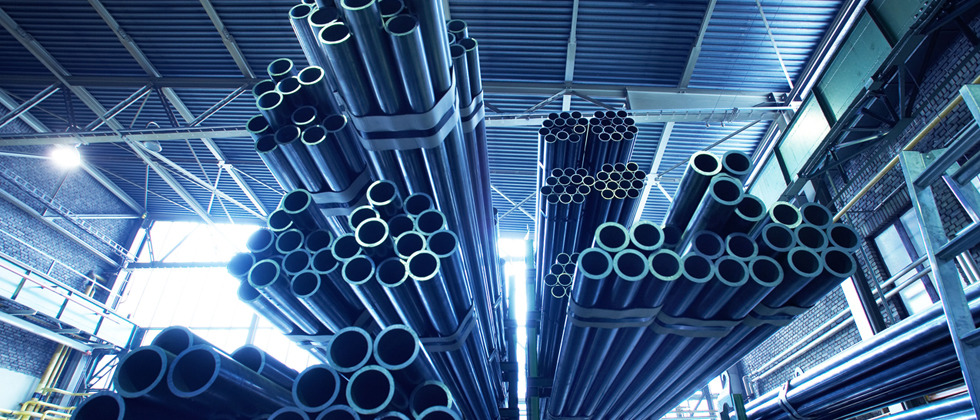
Welded tube values in Europe are set to increase, in line with higher contract prices and quotes for hot rolled coil.
Tube prices have increased compared to December, as discounts were reduced by 2 or 3 points in Western Europe, but the increases are slower compared to the price hikes seen for HRC. Re-rollers and distributors in Italy and France say that demand remains fragile from some sectors such as automotive and appliances where consumption is now considerably lower. Other sectors like construction and energy are performing better, Kallanish notes.
The tube price fall accelerated in December, bringing some values below sustainable levels. Over the past two weeks, however, in Germany, Italy and other European countries, prices have increased in line with hiking coil values and some need for restocking.
The level of discounts in Italy reached some 38-39 points last month and has now fallen to some 35-36, but tubemakers need to continue to push up their prices to ease the current margin squeeze. In Italy, they intend to recover 5 points in the second half of January, the equivalent of €70-80/tonne ($76-87), depending on product, and reach a level of discount of 30 points on average gradually by 1 February.
As some welded tube prices are unsustainably low, both producers and distributors are in need of increasing margins or risk stopping production lines to avoid selling at a loss. This year, re-rollers in Europe are dealing with high transport costs, particularly in Germany, France and Eastern Europe, following the increases implemented for railway freight and intermodal transport starting this month.
Energy prices remain an issue as some steelmakers and re-rollers are paying higher prices in the first quarter after their annual or six-month energy contracts expired in 2022. Uncertainty, longer lead times of now pricey coil and limited import offers are adding to the issue of high production costs.
Natalia Capra France

Northwest European coil market enters standoff
Following some buying activity in the wake of price increases, the northwest European coil market has seemingly re-entered a period of reservation, with transaction activity slowing. Observers’ views diverge, however, on whether the reservation is more on the side of the mills or their customers.
ArcelorMittal’s January announcement of a base price for hot rolled coil at €760/tonne ($843), cold rolled coil at €860/t and galvanized coil at €880/t will not be the last word, a Dutch manager believes. “New price increases cannot be ruled out again soon,” he says.
A German buyer forecasts the mills will charge €780/t for HRC as soon as they return to the market – which they have left for the time being. “A colleague heard from a mill that he’d have to wait two weeks before it will again accept orders – and give out prices,” he tells Kallanish, stating that order books are full for the first quarter. Both the German and Dutch sources see the major mills following the market leader in this regard.
An alternative view comes from a buyer at a German processor, who is sure the current standstill comes from the decision of buyers not to place orders. He is also sure that €760/t “is too high, nobody will pay that”, and claims that tonnages can still be had for delivery in Q1.
The next two weeks should bring some clarity once mills return to offering, potentially but not necessarily at even higher prices.
Christian Koehl Germany

European heavy plate prices rise on increased demand, slab costs
Domestic prices for heavy plate increased across the EU in the week ended Jan. 20 amid support from solid demand and higher slab costs.
Demand has mainly increased from projects. While distributors buying material on spot basis have not shown higher demand, they have accepted the price increase.
“Plate producers are focusing on projects nowadays and for a good part of this year,” an Italy-based source said.
Platts assessed domestic heavy plate prices in Northwest Europe up Eur50 on the week at Eur990/mt ex-works Ruhr on Jan. 20.
Tradable values and offers were reported at Eur980-Eur1,000/mt ex-works Ruhr.
Platts assessed domestic heavy plate prices in South Europe at Eur860/mt ex-works Italy, up Eur20 week on week.
Spot deals were reported at Eur850-Eur870/mt ex-works Italy.
Italian re-rollers were targeting Eur900/mt ex-works for heavy plate, as the increase was needed to cover rising slab costs.
“Demand is gradually getting better; it is nothing crazy but we bigger buyers accepting higher prices,” a mill source said. “And we need to cover higher slab costs.”
Platts assessed import slab prices in Italy up $50 on the week at $690/mt CIF Italy on Jan. 20.
“Last week they increased substantially with workable levels around $700/mt CIF Italy – some producer less, some producer more than the mentioned level,” an Italy-based re-roller said. “Heard some earlier booking at $670-$680/mt CIF.”
Market participants, however, said that prices below $690-$700/mt CIF Italy were no longer available.
Platts is part of S&P Global Commodity Insights.
— Maria Tanatar
Steel trade case monitor for December 2022
Competition in the global steel markets remains fierce. Fastmarkets is therefore providing an update on potential, new, in-progress and closed anti-dumping (AD) and countervailing duty (CVD) cases; safeguards; sanctions and free-trade agreements from around the world in December 2022. The case list below includes updates only.
For other continuing cases this year, see the updates for November.

Updated cases for December include:
1 Eurasian Economic Union (EAEU) extendingf anti-dumping duty on imports of PPGI from China until September 15, 2023, for a period of re-investigation.
2 South Africa sets six-month export ban on scrap
3 Thailand imposed anti-dumping duty at 6.28-51.69% on cold-rolled stainless flat steel from Indonesia, Malaysia.
4 Saudi Arabia announced new legislation for remedies on imports, including steel.
5 EU reviewed safeguard measures, keeping them unchanged.
6 The US continued an anti-dumping order on steel flanges from India, Italy, Spain and a CVD order on material of Indian origin.
7 The US maintained duties on welded stainless pipe from South Korea, Taiwan.
8 The US made a preliminary determination assigning dumping margins of 13.72% for Husteel and 0.00% for Nexteel.
9 Japan imposed anti-dumping duty of 9.8-41.7% on hot-dipped galvanized steel wire from South Korea and China.
10 The EAEU and UAE decided to start negotiations on a free trade agreement.
11 Brazil to decide whether to apply countervailing duties to hot-rolled coil from China by January 21, 2023.
12 The EAEU introduced anti-dumping duty on steel gate valves for pipelines from China for five years.
13 The EAEU introduced anti-dumping duty on ferrosilicon manganese from Georgia for five years.
14 The US continued anti-dumping duty orders on circular welded carbon-quality steel pipe from Oman, Pakistan, and the United Arab Emirates.
15 Russia extended its quota regime on ferrous scrap exports outside the Eurasian Economic Union (EAEU) until June 30, 2023.
Published by: Elina Virchenko
