


KPMG: Agenda 2023 du conseil d’administration
Les conseils d’administration peuvent s’attendre à ce que leur processus de surveillance et de gouvernance soit davantage mis à l’épreuve au cours de l’année à venir par toute une série de défis: volatilité économique mondiale, guerre en Ukraine, perturbations de la chaîne d’approvisionnement, en passant par les risques sociaux et les risques de cybersécurité, mais également un marché des talents tendu.


EUROMETAL was at SEPEM Industries 2023 in Douai


SEPEM is a French industrial fair. Organized in different regions of France, this fair brings together all industrialists from an entire region.
In this edition in Douai, a town in the north of France, between Lille and Cambrai, it was possible to find not only some French steel distributors but also from the northwest of Belgium.
This visit allowed visiting the ArcelorMittal Distribution Solutions stand with emphasis on the e-steel platform, SAEY, Dubocage, France Steel, Contisteel, Irestal, Swiss Steel France and Thyssenkrupp Materials France.

US Steel Kosice BF restart concerns EU flat steel market
Slovakia-based integrated steelmaker US Steel Kosice (USSK) has restarted a second blast furnace (BF) at its Kosice facility, the company told Fastmarkets on Wednesday January 25.
A spokesperson for the company confirmed earlier this week the restart of BF2, which has a capacity of 1.8 million tonnes per year of pig iron, after almost five months of downtime.
BF2 was stopped in September 2022 due to poor market fundamentals, Fastmarkets reported.
USSK also confirmed the restart of BF1 last week.
US Steel Kosice usually has three BFs operating at any given time, with a combined capacity of 5 million tpy of pig iron. The company produces at steel products: hot-rolled, cold-rolled and hot-dipped galvanized coil.
Currently all three BFs are operational, the spokesperson told Fastmarkets.
“I can confirm that all three blast furnaces have been in operation since the start of this week [January 23],” the spokesperson said.
The news about one more BF being brought back online raised concerns among the EU at steel market participants. They were worried that the gradual restart of idled steelmaking capacities that were suspended in the fourth quarter of 2022 would threaten the recent uptrend in prices in the EU
at steel market.
Earlier in January, ArcelorMittal said it was considering restarting a BF at its facility in Gijon, in northwest Spain.
Market sources said that the sharp price rises in the at steel segment were prompted by a more balanced market, and therefore increasing steel output might hamper further increases.
Fastmarkets calculated its daily steel hot-rolled coil index domestic, exw Northern Europe at €754.55 ($820.57) per tonne on Tuesday, up by €2.05 per tonne from €752.50 per tonne on Monday.
The latest calculation of the index was up by €39.13 per tonne week on week and by €85.80 per tonne month on month.
By Julia Bolotova

Acciaierie d’Italia strikes steel, wind energy exchange partnership
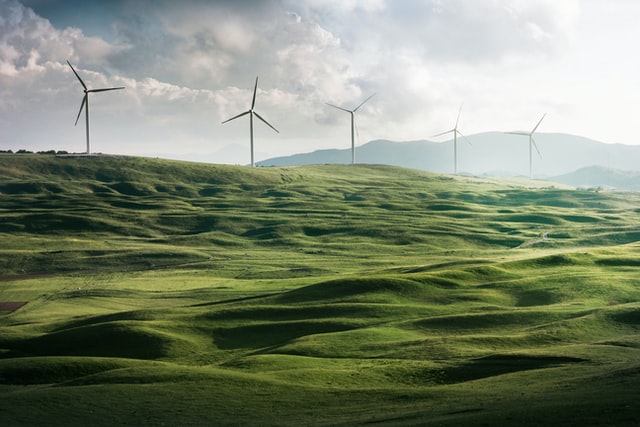
Acciaierie d’Italia (ADI) is partnering with Falck Renewables and BlueFloat Energy to boost its use of renewable energy and optimise consumption. The firms have signed a letter of intent that will trigger a roundtable discussion about possible collaborations and synergies, a source close to the company confirms.
ADI will supply steel and other materials for the construction of floating offshore platforms for wind farms developed by a joint partnership between Falck Renewables and BlueFloat Energy. The two energy companies will return the favour by supplying renewable energy and green hydrogen for steelmaking, Kallanish notes.
Falck Renewables has vowed to help ADI build a photovoltaic infrastructure within the Taranto steelmaking facility and on the company’s land outside the plant. The partners plan to create a consortium that will involve other industrial partners and research centres. Their mission is to accelerate the use of renewable electricity for energy-intensive sectors and to develop a value chain for wind farm components production in Apulia, southern Italy.
ADI has set a production target of 4 million tonnes in 2023 and 5mt in 2024. This year, it will start revamping blast furnace no.5, which has been idled for many years. The company is planning to boost its circular economy, desalinate water at its Taranto facility and recover all by-products that can be reused within the steelmaking process but also by other industries (see Kallanish passim).
With its new decree, “Urgent Measures for Strategic National Installations”, the Italian government recently approved the injection of €1 billion ($1.09 billion) into the troubled steel producer. The funds, which will help state company Invitalia to become the majority shareholder in 2024, will also ensure the industrial development of Taranto, employment guarantees and production targets higher than those achieved by Acciaierie d’Italia in the last two years.
Natalia Capra France

German industry compares technology transition to open-heart surgery
Participants at recent industry conferences in Germany expressed their thoughts on the challenges the technical transition of the steel industry will bring for the players involved.
Unlike previous investments during the forty years of his career in the steel industry, the investment campaigns in direct reduced iron and hydrogen are a venture into murky territory, says Karl-Ulrich Köhler. The chief executive of Saarland mills Saarstahl and Dillinger noted during stockholders federation BDS’s Green Day conference earlier this month that “investments used to be made on the basis of economic considerations when you had clarity about the outcome. Now it is the other way round, in order to fight climate change.”
“Colleagues of mine call it ‘hara-kiri’, but we won’t make progress if we do not start at some point. And once we start, others will follow. We are banking on a positive dynamic,” Kallanish heard him say at the conference.
A similar defiance was expressed earlier by speakers at the ecoMetals Day in Düsseldorf last September. Christian Vietmeyer of fabricators federation WSM drew a comparison with the progress that has been triggered by necessity because of Covid-19. “When the pandemic broke out, we did not have any vaccine, either, but then it came,” he said. He added: “We do see the road towards hydrogen ahead, but we need the will to go down it.”
Gunther Kegel, president of the German Electrical and Electronic Manufacturers’ Association (ZVEI) pointed at the big changes the hydrogen conversion will mean for municipal utilities during ongoing operation. “It will need investors, it will require external monitoring, and the management floors will be restructured – and we have not even started with that,” he noted. “It will be like open heart surgery.”
Christian Koehl Germany

Decarbonisation investments should remain in EU: German steelmakers
Investments into new technology and new sites required to achieve a transition to low-carbon steelmaking ought to be kept within Germany or the EU, German industry players say.
The transition towards direct reduced iron-based technology was a key theme at the Green Day conference organised earlier this month by German steel stockholders association BDS. Given that Germany, especially, is a country of high energy costs, the question arose if new mills should be built offshore. “Wouldn’t the investments make more sense in places where renewable energies are more abundant?” asked Heinrich Sülzle of distributor Sülzle Gruppe.
Karl-Ulrich Köhler, chief executive of the Saarland mills, concurred. “We have value chains with the highest know-how in the EU and Germans, especially, and we would be crazy giving up what has made us strong,” Kallanish heard him say. He added that offshoring for the sake of lower initial costs would be short-sighted.
Arne Langner of ArcelorMittal gave the example of the group’s mill in Canada, Dofasco, which recently received public support approval from the government. Such bureaucratic necessities are a weakness of the EU because they are time-consuming, he said. Still, the global group also plans investment at its German mills, as well a shift of technology towards DRI.
One group that already received approval for support for its plans is Salzgitter AG. Its speaker Alexander Redenius agreed that a move to other shores would shake the entire existing supply chain. “We are focusing on the sites here, and we do not want to lose them,” he affirmed.
Christian Koehl Germany

French electrolyzer McPhy grows order book, secures German steel project
French electrolyzer and hydrogen refueling station manufacturer McPhy grew its order book by over 50% in 2022, landing a contract for a low-carbon steel project in Germany and securing funding for its planned 1 GW/year Belfort factory, the company said in a statement late Jan. 24.
Its firm order intake rose 53% to Eur29.4 million ($32 million) in 2022, with a portfolio of 45 MW of electrolysis and 40 hydrogen filling station projects signed, commissioned or under execution as of Dec. 31, 2022.
The company is a preferred partner or selected supplier for a further 148 MW of electrolyzers and 56 stations.
“These are the first indications of upcoming deployments in low-carbon hydrogen as the market is getting more structured,” CEO Jean-Baptiste Lucas said in the statement.
Lucas said the first national grants from the EU’s Important Projects of Common European Interest (IPCEI) would “foster the development of production capacities and will shortly be followed by a second wave of funding, which will fuel demand and the transition to larger-scale projects.”
McPhy took a final investment decision and started construction of its 1 GW/year production facility in Belfort, France, following a successful IPCEI grant application in 2022.
McPhy received a first payment of Eur28.5 million from the French state, as part of a Eur114 million grant.
The plant is due to start operations in the first half of 2024, ramping up gradually to reach 1 GW/year production capacity.
The gigafactory “will allow us to lower the cost of our electrolyzers and increase their capacity in order to provide competitive low-carbon hydrogen very quickly,” Lucas said.
In the meantime, McPhy has scaled up capacity at its San Miniato factory in Italy to 300 MW/year to meet demand while waiting for the Belfort plant to come online.
Platts, part of S&P Global Commodity Insights, assessed the cost of producing renewable hydrogen via alkaline electrolysis in Europe at Eur8.45/kg ($9.18/kg) Jan. 24 (Netherlands, including capex), based on month-ahead power prices. PEM electrolysis production was assessed at Eur10.25/kg, while blue hydrogen production by steam methane reforming (including carbon, CCS and capex) was Eur4.12/kg.
McPhy secured an equipment order at the end of 2022 from an industrial joint venture for low-carbon steel production in Germany, close to the company’s design and engineering site in Wildau.
It covers two 1-MW electrolyzers and a dual pressure 350/700 bar fueling station for forklift trucks and trailer trucks, McPhy said, with a five-year services contract.
First steel deliveries from the project are expected in the first half of 2024.
McPhy said the order highlighted “the relevance of the group’s European operating setup.”
Some in the industry fear electrolyzer producers outside Europe could develop a competitive advantage through cheaper manufacturing, such as in China and elsewhere.
Other electrolyzer manufacturers are facing problems scaling up. The UK’s ITM Power is reviewing its operations following several profit warnings, and previously shelving plans to build a new factory in Sheffield.
McPhy also finalized an eight-year maintenance contract with Siemens Energy in 2022.
McPhy said 2022 marked a return to sustained sales growth, with revenue up 22% to Eur16 million, reflecting the materialization of first orders under “major” contracts in recent years.
Losses are anticipated at Eur34 million to Eur37 million, as the company invests and scales up.
— James Burgess


Liberty Liege attracts attention of several buyers: administrator
Several companies are interested in buying the ex-Liberty Steel galvanizing line plant in Flémalle and tinplate line plant in Tilleur, both in Liege, Belgium, a provisional administrator and legal representative of the production sites’ Lexlitis law firm told S&P Global Commodity Insights on Jan. 25.
“I can confirm that I am in contact with companies interested in an acquisition of all or a part of Liberty Liege activities,” Nicholas Ouchinsky, lawyer and legal representative responsible for the assets sale at Lexlitis, said.
The Liège Enterprise Court in December ruled the two plants must be restructured, with a provisional administrator and a legal representative appointed by the court. Liberty Flémalle has annual capacity of 950,000 mt of galvanized steel and Tilleur can produce up to 200,000 mt of tinned products.
The potential buyers have been invited to make offers for the Liberty Steel assets by Feb. 24.
“After that date I will be able to determinate the possibility of one asset deal or more,” Ouchinsky said.
Market sources have named JSW Steel, ArcelorMittal and NLMK among the possible buyers.
ArcelorMittal and NLMK declined to comment on the matter and JSW Steel did not reply to the request for comment.
Lexlitis is currently in discussions with the authorities of Walloon region in Belgium regarding the possibility of a loan “to make a bridge until the end of the tenders,” Ouchinsky said.
— Maria Tanatar, Ekaterina Bouckley

European hot-rolled coil prices inch up on limited availability
Domestic prices for hot-rolled coil increased in Europe on Jan. 25 due to domestic steelmakers’ full orderbooks.
European mills have sold out first-quarter rolling material and were aiming for higher prices for Q2-production coil.
Platts assessed domestic prices for hot-rolled coil in Northwest Europe up to Eur760/mt ex-works Ruhr on Jan. 25, up Eur5 week on week.
A Germany-based steelmaker settled a deal for Q2-production HRC with a local buyer at Eur760/mt ex-works Ruhr. The same mill was aiming for Eur800/mt ex-works Ruhr.
The majority of market participants estimated achievable prices at Eur750-Eur760/mt ex-works Ruhr, and they also believed that those prices would no longer be available soon, as mills have been insisting on Eur780-Eur800/mt ex-works Ruhr.
“I think Eur750/mt ex-works Ruhr is still realistic for HRC, but I believe that the prices will move close to the offers of Eur780-800/mt ex-works,” a Germany-based trader said.
A Northern Europe-based source reported deals at Eur720/mt ex-works Northern Europe, but the price was not reflected in the assessment because the sales were made outside the Ruhr area in Germany and information about sales was not widely confirmed in the market. Some sources suggested that such prices were only available ex-warehouse in the Benelux area for imported material booked in 2022 at lower prices.
One source also said that a Northern Europe-based steelmaker was offering a limited range of coil products at prices about Eur50-Eur80 below market offers, but that the price was not representative in the current bullish market.
Price assessment for domestic hot-rolled coil in South Europe increased Eur10 day on day to Eur745/mt ex-works Italy on Jan. 25.
The assessment was based on offers reported at Eur740-Eur750/mt ex-works Italy and tradable value reported at Eur750/mt ex-works Italy.
The bullish mood in the market had been driven by a combination of reduced availability, caused by a combination of some apparent demand revival and production cuts in 2022, as well as an anticipated rise in prices in Asia after China’s steelmakers will return from Lunar New Year holidays.
Some Europe-based buyers, however, were concerned that end-user demand might not recover enough to support the price rise. In addition, the buyers were uncertain about the sustainability of the upward trend if more steelmakers decide to restart the furnaces that were idled last year.
“[The] point is that some mills are going to restart idled blast furnaces again, following US Steel Kosice [in Slovakia] and ArcelorMittal Spain, and after certain time mills will end up under pressure to sell capacity,” a Germany-based distributor said. “But in terms of demand, I do not see significant increase, for construction, I guess situation will become worse. At least in Germany a lot for projects are postponed or cancelled due to higher material cost and increasing interest rates.”
The majority of sources, however, believed that demand recovery would be strong enough to support the price rise, and that mills would maintain production under control.
“Spanish mill restarted mainly to solve some logistics problems, and not to add significant volumes in the market” a second Germany-based distributor said. “And Slovakia mill has high production costs, they will support the price recovery. Restart of any other equipment would take time, it would take at least a couple of months.”
Platts is part of S&P Global Commodity Insights.
— Maria Tanatar, Benjamin Steven

EU CRC and HDG prices rise on domestic mills’ strong orderbooks
Domestic prices for both cold-rolled and hot-dipped galvanized coil increased in the EU in the week ended Jan. 25, supported by limited availability from European mills.
“Mills are sold out of the first quarter rolling downstream coil, some say that they sold out April,” a Germany-based distributor said. “So, it makes sense that they insist on higher prices.”
Although a bullish mood dominated the European market, some buyers questioned the sustainability of the trend due to slow demand recovery. In addition, some expected that the steelmakers might restart capacities that were idled last year, which would result in increased availability and hamper the price rise.
Platts assessed domestic prices for cold-rolled coil in Northwest Europe at Eur875/mt ex-works Ruhr on Jan. 25, up Eur25 on the day and up Eur50 on the week.
Market participants estimated achievable prices for CRC at Eur850-Eur900/mt ex-works Ruhr.
Platts assessed domestic hot-dipped galvanized prices in the region up Eur50 on the week to Eur920/mt ex-works Ruhr.
Distributors estimated tradable values at Eur900-Eur970/mt ex-works Ruhr. A steelmaker reported an offer at Eur930/mt ex-works Ruhr.
A German mill was also reported to have increased its official offers to Eur1,100/mt ex-works Ruhr for HDG, but market participants deemed the price as too high, and it was not included into the assessment.
Platts assessed domestic prices for CRC in Southern Europe at Eur830/mt ex-works Italy on Jan. 25, up Eur15 week on week.
Buyers reported tradable values at Eur810-Eur830/mt ex-works Italy and a mill reported tradeable values at Eur870/mt ex-works Italy.
The assessment for domestic prices for HDG in Southern Europe also increased Eur20 on the week to Eur850/mt ex-works Italy, reflecting achievable prices heard at Eur850/mt ex-works and offers reported at Eur880/mt ex-works.
Platts is part of S&P Global Commodity Insights.
— Maria Tanatar