


EU CBAM puts African installed power capacity at risk: Anglo American
The EU’s introduction of its planned carbon border adjustment mechanism risks derailing the expansion of installed power capacity across the developing world, Anglo American CEO of Global Bulk Commodities Themba Mkhwanazi told the Investing in African Mining Indaba in Cape Town Feb 8.
Members of the European Parliament reached a provisional agreement with the European Council in December on a law to establish the new carbon fee.
Under the rule, companies importing select products “including iron, steel, and some items made of the two metals” will be required to buy certificates that represent the difference between the carbon price paid in the country of production and the carbon price in countries participating in the EU emissions trading system.
Once finalized, the policy will go into effect in October, beginning with a transition period.
According to Mkhwanazi, the implementation of CBAM in its existing form would slow the roll-out of installed power capacity throughout the African continent as metal and mining companies halted or delayed investments in projects and adjacent infrastructure in light of the new tariffs associated with importing emissions-intensive products to the EU.
“There must be an acceptance that there is an energy transition pathway that does not got directly from fossil fuel to green energy,” he said, adding that the decarbonization of Anglo’s steel operations would be less direct and would involve the use of abatement technologies.
Despite its progress in decarbonizing its steel operations, Mkhwanazi noted that Anglo’s African operations would continue to rely on the traditional blast furnace with the company using hydrogen produced from natural gas and carbon sequestration to minimize its carbon emissions footprint and achieve emission reduction objectives.
Although adding hydrogen into blast furnaces can reduce carbon emissions, that does not offer carbon-neutral steel production because regular coking coal is still a necessary reductant agent in the blast furnace.
In its current form, CBAM does not make allowances for products produced outside the EU using emissions abatement methods, such as carbon sequestration or the use of hydrogen in steelmaking.
“The EU regulations put at risk our installed capacity in South Africa and the developing world which is very much based on fossil fuels,” he said.
Net-zero emissions by 2040
According to Mkhwanazi, Anglo is continuing to decarbonize its African steel value chains with the company targeting a 30% reduction in group carbon emissions by 2030 and net-zero emissions across all operations by 2040.
Last July, Anglo said it was partnering with EDF Renewables to develop 3-5GW of clean generation capacity in South Africa, to meet the companies operational power requirements and support the local electricity supply systems.
The mining of Africa’s mineral resources must be achieved in a responsible way in harmony with the needs of society and the natural environment, Mkhwanazi said.
“We must do this in a way that create enduring value and a decent lift for all.”
— Euan Sadden


Northwest Europe CRC, HDG prices rise on demand recovery
Prices for both domestic and imported cold-rolled and hot-dipped galvanized coil have moved up in the week to Feb. 8 in Northwest Europe supported by some demand recovery and full order books of mills.
Platts assessed domestic prices for cold-rolled coil in Northwest Europe up Eur20/mt on day and Eur5/mt on week to Eur860/mt ex-works Ruhr of Feb. 8. The assessment was based on tradable values reported at Eur830-900/mt ex-works Ruhr.
Platts assessed import cold-rolled coil in Northwest Europe at Eur835/mt CIF Antwerp, up by Eur10/mt on day.
Offers of CRC from Asia have been reported at Eur830-860/mt CIF Antwerp.
Some big steelmakers have been focused on trading of HDG, using more CRC as feedstock. This resulted in lower availability of CRC and showed some support to the prices.
“Some Germany mills are not offering CRC at all, they focus on HDG sales and claim that they have good order books,” a German service center said. “Generally, there is less CRC in the market now.”
“I think we finally see some recovery of CRC, this had been the worst traded coil product, so there is a chance that it will finally see some recovery,” a Northwest European distributor said.
European mills have fully booked first quarter rolling downstream coil and some claim that they were also sold out of April and in some cases May production material.
In addition, several sources reported demand increase from automotive industry.
Despite positive sentiment, buyers have been focused on purchases of smaller lots of material as they remain uncertain in current trend sustainability.
“Customers do not know what will happen in the market, so they buy what the need on aa day-to-day basis, but this is actually good – we have stable demand,” a steelmaker said.
The assessment for domestic hot-dipped galvanized coil in the region also moved up by Eur10/mt on week to Eur900/mt ex-works Ruhr on Feb. 8.
Tradable values have been estimated by market sources at Eur860-930/mt ex-works Ruhr.
Platts is part of S&P Global Commodity Insights.
— Maria Tanatar
ArcelorMittal Spain resumes ACB operations for one order
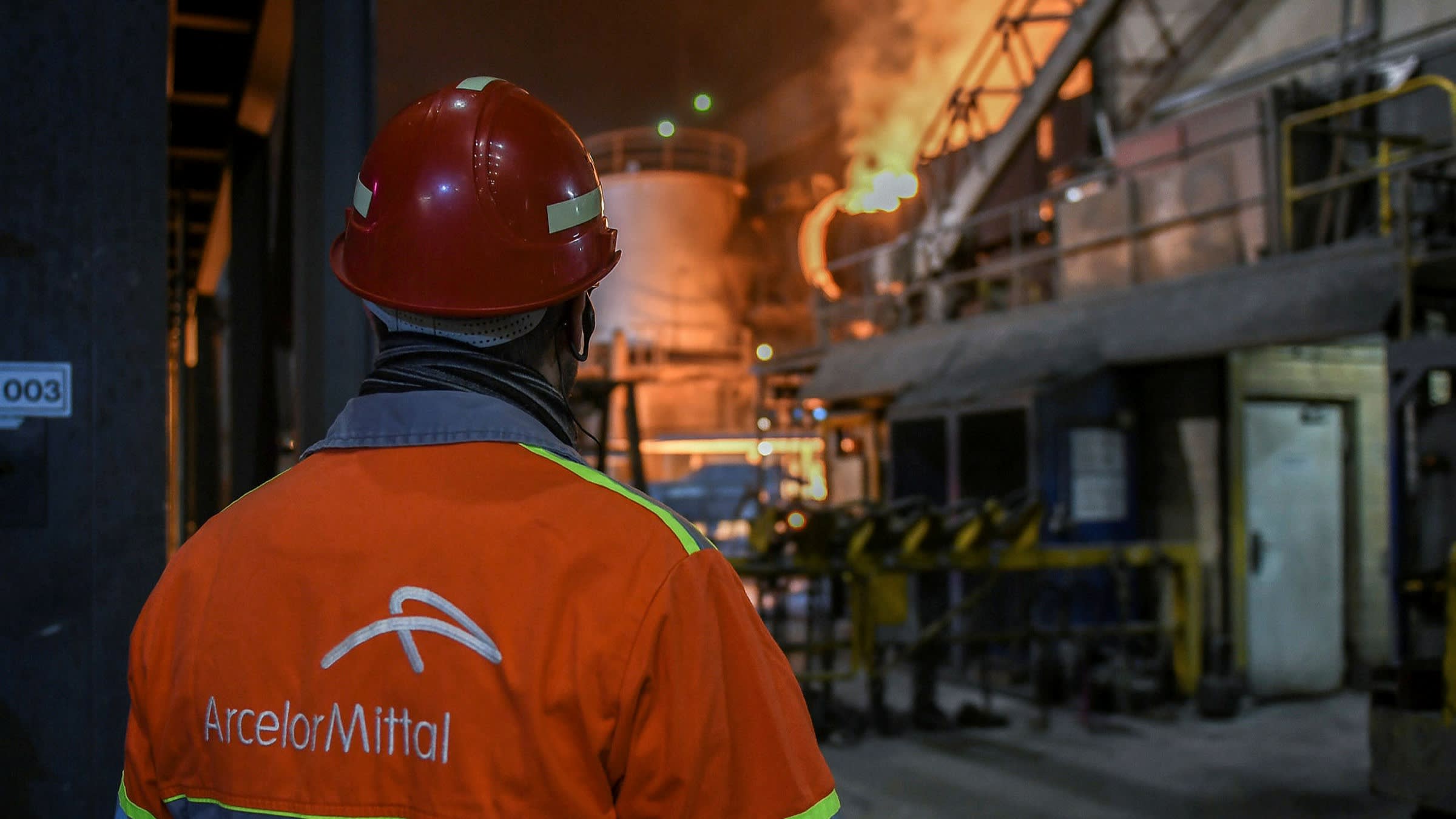
ArcelorMittal tells Kallanish it is temporarily restarting operations at its Acería Compacta de Bizkaia (ACB) plant in Sestao, northern Spain. Production will resume between 11-17 February to fulfil one order. The site produces hot rolled, pickled and oiled coils through the electric arc furnace method.
“We are going to do a short production cycle of six days and then stop ACB again,” says a spokesman. The steelmaker declined to comment on the volume and specification of the coils it will supply, or to disclose its client.
The site was halted last August for maintenance, but the forecast for lower demand has prompted the steelmaker to delay the resumption of activities. There is currently no date for the restart of operations, ArcelorMittal says.
Meanwhile, the Asturian regional government has begun the environmental evaluation of ArcelorMittal’s project for the construction of a 2.3 million tonnes/year green hydrogen-based direct reduced iron unit. The new DRI unit will be the first of its kind in Spain and will feed the company’s Asturias and Sestao steelworks.
In December, the steelmaker received a positive environmental impact statement (EIS) for the installation of a hybrid EAF at its Gijón plant.
Both the DRI unit and EAF are part of ArcelorMittal’s €1 billion ($1.07 billion) investment in Spain. The plan has entered its last pre-execution phase. In January, the European Commission’s Directorate General for Competition gave a positive evaluation of the project. The final decision on financial support is now up to the European Commission, which must rule within a period of two months.
Todor Kirkov Bulgaria

Voestalpine eyes March Kapfenberg plant launch after delays
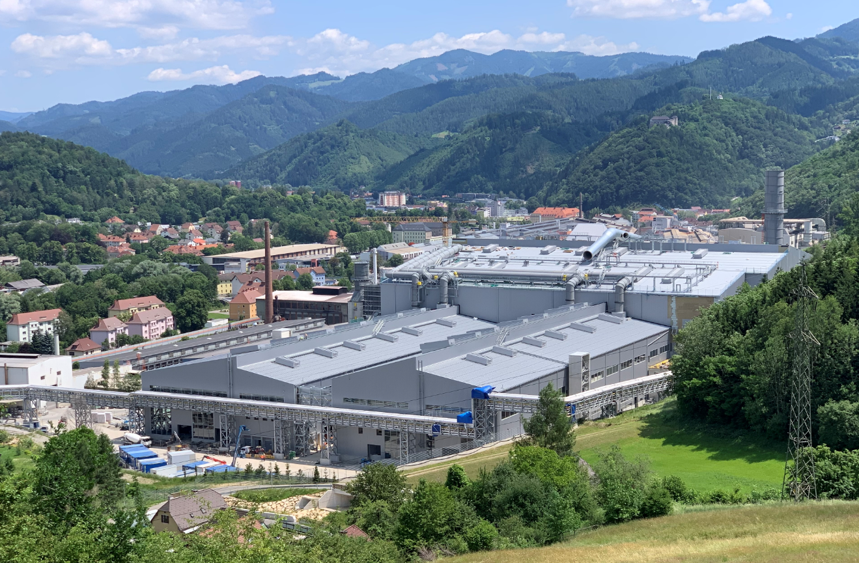
Voestalpine is optimistic that the start-up of its all-new special steel plant in Kapfenberg, Austria, will take place by the end of March.
The project’s completion suffered massive delays due to delivery bottlenecks for technical equipment, partly attributable to the Covid-19 pandemic hitting during the construction period. The start-up is now coming nearer. “It was our plan to still have the plant started this fiscal year [April 2022-March 2023],” company chief executive Herbert Eibensteiner said at a press conference on Wednesday monitored by Kallanish.
The plant is a relative greenfield project, as it will replace an existing plant that will not be further modernised. According to Eibensteiner, both plants will operate in turns for a transitory period, until the new plant has ramped up to full industrial production.
The plant is part of the group’s High Performance Metal Division, formerly known as Böhler-Uddeholm. In the first three quarters of this fiscal year, the division lifted its revenue year-on-year by 29% to €2.78 billion ($2.99 billion). It benefited, among other things, from a positive trend in the aerospace segment, primarily driven by increasing demand for single-aisle aircraft used in regional air traffic, Eibensteiner noted.
Meanwhile in Germany, the division’s plant in Wetzlar is facing a 15% cutback in personnel. “At the group level, we could largely hand down our increased energy costs, but we could not do it in all segments,” Eibensteiner explained. He added that the plant’s international competitiveness has suffered, and that besides cutting staff, measures taken include investment in energy efficiency.
Christian Koehl Germany

Italian wire rod stagnation continues
The Italian wire rod market is in a deadlock that has continued over the past five months with some intermittent spells of demand resumption. Economic stagnation and uncertainty are limiting domestic but also import sales, with buyers speaking about a significant consumption reduction after the post-Covid rush, market participants tell Kallanish.
Drawing mills and distributors are in no need of material, and falling prices are not enticing them to purchase. Sales are occurring still only for small volumes. Some clients have been implementing production stoppages due to the reduced demand. In Italy, two producers are currently idled, taking advantage of the slow market to revamp equipment. No resulting shortage of material has been registered in the market, however.
Local values for drawing-quality material have reached €660-680/tonne ($706-728) ex-works, while imported material from North Africa is offered at some €650/t cfr Italy, sources suggest.
Meanwhile, northern European wire rod prices fell last week due to low demand and a slow market. Domestic transaction prices for drawing-quality wire rod were at €690/t ex-works and mesh-grade wire rod at €710/t, sources say (see Kallanish 3 February).
Natalia Capra France

Algeria strengthens position as longs supplier to Europe
Algeria became one of the main origins of long product imports into Europe in 2022 thanks to recent developments in its domestic steel industry, as well as the need for European buyers to substitute imports from Russia and Belarus.
According to the latest Eurofer numbers, Algeria supplied some 400,000 tonnes of long products into Europe last year. The main products imported were rebar (280,000t) and wire rod (120,000t).
Until 2020, Algerian sales into Europe were non-existent. In 2021, supply surpassed 200,000t. The increasing trend could continue this year as imports from Belarus and Russia remain sanctioned and Algerian mills are further expanding their commercial ties in Europe.
The two main suppliers of long products from Algeria into Europe are Tosyali Algerie and Algerian Qatari Steel (AQS), which have recently boosted their capacity.
Up until 2020, Europe was one of the main suppliers of steel to Algeria, mainly of long products. In 2014, European steelmakers exported almost 5 million tonnes of finished steel products to Algeria; in 2022, exports fell to little more than 200,000t, of which long products accounted for only 50,000t, Kallanish notes.
A European trader active in the region confirms that the only European suppliers of steel into Algeria currently are the Italians, who are able to sell mainly small merchant bar in the market. Other products historically imported such as rebar and sections are now produced locally by Algerian steelmakers and re-rollers.
Emanuele Norsa Italy

Italian distribution faces slower coil derivatives market
The Italian distribution sector is expressing concern regarding the current double-tier market. Coil prices have increased strongly since the resumption of activity in January but coil derivatives such as sheet and tube are lagging behind.
Producers are about to announce increases for sheet and push up tube prices, but some buyers are withholding their purchases because of uncertainty. According to a large service centre and a purchasing group, there is no euphoria over coil derivative sales, particularly considering appliances sector activity is subdued.
Sheet prices start at €850/tonne ($910) ex-works for the basic hot rolled grade and go up to €880-890/t for the pickled grade. On one hand, these values are seen increasing this month as producers intend to align sheet prices to HRC increases. On the other, however, the distribution sector fears the speculative attitude of certain European HRC producers who are increasing prices too quickly and may restart more blast furnaces in Europe.
Despite improved coil and derivative sales volumes since the turn of the year, distributors and service centres consider the market to still be fragile. Further HRC capacity restarts would contribute to a price reduction throughout the value chain.
Tube sales are particularly sluggish, sources tell Kallanish. Buyers are refusing any increase and insisting on keeping the level of discount at 32 points. Some grades, such as structural and seamless tubes, remain in short supply.
Natalia Capra France

Weak fundamentals inhibit activity in Northern European rebar market [corrected]
Conditions remained unchanged in the Northern European rebar market in the week to Wednesday February 8, sources told Fastmarkets, with trading activity limited by a lack of demand from the construction sector – particularly from private housebuilders.
There was also significant uncertainty regarding the likely economic fallout from the devastating earthquakes in Turkey and the slow demand was putting downward pressure on rebar prices in Northern Europe.
Fastmarkets’ weekly price assessment for steel reinforcing bar (rebar), domestic, delivered Northern Europe, was €690-710 ($740-761) per tonne on Wednesday, down by €5-30 per tonne from €700-740 per tonne on February 1.
“There is very little to no activity,” one buyer source from the Netherlands said. “At this time of year, it is always slow, but not normally as bad as this. No one wants to buy.”
The construction industry remains slow, sources said, due to the worsening recession across Europe.
The depressed demand has resulted in a bearish sentiment, with buyers inclined to wait for clarity before restocking.
“[Rebar] prices remain unchanged because market conditions have not changed,” a producer source from Germany said.
“There is not a lot of demand and no one knows what the actual price level is,” the source added.
There was also minimal interest in imported stock, sources told Fastmarkets.
Most market participants said scrap prices would fall in the short term, following the weakening of domestic demand in Northern Europe, but would increase the medium term because domestic demand for scrap was likely to increase when rebuilding work begins in southeastern Turkey – where a series of deadly earthquakes have destroyed many buildings.
International scrap prices have a direct impact on the price of all long steel products and international scrap prices have been rising since December 2022.
Fastmarkets’ daily calculation of the index for steel scrap, HMS 1&2 (80:20 mix), North Europe origin, cfr Turkey, was $418.62 per tonne on February 8, from $418.36 per tonne last week.
(Fastmarkets’ index for steel reinforcing bar (rebar) domestic, delivered Northern Europe was erroneously listed as $695-710 per tonne when this report was originally published. This has been corrected to $695-710 per tonne.)
Published by: India-Inés Levy


European HRC buyers step back from trading after restocking, mills remain bullish
Trading remained slow in the European market for steel hot-rolled coil, but some mills were considering price rises on the basis of good order books and limited availability, Fastmarkets heard on Wednesday February 8.
Fastmarkets calculated its daily steel hot-rolled coil index, domestic, exw Northern Europe, at €757.62 ($812.07) per tonne on Wednesday, up by €2.62 per tonne from €755.00 per tonne on Tuesday.
The latest calculation of the index was up by €5.74 per tonne week on week, and up by €88.45 per tonne month on month.
Trading was still slow in the region, because buyers restocked in January and were now taking a wait-and-see stance, with only hand-to-mouth purchases reported.
Estimates of tradeable values from the buyers’ side were reported between €750 per tonne and €780 per tonne ex-works.
Offers, meanwhile, were reported at €780-800 per tonne ex-works for April-May delivery HRC.
Several sources told Fastmarkets that a leading European steelmaker was planning another round of price rises to be imposed on second-quarter-rolling coil, despite limited activity in the market.
Sources said that reduced supply amid output cuts, as well as a lack of competitive imports, remained the major factors that were supporting the uptrend in the HRC market.
Real steel demand, meanwhile, was still subdued.
“We will see a clearer market picture in a couple of weeks, when buyers come back for [second-quarter] volumes,” a trading source said.
Fastmarkets’ calculation of the daily steel hot-rolled coil index, domestic, exw Italy, was €752.34 per tonne on Wednesday, up by €2.76 per tonne from €749.58 per tonne on Monday.
The latest calculation of the index was up by €2.34 per tonne week on week, and up by €99.84 per tonne month on month.
Transactions were reported at €750-760 per tonne ex-works, but in general the trading activity was low. This was also because buyers purchased enough material during January and were now assessing the market.
Producers, in their turn, had good order books and were aiming to push HRC prices to €780-800 per tonne ex-works in transactions during February.
Import HRC offers to Europe were still limited.
Buyers reported price indications for Indian and Asian HRC at €730-740 per tonne CFR for April shipment, which they suggested was rather high, given the domestic prices in Europe and the long lead times on imports.
“HRC booked for import now will arrive in May-June,” a trading source in Italy said, “and the price difference with European mills is too small to take a risk.”
Published by: Julia Bolotova

European CRC, HDG producers bullish on good order books, reduced output
European steelmakers are considering pushing for higher flat steel prices on reduced production levels and good order books, sources told Fastmarkets on Wednesday February 8.
European producers are sold out of first-quarter rolling cold-rolled and hot-dipped galvanized coil, they added.
Steel mills producing CRC and HDG have been running at reduced rates, keeping the market balanced.
But trading activity was muted in both Northern and Southern Europe in the seven days to Wednesday because buyers restocked through January and are now holding back from making any new purchases.
Producers in Northern Europe maintained their offers for April-May delivery CRC at €880-900 ($943-965) per tonne EXW and at €900-930 per tonne EXW for HDG, but those prices were above the level of transactions reported by sources.
Notably, tradable values were heard at €850-870 per tonne EXW for CRC and €860-880 per tonne EXW for HDG in the north.
One Italian mill was offering both CRC and HDG to Germany at €900 per tonne delivered.
And while mills reported an increase in inquiries from buyers in the week to Wednesday, traded volumes remained limited, they said, because buyers were continuing to resist the higher offer prices.
Fastmarkets’ weekly price assessment for steel CRC domestic, exw Northern Europe was €860-880 per tonne on Wednesday, stable week on week.
Fastmarkets’ corresponding weekly price assessment for steel HDG domestic, exw Northern Europe was €870-900 per tonne on Wednesday, also unchanged from February 1.
Both price assessments reflected the lower end of offers, rare deals and estimates of achievable prices made in the week to February 8.
Southern Europe
In Southern Europe, CRC offers were heard at €880 per tonne EXW, while HDG offers came in at €900 per tonne EXW.
Bookings were reported at somewhat lower levels during the assessment week, however – at €850-870 per tonne EXW for CRC and at €870-880 per tonne for HDG.
Some producers in the region withdrew from the market after having sold out of first-quarter rolling CRC and HDG and were said to be planning a price rise.
Fastmarkets’ weekly price assessment for steel CRC domestic, exw Southern Europe was €850-870 per tonne on Wednesday, flat week-on-week.
The corresponding weekly price assessment for steel HDG domestic, exw Southern Europe was also unchanged week on week at €870-880 per tonne on February 8, with both assessments reflecting the lower end of offers, rare deals and estimates of achievable prices.
Import offers to the region, meanwhile, increased after a series of bookings in late January-early February.
An offer of CRC from South Korea was heard in Southern Europe at €830-840 per tonne CFR, compared with a reported transaction level of €810 per tonne CFR about two weeks ago, sources said.
No new offers have been heard from Japan so far this week.
Sources reported only one HDG offer in Southern Europe in the week to Wednesday, which was for 0.5mm HDG from Vietnam at around €900-910 per tonne CFR.
Published by: Julia Bolotova