

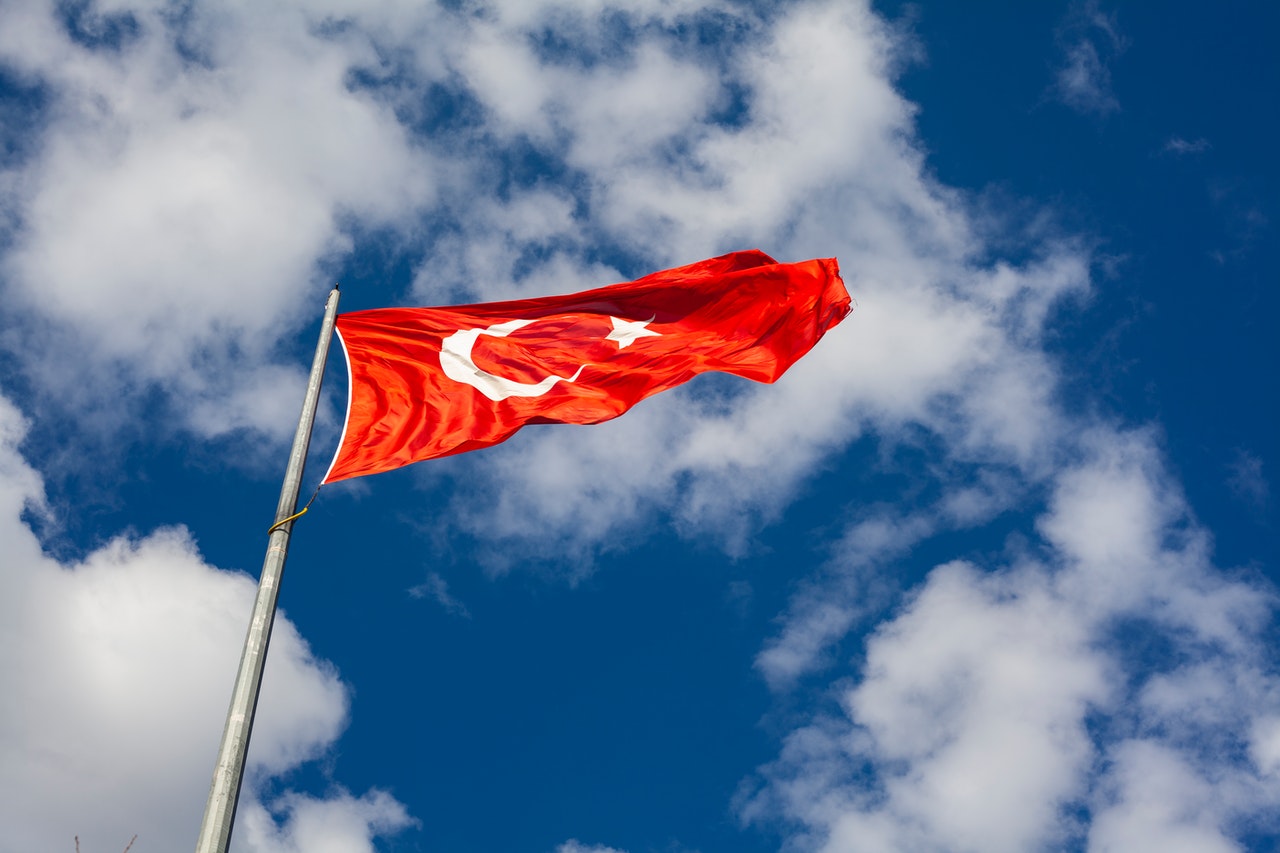
Turkish earthquake to impact global steel supply chain
Demand for steel had been picking up, in Turkey, particularly from the real estate sector. However, following the devasting earthquake that took place on 6 February, market activity was paused. Efforts to save as many people as possible were, quite rightly, the main priority. Equipment from local manufacturers and steelmakers was utilised in the rescue and recovery operation.
The port of Iskenderun was severely damaged and inbound cargoes, including those of scrap steel, were diverted. It could take several months before port operations return to normal. All activity, for now, is concentrated on housing survivors who have been displaced by the earthquake.
Several steel mills in the vicinity have halted their operations and declared force majeure on contracts with their customers. Steel production in the country will fall, initially. This will impact supply both inside and outside Turkey.
Exports of finished steel will be drastically reduced. Turkish suppliers shipped an annual average of almost 20 million tonnes of finished steel around the world, over the past five years. A substantial proportion of this volume will be removed from the global supply chain.
Production at many Turkish steelmakers was reduced following a hike in electricity rates, last September. Mills in the country sought ways to cut other costs in order to remain competitive in the local and international markets.
However, export offers of finished steel into Europe became unattractive, in late 2022. Consequently, few orders were placed. Total export volumes from Turkey fell by approximately 50 percent in the fourth quarter of last year, compared with the same period in 2021. This will, initially, reduce the impact from the recent earthquake, on supply to the European steel sector. The EU accounts for around 30 percent of total Turkish export volumes, based on a five-year average.
Rebar is the largest product, by volume, exported from Turkey, and will be one of the key materials needed in the rebuilding efforts, following the earthquake. More than a third of all rebar exported, in the past four years, was destined for the Middle East market. Around 4 million tonnes of finished steel products is imported into this region from Turkish suppliers, each year. How much of this supply will be lost is, as yet, unknown, but the need to replace, potentially, more than 2 million tonnes per year of rebar alone will, almost certainly, push global export prices upwards.
A surge in demand for steel in Turkey is expected when rebuilding efforts get fully underway. Chinese and other low-cost Asian suppliers will attempt to boost their sales volumes to the country. This is likely to tighten availability in the global steel market. In the short term, we anticipate that the reduced availability of finished steel from Turkey will, at least partially, ease the current oversupply pressures in the European and Asian long product sectors.
Source: meps


Global crude steel output recovers in Jan but remains 3.3% lower on year: World Steel
Global monthly crude steel production in January fell 3.3% year on year to 145.25 million mt, according to World Steel Association data published Feb. 22.
The January monthly production total represented the third consecutive month of month on month growth, with global steel output in January increasing by 3.4% over December 2022.
Leading producers
China produced 79.45 million mt of crude steel during the month, up 2.3% year on year and 2.0% on the month, accounting for 54.7% of the overall total.
Monthly production in world’s second-largest steel producer, India, was reported at 10.93 million mt, up 2.6% year on year but falling 0.2% from the month prior.
Similarly, steel production in Japan was reported at 7.22 million mt for the month, down 6.9% year on year but 4.6% over the month prior.
Output from the US increased for a third consecutive month, with January production reported at 6.50 million mt, down 6.8% year on year but up 2.6% on a monthly basis.
In Russia, monthly steel production was reported at 5.75 million mt, unchanged from the month prior but down 8.9% year on year as the Russia-Ukraine war and related sanctions continued to weigh on the industry.
South Korea production for January decreased 9.8% on the year to 54.77 million mt.
Output from Turkey fell 17.5% to 26.05 million mt.
European output falls
Monthly crude steel production in the whole of Europe, including the UK, was reported at 12.21 million mt in January, down 17.5% year on year as the region’s steel producers continued to curtail production due to high energy prices and low demand.
European steel producers have seen some relief in recent weeks, with mild winter temperatures causing European gas prices to fall to levels not seen since December 2021 amid healthy gas storage levels and demand reductions.
As a result, some mills have signaled that they will gradually restart operations, but high inflation and persistent recessionary fears continue to weigh on the demand outlook.
Platts, part of S&P Global Commodity Insights, assessed Dutch TTF front-month gas at Eur31.70/MWh Feb. 21, up 1.4% from the previous session. The TTF benchmark contract averaged Eur132.31/MWh in 2022, S&P Global data showed.
Platts assessed Northwest Europe hot-rolled coil at Eur790/mt ($840/mt) ex-works Ruhr Feb. 21, up from Eur610/mt Dec. 1, 2022.
— Euan Sadden


British Steel proposes closing Scunthorpe coke ovens to cut costs, emissions
UK integrated steelmaker British Steel said Feb. 22 it is proposing to close its coke ovens to cut costs and carbon emissions, in a move that could trim up to 260 jobs at the long products and rails producer.
Further “streamlining” and cost-cutting measures may also be taken, it said.
The coke ovens at the company’s Scunthorpe works are near the end of their operational life. The Chinese-owned steelmaker plans to continue integrated steelmaking through increased steel scrap usage and by adding ore-based metallics to its blast furnaces to displace iron ore, it said in a statement.
The proposal is part of a “drive to overcome global economic challenges and build a green and sustainable future,” British Steel said. “Decisive action is required because of the unprecedented rise in operating costs, surging inflation, and the need to improve environmental performance.”
British Steel said its bills for energy and carbon increased by GBP190 million ($230 million) last year, including an extra GBP120 million for energy and more than GBP70 million extra for annual carbon costs.
British Steel, the UK’s second biggest steelmaker, has a total steel products capacity of about 3 million mt/year. Production capacity won’t be impacted if the coke ovens close, a spokesperson said Feb. 22.
The date for proposed closure of the coke ovens—already discussed with trade unions—has not yet been confirmed. The proposals could lead to the loss of up to 260 roles at the company’s Scunthorpe site. In total at its various sites, British Steel employs more than 4,500 people, of which around 300 are in the Netherlands.
“Steel is vital to modern economies and with demand expected to grow over the coming decades, British Steel has a crucial role to play in ensuring the UK has its own supply of high-quality steel,” said British Steel CEO Xifeng Han.
British Steel’s owner, Jingye Steel Group, has invested GBP330 million in capital projects at the company, including modernization and decarbonization initiatives, since it acquired the business in March 2020, taking it out of liquidation. At that time the Chinese steelmaker pledged to invest around GBP1.2 billion to modernize and improve British Steel, including by construction of an electric arc furnace in Teesside, in the north of the UK.
“Jingye is committed to our long-term future, but decarbonization is a major challenge for our business and, like most companies, we’re facing significant challenges because of the economic slowdown, rising inflation, and exceptionally high energy prices,” British Steel’s statement said. “We have taken action to reduce costs within our control; however, steelmaking in the UK remains uncompetitive when compared to other international steelmakers. Our energy costs, carbon costs, and labor costs are some of the highest across the world, which are factors that we cannot influence directly.”
British Steel entered into talks with the UK government last summer to discuss potential support amid cost increases and the need to decarbonize. In January, the company told S&P Global Commodity Insights that government support was “required” for the successful decarbonization of British Steel. The steelmaker said Feb. 22 that it is “extremely grateful” for the government’s support, without giving details.
“It’s important we have the correct policies and frameworks in place to back our drive to become a clean, green, and successful company and we’re continuing to discuss this with the government. We are committed to working together and to [make] the home-made steel Britain needs for generations to come,” the steelmaker said in its statement.
Steelmaking is one of the UK’s biggest carbon emitters and is responsible for around 9% of carbon emissions globally.
Closure of the Scunthorpe coke ovens would bring environmental benefits including reductions in emissions to air and water, the steelmaker noted. British Steel unveiled a Low-Carbon Roadmap in October 2021 and is already undertaking several projects to improve its environmental performance.
Ore-based metallics
“Embracing new technology and ways of working will help our drive to reduce emissions and support clean growth,” Xifeng Han said. “We have increased the amount of scrap used in the integrated steelmaking route. In addition, we’ve started a project to add ore-based metallics to the blast furnace to displace iron ore and we manufacture a range of products with significant environmental benefits including high-strength structural steel and Zinoco rail.”
Major ongoing projects to improve British Steel’s product quality, range, and service since Jingye’s takeover include the installations of a GBP54 million billet caster and a GBP26 million mast service center, both scheduled to come online this year. A near GBP50 million upgrade to its wire rod mill continues, to be completed next year. Other investments include GBP30 million for new unloaders for British Steel’s port facility, GBP14.6 million for improvements in energy operations, GBP9 million for a new rail stocking facility, and GBP12 million to upgrade IT systems.
British Steel manufactures more than 1,450 different specifications of steel that is rolled into wire rod, sections, special profiles, rail, billet, bloom, and slab. Its headquarters is at its integrated steelworks in Scunthorpe, North Lincolnshire, where it has four blast furnaces, of which two are currently operational.
Its other facilities include the Teesside Beam Mill at Lackenby; Special Profiles at Skinningrove; and FN Steel in the Netherlands, as well as a port facility at Immingham Bulk Terminal and an R&D center at Sheffield.
— Diana Kinch

German steel output rebounds, down on-year
Crude steel production at German mills in January was 2.92 million tonnes, down by 10.2% on-year, according to steel federation WV Stahl.
However, it is up compared with December’s figure, which was 2.69mt, or down 15% on-year (see Kallanish passim).
Last month, steel production amounted to 2.13mt, less 7.9%. Electric arc furnace production was 792,000 tonnes, down by 16% on-year. Pig iron production in Germany in January decreased by 7.9% on-year to 1.96mt. The output of hot-rolled steel decreased by 13.4% to 2.56mt.
Germany is one of the 10 largest steel producers in the world, according to worldsteel.
In 2022, the country reduced steel production by 8.4% on-year to 36.8mt, taking seventh place in the world ranking.
The figure is still somewhat above the output seen in 2020, the year of Covid-19, but marks the second-lowest production performance since the financial crisis in 2009. Output fell especially after the summer, amid stoppages and production cuts all over Europe, making it the weakest half-year since the beginning of unified German statistics in 1990, WV notes.
The difference in the on-year comparison is nearly equal for the oxygen-route as for the electric arc furnace route, although remarkable differences occurred during the year, it added.
German engineering giant thyssenkrupp may expand its production capacity in India (see Kallanish passim). The company is in talks with the Indian government to explore possibilities for the said expansions.
Svetoslav Abrossimov Bulgaria


Hydnum Steel to build Spanish green steel mill
Spain’s Hydnum Steel (HS) is planning to build the first green steel mill on the Iberian Peninsula, Kallanish notes. The project, which is a partnership made up of the Helvella investment company, Siemens, ABEI Energy and Russula Corporation, will be located in Puertollano in the Castilla-La Mancha region. “The facility will be designed from the ground up to use non-fossil energy throughout the manufacturing process, thus, it will gradually incorporate green hydrogen into the production process with the aim of substantially reducing CO2 emissions,” HS explains.
HS will be highly efficient, automated and safe through the use of new technological developments in digitization and artificial intelligence. “Production will be in line with the sustainable development objectives in the steel sector and the circular economy, recycling scrap as raw material, minimizing the use of water and valuing the waste and by-products generated during the manufacturing processes,” HS confirms.
As the technology partner, Siemens will provide digital solutions related to the design, manufacturing and maintenance phases of the plant.
ABEI Energy’s contribution will be focused on the production of green hydrogen and will also develop renewable projects on the use of photovoltaic technology and wind power. Service supplier Russula will be responsible for the engineering and full automation of the plant.
The facility will occupy an area of 1.3 million square metres. The project is valued at €1 billion and will create 400 direct jobs. During the first phase of development, HS estimates to invest €600 million. The plant is expected to be operational in 2026 in order for the company to access European funding.
Todor Kirkov Bulgaria

European scrap forecast to increase
European scrap prices are forecast to increase significantly in March, possibly in the range €20-30/tonne ($21.3-31.9) compared to February levels against the backdrop of strong post-earthquake Turkish demand, sources in France, Italy, Germany and Eastern Europe believe.
Some scrap exporters from northern European ports are waiting for prices to increase further from the current $430/t cfr Turkey to sell their cargoes, Kallanish understands.
An exporter says that with the current Turkish prices, over €400/t cfr, a lot of material will be shipped to Turkey and European mills will have to pay more for domestic scrap in March. This is also due to short supply and strong demand for grades such as E40 shredded and chiselled E1. Another seller reports an improved intake of E40 but not enough availability to satisfy the high European demand for this grade for which short supply is caused by the lower availability of car bodies.
A large steelmaker in northern Europe is said to be looking for higher scrap volumes in March together with coils producers also looking to procure high volumes thanks to the good sales performance of coils.
In Italy, France, Germany and Eastern European countries such as Poland, February scrap prices are flat on January with some €5-10/t increases. Some mills in northern Europe that negotiated contracts just before the earthquake hit Turkey paid between €20-25/t increases for scrap and they are not seen increasing their prices significantly in March.
Over the past days, mills in these countries have started granting €10/t hikes compared to the beginning of February bringing E40 mixed grade at €380-390/t delivered and E1 at €360/t delivered. In Italy, France and Germany domestic prices are mostly aligned. E40 mixed grade is pegged at €380-390/t delivered on average. Demolition E1 is on average at €340-360/t delivered respectively this month, sources suggest.
Despite strong demand from some flat mills, specialty steel producers and Turkish demand, uncertainty is sustained.
Natalia Capra France

Rebar price rises forecast in Italian market, Spanish price steady
Fundamentals remained stable in the Southern European rebar market in the week to Wednesday February 22, but producers told Fastmarkets that an anticipated increase in scrap costs in March meant they would be targeting higher prices in the coming week.
Scrap prices in Turkey have risen because of the recent devastating earthquake, sources said.
But trading activity in the rebar market remained slow because most buyers completed restocking in the first 10 days of the month, Fastmarkets understands.
Fastmarkets price assessment for steel reinforcing bar (rebar) domestic, exw Italy was €740-780 ($789-832) per tonne on Wednesday, down by €25 per tonne per tonne at the high end from €740-805 per tonne last week.
Sources did report a pick-up in demand for rebar exports, however.
“The price is quite stable, [but] producers have seen increasing appetite in the international market for rebar exports, so they are now trying to ask for higher prices in the Italian market,” a producer source said.
“The earthquake in Turkey has shaken the European market. I think that before the end of the week the producers will try to announce a new price of around €800 per tonne EXW,” the source added.
But other sources said that demand had been relatively weak.
“There has been no significant new business or fresh orders. The Italian mills are busy delivering old orders,” another producer source said.
“We expect scrap prices to rise, however, given the fact Turkish mills are already paying a premium for scrap. We expect the scrap price rises to rise again in March. And with scrap prices increasing, it will not be possible for mills to offer a reduction,” the source added.
International scrap prices, which have been rising since December 2022, affect the price of all long steel products.
Fastmarkets’ daily calculation of the index for steel scrap HMS 1&2 (80:20 mix), North Europe origin, cfr Turkey was $436.12 per tonne on February 22, up from $410.79 per tonne last week.
Spain
Prices remained stable in the Spanish rebar market, with little activity reported in the week to Wednesday.
Fastmarkets’ price assessment for steel reinforcing bar (rebar), domestic, delivered, Spain was €740-770 per tonne on Wednesday, unchanged week on week.
“Today, the steel mills are squeezed between stable or rising raw materials costs and a very weak finished product market, which leads customers to ask for reductions,” a buyer source said.
Published by: India-Inés Levy


European HRC market remains bullish on mills’ healthy order books
Good order books at steel mills have kept European hot-rolled coil prices elevated despite the limited trading seen in recent weeks, sources told Fastmarkets on Wednesday February 22.
Fastmarkets calculated its daily steel hot-rolled coil index domestic, exw Northern Europe, at €776.00 ($827.26) per tonne on Wednesday, up by €3.74 per tonne from €772.26 per tonne on Tuesday.
The latest calculation of the index was up by €9.12 per tonne week on week and by €36.22 per tonne month on month.
Mills in the region were offering April-May delivery HRC at €800-820 per tonne EXW, however some mills claimed to have sold out of April volumes already.
“Maybe there will be more April volumes after the Fos-sur-Mer restart,” a mill source told Fastmarkets, referring to the news that leading European steelmaker ArcelorMittal is planning to restart a blast furnace at its Fos-sur-Mer plant in southern France.
Transactions for limited tonnages were reported at €770-780 per tonne EXW on Wednesday, while buyers’ estimations of achievable prices were at €760-770 per tonne EXW.
Most sources agreed that HRC prices would keep rising slowly in March, supported by good order books at mills and expected restocking activity.
But still-subdued demand from end users, as well as increasing availability of coil due to capacity restarts, caused concerned among buyers about the sustainability of an uptrend beyond March and April.
Since January, European producers have gradually been restarting steelmaking capacity that had been idled in the final quarter of 2022 due to poor market fundamentals.
Fastmarkets’ calculation of its daily steel hot-rolled coil index domestic, exw Italy, was €769.38 per tonne on Wednesday, up by €6.05 per tonne from €763.33 per tonne on Tuesday.
The latest calculation of the index was up by €11.88 per tonne week on week and by €41.05 per tonne month on month.
Sources said that Italian mills are largely sold out of material for April delivery.
“We saw good order intake from tube makers for April [delivery] coil in the past couple of weeks,” a second mill source said.
Offers of May-delivery coil from integrated mills in Italy were reported at €800-820 per tonne delivered which would net back to €780-800 per tonne ex-works.
Sources said, however, that some transactions for tonnages below 500 tonnes were reported at €770 per tonne EXW in the nation.
Meanwhile, HRC offers from Southeast Asia to Italy were heard at €740-760 per tonne CFR for April May shipment.
But long lead times as well as a small gap with domestic prices stopped European buyers from making overseas bookings.
Published by: Julia Bolotova