


Ian Darby replaces Martin Maley as managing director of NASS
The National Association of Steel Service Centres (NASS) wishes to announce that Martin Maley has left the post of Director General with effect from the 28th February 2023.
I am sure that you will join with us to thank Martin for the valuable contribution he has made to the Association in his time in the position.
The Management/Executive Committee have met with a prospective replacement and are pleased to announce that Mr Ian Darby has been employed on an interim basis to the post. The committee have tasked Ian with bringing in new, and hopefully encouraging previous members to re-join the Association.
Ian has been working as the Finance Manager for NASS, and a lot of you will know his father, John Darby who worked in the same position for many years before him.
Hopefully most of you will be at the joint NASS / ISTA meeting in March at the “Hilton Garden Inn, Birmingham” where you will have the chance to meet Ian who is looking forward to introducing himself to you and to give him a chance to explain his vision for the future of NASS.
He is also very keen to hear from the members of NASS as to their ideas on how to improve the services that NASS provide.
Looking forward to meeting you all at the Hilton Garden Inn, on the 23rd March.


Benteler boosts profit in 2022
Benteler Group was able to lift revenue and boost its operating result in 2022, Kallanish learns from the German/Austrian metal processing firm.
The tube and automotive components maker increased revenue to around €9 billion ($9.6 billion), after €7.3 billion in the preceding year. Of the total, the tubes division accounted for €1.9 billion, and automotive activities for €7.1 billion.
At €703 million, the operating result (Ebitda) was significantly higher than in the previous year at €332m. Liquidity also improved despite a challenging market environment characterised by the Ukraine war, supply chain problems, and rising energy and material prices, the company notes.
With new products, such as battery cooling plates and rotor shafts, the group started taking advantage of market potential in e-mobility. Other newly introduced products include its “Smartcut” tubes made from free-cutting steel. These combine the material advantages of free-cutting steel with the geometric properties of a tube and are thus optimised for machining.
Christian Koehl Germany


Benelux scrap continues rise despite weakened Turkish demand
Scrap prices in the Benelux are seen continuing to rise despite the slowdown in Turkish mills’ scrap purchases last week, Kallanish notes.
Benelux exporters’ dock prices were mostly at €365-380/tonne ($388-404) delivered on Monday, up €5/t from a week earlier.
Although some exporters are trying to maintain their dock prices at €365/t amid Turkey’s slower demand, the ones that need to source material are seen being forced to pay higher prices due to weak inflow.
Turkey’s scrap demand was slower last week compared to the previous two weeks. This has also slowed the pace of the rise in scrap prices. Last Friday, however, southern Turkish mills returned to the market and concluded some deep-sea and short-sea scrap bookings. Southern mills booked small-volume cargoes from the EU at around $448/t cfr Turkey.
One deep-sea booking from the UK was concluded by a southern mill at $455/t cfr for HMS 1&2 80:20 and $475/t cfr for shredded and bonus grade, for April shipment. The initial offer for HMS 1&2 80:20 was heard at around $458/t cfr.
US and Baltic suppliers that offered HMS 1&2 80:20 at $460-462/t cfr failed to find interest from buyers last week.
Market participants expect Turkish mills to resume scrap purchases this week as April-shipment scrap requirements are largely incomplete. Producers have meanwhile committed to supplying high volumes of steel to the government for the reconstruction of damaged and collapsed buildings after the earthquakes.
While Turkey’s scrap market was on hold for most of the week, European suppliers continued to increase their offers in India where mills resumed scrap bookings ahead of the Holi festival, however not aggressively. Following deals at $470-475/t cfr Nhava Sheva for containerised shredded, offers have increased to $475-485/t cfr levels.
Burcak Alpman Turkey

Lower availability supports Italian scrap prices: Assofermet
The scrap shortage at Italian merchants’ yards and the lower collection caused by production cuts in recent months will contribute to supporting domestic scrap values, with some increases occurring in new March contracts, Italian steel trade association Assofermet says in its latest market note monitored by Kallanish.
Concerns about high transport costs persist in the sector. February was mostly a stable month in terms of prices. Last month, mills’ purchasing volumes and scrap availability were limited. In the last week of February, the low scrap availability together with increasing Turkish import values caused domestic prices to tick up, Assofermet comments.
Meanwhile, pig iron availability remains good in Italy. In February, Russian producers seemed to have prioritised slab production to the detriment of pig iron supply. Ukrainian producers have remained absent from the local pig iron market. Last month, the association observed a general pig iron price stability with some attempts at increases.
Italian scrap prices increased €10/tonne ($10.6) in the last week of February and continue to hike this month, with contracts being negotiated this week (see Kallanish passim).
Natalia Capra France
Costlier inputs prompt ArcelorMittal to hike EU longs
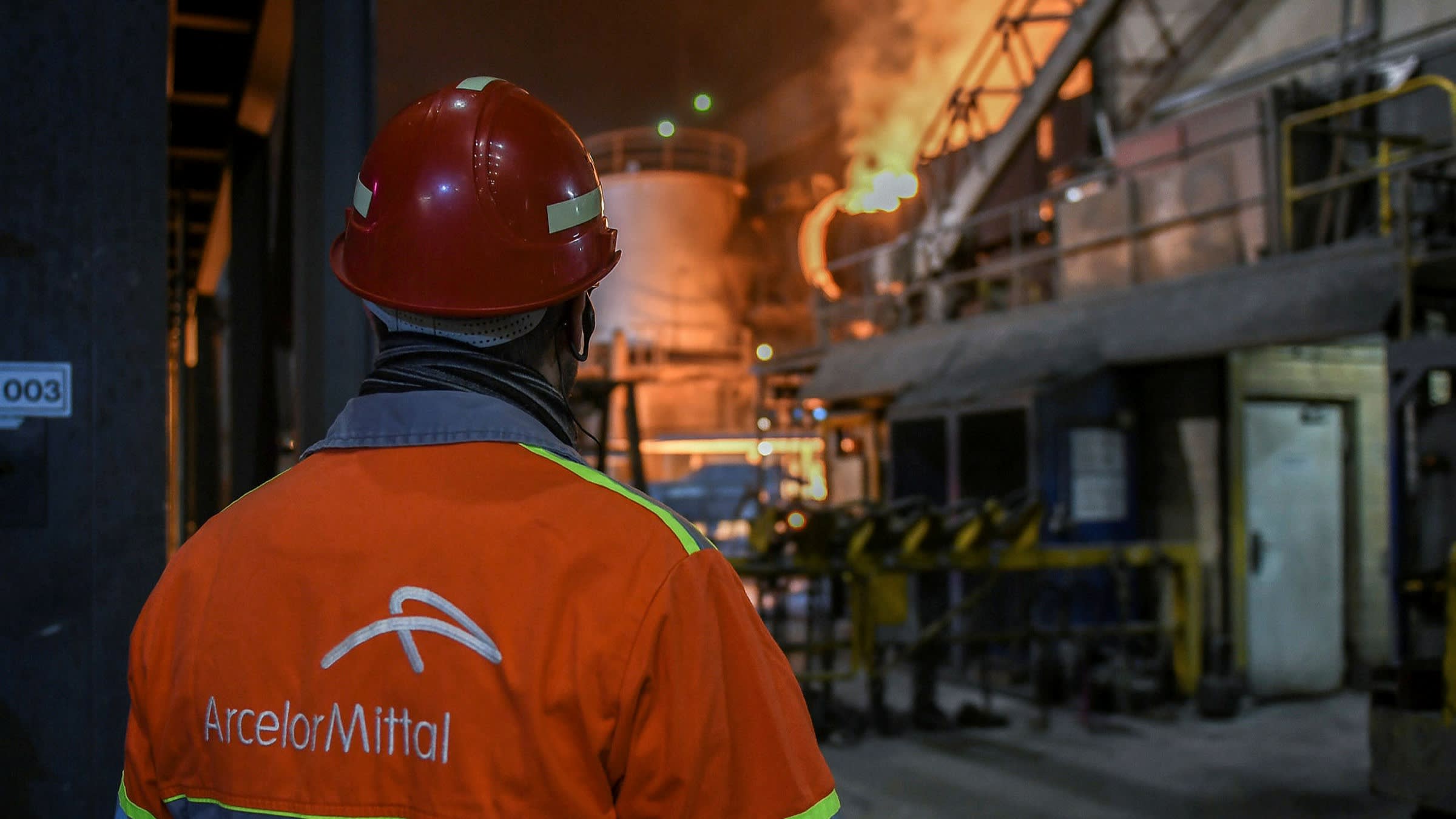
ArcelorMittal is communicating to its European customers this week its intention to raise long product offers, in order to recover some margin loss due to higher input costs.
According to market sources, the company is increasing offers for commodity-grade products by some €30/tonne ($321) with immediate effect. Longer-term contracts for the second quarter for higher-grade products are being raised by a minimum of €50/t.
The company previously announced its intention to raise longs offers in Europe in mid-January, but that move was not accepted by the market. According to Kallanish indices, rebar prices in both northern Europe and Italy moved down in February, reaching in northern Europe’s case €765/t ex-works base, their lowest level since May 2021.
Sources among European suppliers are now hopeful this new price hike will be accepted, as demand indicators are picking up and increased production costs led by scrap have been well advertised.
One source notes that, at current price levels, European mills are also significantly reducing their output of commodity-grade long products, to avoid selling at below cost. “This first price increase could be followed by new ones if scrap levels continue to recover at the pace they are now,” a source adds.
For the first time since April 2022, rebar prices in northern Europe have returned to below hot rolled coil values, as a consequence of the diverging trend the two products have witnessed since the beginning of this year.
Emanuele Norsa Italy

HRC buyers in Northern Europe show more interest in purchasing amid expected price rise
European hot-rolled coil buyers showed more interest in making bookings amid a bullish mood in the market and limited availability, sources told Fastmarkets on Monday March 6.
Integrated mills in Northern Europe were mostly offering May-rolling coil at a minimum of €820 per tonne EXW, with more price rises expected to be announced shortly, sources said.
Offers from re-rollers in the region were reported within a range of €800-820 per tonne EXW for May-delivery HRC.
A transaction was reported in Germany at €815 per tonne EXW.
Buyers, meanwhile, reported workable prices to be between €800 and 820 per tonne EXW on Monday.
At the same time, two trading sources pointed out that mills in the region were refusing to accept bids below €820 per tonne EXW, while new offers were expected to be in the range of €850-860 per tonne EXW.
Sources said that buyers had started to show more interest in making bookings lately, given the uptrend in the market and reduced supply.
“We see buyers getting nervous about availability [of HRC]. I think we will see a restocking by mid-March, since in general the level of stock is low across the supply chain, and distributors and steel service centers are short of some positions,” a mill source told Fastmarkets.
On the other hand, subdued demand from end-use sectors was casting doubts about the sustainability of the uptrend in the second half of the year, sources said.
“Mills have good order books now and there are not many imports coming in, and these two factors are the main drivers for HRC prices now. But without any real steel demand recovery, the increase cannot be sustained,” a steel service center source said.
Fastmarkets calculated its daily steel hot-rolled coil index domestic, exw Northern Europe at €811.33 ($862.61) per tonne on Monday, up by €4.02 per tonne from €807.31 per tonne on March 3.
The latest calculation of the index was, however, up by €18.83 per tonne week on week and by €59.66 per tonne month on month.
Fastmarkets’ calculation of its daily steel hot-rolled coil index domestic, exw Italy was €795.00 per tonne on Monday, up by €7.86 per tonne from € 787.14 per tonne on March 3.
The latest calculation of the index was up by €10.00 per tonne week on week, and up by €48.33 per tonne month on month.
Activity in the Italian HRC market was largely muted on Monday, but expectations were largely positive due to reduced supply of the steel product.
May-delivery coil from local suppliers was offered at €820 per tonne delivered (about €800 per tonne EXW), sources said.
But higher prices were expected to be announced for June-delivery HRC, sources said.
One integrated mill in the south of Italy was reportedly overbooked and delaying orders, aggravating supply tightness in the market.
Published by: Julia Bolotova

UK DATA: Feb passenger car sales rise 26% on year: SMMT
New car registrations in the UK totaled 74,441 units in February, the seventh consecutive month of growth, with sales rising 26.2% year on year as supply chain shortages eased, according to data released March 6 by the Society of Motor Manufacturers and Traders.
However, the volume fell 43.6% from January to the lowest monthly volume since August 2022, due to February being typically low volume ahead of the March plate change.
The volume was down just 6.5% on the same month in 2020, according to the SMMT.
“After seven months of growth, it is no surprise that the UK automotive sector is facing the future with growing confidence,” SMMT CEO Mike Hawes said.
“It is vital, however, that government takes every opportunity to back the market, which plays a significant role in Britain’s economy and net-zero ambition,” he said, calling for the upcoming budget to deliver measures that drive the transition to electric vehicles by increasing affordability and ease of charging.
EV sales rise on year
February battery EV sales rose 18.2% on the year to 12,310 units, but were down 28.8% from January to a six-month low.
BEVs made up 16.5% of the total market share in February, down from 17.7% a year ago.
Sales of plug-in hybrid EVs edged up 1.0% from February 2022, but dropped 48.2% month on month to 4,723 units, taking a market share of 6.3%, down from 7.9% a year ago.
However, the market share of hybrid EVs climbed to 12.9% in February from 11.7% a year ago, with sales at 9,633 units, a 40% year on year increase, but down 14.5% from the previous month.
The SMMT said 488,000 PHEVs and BEVs were expected to join Britain’s roads in 2023, with automakers bringing more than 40 new plug-in EV models to the market.
“This will inevitably increase demand for charging infrastructure, however, and while the new GBP56 million ($67.2 million) LEVI [local EV Infrastructure] capability funding is welcome, there remains a clear requirement for binding targets that ensure charge point rollout keeps pace,” it said.
Despite falling since the start of 2023, battery metal prices remain at high levels. Platts, part of S&P Global Commodity Insights, assessed seaborne lithium carbonate and lithium hydroxide at $64,000/mt CIF North Asia and $71,600/mt CIF North Asia March 6, down 14.7% and 11.9%, respectively, since the start of 2023.
ICE market share remains below 50%
Meanwhile, the market share of internal combustion engine vehicles remained below 50%, with petrol and diesel cars accounting for a combined 47.9% of total new passenger car sales, the lowest since December 2022.
Petrol cars continued to hold the largest market share at 40.6% or 32,311 units, with the market share up from 40.6% a year ago. The volume rose 34.9% year on year, but fell 45.2% from January to a six-month low, according to the SMMT.
Diesel vehicles’ market share fell to 4.5% from 6.6% a year ago, with 3,348 unitssold, down 14.6% on the year and falling 36.6% on the month to the lowest level since April 2020.
— Jacqueline Holman


Meneta Group to use SSAB low-carbon steel for auto component production
Global supplier of automotive components and composite materials, Meneta Group, has committed to utilizing low-carbon steel from Nordic and US-based steel company SSAB across its global operations, it said March 3.
As a result, the company expects to achieve annual Scope 3 emissions savings of 5,500 to 6,000 mt by 2026, which it intends to expand to 60,000 mt once low-carbon steel provided by SSAB is fully incorporated into its global operations.
“Being able to source sustainably manufactured steel for our global production sites already from 2026 ties in perfectly with Meneta’s existing market-leading role and first-mover status,” said Meneta Group CEO Kim Oestergaard.
“Our goal is to be among the first suppliers in the automotive industry to offer components and materials with significantly reduced CO2 footprints to our global customers,” he added.
Menata’s objectives are aligned with SSAB’s plans to deliver low-carbon steel at a commercial scale during 2026 and to largely eliminate carbon emissions from their own operations around 2030.
According to Menata, SSAB is developing a value chain for low carbon iron- and steel production through the use of renewable electricity and hydrogen instead of coking coal traditionally used for iron ore-based steel production.
“We are extremely happy to welcome Meneta, a forerunner within automotive brake components and sealing materials, as a partner for fossil-free steel products,” said Sales Director in SSAB Europe Jan Meier.
Platts assessed Northwest Europe hot-rolled coil at Eur820/mt ($840/mt) ex-works Ruhr March 3, up from Eur610/mt Dec. 1, 2022, according to data from S&P Global Commodity Insights.
— Euan Sadden