

Lhoist, Air Liquide aid thyssenkrupp supply-chain decarbonisation
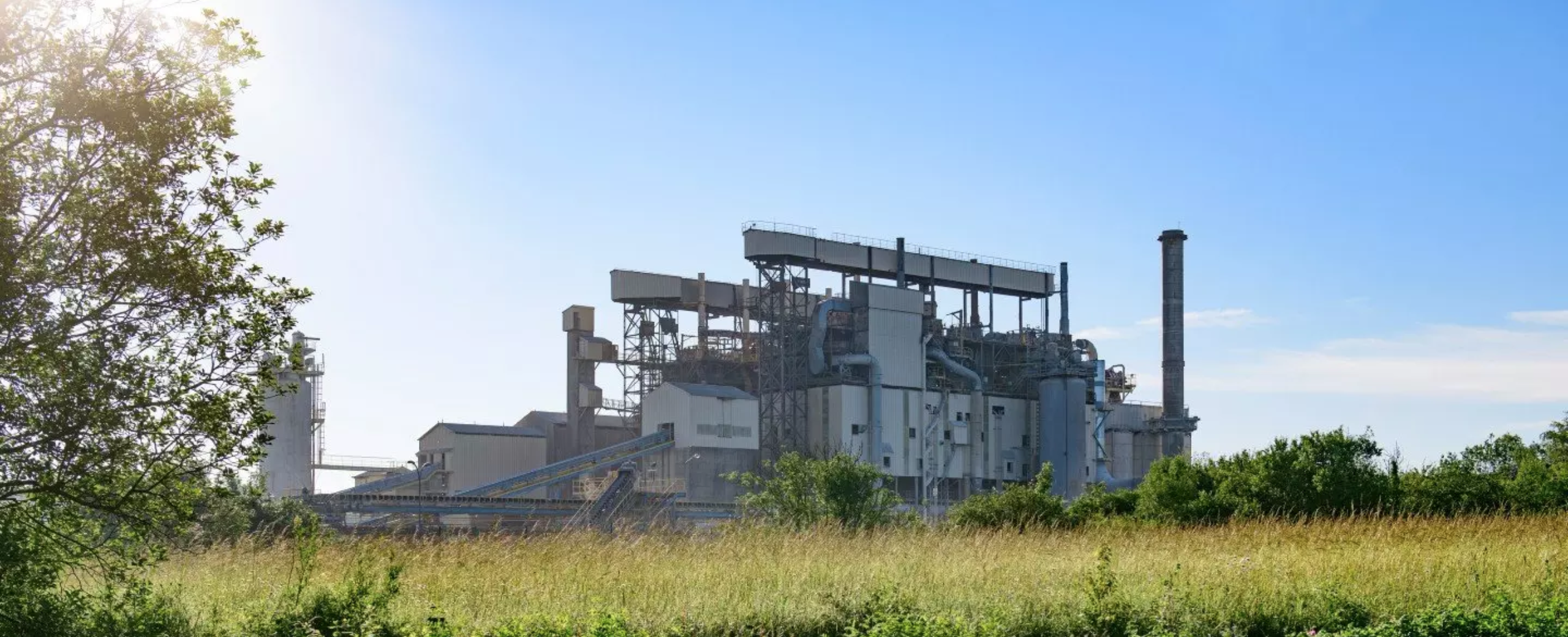
Lime manufacturer Lhoist Germany and industrial gases company Air Liquide are working on a plan for a large-scale industrial plant to capture the CO2 generated during lime production. Thyssenkrupp will be a beneficiary, as it aims to boost production of “green” steel using carbon-neutral lime.
The project will be carried out at Europe’s largest lime production plant in Wülfrath, North Rhine Westphalia state. For thyssenkrupp Steel, “green” lime is another important building block in its technnological transformation, the steelmaker says in a statement seen by Kallanish. In cooperation with Lhoist and Air Liquide, it aims to prevent the generation of about 1 million tonnes/year of CO2 in the production of the lime it sources.
“The project is a perfect example of the decarbonisation of the entire supply chain,” tk Steel chief technology officer Arnd Köfler said during a presentation in Wülfrath, attended by the state’s economy minister, Mona Neubaur. “Unavoidable CO2 emissions from lime manufacture can be captured with our technology, and then safely transported, reused or stored,” said Gilles Le Van of Air Liquide.
Lime is needed in numerous industrial value chains. In steelmaking, lime products are indispensable for removing troublesome by-elements from the hot metal and binding them in the converter slag that is derived from the lime. Manufacturing green steel thus requires green lime, thyssenkrupp states.
Christian Koehl Germany

German car production keeps rising
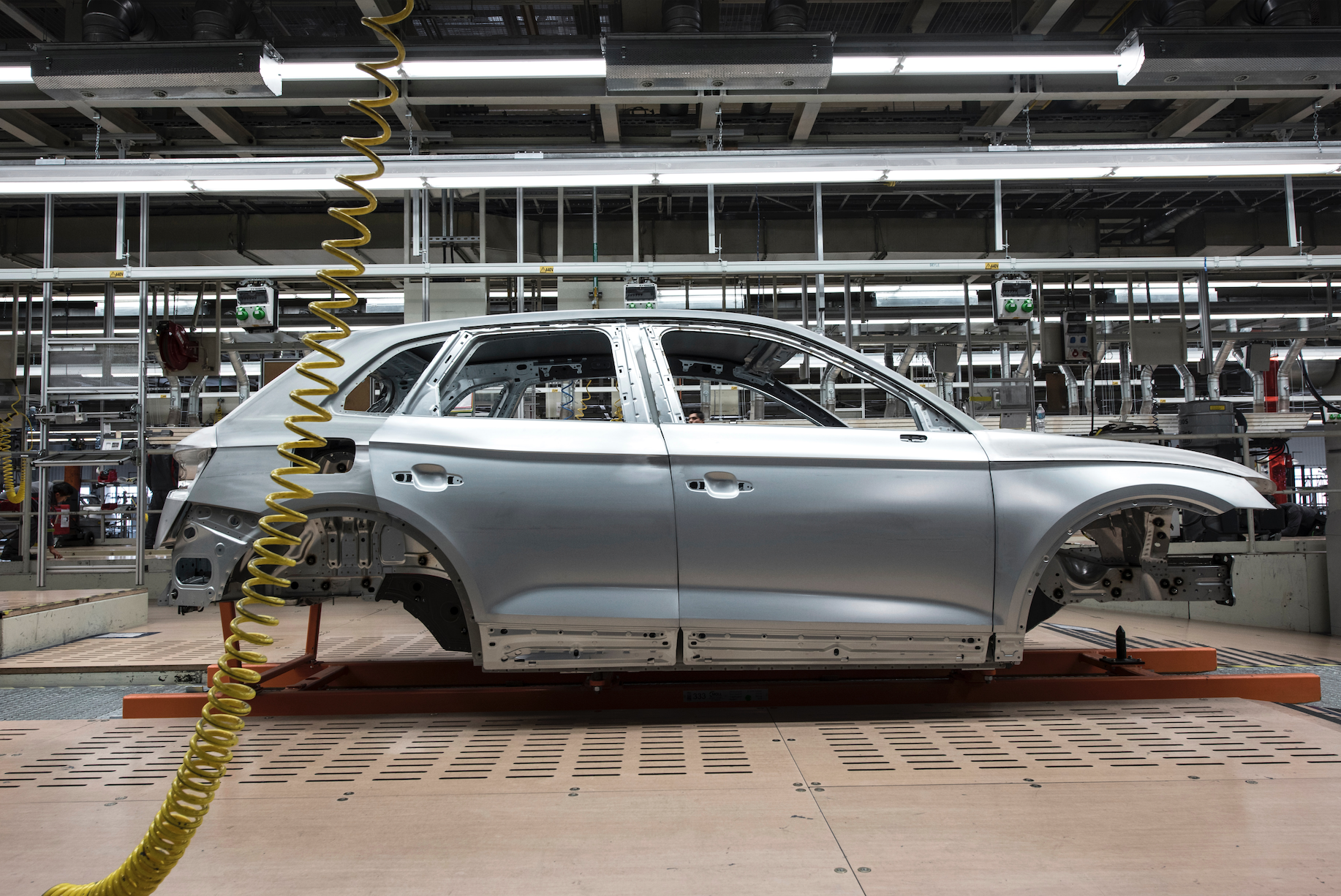
Output of passenger cars from German assembly lines in February saw the tenth month-on-month increase in a row, Kallanish hears from national carmakers federation VDA.
In comparison with one year ago, February’s production of 382,600 units means an increase of 24%. Taking January and February together, the output of 708,300 units was 26% higher than in the first two months of 2022.
VDA attributes the upward trend largely to the recovery of the supply chain, meaning bottlenecks of some materials and components have been resolved. Still, it points out that production is still well below the levels seen before Covid-19. Two-month production, for example, lags behind that of 2019 by 13%, VDA notes.
Exports of cars made in Germany show the same trend as production: at 278,000 units, delivery of passenger cars to foreign shores in February was 24% above February 2022.
Christian Koehl Germany

European flats prices consolidate at higher levels: Marcegaglia
Prices of flat products in Europe are currently consolidating at higher levels, continuing the recovery trend started at the end of 2022, Antonio Marcegaglia, president and chief executive of Marcegaglia, said during a webinar organised by Siderweb.
The executive noted that in the fourth quarter of 2022, flats prices across Europe fell to close-to-cost levels for producers. Kallanish indices for northern European HRC bottomed at €650/tonne ($689) ex-works base at the end of November 2022, and have since recovered to as much as €800/t ex-works base.
Marcegaglia confirmed that current offer prices from European steelmakers have reached, and in some cases surpassed, €820/t ex-works base for HRC. He noted that the market is expected to consolidate at these levels in the short term; further increases could be seen, but of a more limited magnitude.
“There will not be space for prices to drop from the current offer levels in Europe; there could be a further increase, but not too significant,” he added. Prices of flat products processed from HRC are however currently lagging behind on the recovery path.
On the demand front, 2023 is expected to show a recovery in terms of flats demand in Europe.
Looking forward, Marcegaglia said some changes could be seen in trade flows of steel products into Europe from the fourth quarter. This is because steel products processed from Russian steel will be formally banned in Europe, as anticipated in the latest round of sanctions announced in Q4 2022.
Emanuele Norsa Italy

UK well behind EU in plan to decarbonize steel industry: UK nonprofit
The UK has fallen significantly behind Europe on its strategy to decarbonize the steel industry, with only one low carbon steel project being developed, independent nonprofit UK Energy & Climate Intelligence Unit said in a report published March 7.
The report found that the European Union had increased the number of low carbon steel projects planned or in progress to 38 in 2023, up from 23 in 2021.
As a result, the EU remains well ahead of the UK, which currently accounts for only one planned project, up from zero in 2021.
Within the EU, the group said the increase in natural gas prices in 2022 arising from Russia’s invasion of Ukraine has doubled the number of low-carbon steel projects utilizing green hydrogen, produced by splitting water into hydrogen and oxygen using renewable energy.
“Electricity prices have risen sharply in the two years since as a result of the Russian invasion of Ukraine, in part pushing up the gas price,” the report said.
In contrast, the report found that EU steel projects using blue hydrogen, which splits natural gas utilizing steam methane reformation and incorporates carbon capture and storage, or CCS, technologies, declined by 67% between 2021 and 2023.
According to the group, the single UK project being planned, an initiative from business consortium Zero Carbon Humber, which aims to create a decarbonized industrial cluster in Teesside and the Humber with partners including British Steel.
“The project will look at introducing blue hydrogen for EIIs Steel Group, including British Steel’s Scunthorpe plant,” it said.
The report said Germany alone has invested Eur8.5 billion in decarbonizing its steel industry.
By comparison, the group said the UK continues to face uncertainty surrounding support for the domestic steel industry, although it noted that the government was due to allocate the GBP250 million Clean Steel Fund this year.
Industry association UK Steel did not immediately respond to a request for comment.
Platts assessed Northwest Europe hot-rolled coil at Eur830/mt ($878/mt) ex-works Ruhr March 7, up from Eur610/mt Dec. 1, 2022, according to S&P Global Commodity Insights data.
— Euan Sadden


Domestic HRC prices in Europe set to rise further
European hot-rolled coil prices are expected to rise further this week, supported by reduced availability, good order books at producers and expected restocking, sources told Fastmarkets on Tuesday March 7.
European buyers have been awaiting higher offers from integrated mills, with prices not expected to be lower than €850 ($906) per tonne EXW, sources said.
Most mills are now only able to offer May production coil, Fastmarkets understands.
“There are some April [production] volumes [of HRC] if you are lucky, but generally its May already,” a trader source in the region said.
Market participants said they expect the higher offer prices to be gradually accepted in deals due to limited supplies and anticipated restocking.
“Trader stock levels are quite low [and] some cannot wait any longer—they need material. [But] producers feel no pressure, they have good order books,” a European distributor said.
Distributors said sales levels to end users in January and February were “normal”, despite experiencing some difficulties passing on higher prices.
“We have had a normal level of sales [to end users], enough inquiries to feel comfortable. The demand is there, it is not booming, but it is normal,” a steel service center source told Fastmarkets. “We have had some difficulties with increasing prices for end users, but they tend to accept [the increases] step by step.”
Buyers in the region said that a workable price in Northern Europe was about €800-820 per tonne EXW.
One integrated mill in the Benelux area expected to bring forward planned maintenance of one blast furnace to April rather than wait until summer, sources said.
Fastmarkets calculated its daily steel hot-rolled coil index domestic, exw Northern Europe at €818.13 per tonne on Tuesday, up by €6.80 per tonne from €811.33 per tonne on March 6.
The latest calculation of the index was up by €24.38 per tonne week on week and by €63.13 per tonne month on month.
In Italy, meanwhile, the situation with supply was even tighter, sources said.
May-delivery coil from local suppliers was on offer at €820 per tonne delivered (about €800 per tonne EXW), sources said.
And July-delivery HRC from an integrated mill in the south of Italy was on offer at €850 per tonne EXW.
Buyer estimates of the tradable level came in at €780-800 per tonne EXW, depending on tonnage.
Fastmarkets’ calculation of its daily steel hot-rolled coil index domestic, exw Italy was unchanged at €795.00 per tonne on Tuesday.
The latest calculation of the index was up by €10.00 per tonne week on week and by €45.42 per tonne month on month.
Overseas HRC offers to Europe have been limited so far this week, with suppliers also considering price rises, Fastmarkets understands.
Offers from Southeast Asia to Italy were heard at around $800-820 per tonne CFR for May shipment, but the workable price was estimated by buyers at $780-800 per tonne CFR.
“The [overseas HRC suppliers] are trying to increase [HRC] prices, but customers are not accepting any increases and some sellers are finally willing to accept deals below the offer prices,” the trading source in Southern Europe said.
Long lead times were limiting buying interest in imported HRC, sources said.
In fact, several trading sources pointed, that booking imported coil would only make sense for “back-to-back” business, while buying it for stock would be too risky, given the high levels of volatility in the market.
Published by: Julia Bolotova
