


Economic impact of iron and steel industry of Ukraine 2021-2022
GMK Center presented today the study “Economic impact of iron and steel industry of Ukraine 2021-2022”.
This document presents basic data about:
- Contribution of iron and steel industry to the economic and social development of the country
- Logistics and export of metal products
- Production results of Ukrainian iron and steel companies
- Humanitarian support and support of defenders of Ukraine by iron and steel companies
You can find out this report here:
Synergy Tradeco announces participation at the Made in Steel 2023 steel fair
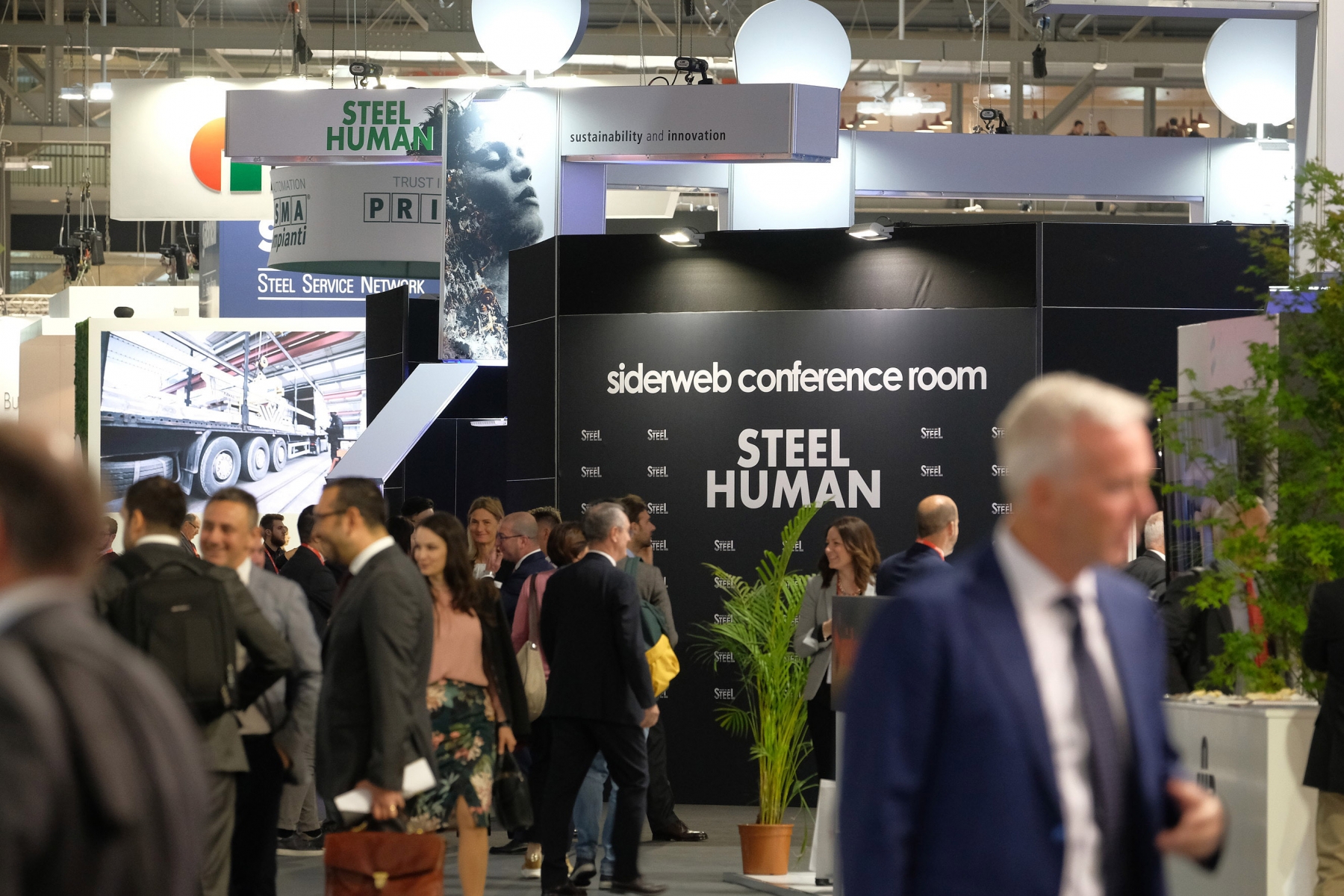
Antwerp, Belgium based – Synergy Tradeco N.V. is excited to announce its participation at the Made in Steel 2023 steel fair, taking place in Milan from May 9th to May 11th, 2023. Synergy Tradeco NV will be located in Pavilion 24 at Stand A12, where it will showcase its products and services to the steel industry.
Synergy Tradeco NV is a reputable steel trading company with its growing footprints in the European market . The company specializes in the supply of high-quality steel products to clients across the world. The company’s commitment to quality, reliability, and customer satisfaction has earned it a stellar reputation in the industry.
The “Made in Steel 2023” steel fair is an important event in the steel industry. The event brings together professionals from across the industry, offering an opportunity for networking, learning, and exploring the latest trends and innovations.
Visitors to Synergy Tradeco NV’s stand will have the chance to learn about the company’s wide range of steel products, including hot-rolled steel, cold-rolled steel, galvanized steel, and more. They will also have the opportunity to interact with the company’s representatives, who will be on hand to provide expert advice and answer any questions.
For more information about Synergy Tradeco NV and its participation at the “Made in Steel 2023” steel fair, please visit synergy-tradeco.com.
Contact: Synergy Tradeco N.V. +32 3 288 7179, steel@synergy-tradeco.com


Voestalpine upgrades PSI quality control system
Voestalpine Stahl has gone live with production management system PSImetals version 5.21, Kallanish learns from PSI Software AG.
After the modernisation of the existing CAQC (Computer Aided Quality Control), voestalpine Stahl will in future be able to upgrade its system seamlessly with new PSImetals product releases, the Berlin-based software provider says.
The CAQC system at voestalpine Stahl is used to configure and calculate treatment practices in the melt shop, before and during the production process with an output capacity of 6 million tonnes/year. The upgraded PSImetals 5.21 covers the production process in the melt shop, including basic oxygen furnace, secondary metallurgy lines, continuous casting as well as mould casting, PSI explains.
With the standard functionality of PSImetals, it is possible to configure future requirements instead of performing feature-specific development, the company says. PSI was founded in 1969 and employs more than 2,200 people worldwide. It has also provided thyssenkrupp Steel with several solutions.
Christian Koehl Germany

Italian crude steel output continues to decline
Italian crude steel output fell 7.3% year-on-year in February to 1.8 million tonnes, according to data issued by local steelmakers association Federacciai. In the first two months of the year, production declined by 10.8% on-year to 3.4mt.
Flat steel production tumbled by 10.7% to 805,000t last month and by 14.2% to 1.5mt in January-February. Longs output fell 7.1% in February to 1.1mt and by 12.7% to 1.8mt in the first two months of 2023, Kallanish notes.
Italian crude steel output declined by 11.5% y-o-y in 2022 to 21.6mt. Flats production tumbled 13.8% to 9.5mt, while longs output fell by 12% to 12mt, Federacciai says.
Natalia Capra France
Ukraine increases scrap purchases, exports surge
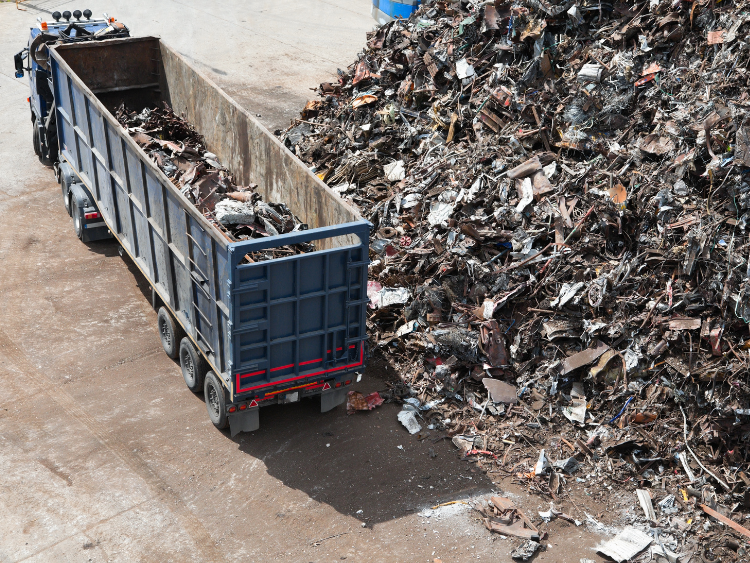
Ukrainian mills increased procurement of ferrous scrap in February compared to January, according to the Ukrainian association of secondary metals, UAVtormet.
The volume purchased increased by 51.6% on-month to 60,500 tonnes, but fell 51.6% on-year, Kallanish notes. Supply of scrap to Ukrainian enterprises was also up 43.3% on-month to 70,800t, but down 73% on-year.
In January-February, procurement of scrap decreased by 70.8% on-year to 152,200t.
At the same time, ferrous scrap stocks are critically low and continue to shrink, UAVtormet observes. As of 1 March, they were at the level of 15,000-20,000t compared to 20,000-25,000t at the beginning of February.
Exports of scrap in February amounted to 16,500t, up 98.8% compared to the previous month and more by 79% on-year. January-February scrap exports increased by 3.5 times to 24,800t compared to the same period last year. Imports of the feedstock have amounted to 400t in March so far, while in January and February no scrap was imported.
In December 2021, Ukraine’s parliament increased the duty on the export of ferrous scrap to €180/tonne.
“During the first two months of 2023, the volume of scrap procurement in Ukraine continued to decline,” UAVtormet says. “This trend is due to the crisis in the scrap industry and the existing pricing in the market. It is the growth in the export of scrap metal that allows us to maintain business activity in the current conditions.”
According to its forecasts, scrap procurement in Ukraine in 2023 will amount to 850,000-880,000t. Domestic supplies of raw materials to steel plants will be at the level of 720,000-750,000t.
In February, UAVtormet said that Ukrainian steel mills will not have enough ferrous scrap to meet demand this year, because in 2023 they may need up to 1.7 million tonnes (see Kallanish passim).
Ukrainian mills significantly reduced procurement of ferrous scrap in 2022 to 996,700t, down by 76% on-year.
In total, UAVtormet predicts about 900,000-950,000t of scrap will be generated during the Russian-Ukrainian war, including from utilising scrapped military equipment.
Svetoslav Abrossimov Bulgaria
Dunaferr restarts hot strip mill
Dunaferr has restarted its hot strip mill after a three-month stoppage, a spokesperson for Liberty Steel, which is managing the insolvent Hungarian steelworks, tells Kallanish.
This follows the restart of its blast furnace no.2 and cold rolling mill last month, as well as the stabilisation of its coke batteries.
The move means “customers can yet again enjoy premium steel products made in Hungary” starting from later this month, the spokesperson says.
It will also go some way to easing the tight supply reported for hot rolled coil in Europe amid restricted production and higher import prices. Europe’s leading HRC producer hiked its offer prices again last week, although buyers say mills are unlikely to achieve their target prices in the short term (see Kallanish passim).
In 2020, the last year for which Dunaferr published production data, it recorded crude steel production of 1.18 million tonnes, despite widely reported operational problems in the second half of the year. This was down 19% on-year. The firm’s BF1 remains idle since last summer.
Adam Smith Poland

HRC producers in Europe maintain high offers despite subdued activity
Hot-rolled coil prices were broadly stable in Europe on Monday March 20, with producers bullish on strong order books, sources told Fastmarkets.
Traded volumes were limited in the region, with mainly hand-to-mouth bookings for small lots reported recently.
Buyers remained cautious about recent price increases, given the lack of support from the demand side.
Additionally, most of the steelmaking capacity that was idled during 2022 has been or will be restarted at the start of the second quarter, which will likely alleviate pressure on volumes.
But the effects of these capacity restarts will only be felt in the third quarter of 2023, sources believe.
On Monday, HRC offers from mills in Northern Europe were reported at €860-870 per tonne EXW, and buyers’ estimates of tradeable values were at €820-850 per tonne EXW.
Market sources pointed out that buyers “had no power to claim discounts” because producers have strong order books and are already offering June-delivery HRC.
Fastmarkets calculated its daily steel hot-rolled coil index domestic, exw Northern Europe at €845.00 ($901.21) per tonne on Monday, down by €1.25 per tonne from €846.25 per tonne on Friday.
The latest calculation of the index was up by €10 per tonne week on week and by €72.74 per tonne month on month.
Fastmarkets’ calculation of the daily steel HRC index, domestic, exw Italy was €822.28 per tonne on Monday, up €5.03 per tonne from €817.25 per tonne on Friday.
The latest calculation of the index was up by €9.78 per tonne week on week and by €63.15 per tonne month on month.
HRC producers in Italy were sold out for May-delivery coil and were in no rush to offer material for June delivery.
One integrated mill was targeting as high as €870 per tonne delivered, which would net back to about €850 per tonne EXW.
Buyers’ ideas of tradeable values were heard within the range of €810-820 per tonne EXW.
“Final demand is very slow, but mills have a strong portfolio, so most likely prices [for HRC] will keep climbing in the short term,” a trading source said.
Imported HRC prices were largely not workable for European buyers, given the associated long lead times.
Notably, offers from Japan and South Korea for May-June shipment were reported at €780-800 per tonne CFR.
An Indian producer was aiming for $830-840 per tonne CFR to Southern Europe.
Published by: Julia Bolotova

Hungary’s flat steel producer Dunaferr restarts hot strip mill
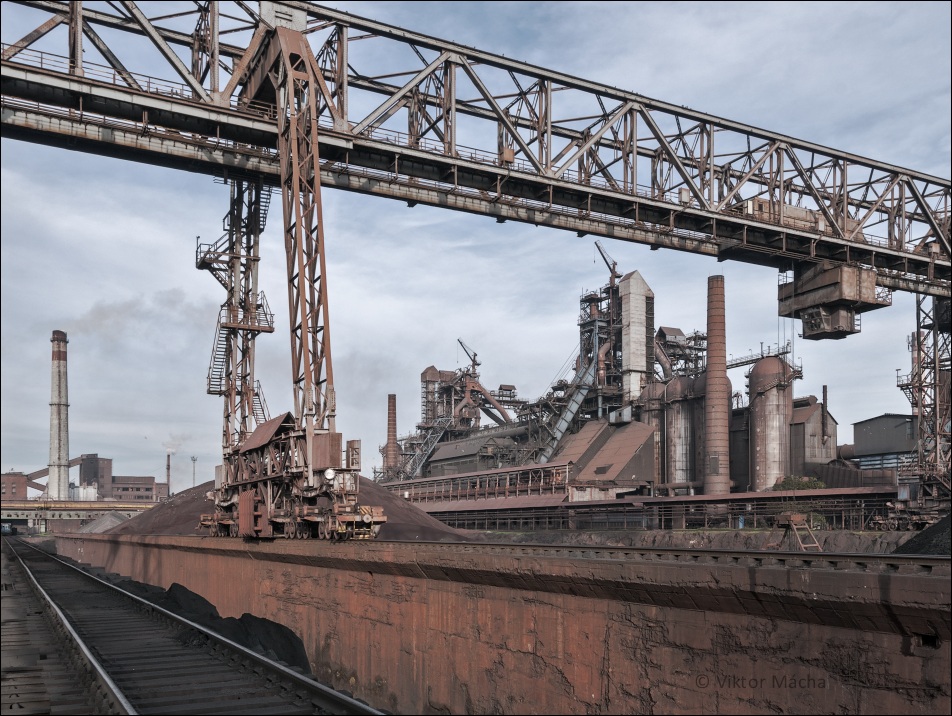
Hungary’s sole flat steel producer, Dunaferr, has restarted hot strip mill that was idled since December 2022, according to UK-registered Liberty Steel which operates the Dunaferr plant and distributes its output in compliance with the agreement the two signed in February.
The steelworks will start providing its customers premium rolled products later in March, Liberty Steel said to S&P Global Commodity Insights in an email March 20.
“We have signed an operational and commercial agreement with the Dunaferr plant in February to help stabilize its operations,” a spokesperson for Liberty Steel told S&P Global but declined to specify for how long the arrangement will remain in effect.
The restart of hot strip mill follows the February resumption of 660,000 mt/year blast furnace no 2, the basic oxygen converter shop and cold rolling operations, S&P Global reported earlier.
Last month, Liberty also secured a deal with the Hungarian state allowing it to draw a credit line in state-owned EXIM Hungary in order to restart and stabilize operations at Dunaferr, S&P Global reported.
A municipal court in Dunaujvaros ordered the liquidation of Dunaferr, with the steelworks, including its two blast furnaces with a 1.2 million mt/year combined capacity, previously idled since the third quarter 2022, S&P Global reported earlier.
In February, Hungarian Prime Minister Viktor Orban said the government would pay the wages of Dunaferr’s workers for the next six months, during which, it would expect to find a new owner for the plant.
Platts, part of S&P Global, assessed domestic hot-rolled coil prices in Northwest Europe at Eur850/mt ex-works Ruhr March 17, and those in south Europe at Eur820/mt ex-works Italy, both stable on the day.
— Ekaterina Bouckley

Italian steel market confronts pickled coil shortage
Availability of pickled coil, particularly of higher thickness, has been significantly below normal in Italian market, sources told S&P Global Commodity Insights in the week to March 20.
Technological issues on one of Arvedi’s lines and low water levels affecting production at Delna site, owned by CLN, are behind the shortage.
“Supply of pickled and oiled coil in Italy is generally tight, and any issues causing production to drop immediately hit the market,” an Italian trader said.
Arvedi has had technological issues on its push-pull pickling line for processing of coil with 8-12 mm thickness, and the line has been stopped, a source close to the mill said. The company did not respond to S&P Global’s requests for comment.
The Delna plant is having “full revamping of one pickling line processing thicknesses over 6 mm, and low levels of water in lakes and rivers are affecting production,” the source from the company said.
An Italian distributor said Delna can’t offer “from 6 mm and up because of lack of water issues,”
Delna’s pickling line that can process coil with thickness from 1.5 mm to 15 mm has a capacity 450,000 mt/year. Another line that processes coil from 1.4 mm to 7 mm has capacity of 400,000 mt/year.
As a result, the premium for pickled coil over dry HRC increased to about Eur40-50/mt from around Eur20-30/mt, according to market sources.
Platts assessed domestic prices for hot-rolled coil in South Europe at Eur820/mt ex-works Italy March 20.
— Maria Tanatar