Works ‘near completion’ on restart of Dunkirk blast furnace: ArcelorMittal
Works to repair the No. 4 blast furnace at ArcelorMittal’s Dunkirk plant “are near completion”, the steelmaker told S&P Global Commodity Insights on July 3, without specifying a date.
The company had been aiming to restart the 3 million mt/year blast furnace at site in northwest France in the third week of June, after operations stopped on March 30 due to an ignition-caused fire.
Originally, ArcelorMittal had planned to restart the blast furnace at the end of May, but that date was also delayed.
ArcelorMittal Dunkirk has three blast furnaces with a combined maximum output of 7 million mt/year. No.4 is the largest. Blast furnace No. 3 can produce 1.5 million mt/year and was restarted recently after being idled since mid-September 2022.
At Gijon in Spain, where the company suffered another fire at blast furnace A on March 27, ArcelorMittal told S&P Global Commodity Insights on June 27 that it was aiming for a restart near the end of the week starting July 2.
Author Annalisa Villa


Slow demand inhibits trading in European steel HRC markets
End-user demand for steel hot-rolled coil remained weak across Europe, sources told Fastmarkets on Monday July 3.Fastmarkets’ daily steel hot-rolled coil index, domestic, exw Northern Europe, was calculated at €680.00 ($741.76) per tonne on Monday, up by €5.90 per tonne from €674.10 per tonne on June 30.
The latest calculation of the Northern European index was also up by €7.50 per tonne week on week, but was down by €57.08 per tonne month on month.
Market conditions were largely unchanged in Northern Europe, with slow demand and few trades, sources said.
But while some expected prices to remain largely unchanging through July, others were forecasting limited restocking in the first half of the month.
“The market is unchanged this week compared with last week, [and it is] summer vacation time now in Germany, so it´s quite quiet at the moment,” a trader source told Fastmarkets. “I forecast the market will remain silent for the next few weeks.”
A second trader source said: “The market is on pause at the moment, [but I do] expect buyers to return to restock in the first half of July, [although] restocking will be limited because end-user demand is weak.”
Most market participants, however, expected prices to be largely stable until September.
Buyers’ estimates of the tradable level were between €670 and €700 per tonne ex-works.
Mills in Northern Europe were now offering coil for August-September delivery, sources said.
Fastmarkets calculated its daily steel hot-rolled coil index, domestic, exw Italy, at €650.00 per tonne on Monday, unchanged from June 30.
The Italian index was, however, up by €3.75 per tonne week on week, although it was down by €30.00 per tonne month on month.
Sources in Italy also expected to see limited restocking in the first half of July.
Buyers, meanwhile, said that the tradable level in Italy on Monday was €650 per tonne ex-works.
Imports
Offers of September-shipment coil from Asia to Italy were heard at $610-620 per tonne CFR, according to a buyer source in Southern Europe.
Published by: India-Inés Levy


Tubos Reunidos first-half profit grows, outlook negative
Spanish seamless tube supplier Tubos Reunidos (TR) saw most of its main indicators grow in the first half of 2023 compared to the previous year and H2 of 2022, Kallanish notes.
This was mainly due to an improvement in activity and strong demand in the North American market, TR president Francisco Irazusta comments. “The upstream (OCTG) and midstream sectors showed very solid performance since the second half of 2022, as well as the demand coming from the mechanical sector in Europe,” he says.
However, order intake has dropped significantly in recent months due to downward adjustments in both apparent demand and prices. These factors will have a significant impact on second-half results, but the expectations remain in line with the TR strategic plan, the executive explains.
“Some projects stopped due to the uncertain environment and the constant increase in interest rates, which is undoubtedly impacting demand. In this sense, Tubos Reunidos currently has a portfolio of orders worth €141.7 million and forecasts a second half of the year with a significant decrease in sales and Ebitda compared to H1,” Irazusta adds.
The group’s revenue in January-May moved up by 35% versus the same period in 2022 to €300 million. The North American market represented 53% of total sales, almost equal year-on-year.
TR says its investments will total almost €25 m in 2023. Because the US is the most relevant market for its business, the company will devote almost €7m to the upgrade of its Houston plant to double the capacity of its US facilities up to 75,000 tonnes.
The company posted an Ebitda of €70m in the January-May period, an improvement of €20m compared to H2 2022. TR performance is pending auditing, the seamless tube supplier adds.
Todor Kirkov Bulgaria


DB Cargo, voestalpine extend supply chain cooperation
Voestalpine and railway freight company DB Cargo have signed another contract for steel shipments and incoming scrap transport of over 1 million tonnes.
The contract extends the existing cooperation of DB Cargo’s Bavaria Shuttle. This provides climate-neutral transport from the steelworks to the assembly line of the automotive industry, Kallanish hears from the companies. With a round trip, voestalpine in Linz, Austria, can send steel to three different locations every day and receive scrap from three shipping points. The combination of steel and scrap avoids empty runs and thus CO2 emissions.
Necessary subsequent truck runs are neutralised with CO2 certificates. Voestalpine, logistics subsidiary Logistik Service GmbH (LogServ) and DB Cargo have now applied this principle to other shuttle concepts, such as the Schwaben Shuttle in the southwestern German Swabia region.
The concept is being taken further with additional innovation in freight wagons, a lightweight wagon for scrap metal, DB Cargo points out. The so-called TransANT wagons can transport about 15% more cargo and thus increase the efficiency of a train.
Christian Koehl Germany

ETS reforms fall short of requirements: UK Steel
UK Steel says the government’s UK Emissions Trading Scheme (ETS) reforms announced on Monday contain gaps that need to be addressed for the steel industry to successfully meet decarbonisation targets.
Emissions caps have been tightened for the UK’s power and industrial sectors. To ease the transition, the cap will be set at the highest level of the range consulted on, in line with net zero – allowing maximum flexibility for industries, a government note says. Extra allowances will also be made available to the market between 2024 and 2027, while the current levels of free allocation of allowances for industry has also been guaranteed until 2026, to continue to protect them from international pressures.
The UK ETS will be extended to cover more sectors – domestic maritime transport from 2026 and waste from 2028. This will be during the rolling out of a phased removal of free carbon allowances for the aviation industry in 2026 and supporting investment in new Greenhouse Gas Removal technologies.
“With 2026 less than three years away, and with only nine years to decarbonise the steel industry according to the Climate Change Committee, the lack of detail, strategy and financial long-term leadership leaves steelmakers in the dark,” UK Steel says in a note sent to Kallanish.
“Without a hawk-like vision, a carefully planned capital expenditure and a powerful decarbonisation strategy, we could simply close down steel plants and de-industrialise the nation,” says UK Steel director general Gareth Stace. “There are huge question marks over if Government really wants to sustain steel, the backbone of British manufacturing, or just leave it to shrink and rely on other nations’ supply.”
“We are committed to decarbonising by 2035 if the right business environment is created, and ETS free allowance, the level of the cap and a CBAM will help this,” Stace continues. “Yet Government is plainly taking with one hand and not giving back with the other when it issues one-off policies without a strategic plan for capital expenditure and aligning ETS regulations with CBAM implementation.”
Adam Smith Poland

Energy to rise 35% without government help: Federacciai
The Italian government may end the tax credit for energy-intensive sectors such as steel and scrap the exemption from electricity transport and distribution charges. This move risks increasing electricity costs in the country by 35% for steelmakers, Federacciai president Antonio Gozzi tells Kallanish.
“While the French and German governments adopted specific measures to support energy-intensive industry and are wading the countries through this energy crisis, in Italy the opposite is happening,” Gozzi earlier told local broadsheet IlSole24Ore.
The French industry pays about €42 ($45) per megawatt-hour electricity, while German steelmakers pay approximately €60/MW-h. Including the tax credit and exemption from electricity distribution charges, Italian steelmakers pay about €100/MW-h. Without the government’s help, energy-intensive industries will pay some €120/MW-h, unlike their French and German competitors.
Gozzi says he is in talks with the Italian authorities in Rome. Together with Confindustria, the national industrialists’ association, he is proposing a project be implemented by the end of the year that allows Italian companies to align their electricity costs with France and Germany.
The Italian electricity operator in Italy has 25 terawatts available from renewable sources. Instead of trading the surplus energy on the stock exchange, it may sell it to energy-intensive companies at a discounted price of €50/MW-h. The industry would then return the value of the discounted energy within a certain timeframe with investments in renewable plants, Gozzi proposes amongst other possible solutions.
The risk of high energy costs is that Italian steelmakers and other sectors will lose competitiveness. “We have sold steel to our clients based on a certain cost of energy that represents between 33-35% of the total cost of steel,” Gozzi continues. In the coming weeks, Federacciai and Confindustria will suggest that the exemption from electricity distribution charges stops on 1 January 2024 as the rules should not change abruptly in the course of this year.
The two associations will also ask to the government to reduce the tax credit, instead of stopping it, from the current 25% to 20%. Federacciai’s warning has been backed by steelmakers such as Gruppo Arvedi and the country’s metallurgy unions.
“The issue of energy competitiveness in our country, despite the efforts made, continues to be a factor of international difference that penalises our country, an Achilles heel that we can no longer accept in this way … It is necessary to avoid negative repercussions, especially on production and production continuity and, therefore, consequently on employment,” says FIM CISL unions secretary general Roberto Benaglia in a note. He has also asked for an urgent meeting with Minister of Enterprises and Made in Italy Adolfo Urso.
Natalia Capra France
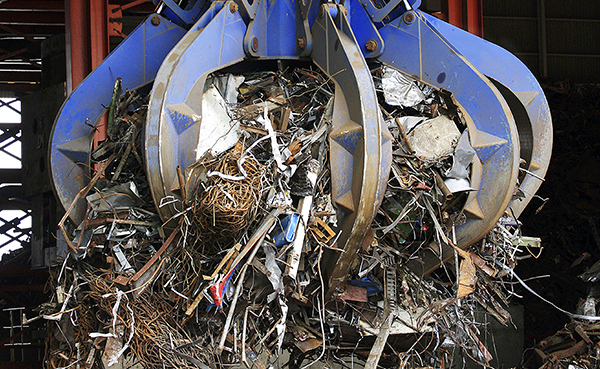
Synergy Tradeco: Driving Sustainability in the Steel Industry through Non-Prime Steel & Scrap Trading and following Circular Economy Practices
Synergy Tradeco NV is contributing towards global emission for steel by dealing in non-prime steel & steel scrap and following a circular economy by encouraging reusing & recycling steel.
Reduced Energy Consumption: Reusing steel helps minimize the need for primary steel production, which requires significant energy inputs. By dealing in non-prime steel and promoting its reuse, Synergy Tradeco contributes to lower energy consumption and reduces associated greenhouse gas emissions.
Conservation of Natural Resources: The reuse of steel reduces the demand for natural resources such as iron ore and coal, which are used in primary steel production. By conserving these natural resources, Synergy Tradeco helps mitigate the environmental impact associated with their extraction and processing.
Waste Reduction: By actively engaging in the circular economy, Synergy Tradeco reduces the amount of steel waste that would otherwise end up in landfills or require disposal. By encouraging recycling steel scrap, the company not only minimizes waste generation but also supports a more sustainable and efficient use of resources in form of billet and slab production mainly through Electric Arc Furnaces globally and supports a more sustainable approach to steel consumption.
Promoting Sustainability: Synergy Tradeco’s circular economy approach aligns with global sustainability goals. By actively supporting the reuse & recycle of steel, the company exemplifies responsible business practices and fosters a more sustainable steel industry.
Overall, Synergy Tradeco’s commitment to dealing in non-prime steel & scrap and promoting the circular economy by encouraging the reuse & recycle of steel reflects a positive step towards reducing global emissions for steel. Their efforts serve as an example for other businesses to adopt more sustainable practices and contribute to a greener and more environmentally friendly steel industry.