


EU HDG: North rises, Italy falls
North European hot-dip galvanised (HDG) coil prices nudged up a touch this week, supported by disruption to German production, while Italian prices edged marginally lower.
Argus‘ weekly ex-works northwest EU HDG assessment rose by €10/t to €790/t, while the weekly Italian assessment slipped by €5/t to €765/t ex-works. The weekly cif Spain Z140 0.57 marker dipped by €5/t to €780/t cif.
In northern Europe domestic offers were around €800-820/t delivered base, with some mills reporting sales of small tonnages at the top end of this range. Larger buyers still said they could achieve below €800/t.
Salzgitter’s force majeure predominantly involves HDG, as one of the company’s lines was impacted by recent flooding. This has tightened up supply somewhat in the northwest, with other mills also seeming to have less capacity.
Italian producers are seeking above €800/t base delivered for September-October deliveries. One mill offered at €800-820/t base delivered Italy depending on the customer, but has sold within that range into Germany.
Another producer was asking for €800/t, but has sold at €770/t ex-works in Italy, albeit with a high extra. The price is around €20-25/t higher than the bottom of June prices, a buyer said.
A third seller was at €810-820/t. A north EU supplier had offered into Italy at €880/t base delivered, but made no sales. A buyer estimated workable prices at €770-780/t base delivered, but was not in negotiations.
The import market was fairly quiet, but the euro-dollar exchange rate meant that previous dollar-denominated offers came down in euro terms.
Egyptian material, z140 0.57 was still priced at $850/t cfr Spain this week. Other origins were available at around €800/t cfr for the same specifications, but market participants said €780/t cfr is achievable. Taiwanese material was reportedly priced around $30-40/t above other origins. A buyer expected to be able to obtain €790/t cfr for 0.5 z100 Indian HDG. A Vietnamese offer was still heard at $870/t cfr Spain for z140 0.57. Indian 0.5mm Z275 was offered into Antwerp at $940-950/t cfr Antwerp. Traders said interest was limited in the north with holidays already under way.
“Vietnam [previously] increased prices but now they are more flexible. They are not pushing for new orders,” a trader said. “Mills are hungry and summer holidays are here, so expect nothing good out of this,” a buyer said. “No big movements will be done, activity is really depressed,” another buyer said, adding that they are selling 20pc below budget so far this month.
Lora Stoyanova, Argus Media

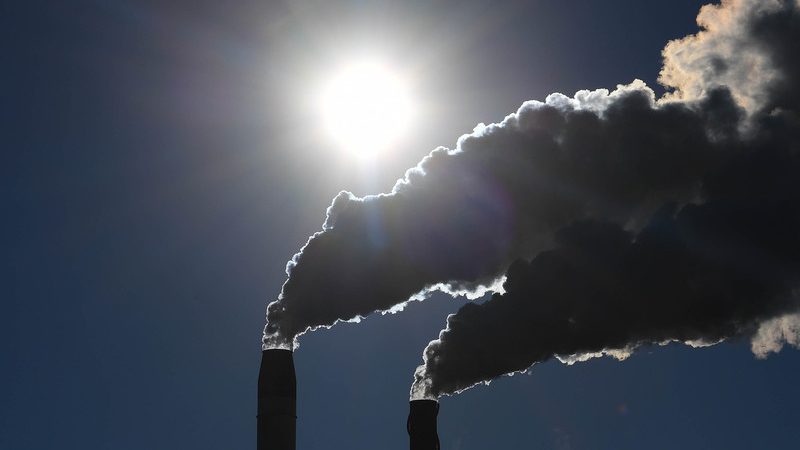
EU invests Eur3.6 bil of ETS revenue in clean tech projects through Innovation Fund
The European Commission has awarded over Eur3.6 billion ($4.0 billion) to large-scale clean technology projects across a range of industries, financed through the EU Innovation Fund using emissions trading revenues, it said in a statement July 13.
The 41 projects cover a range of industries including cement, steel, advanced biofuels, sustainable aviation fuels, wind and solar, and renewable hydrogen and its derivatives, with projects all starting operations by 2030.
“The funding will contribute to the greening of significant sectors of the European economy, in particular those that are difficult to decarbonize,” the EC said.
The projects could save 221 million mt of CO2 across their first 10 years of operations, with a focus on the EU’s REPowerEU plan and phasing out Europe’s reliance on Russian fossil fuel imports, it said.
Under the fund’s “general decarbonization” theme, eight projects received Eur1.4 billion. These included three refinery projects and five in the cement industry.
Under “industry electrification and hydrogen,” 13 projects received Eur1.2 billion, with six focused on hydrogen production and seven on hydrogen consumption in chemicals, refining and steel.
“Clean tech manufacturing” projects were awarded almost Eur800 million, with four electrolyzer manufacturing projects, four in batteries and three on solar photovoltaic panels and modules.
A further nine mid-sized pilot projects received Eur250 million across wind and ocean energy, chemicals, glass, carbon capture and e-fuels.
Further project development funding support for less mature projects will receive backing from the European Investment Bank in the fourth quarter of 2023.
The EC will launch the next call for large-scale project proposals under the Innovation Fund at the end of the year, with a budget of Eur4 billion.
Author James Burgess


European HRC buyers’ moods turn bearish on weak demand
Bearish sentiment prevailed in the European hot-rolled coil on July 12 due to limited demand from both end users and distributors.
Against earlier expectations after the domestic price stabilization, neither buyers’ interest nor prices have recovered. The buyers preferred to remain in a “wait-and-see” mode, reluctant to buy big volumes, as they believed that the bearish price correction was possible.
“The price increase is not there, there are no fundamentals for the recovery — production costs are still low,” a Southern Europe-based service center source said. “In terms of demand — it remains weak globally, not only in the EU. Nobody wants to book volumes.”
A distributor said buyers’ moods turned pessimistic, as they wanted to see HRC prices below Eur600/mt ex-works before restocking.
“But previously they were telling the same about prices of Eur650/mt ex-works,” the distributor added.
Platts assessed domestic hot-rolled coil prices in Northwest Europe down Eur10 on the day at Eur670/mt ex-works Ruhr on July 12.
Tradable values were heard at Eur650-Eur690/mt ex-works Ruhr, and the majority of sources reported achievable prices within the range of Eur660-Eur670/mt ex-works Ruhr.
Market sources said that some of the region’s mills have been ready to sell bigger lots of coil at Eur650/mt ex-works Northwest Europe. In addition, some mills were reported to have August rolling coil, indicating empty orderbooks.
Some mills, particularly in Southern Europe have pushed offers up, but it did not result in an increase in transaction prices, sources said.
Platts assessed domestic prices for hot-rolled coil in South Europe at Eur655/mt ex-works Italy on July 12, down Eur5 on the day. The assessment was based on tradable values reported at the equivalent of Eur650-Eur660/mt ex-works Italy, while official offers were heard at Eur670-Eur700/mt ex-works Italy.
Some market participants, however, believed that the distributors would have to restock soon and that the trading activity recovery would help drive domestic prices up. EU coil prices were additionally supported by seasonal maintenances at steel mills and long lead times for imported coil.
“Customers do not have much stocks so they would return when they would be more sure in the prices,” a trader said. “Currently there is a standoff between buyers and sellers.”
An Italy-based service center source expected some limited strengthening on apparent demand from restocking.
Platts is part of S&P Global Commodity Insights.
Author Maria Tanatar

EU steel section prices stable amid slow demand
European domestic steel sections prices were stable week on week to July 12, as demand remained slow ahead of the upcoming summer holidays.
The Platts assessment of European medium sections (category 1, S235 JR) was flat at Eur820/mt delivered on July 12.
One distributor source in the Benelux region put a tradable level for category 1 medium sections around Eur820-Eur825/mt delivered Benelux. The source reported that mills were hoping to reduce production capacity, as demand remained weak and producers were hoping that reducing capacities might stabilize prices. The distributor also reported that there was no pressure from the import market, as domestic prices for long steel products in Europe were already significantly low. However, the distributor expected demand to remain weak, as customers usually held back on placing orders during the summer holidays and were returning to the market in September.
One Europe-based mill source said that mills were aiming for higher prices, however amid limited demand it was only successful to a certain extent. The source put a tradable level for beams around Eur820-Eur825/mt delivered.
Meanwhile, Platts assessed Northwest Europe rebar stable at Eur580/mt ex-works week on week on July 12.
One Europe-based mill source cited mill offers for rebar in Northwest Europe around Eur600/mt delivered.
One Europe-based trader indicated workable levels for rebar in Germany around Eur590/mt delivered, with tradable levels for rebar in the Benelux region around Eur600/mt delivered.
Author Rabia Arif

ArcelorMittal Hamburg uses waste granulate instead of coal
ArcelorMittal’s Hamburg steelworks has recently started using a granulate made from municipal waste instead of coal to produce crude steel from sponge iron and recycled scrap in an electric arc furnace.
The company invested two years of development in the new process, and now around half of the coal previously used in the EAF is being replaced by an alternative that conserves resources. The process saves 3,500 tonnes/year of direct CO2 emissions, Kallanish hears from the company.
At the beginning of the project, ArcelorMittal engineers tested various substitutes for their suitability together with technology supplier Stein Injection Technology. “Among other things, we examined sewage sludge and paper fibre residues, processed orange peel and non-recyclable waste,” says project manager Michel Wurlitzer.
The most convincing results were delivered by a residual material granulate from waste from private households and similar institutions. The CO2 reduction is made possible by the biogenic carbons contained, which are present in paper or cotton fibres, for example, and by the hydrogen contained. Another advantage is that the high temperatures in the steel bath, which exceed 1,600 degrees Celsius, lead to the complete decomposition of the granulate.
Christian Koehl Germany


Italian car output continues to hike
Italian passenger car output confirmed its upward trend in May, like many other European countries, Kallanish notes from local carmakers’ association Associazione Nazionale Filiera Industria Automobilistica (Anfia) preliminary data.
Italian car production increased year-on-year by 8.7% on-year in May to 53,907 units, and by 12.9% on-year to 237,801 cars in the first five months of the year. By comparison, Spanish car output increased in May by 23.5% to 197,422 cars and by 13.2% to 843,361 units in January-May. German output skyrocketed by 25% to 380,100 units and by 32% to 1.8 million cars in the first five months. The UK also recorded increases, of 26.9% to 79,046 cars in May and 10.7% to 365,401 units in January-May, Anfia reveals.
Italian passenger car output hiked 6.6% y-o-y in full-year 2022 to 473,149 units. In 2021, Anfia registered 442,432 units produced in the country, and 451,718 units in 2020.
Italy has 23 car production plants. Spain has 17 plants, France 31 and Germany 42.
“The automotive production sector is placed in the context of an overall Italian industrial production decline compared to last year’s levels: in May 2023, in fact, the industrial production index as a whole closed down 3.7% compared to May 2022 and decreased by 3.1% in the first five months of the current year compared to the same period in 2022,” Anfia says quoting data from national statistics institute ISTAT.
Local service centres, re-rollers and coil producers continue to report improved demand from the automotive sector, particularly in Germany, but a continued order contraction from other sectors.
Natalia Capra France

German service centre sources Greentec steel from voestalpine
German steel service centre EMW Stahl Service says it is joining voestalpine in efforts to expand the availability of CO2-reduced steel for the steel processing industry.
Starting this year, voestalpine Stahl will supply independent steel service centre EMW with its Greentec steel edition with a reduced carbon footprint, EMW tells Kallanish. “As one of Europe’s largest independent steel service centres, one of our ambitious goals is to achieve complete climate neutrality in Scope 1 and 2 by as soon as 2030,” says the German company’s managing director, Michael Mockenhaupt.
Voestalpine has already been offering all flat steel products from its Steel Division with a reduced carbon footprint. These include electrical steel strip, such as that used in wind turbines, and high-strength steels for lightweight automotive construction.
EMW, headquartered in Neunkirchen in North Rhine Westphalia’s Siegerland region, is a business unit of the globally active Schäfer Werke group and supplies coils, slit strips, blanks and circular blanks to the steel processing industry.
Christian Koehl Germany

Renewables bottleneck necessitates alternative-to-hydrogen decarbonisation paths: Bellona
“Exorbitantly high” renewable electricity demand is the number one bottleneck to drastically reducing emissions and reaching climate neutrality in the steel industry. Decarbonisation pathways relying on carbon, capture and storage (CCS) for primary steel production need to be considered as a complementary decarbonisation route. So concludes non-profit organisation Bellona in a report.
Although hydrogen has been touted as a promising solution for decarbonising the steel sector, due to its vast resource requirements, it cannot be considered a silver bullet, Bellona emphasises. It needs to be coupled with other solutions.
One would be reducing the total demand for steel through efficiency and sufficiency measures. For example, moving from private to public mobility with massive deployment of public transport and shared mobility solutions, thereby slashing new passenger car production.
Increasing recycling rates is another option. This could, for instance, be achieved by enhancing urban mining efforts or reducing exports of scrap to countries, such as Turkey, and instead recirculating them to steel mills within the EU. “Such an approach might, however, carry the risk of increasing emissions from enhanced steel production in those countries currently importing European steel scrap, as they might be forced to increase their primary steel production to satisfy demand,” Bellona says in the report seen by Kallanish.
Scrap supply is also infinite, meaning that despite high recycling rates, high steel demand is unlikely to be satisfied solely through recycled resources, necessitating the continued production of primary steel. Moreover, impurities in the recycling process accumulate with every recycling iteration, meaning primary steel production is required for higher-grade demands.
CCS is another alternative. However, the separate CO2 point sources within the current blast and basic oxygen furnace route limit the effectiveness and economics of CCS, further aggravated by low concentrations of CO2 in the flue gases. The effective application of CCS with a blast furnace steel production route requires the rebuilding of the plant into a Hisarna plant or a top-gas recycling plant, Bellona explains.
Steel is a crucial material for the energy transition – the construction of wind turbines being a prime example, Bellona says. A windfarm with 1MW capacity requires roughly 120 tonnes of steel. To produce this amount of steel through DRI one would need around 384 MWh of renewable electricity.
If enough windmills were to be built to produce the hydrogen needed to supply the 12 EU steel plants that have pledged to switch to hydrogen-based DRI-making in the coming years, one would need around 85GW of new installed wind capacity. This is equivalent to 31% of what RePowerEU seeks to deploy between now and 2030.
Adam Smith Poland