

Rapid quota uptake, reduced imports may drive late-2023 steel HRC price rebound in EU
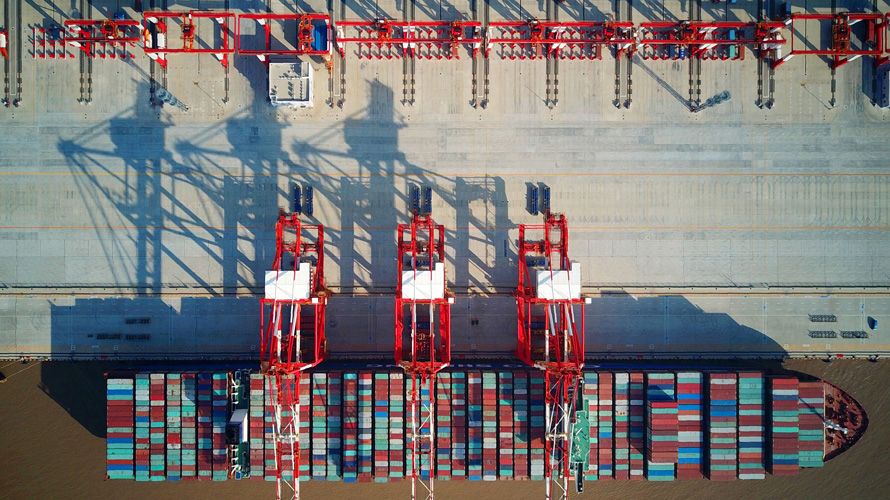
The rapid uptake of the safeguard quotas for European Union imports was likely to drive a rebound in the prices for steel hot-rolled coil in the fourth quarter of the year, industry sources told Fastmarkets on Wednesday July 26.
As of July 25, 88% of the total quarterly allocation of 933,743 tonnes in the “other countries” category, for the period from July 1 until September 30, had been taken up, according to EU customs statistics. The remaining 113,338 tonnes would be available until September 30.
On July 17, the available balance in this category was 316,409 tonnes, so uptake has been quite fast in the past week.
Vietnam, Japan, Taiwan and Egypt were the major HRC suppliers to the EU under the “other countries” category, with Asian suppliers offering the most competitive prices, according to EU market sources.
During May-June 2023, the gap between domestic and import HRC prices was more than €100 ($111) per tonne, which helped to drive demand for overseas coil.
“HRC shipments for August-September arrivals are on their way to the EU, but obviously there will not be enough allocation,” a distributor in Italy said. “Third-quarter quota volumes are almost [fully used], so those tonnages would have to wait to be cleared through customs after October 1. [Consequently] the fourth-quarter ‘other countries’ quota is likely to dry up quickly as well.”
Currently, Asian suppliers are offering end-September or October shipment, which would mean end-November or early-December arrival.
“There will be a [scramble] at EU ports to customs-clear tonnages as of October 1, when the new quota period starts,” a trader in Italy said.
“Starting from October 2023, the risk of not fitting into the quota and paying [the resulting] 25% [in import duty] would be too high,” a second trader in Italy said. “We already see quite low interest in overseas bookings, despite some competitive offers.”
Market sources suggested that a lack of competitive imports at the year-end might support a domestic price rebound for HRC in Europe.
“The full utilization of the ‘other countries’ quotas would eliminate Taiwan, Vietnam and Japan from the market, so the EU buyers would basically be left with Turkey and India as major overseas suppliers in the fourth quarter,” a trading source in Italy said. “And neither supplier tends to give big discounts on HRC. So it is highly likely that the bargaining power of the EU mills will increase in the fourth quarter.”
The other HRC suppliers with individual country quotas to the EU are Turkey, India, South Korea, Serbia and the UK.
Among these, Turkey, India, Serbia and the UK have been using their allocations at quite a slow pace, and the prices offered from those countries were quite close to the EU market levels, industry sources said.
For example, as of July 26, Turkey had only used 12% of its 469,173 tonnes allocation for imports of HRC into the EU.
Turkey must pay anti-dumping duties on HRC imported into Europe – “and they are quite expensive,” a trading source in Germany said.
As of the same date, India had used only 30% of its 297,900 tonnes third-quarter allocation.
“India has quite a strong domestic market, [so it is] not very aggressive in exports,” a trader in the Benelux area said.
An expected shortage of overseas-origin HRC was one reason why European mills were reluctant to cut their offer prices further, despite dull demand, sources said.
“The European mills are being very prudent now,” a source in Spain said. “They are reluctant to give discounts for September-October-delivery HRC because they expect the balance of power in negotiations to shift back to them, when key overseas suppliers are locked-out of the market because of depleted quotas.”
Fastmarkets’ daily steel hot-rolled coil index, domestic, exw Northern Europe, was calculated at €656.25 ($725.58) per tonne on July 26, down by €0.63 per tonne from €656.88 per tonne on July 25.
Market sources have suggested that, starting from September, a rebound in apparent steel demand and the expected lower supply of imports might support a recovery in domestic HRC prices in the EU.
Published by: Julia Bolotova


Digital solution increases performance in the manxa FERROS warehouse
The Manxa Group is the leading steel trader in southeastern Spain and a specialist in steel beams, profiles and sheet metal. By using the “Steelsuite” industry platform from Kaltenbach.Solutions GmbH, the company is now planning a sustainable increase in performance in its central warehouse.
In July, Kaltenbach.Solutions launched a digitalization project at the Spanish Manxa Group near Barcelona. Together, they want to introduce data-based performance management in the central warehouse of manxa FERROS. First, an initial workshop was held with the managers to clarify their expectations and determine the customization needs of the digital solution. Topics such as the scope of the existing machinery, the optimal fit of machine selection, work area and batch size to the order structure, the intralogistics on the store floor and the actual activity profiles of the workers were discussed.
Afterwards, six “BoosterBOXes” were put into operation to measure the performance of the machines and systems. The recorded data is clearly visualized on the digital industry platform “Steelsuite” from Kaltenbach.Solutions. This gives employees access to all relevant information via handheld at any time. Based on the AI-supported analysis, fact-based decisions can be derived in the next step, which should lead to an optimization of processes and workplace-related procedures. In the medium term, the Manxa Group is aiming for a sustainable increase in performance in the warehouse.


Outlook deteriorates for 2023 as uncertainty persists, but stronger recovery expected in 2024
The lingering impact of several downside factors severely affecting apparent steel consumption in 2022 – high energy prices, war-related disruptions, sluggish demand prospects – continues to feed uncertainty and pressure the steel market outlook for 2023, resulting in a deeper-than-expected recession (-3%). This would mark the fourth negative performance in the past five years. A stronger recovery is projected in 2024 (+6.2%), contingent on more favourable conditions in the overall industrial outlook. Despite persisting overall weak demand, imports still maintain historically high demand market shares (22%).
“The European steel industry has been navigating through numerous challenges for a long time now, from the pandemic to the energy crisis and other ongoing disruptive factors. At the same time, the EU is at a critical juncture to achieve its decarbonisation, circularity and strategic autonomy targets, for which steel is a key enabler. Supporting European green steel becomes therefore crucial to drive the uptake of renewables, hydrogen and the cleantech economy in the EU”, said Axel Eggert, Director General of the European Steel Association (EUROFER).
EU steel market overview
In the first quarter of 2023, apparent steel consumption continued a downward trend (-11.7%), with a volume of 34.5 million tonnes. While this represents an improvement compared to the last quarter of 2022 (-19.3%), the latest data still show underperformance compared to 2021-2022. As a result, apparent steel consumption for the whole of 2023 has been further cut (-3% from -1%). However, a more pronounced rebound is expected in 2024 (+6.2% from +5.4%) if positive conditions for steel demand materialise. Improvements in apparent steel consumption are not expected before the third quarter of 2023.
Domestic deliveries followed the same downward path, declining as well (-6.2%) in the first quarter of 2023 for the fourth consecutive time, although at a slower pace than the preceding quarter (-15.1%). In line with demand deterioration, imports also experienced another steep slump (-28%, after the previous -33%). However, the market share of imports out of apparent consumption remained considerably high in historical terms once again (22%).
EU steel-using sectors
Despite persisting challenging conditions, steel-using sectors kept growing also in the first quarter of 2023 (+3.7%) primarily driven by the outperforming automotive, mechanical engineering and transport sectors, which compensated for the subdued output of domestic appliances, tubes and metalware. Construction, so far one of the main components of the steel-using sectors’ resilience, experienced a slowdown for the first time after 2020 and recorded nearly flat growth (+0.1%). The sector is anticipated to enter a recession in 2023 owing to a contraction in the residential construction sub-sector, due to the rise in interest rates impacting demand.
This should result in an overall moderate growth for steel-using sectors in 2023 (+1.3%) compared to 2022 (+3.1). This forecast is more upbeat than the previous estimated (+0.3%). In 2024, growth is projected to slow down again (+0.4%), mainly due to a likely downturn in the automotive sector.

Quota exhaustion could generate demand for EU HRC
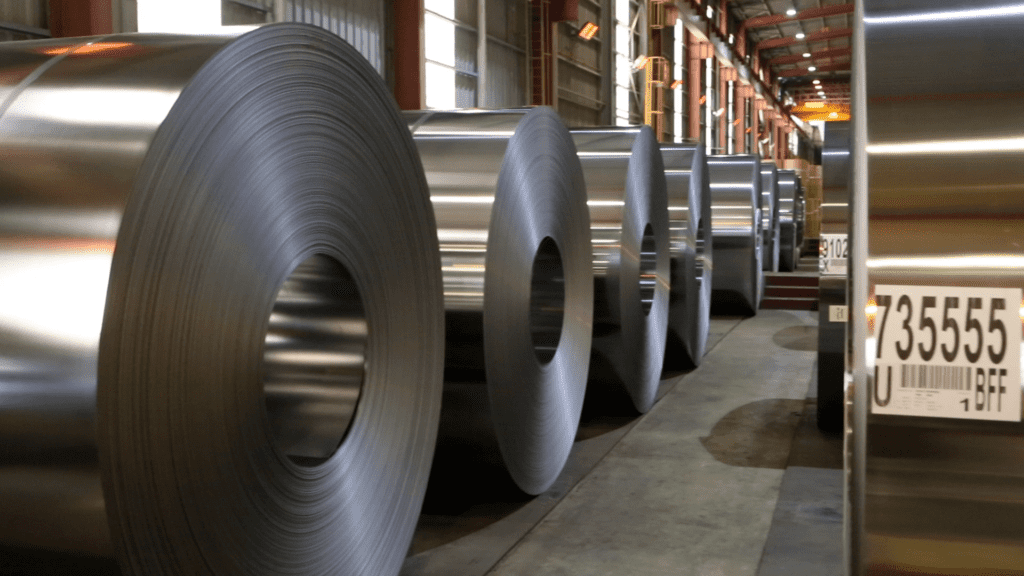
The near critical level of the “other countries” EU import quota for hot-rolled coils (HRC) could generate additional and unexpected demand for EU material, but most EU mills are unlikely to be able to capitalise on this owing to their lead times.
The quota as of 25 July had a 12pc balance, with a further 10pc worth of HRC awaiting allocation, meaning that after that material is fully allocated a mere 2pc will be left over. When the quota has under 10pc balance left, authorities request a bank guarantee from the importer to secure that the 25pc safeguard duty can be paid — this had already probably deterred some buyers from trying to custom clear their tonnages as the quota was drawing down.
Several buyers are reported to still expect vessels to arrive in the EU in August-September, containing HRC, which was to be cleared under the non-country specific allocation. They will now have to wait until 1 October for their material to be in use.
But delays in customs are expected in October, as not only will there be leftover HRC from the current quota to be cleared, on top of the already probable high arrivals for the October-December period, but every importer will have to provide proof of no Russian substrate used in manufacturing. Market participants said that there has been no clarification from EU authorities about what documents will be admissible as evidence.
“Buyers will probably stop buying from imports and, on the other side, in the fourth quarter probably we will have some shortage,” a buyer said. “A part of my material, for example, is coming from Japan or Taiwan so probably we will have to custom clear it on 1 October, but I am not sure that there will be space for everybody, so I expect in September we will have a shortage,” they added.
Some buyers said that, after seeing the rate of imports over the first two weeks of July, they decided to change the destination of vessels to less busy or closer EU ports than the original point of custom clearance to make sure their purchases were cleared. Others said that they have directed more tonnages to EU mills than usual for September, and have increased their contract requirements for that month.
Those buyers that will not be able to use their material now and wait for the October quota, if not willing to run their stocks dry, will be likely to have to purchase more material either from EU mills, or from countries with specific own quota allocations such as Turkey and India.
There are only a handful of EU mills that have September deliveries available — most mills offer for October onwards. That said, several market participants expect that the quota exhaustion for July-September and the expected exhaustion for October-December will incentivise EU producers to attempt to raise prices even if they do not necessarily have the availability.
Not everyone is of the same view — some buyers said that the quotas exhaustion indicates oversupply in the EU market, with over 1mn t imported already in July alone.
“EU mills will try to increase prices owing to material stuck at ports, but what about the million tonnes already cleared? All this material will need to be digested in a bad market scenario,” a market participant said.
“This will not have a huge impact on demand for mills, it might impact on the ability to supply to end-users. Supply will be sufficient, but we will see lower stock levels. The material that was bought in the third quarter will be missing, but the EU mills will not be able to step in due to lead times,” another market participant added.
By Lora Stoyanova
