

Austria’s EHG acquires German stockholder, expands in Bavaria
Austrian steel and metals distribution company EHG Gruppe has acquired Pader Stahl in Paderborn, thus expanding its presence in Germany and especially in North Rhine Westphalia state.
Pader Stahl operates two houses in Paderborn, with some 40 employees, and in 2022 achieved a revenue of €37 million ($41m). It offers various processing services, especially sawing. EHG notes the new company in its group will see a promising synergy with a warehouse it owns in Bad Oyenhausen, which is located nearby.
EHG notes that the takeover is being carried out in two stages, with 50% of the shareholding changing ownership retroactively as of 1 January 2023, and the other 50% following at the end of 2026.
Kallanish has also learned of plans by the Austrian group to build a new site with office buildings and a warehouse in Aichach, Bavaria. It says this investment will massively expand its capacities in southern Germany and prepare the group for future growth that is expected in the region.
The new location will employ a staff of 35; its warehouse will have a size of more than 8,000m2. The groundbreaking took place in July and completion is projected for the end of 2024. The roof of the warehouse will be covered with solar panels to provide some of the electricity feed for the site.
EHG now operates ten sites in Austria, Germany, Switzerland and Romania. With 360 employees, it sends out a daily tonnage of approximately 600 tonnes, and in 2022 achieved revenue of €215m.
Christian Koehl Germany


Sidenor, Basque country to develop renewable energy project
Special steelmaker Sidenor has signed a partnership agreement with Basque agency EVE to develop a renewable energy project, the Spanish northern regional government tells Kallanish.
The sides created a joint venture company Eguzkind, which will build eight photovoltaic solar plants in Lleida, Tarragona and Barcelona. These will have total power of 43 megawatts.
“The construction of these plants, which will involve an investment of €40 million ($43.8m), is already under development and will begin to supply energy to Sidenor in the last quarter of this year,” EVE says. “The operation of the eight photovoltaic solar plants will make it possible to advance in the decarbonisation of Basque industry and guarantee Sidenor’s electricity supply.”
The steelmaker will purchase the energy through a long-term contract. “The Eguzkind project is an important step for us to become an active part in the generation of renewable energy while reducing CO2 emission in our processes and moving towards the production of green steel,” Sidenor explains.
Todor Kirkov Bulgaria

Outokumpu completes longs divestment to Cogne
Outokumpu has completed the divestment of the remaining Long Products business in Degerfors and Storfors to Cogne Acciai Speciali.
The sale was originally announced at the beginning of April (see Kallanish 1 April). It trailed the divestment of the majority of the Long Products business to Marcegaglia at the beginning of the year.
The enterprise value of the latest transaction is €12 million ($13m) and it has a positive cash impact for Outokumpu. The company will book a loss of approximately €30m for the third quarter.
Outokumpu has therefore exited production of long products for good, and is now focused fully on its core business, stainless steel flat products and ferrochrome. The plate operations in Degerfors are not affected by the divestment, Outokumpu notes.
Cogne Acciai Speciali is now part of Taiwan’s Walsin Lihwa, which is investing over €110m in Cogne’s Aosta plant between 2022-2024. The growth strategy involves gaining market share in Europe and Asia, and developing the group’s presence in the US. Cogne intends to boost output by adding shifts and hiring more workers.
Christian Koehl Germany , Natalia Capra France

Steel decarbonisation requires G20 dialogue, cooperation: IRENA
Dialogue and co-operation in the G20 will be critical to ensuring access to the resources required to decarbonise the steel industry on a global scale, says a new report from the International Renewable Energy Agency (IRENA) in collaboration with India’s Ministry of Environment, Forest and Climate Change.
The role of steel recycling will continue to grow over time as more scrap becomes available in emerging economies, resulting in larger shares of recycled steel, in turn progressively reducing the need for primary production. By 2050, about half of the world’s steel production could come from recycled scrap, according to the report seen by Kallanish.
“National governments can make a difference by adopting and enforcing regulations that ensure environmentally sound and thorough steel scrap collection and sorting processes,” the report states. “Adopting such good practices in the recovery of end-of-life steel products is also crucial to minimise scrap’s contamination by other materials, for example, copper, thereby enabling the use of scrap as input for higher-quality steel specifications.”
“Dialogue and co-operation in the G20 can contribute towards removing the barriers to international scrap trade, allowing scrap to be transported and used where it creates the most economic and environmental value,” it adds.
G20 members can also facilitate the exchange of best practices among national policymakers and regulators. This could focus on preventing market distortions that disincentivise investments in energy efficiency projects. Implementing best practices can make the industry more competitive and provide sufficient incentives to invest in improving efficiency in domestic steel industries.
When it comes to hydrogen use, regions with low-cost, abundant and high-quality renewable energy and iron ore resources are in the best position to make hydrogen-based iron ore reduction competitive, the report continues.
This creates an opportunity for international co-operation. Iron ore exporters with competitive captive renewables supply could capture more value by exporting processed iron. Importing countries could reduce the overall costs of decarbonising their domestic industries while retaining steel production within their borders, the report observes.
A transition towards renewables-based steel will require decisive policy support in the early stages of technology adoption. Policy action at the national level can help create the conditions for investment but since steel is an internationally traded commodity, multilateral co-ordination will be vital.
The report recommends G20 members co-operate in several areas to accelerate a transition towards renewables-based steel. These include dialogue towards internationally agreed definitions, standards and certifications for low-carbon steel; initial demand creation through multilateral public procurement commitments; and knowledge exchange on technology research and development. Further areas are professional skills needed for the transition; and technical and financial assistance to developing countries, among others.
Adam Smith Poland

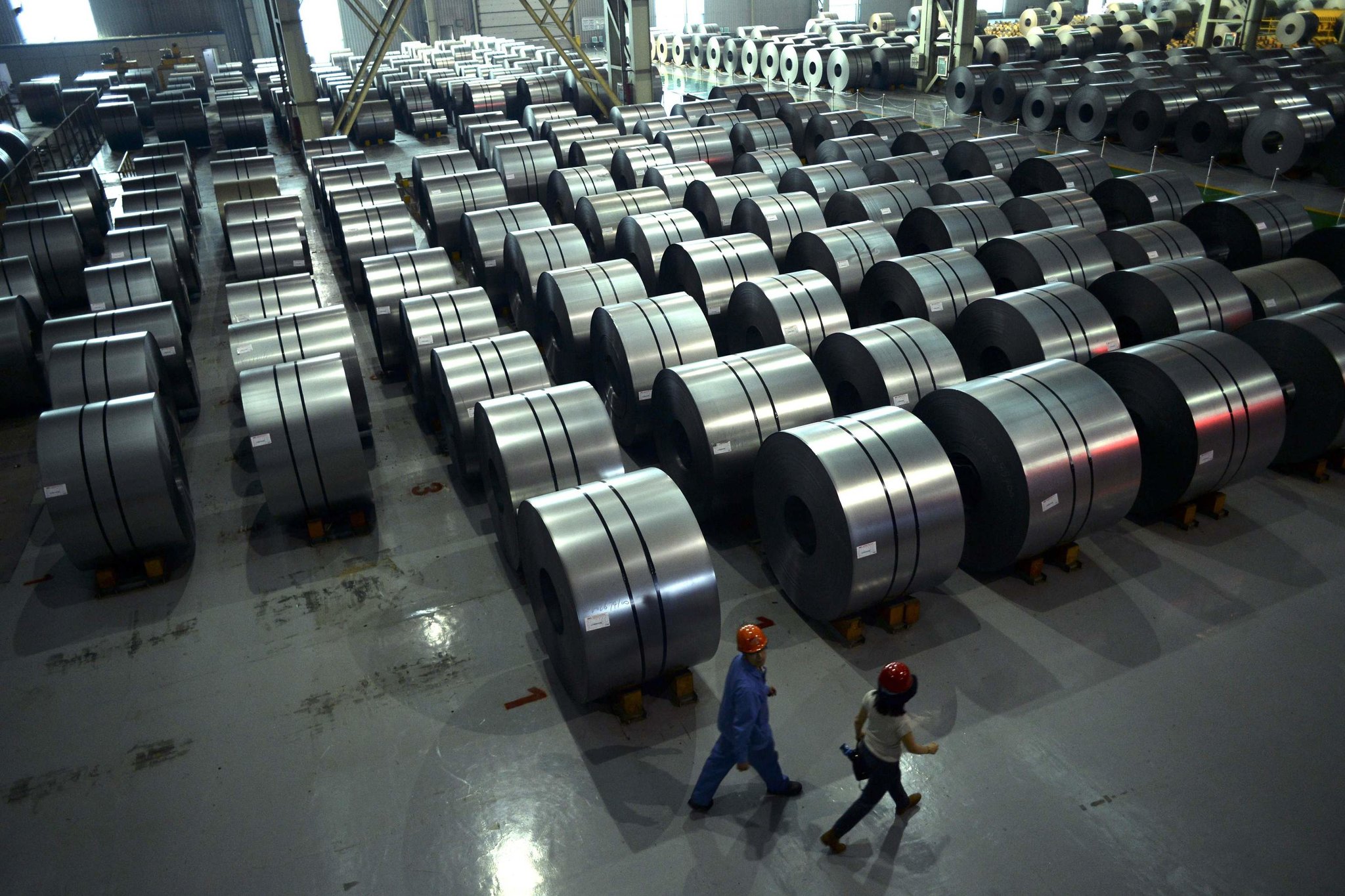
Trading on pause in European HRC market due to seasonality, mills hope to achieve higher prices in September
The seasonal demand slowdown has almost brought trading to a halt in both Northern Europe and Italy.
Fastmarkets’ daily steel HRC index, domestic, exw Northern Europe, was calculated at €650.00 ($715.94) per tonne on August 1, down by €4.92 per tonne from €654.92 per tonne on July 31.
The latest calculation of the Northern European index was down by €6.88 per tonne week on week and by €24.10 per tonne month on month.
As was seen the week before, few suppliers were active in the market.
One German producer was running at reduced rates and therefore had significant delays in order deliveries, with target prices for November-rolling HRC heard at €700 per tonne ex-works – although this was considered unworkable by buyer sources.
In fact, buyers’ estimates of tradeable values were heard at no more than €640-650 per tonne ex-works.
One major integrated producer in the region was heard offering September-delivery HRC at €660 per tonne ex-works.
European mills were optimistic about the post-summer market outlook, expecting apparent steel demand to revive.
“We have not seen any restocking in July, [although] buyers would [normally] come back for volumes,” a mill source said.
Another supportive factor in the European markets was the fast take-up of HRC safeguard quotas in the “other countries” category, which would exclude the most competitive suppliers.
As of July 28, 100% of the total quarterly allocation of 933,743 tonnes in the “other countries” category, for the period from July 1 until September 30, had been taken up, according to EU customs statistics.
Vietnam, Japan, Taiwan and Egypt were the major HRC suppliers to the EU under the “other countries” category, with Asian suppliers offering the most competitive prices, according to EU market sources.
The other HRC suppliers with individual country quotas to the EU are Turkey, India, South Korea, Serbia and the UK.
Among these, Turkey, India, Serbia and the UK have been using their allocations at quite a slow pace, and the prices offered from those countries were quite close to the EU market levels, industry sources said.
Notably, a source in the Benelux area reported an HRC offer from Turkey to Europe at €620-630 per tonne CFR to Antwerp, excluding anti-dumping duty.
At the same time, market sources held little hope of a real consumption rebound in September.
“Construction remains the worst, and automotive the best [performing end-user sectors], but only because the [car industry] is not declining – it remains rather stable,” a distributor in Europe said. “I wouldn’t expect massive price gains [for HRC] in September, but restocking and import issues might allow for a price rise of €15-20 per tonne.”
Fastmarkets calculated its daily steel HRC index, domestic, exw Italy, at €637.50 per tonne on August 1, up by €2.50 per tonne from €635.00 per tonne on July 31.
The Italian index was down by €2.50 per tonne week on week and down by €12.50 per tonne month on month.
Trading in Italy’s market has been described as completely “dead” due to summer closures at key suppliers.
Buyers reported tradeable prices for September-October-delivery HRC at €630-640 per tonne ex-works on August 1, while some producers would hope to achieve €670 per tonne ex-works for such material.
One integrated mill in the country was going to stop one blast furnace for the entire month of August to perform planned maintenance, Fastmarkets heard.
Another integrated producer in Italy has also stopped steelmaking operations for scheduled maintenance and was expected to resume in the week of August 25.
Market sources expected quiet conditions to prevail for most of August due to the summer slowdown.
Import HRC offers were largely flat day-on-day on Tuesday, with no fresh bookings reported.
HRC for shipment in October from Vietnam was said to be available at €580 per tonne CFR to Italy, while one Japanese supplier was offering end-September-shipment HRC at €595-600 per tonne CFR to Italy.
India-origin coil was offered at €600-610 per tonne CFR, but Turkish suppliers were the most expensive, with HRC for September shipment available at €620 per tonne CFR.
Published by: Julia Bolotova
