

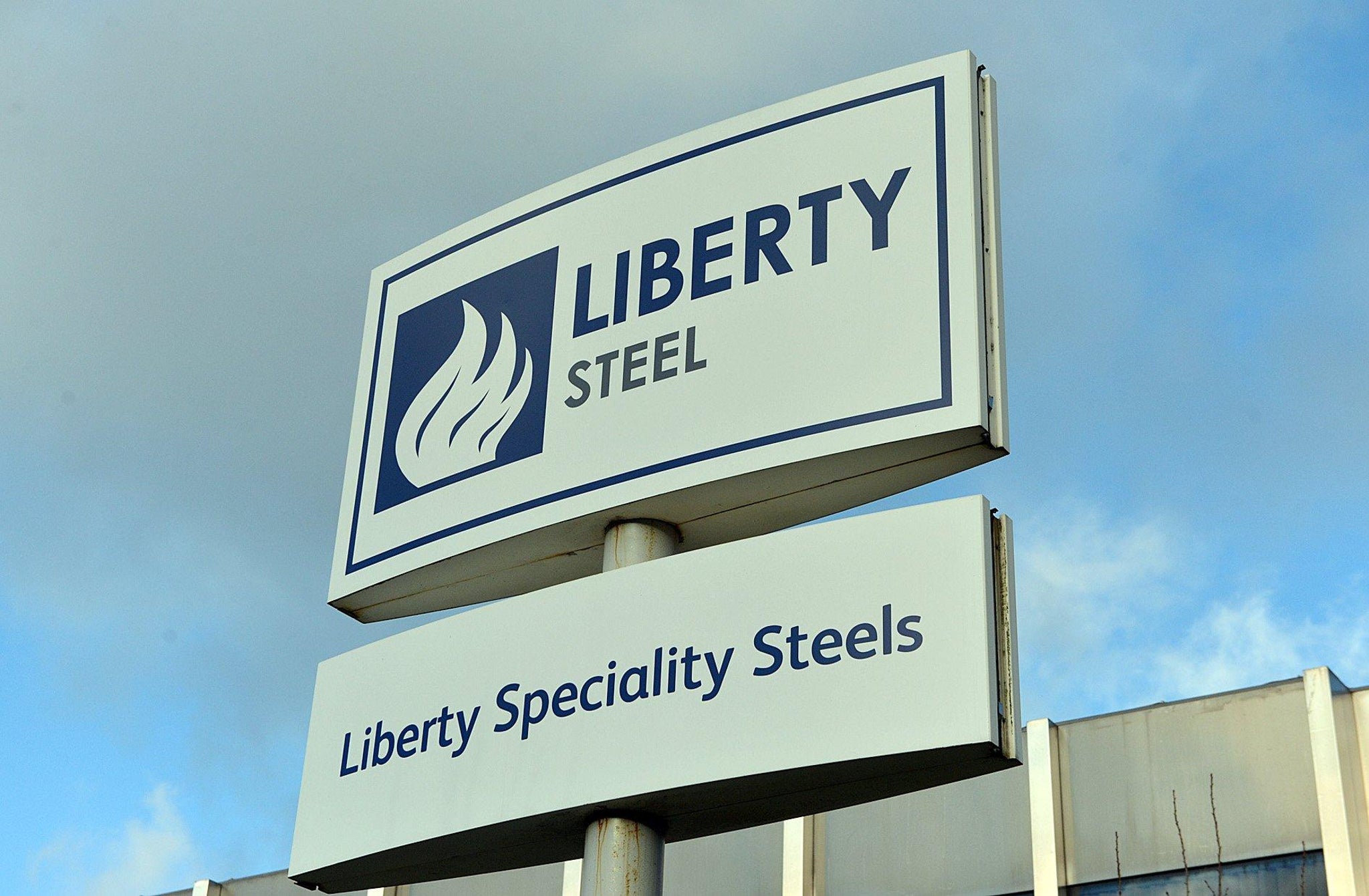
Liberty Steel plans stoppage of last operational blast furnace at Hungarian mill
Liberty Steel is expected to shut down 660,000 mt/year blast furnace No. 2 because of the high cost of steel production and low price of rolled steel, with the procuring of raw materials to provide iron smelting operations another factor, according to the sources. The company, which purchased the mill from the Hungarian government in July but has been efectively managing it since February, will use either its own slabs or buy external slabs to keep the rolling mills running.
A Liberty spokesperson did not respond to inquiries from S&P Global at the time of writing.
However, it is not clear whether rolling at the plant currently produces any significant volumes. In June, the mill suspended major rolling mills because of a lack of steelmaking raw materials that Liberty Steel allocated to it. At the time of its acquisition, Dunaferr was running at 30% of capacity with a restart of the idled mills tentatively scheduled for second half of July, but no update has been provided since then.
The blast furnace downtime is planned to last at least three months, during which Dunaferr will reroll slabs and/or hot rolled coils it receives from Liberty’s other mills in Eastern Europe — Galati in Romania and Ostrava in the Czech Republic. The choice of semi-finished feedstock had narrowed for the mill since Russia’s invasion of Ukraine, said one of the sources, adding that before the war Dunaferr was also purchasing slabs from Russia and Ukraine.
“The problem though if Liberty shuts down the blast furnace [is that] the Dunaferr mill will be missing the gas for its slab reheating and rolling operations. And if the coke ovens are suspended too, then they [will] have to purchase natural gas on the free market and this might be too expensive to sustain competitive production,” said the source.
The Dunaferr plant has two blast furnaces with a total capacity of 1.2 million mt/year.
Author Maria Tanatar, Katya Bouckley
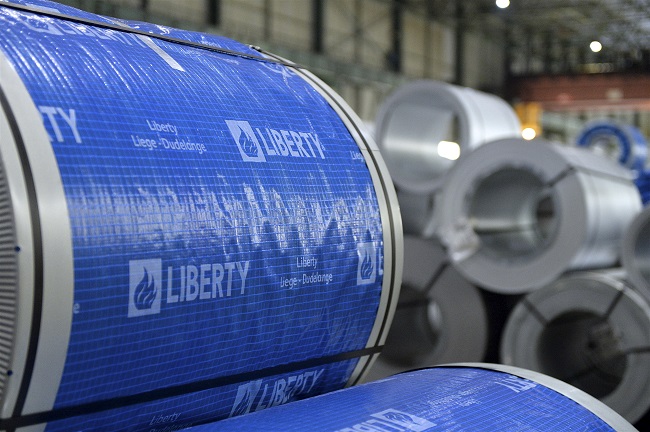
Liberty Steel Galati to boost product quality with MULPIC system for heavy plate mill
Romania’s largest integrated steel plant Liberty Galati has placed an order with Primetals Technologies for a Multi-Purpose Interrupted Cooling (MULPIC) system and a water treatment plant that will allow it to expand the high value-added product range at its heavy plate mill, Primetals said Aug. 8.
The engineering company will design and supply the entire in-line plate cooling system comprising three banks each measuring six meters. The headers and water pipework are made of stainless steel, guaranteeing long equipment lifetime and reduced emissions.
The MULPIC combines the machinery with process control technology and provides an in-line integrated plate cooling system designed to reach the cooling rates and temperature drops required for plates of varying features.
Controlled water distribution with a cooling accuracy of up to 12 degrees Celsius allows for the processing of plates in 8 to 80 mm thicknesses and 1,500 to 4,150 mm widths. This will enable the Galati mill, part of UK-registered Liberty Steel, to expand its range of products and improve their quality.
“The project will be completed next year and will allow us to respond to our customers’ demand for higher value products,” Sandip Biswas, the CEO of Liberty Primary Steel and Mining, said in a statement.
He said the accelerated cooling system is essential for modern plate mills, like the one at Galati, to produce higher strength grades which require higher cooling rates and greater cooling accuracy.
The plates’ excellent temperature and flatness uniformity provided by the accelerated in-line cooling produces higher strength steel grades, which require 25%-50% less alloying elements. This means not only significant savings, but also lower environmental impact associated with the mining and processing of these alloying elements.
Steel coil and plate producer Liberty Galati has a nominal capacity of 3 million mt/year of hot rolled quarto plates.
In mid-2022, Liberty Galati launched a tender to select a supplier of hybrid electric arc furnace technology it needs to develop low carbon steel production.
The company, however, declined to comment on whether that tender has been finalized or suspended when inquired by S&P Global Commodity Insights.
Author Katya Bouckley

Steel technology provider Voestalpine sees economic mood clouded over in several end-user sectors
“[But when] comparing the figures year over year, it is important to remember that we are measuring ourselves against the best quarter [April-June 2022] in the group’s history,” CEO Herbert Eibensteiner said in a statement.
The momentum of the past business year in the energy — oil & gas — sector was unchanged. The solar industry also continued to see strong demand. Voestalpine supplies solar projects worldwide and is supplying steel sections for one such project in Brazil.
Going forward, a certain softening was expected for the conventional energy — oil and gas — sector, but the renewable energy sector was expected to remain robust for the rest of the year as was the railway infrastructure business, which developed strongly in the April-June quarter.
High demand for Voestalpine’s track grades enabled full capacity utilization at the Donawitz site in Austria.
The first quarter of the company’s 2023-24 year (April-March) saw a continued positive trend in the aerospace industry, and demand in the storage technology segment was as strong as ever, according to Voestalpine.
By contrast, there was a noticeable slowdown in demand in the mechanical engineering, consumer goods, and construction sectors.
Central bank measures to fight inflation have hit manufacturing industry, the company said, adding that demand from those segments will remain weak throughout the rest of 2023-24 assuming no short-term policy reversal.
The automotive industry recorded satisfactory demand in the April-June quarter. The supply bottlenecks the industry faced during the previous two years have been dissipating, and it should perform steadily for the rest of the year.
From a regional point of view and from the perspective of the Voestalpine portfolio, the strongest economic slowdown was expected in Europe, while a moderately weaker development is anticipated for North America.
South America should be stable, while the Asian economic area (China) was likely to grow slightly.
Assuming the global economy was not hit by further central bank tightening and no further escalation in the Russia-Ukraine war or geopolitics more broadly, Voestalpine expected to generate Eur1.7 billion-1.9 billion EBITDA ($1.9 billion-$2 billion) in 2023-24.
Capex guidance was unchanged at Eur1.2 billion, which includes expenditure for the construction of electric arc furnaces at Linz and Donawitz sites, both in Austria.
Revenue over April-June was down 4.3% year on year to Eur4.4 billion, while EBITDA fell 43% to Eur505 million.
Voestalpine did not post production figures for the quarter. In 2022-23 and 2021-22, it made 7.20 million mt and 7.84 million mt, respectively, of crude steel.
Author Katya Bouckley

Trading still quiet in European steel HRC market amid seasonal closures
Fastmarkets’ daily steel HRC index domestic, exw Northern Europe, was calculated at €644.58 ($706.85) per tonne on Wednesday, down by €1.25 per tonne from €645.83 the day before.
The Northern Europe index was down by €3.34 per tonne week on week and down by €37.42 per tonne month on month.
Seasonal closures resulted in minimal market activity, Fastmarkets heard.
“Very little is happening, as is typical of this time of year,” a trader source in the region said.
Most buyers’ estimates of a tradable price were reported in the region of €620-650 per tonne ex-works on August 9, but one buyer source reported a higher estimate of €650-680 per tonne.
Fastmarkets’ calculation of the daily steel HRC index, domestic, exw Italy, was €633.68 per tonne on Wednesday, down by €2.57 per tonne from €636.25 per tonne the previous day.
The Italy index was down by €2.15 per tonne week on week on Wednesday, and down by €28.32 per tonne month on month.
The Italian market was similarly inactive because of summer closures.
Buyers’ estimates of workable prices for HRC for delivery in September-October were reported at €630-640 per tonne ex-works on August 9.
No fresh import offers were reported, however, with demand for imports said to be nearly nil.
Published by: India-Inés Levy

Italian plate market quietens on flat prices
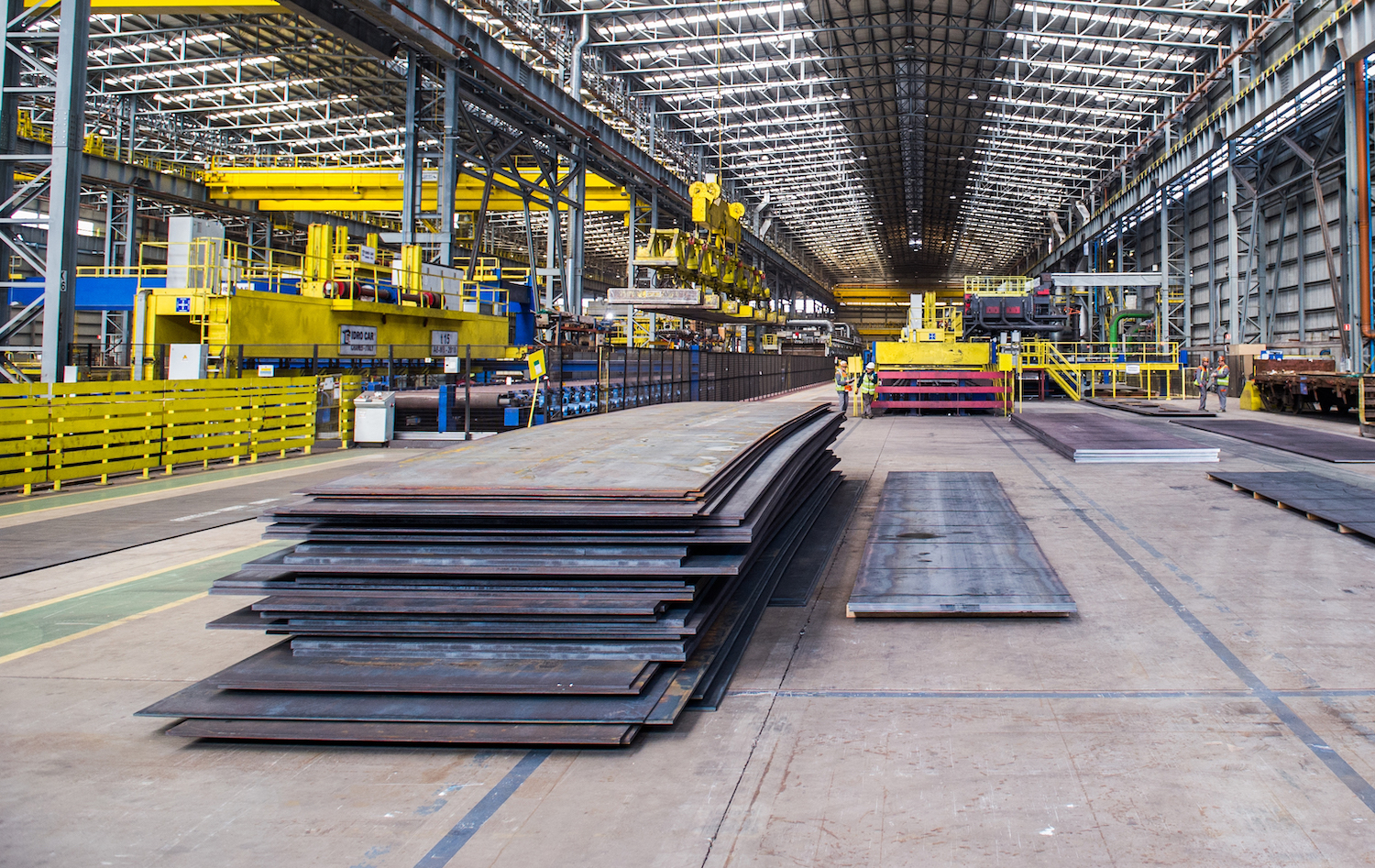
The Italian plate market is going quiet as mills and distributors are idling activity for the August holiday break.
Prices for the S275 and S355 grades ticked up in the first half of July amid restocking for end-August and September delivery. Demand, however, has quietened in the second half of July and beginning of August, in line with the general low activity seen in the European steel sector.
Market sources tell Kallanish that values are now stable, and some deliveries will be slightly delayed because of the imminent mill closures. Stronger demand continues to be reported for S355 grade compared to S275. Some sources are pessimistic for September as they say demand has been “a bit too quiet” in recent weeks and fear that values may edge down next month.
On average, S275 is now hovering at €750-770/tonne ($820-842) ex-works, while €780-790/t is being paid for S355. Lead times from local producers are in the second half of September for material with round edges and in October for trimmed edges. Local producers report very low stocks.
Imported slab in Italy is hovering at $610/t cfr on average.
Natalia Capra France

Italian rebar prices stabilise
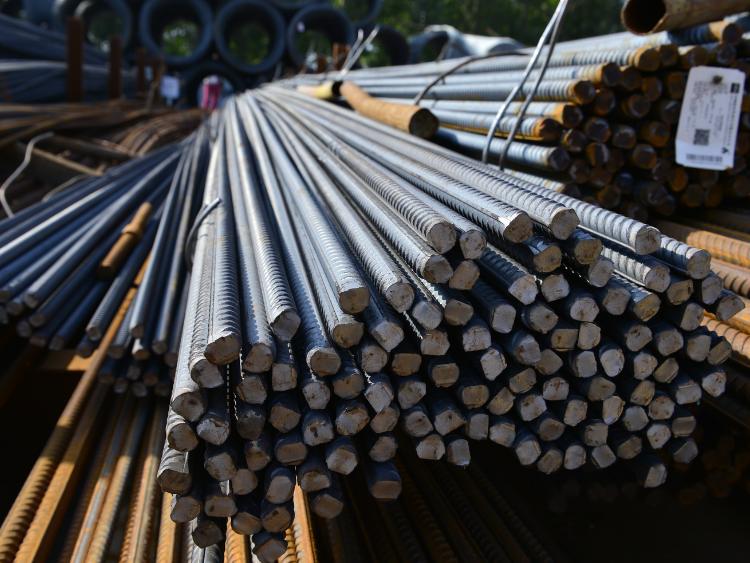
Italian rebar prices are flat on-month, sources tell Kallanish.
Mills reported an average level of orders in July as distributors purchased more material last month to prepare for the market resumption at the end of August. Sellers meanwhile continue to lament low orders.
However, two distributors say they have some work thanks to construction projects, and expect increased activity in the fourth quarter due to the infrastructure projects funded by the national recovery plan – PNRR.
This month, rebar transaction prices remain at €340-360/tonne ($372-393) base ex-works. Mesh is also flat at about €430-450/t, to which buyers have to add transport and around €300/t size extras. Including extras, domestic rebar is hovering at €600-620/t base ex-works. Producers are said to be quoting at between €390-410/t base ex-works.
Natalia Capra France
Voestalpine: automotive developing acceptably, other sectors weaken
Voestalpine’s first fiscal quarter through June turned out to be satisfactory for the group, although it notes that the overall economic mood in some segments has already clouded over noticeably.
“As expected, order intake from the construction, mechanical engineering, and consumer goods industry market segments weakened,” chief executive Herbert Eibensteiner said during the firm’s quarterly earnings call. “The central banks’ measures to fight inflation seem to have reached the manufacturing industry,” he noted, echoing Germany’s mechanical engineering federation VDMA (see Kallanish 9 August). He added that demand from these segments can be expected to remain weak throughout the rest of the 2023/24 business year.
On the other hand, the automotive segment in voestalpine’s customer portfolio is at least performing stably, the company notes. It expects this development to continue for the rest of the business year. The supply bottlenecks faced by the automotive industry for over two years are increasingly dissipating, it states.
Regarding regional developments, voestalpine expects the strongest economic slowdown in Europe, and is more optimistic for the economy in North America.
Compared with the June-2022 quarter, revenue decreased by 4.3% to €4.4 billion ($4.8 billion). The decline in Ebitda was more pronounced, at 42.6% to €505 million. However, “it is important to remember that we are measuring ourselves against the best quarter in the group’s history,” Eibensteiner cautioned.
Christian Koehl Germany
Poland agrees $1.35 billion energy-intensive industries support package
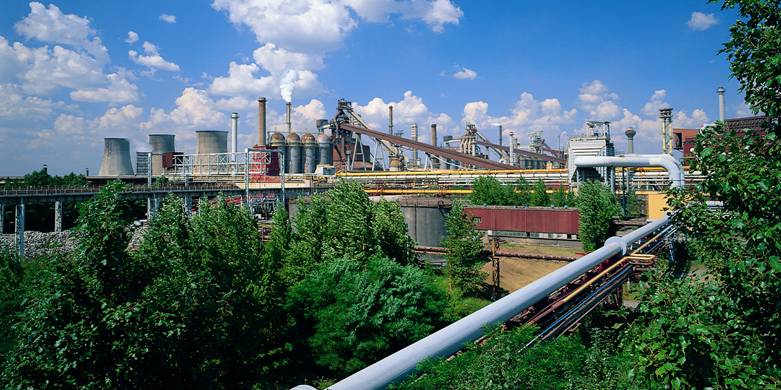
Poland’s cabinet has approved the government’s support package for energy-intensive industries, a key one of which is the steel industry. In 2023-2024 the government plans to allocate PLN 5.5 billion ($1.35 billion) to the programme.
The funds are designed to help firms stay afloat amid higher electricity and natural gas costs. Around 3,000 firms in total are eligible for funding. One stipulation is that electricity and natural gas costs account for at least 3% of the firm’s production value.
“The Polish industry is currently facing challenges related primarily to the energy crisis caused by the actions of Russia and the war in Ukraine. Despite the fact current market prices of energy and gas are falling, many companies are tied to long-term contracts with suppliers, based on much higher prices from the previous year. The related costs pose a threat to the financial liquidity of many enterprises in the industrial sector,” Poland’s Council of Ministers says in a note seen by Kallanish.
Since the outbreak of war in Ukraine, Polish mills have been touting the possibility of investing into captive renewable energy generation to ensure competitively-priced, zero-emission power supply.
Cognor chief executive Przemyslaw Sztuczkowski said last year his firm was yet to feel the impact of the surge in electricity prices as it has energy supply agreed in long-term contracts. However, when these contracts expire, its steel prices will have to go up (see Kallanish passim).
ArcelorMittal Poland (AMP), meanwhile, which will require substantial energy resources to decarbonise its blast furnace-based steel production, signed earlier this year a letter of intent to study the possibility of setting up small modular reactors at its Dabrowa Gornicza steelworks.
Adam Smith Poland

Outokumpu, thyssenkrupp sign first buyer for Circle Green
The new partnership between Outokumpu and thyssenkrupp Materials Processing Europe to market low-emission steel (see Kallanish 26 June) has won its first customer in a German automotive supplier.
Purem by Eberspaecher, a specialist in exhaust technology and acoustic solutions, will use Outokumpu Circle Green supplied by tk Materials. According to Outokumpu, average global CO₂ emissions are 6.1 tonnes of CO₂ per tonne of stainless steel. It claims that its Circle Green is made with CO₂ emissions of up to 0.5t of CO₂ per tonne of stainless steel, which equals a reduction by 92% compared with the industry average.
“We are happy to start the collaboration with Purem by Eberspaecher, offering solutions for both private transport and commercial vehicles, to strive more sustainable mobility in Europe,” Niklas Wass, executive vice president of Outokumpu Stainless Europe, says in a note seen by Kallanish.
The Circle Green material will be supplied to the service centres of tk Materials, which will process the master coil into slit strips, and manage the just-in-time delivery to Purem by Eberspaecher.
The German supplier is part of the larger Eberspaecher Group and works for all automotive manufacturers globally. With 7,100 staff, it makes exhaust and thermal management systems as well as automotive controls. In 2022, it achieved a net revenue of €1.9 billion ($2.1 billion).
Christian Koehl Germany

H2 Green Steel reassures steel buyers by securing Vale, Rio Tinto iron ore pellets
Swedish hydrogen-based steel developer H2 Green Steel has secured scarce volumes of high quality iron ore pellets from Vale and Rio Tinto, providing some reassurance to buyers already making forward purchases of lower carbon emissions flat steel.
The global seaborne direct reduction (DR) pellet market was estimated to account for around 40 million mt in 2022 by Vale, with related pellets delivered mainly to the Persian Gulf and the Americas.
Tightness in global pellet markets had abated by late 2022, and with more US DR pellets supplies planned, the market viewed H2 GS’s prospects in securing iron ore more favorably when the industry gathered at a conference in Stockholm early May.
Rio Tinto will supply IOC pellets from Canada and also offtake H2 GS’s green hot-briquetted iron (HBI) product during the initial steelmaking ramp-up, while Vale will supply DR pellets from Tubarao in Brazil, according to the Swedish developer. H2 GS implied that IOC pellets will take up a larger share of its needs.
Recent accords will enable Rio Tinto and Cargill to each have green HBI for sale to end-users from projects in the Nordics. Cargill agreed an offtake from Blastr’s Finnish DRI and steel project, which is currently deciding between Norway and the UK for a pellet plant.
H2 GS was unable to secure long-term pellet supplies from Sweden’s LKAB, the world’s second largest pellet producer with around 28 million mt/year of capacity. State-owned LKAB operates iron ore mines close to Boden.
LKAB is supplying green pellets to its HYBRIT joint venture DRI pilot plant in Lulea, which plans to develop a commercial green hydrogen DRI plant ahead of H2 GS.
LKAB is ongoing a strategy transformation as demand for DR pellets surges from 2025, becoming a key enabler of European steel decarbonization. LKAB also has plans for developing its own HBI in Sweden to remove emissions from transporting iron oxide pellets, eventually cutting out pelletizing altogether with a move to direct reduction of iron ore resources.
LKAB’s iron ore mining and pelletizing operations are in three sites with exports via Narvik and Lulea, while the company’s commitments to existing buyers such as Salzgitter and Thyssenkrupp was understood to have limited discussions with H2 GS, according to sources familiar.
European mills need more pellets as they transition to DRI from blast furnaces which also use sinter and lump. LKAB also sought to maintain supply contracts to other companies in the Atlantic and Middle East and North Africa market, as well as to SSAB, which is 100% reliant on pellets, and counts LKAB as its biggest shareholder.
Vale expects global DRI/HBI output to rise to 200 million mt by 2030, from around 130 million mt in 2022, with projects incentivized by policies and subsidies in MENA, Europe and North America.
H2 GS has signed up with Midrex for a 2.1 million mt/year DRI plant producing both hot DRI and HBI products. It plans 5 million mt/year of electric arc furnace steel production using ferrous scrap and DRI, in two phases. The company is sticking with initial output from a 2.5 million mt/year EAF starting in 2025. The DRI plant may imply demand for around 3 million mt/year of pellets at full capacity with no maintenance downtime, although there is potential for some lumps to be used instead of 100% pellets.
H2 GS is working with iron ore miner Anglo American on low-carbon steelmaking value chains, including trials of South African Kumba lump ore and Brazilian high-grade iron ore pellet feed, in an earlier joint accord.
Platts, part of S&P Global Commodity Insights, assessed contract 67.5% Fe DR pellet premiums at $59/dry mt for August, with all-in 67.5% Fe DR pellet prices in August assessed at $167.25/dmt FOB Tubarao.
Green hydrogen steel
H2 GS expects that using green hydrogen rather than natural gas will allow for production of low carbon intensity flat steel products with all-in emissions similar or below ferrous scrap-based renewable EAF steel.
H2 GS has been selling forward steel production for well over a year, signing up several end-users and steel processors, as well as trader Cargill Metals, according to company statements.
BMW, Mercedes-Benz, Miele, Scania, Schaeffler, Kloeckner, Electrolux, Marcegaglia, ZF, Steel Processing (Midlands) and Bilstein Group are among buyers agreeing to steel purchases. Pricing is understood to be based on a negotiated low-carbon premium reflecting investment costs to bring on supply, charged over flat steel indices over the related forward period.
Due to upstream mining and processing emissions from iron ore, pellet production and ferrous scrap suppliers and related logistics upstream, along with emissions from ferroalloys and other EAF inputs, H2 GS product’s will still have some associated carbon emissions, while it targets slashing carbon intensity on a Scope 1 and Scope 2 basis to a fraction of coal-based blast furnace produced steels. The company expects to cut emissions from iron ore conversion to metallics by up to 95% by using green hydrogen instead of coal.
In March 2022, ArcelorMittal said its EAF mill in Sestao, Spain, produced hot-rolled coil for Grupo Arania with 532 kg/mt of CO2 of finished steel on a life-cycle Scope 1, 2 and 3 basis, with a high proportion of scrap and 100% renewable power used, setting a new reference for the flat steel business to supply low carbon certified steel. ArcelorMittal said at the time that the 532 kg of CO2 demonstrated was significantly lower than conventional coils produced via the EAF route.
The HYBRIT joint venture has already produced steel with SSAB with trials for various auto and other steel applications. ArcelorMittal has been testing 100% hydrogen DRI at a pilot in Hamburg, while other DRI plants using Midrex and Tenova HYL technology typically run on natural gas which is reformed to be high in hydrogen content. Adapting iron and steel with 100% hydrogen reduction in trials may help overcome concerns around any embrittlement and limitations on steel properties and tolerances.
Thyssenkrupp Nucera will supply alkaline-based electrolysis technology to Boden, providing more than 700 MW of capacity with the DRI module designed to run exclusively with on-site produced green hydrogen.
Author Hector Forster