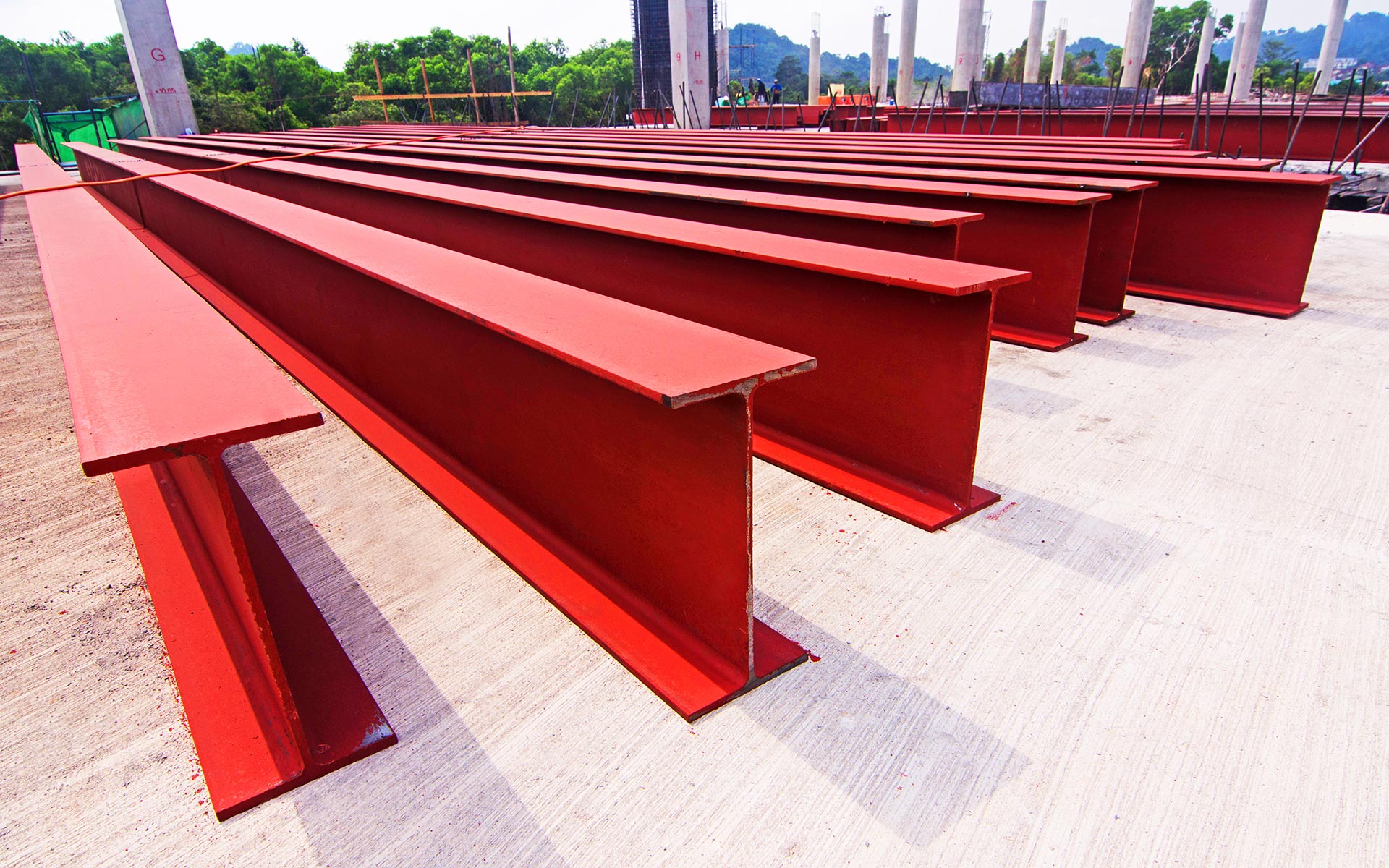
Steel beams prices in Europe flat, scrap feedstock market moves up
“Prices are at the same level as last week, the market is very quiet,” a trader in Northern Europe said.
Fastmarkets’ weekly price assessment for steel beams, domestic, delivered Northern Europe, was €740-780 ($812- 856) per tonne on Wednesday, unchanged since July 19.
Similarly, Fastmarkets’ weekly price assessment for steel beams, domestic, delivered Southern Europe, was €740-780 per tonne on Wednesday, also flat since July 19.
But scrap feedstock prices in Turkey’s bellwether market rose during the pricing period, following fresh deals on Wednesday.
Improving scrap demand in alternative markets, such as India and Pakistan, prompted the increase in prices in Turkey where domestic demand for finished steel products still remains fairly weak.
Fastmarkets’ calculation of its daily index for steel scrap HMS 1&2 (80:20 mix) North Europe origin, cfr Turkey, was $353.34 per tonne on Wednesday, down by $9.61 per tonne from $343.73 per tonne on August 2.


Seasonal closures result in near-zero trading in Southern European long steel market
Fastmarkets’ weekly price assessment for steel reinforcing bar (rebar) domestic, exw Italy, was €660-675 ($724-741) per tonne on Wednesday, unchanged since July 26.
Market participants do not expect prices to change until mills resume trading in September.
“The market is on ‘holiday mode’ across Europe and there are no sales at the moment. As a result, prices remain stable and unchanged from last week,” a producer source in Italy said.
“The market is flat due to summer closures,” a buyer source in the region said.
Prices in the Spanish rebar market also remained stable this past week.
Fastmarkets’ weekly price assessment for steel reinforcing bar (rebar), domestic, delivered, Spain, was €640-650 per tonne on Wednesday, flat since July 12.
Market participants expect to gain greater clarity on price and demand direction when mills reopen in September.
Wire rod
Prices in the Southern European wire rod market were also unchanged this week due to the summer closures, sources told Fastmarkets.
Fastmarkets’ weekly price assessment for steel wire rod (mesh quality), domestic, delivered Southern Europe, was €580–600 per tonne on Wednesday, unchanged since July 26.

Acciai Speciali Terni applies for ResponsibleSteel certification
Acciai Speciali Terni (AST), part of Arvedi, has started the process of obtaining the ResponsibleSteel certification.
“The company has developed an approach aimed not only at complying with the various parameters envisaged by the regulations but also at adopting more restrictive self-regulation criteria than those required by current regulations,” AST says in a note sent to Kallanish.
The ResponsibleSteel certification was created in 2019 and relies on several environmental, social, and governance criteria. In order to be regarded as a ResponsibleSteel producer, a steelmaker has to abide by over 200 criteria, AST explains.
The focus is not only on decarbonisation processes but also on respect for human rights, labour rights, and local communities, as well as a larger spectrum of ESG principles. Last year, the certification body released a new set of revised and more stringent environmental, social, and governance standards to help the industry meet its long-term sustainability goals (see Kallanish 14 September 2022).
At present, audit certification company DNV is verifying Arvedi AST conformity with certain sustainability requirements, such as governance, health and safety, work and human rights, as well as the level of emissions and environmental impact of the plant in Terni. The steelmaker has created a sustainability committee for all decisions regarding environmental impact and circular economy.
The ResponsibleSteel coalition has so far certified 41 steelmaking sites on four continents, representing about 48 million tonnes of production out of the total global production of about 1.8 billion tonnes. According to the coalition, global steel industry CO2 emissions must fall by at least 90% by 2050 to hold global warming at 1.5C.
Natalia Capra France


Deutsche Edelstahlwerke to split into two companies
Deutsche Edelstahlwerke (DEW), the company that encompasses the Germany-based mills of Swiss Steel group, will be split up into two separate companies, executives of the parent group said during a conference call on Thursday.
DEW consists of four mills: in Hagen, Witten, Siegen and Krefeld. It is the biggest unit within the Swiss Steel group. According to a spokesman, the Hagen and Witten mills will be spun off into one company, while Siegen and Krefeld will form the other.
The line of separation will consider differences in the mills’ process routes, which basically all operate electric arc furnaces. The respective organisations will be slimmed, “and not any more distracted by tasks that are common for big entities”, making production more efficient, the spokesman tells Kallanish.
The restructuring also involves a cutback in staff, with at least 350 jobs to be axed across DEW, at mills on either side of the separation. “The critical assessment of the future viability and potential of each of our entities has become more decisive given the current market conditions,” Swiss Steel chief executive Frank Koch said during the call.
The restructuring, furthermore, involves the planned divestment of several entities in Eastern Europe that no longer reflect Swiss Steel’s core business. In February, it announced the sale of companies in Czech Republic, Poland, Slovakia, Hungary, Lithuania, Estonia and Latvia to Jacquet Metals.
Christian Koehl Germany
German car production recovers, but only temporarily
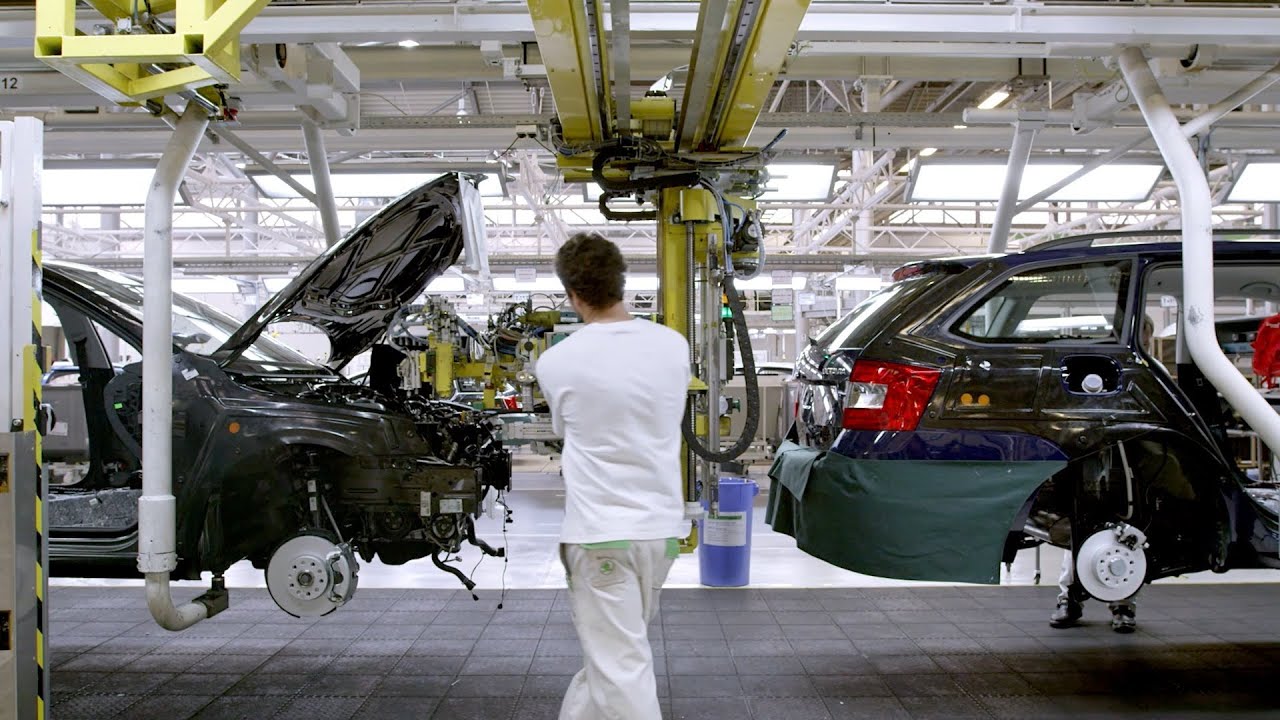
German automotive association VDA has improved its forecast for production of cars in 2023, but does not exclude another downturn going forward.
The association now expects output of 4 million passenger cars from German assembly lines, 15% more than last year. Its previous expectation stood at 3.8 million units. It attributes the improvement to better availability of components along the supply chain. However, it notes the figure is still 14% below the pre-crisis level of 2019, at 4.7m units.
“We may see an upswing in production, but the situation remains tense,” says VDA president Hildegard Müller. She points out that figures from the first half-year are a “rear-view mirror view”, warning that “our expectations for the coming quarters are not positive”. Müller adds: “Order intake has been weakening for some time, and we will feel that once the order backlog has been worked down.”
Meanwhile, steelmakers are offering diverging perspectives on the automotive economy. Thyssenkrupp, for example, has reported “significantly higher order volumes, especially from the automotive industry”. During the presentation of its June-quarter results, chief financial officer Klaus Keysberg emphasised the “upward trend” when asked by Kallanish for the company’s assessment of its automotive industry business.
A similar sentiment was expressed by voestalpine, which stated that the automotive segment in its portfolio is performing “at least stably”. The company is positive that “this development should by and large continue for the rest of the business year”, which means into the first quarter of 2024. At the firm’s latest press conference call, chief executive Herbert Eibensteiner noted the company has shifted volumes to automotive purposes, which were originally meant for other sectors that turned out particularly weak, like mechanical engineering.
A somewhat different impression comes from Swiss Steel, with its special bar quality products. The sales volume of its engineering steels from January to June this year was considerably below the prior half-year, down 20%, on the back of lower sales volumes in the automotive industry, it states.
Christian Koehl Germany

North European HRC prices dip amidst seasonal slowdown and economic concerns
North European hot-rolled coil prices fell over the past week, as some mills cut their prices to move tonnes in a very quiet demand environment.
Activity across the continent is very quiet, amid the holiday season. Parts of north Europe are yet to return, while southern European participants typically take much of August off.
This seasonal quietness is, as usual, sparking fears over the health of demand, both from intermediaries and end buyers. Economic weakness in Germany, which is underperforming the wider Eurozone in terms of manufacturing and construction activity, is further dampening sentiment.
One large producer has taken a scythe to its contractual offers. After securing July-December volumes close to €800/t with northern buyers in recent months, it has started to offer additional volumes closer to €600/t to move surplus tonnages – this is below prevailing spot prices, whereas the initial accords were at a steep premium.

Mills trying to commit more contractual tonnages at such import-busting prices suggests they do not hold a firm outlook for spot prices in the coming quarter, despite the potential restocking that could occur in September – buyers have largely been absence from the spot market since the second quarter, after an earlier restock in the December-March period, so they could replenish to an extent after the holidays. That said, there is a lot of material on the ground after a big increase in imports in May, and call-offs from a number of important end-use sectors have reduced. Northern mills have offered to large Iberian buyers as low as €620/t delivered base, normalising below €600/t on an ex-works basis.
Argus’ daily northwest EU HRC index was €622/t on Wednesday 9 August, down €28/t from 2 August. The Italian market has been much calmer, with holidays in full swing. Argus’ daily Italian HRC index was €631.75/t on 9 August, down €2/t over the same period.