


Steel rebar, wire rod prices largely flat in Poland; post-summer rebound unlikely: sources
Rebar offers from three local producers were broadly stable week on week, in the range of 2,680-2,700 ($652-657) zloty per tonne CPT, which would net back to about 2,650-2,680 zloty per tonne EXW.
One producer in the south of Poland, in the Silesian Voivodeship, was rumored to have stopped rolling operations in a face of slow demand, but it was not widely confirmed by all source before the publication deadline.
Rare transactions were reported within the range of 2,630-2,650 zloty per tonne ex-works during the week. Mills in the region were able to offer rebar from stock with quick shipment, market sources said.
“Demand still weak, only hope is that really some construction projects will start from September, but in general I think rollover [of rebar prices] is the best scenario we can expect,” a trading source said.
In July the Polish government launched a support program for the nation’s “first home buyers,” offering housing loans with a fixed 2% interest rate over 10 years, with the difference to the actual interest rate covered by the state.
That program, available for young people only for their first house or apartment purchase, is supposed to stimulate residential construction, sources said, but only starting 2024.
“As for subsidies for purchase of first apartment, it should revive residential construction area, but I think it will happen 1Q or even 2Q of 2024,” a second trader said.
At the same time, public construction sector in the nation was underperforming due to lack of funding, source said,
Fastmarkets’ weekly price assessment for steel reinforcing bar (rebar), domestic, exw Poland was 2,630-2,650 zloty per tonne on Friday, narrowing upwards by 30 zloty per tonne from 2,600-2,650 zloty per tonne seven days ago.
In the secondary market, rebar prices were reported at 2,720- 2,750 zloty per tonne CPT, largely flat week on week.
Wire rod
The wire rod market in Poland has also been extremely quiet recently due to both seasonality and lackluster end-user demand.
Fastmarkets’ weekly price assessment for steel wire rod (drawing quality), domestic, delivered Poland was 2,750-2,800 zloty per tonne on Friday, unchanged since July 7.
The assessment was based on rare deals reported at 2,750-2,760 zloty per tonne CPT and offers from local mills heard at 2,800-2,900 zloty per tonne CPT.
Import wire rod offers to Poland were also stable over the past seven days. European suppliers were largely out of the market due to summer
holidays.
One Ukrainian supplier was offering mesh-quality wire rod from stock at €610-615 ($663-669) per tonne CPT depending on tonnage, sources said.
Another Ukrainian supplier was offering mesh-quality wire rod at €585 per tonne CPT from stock. At the same time, one source noted that at the border, the same supplier was offering wire rod at around €530 per tonne DAP, which would net back to about €560-565 per tonne CPT.
Published by: Julia Bolotova


European HRC buyers skeptical about post-summer price rebound
Buyers were broadly pessimistic, expecting either a rollover of prices or even a slight decrease, citing slow demand from the end-user side. They also expected an influx of cheap imports into Europe to weigh on the domestic HRC market.
Buyer sources claimed that rapid take-up of the EU import quotas would only limit imports in September and that, from October 1, when the new quota period will start, Europe will be “flooded” with cheaper import alternatives which had been booked in June-July at quite low prices.
“The only thing European mills could do to shift the balance in the market would be to reduce their own output and take a more unified approach to pricing, because we still can see some producers making panic sales at quite low prices,” a trading source said.
Buyers also said that European mills had gaps in their order books and that most of them were still able to offer September-rolling coil.
Currently, buyer sources estimated the tradeable price for HRC in Northern Europe at €630-640 ($685-696) per tonne ex-works for September-rolling material.
And one source reported hearing of a transaction for HRC of Central Europe origin during the week at €665 per tonne delivered for September delivery.
Mills sources were more optimistic, hoping to achieve some uptick in HRC prices in the spot market in September on expected restocking activity and lower availability of imports.
“The level of stock is quite low across the entire supply chain, so buyers will come back for volumes,” a mill source said.
Fastmarkets calculated its daily steel hot-rolled coil index domestic, exw Northern Europe at €636.25 per tonne on Friday, down by just €1.67 per tonne from €637.92 the previous day.
The index was also down by €8.33 per tonne week on week and by €34.58 per tonne month on month.
Fastmarkets’ calculation of its corresponding daily steel hot-rolled coil index domestic, exw Italy was €630.00 per tonne on Friday, down by €2.50 per tonne from €632.50 per tonne on the previous day.
The Italian index was down by €3.68 per tonne week on week, and down by €18.75 per tonne month on month.
The Italian market was seasonally quiet, with trading close to zero.
Buyer sources believed that the achievable price for September-rolling coil was no higher than €620-640 per tonne ex-works, similar to transaction levels seen before the summer maintenance closures.
But producers were expected to push offer prices substantially upward for September-October rolling — to €680-700 per tonne ex-works, several sources told Fastmarkets.
Buyers, however, were skeptical about such massive rises, given the lack of end-user demand.
Offers of November-December delivery HRC from Asian mills were reported at €610-630 per tonne CFR to Antwerp during the week.
Published by: Julia Bolotova

Knauf Interfer sources green steel from tk Hohenlimburg
Knauf Interfer Cold Rolling and thyssenkrupp Hohenlimburg have signed a memorandum of understanding on the purchase of CO2 -reduced steels, Kallanish hears from the companies.
Knauf Interfer Cold Rolling is a cold-rolling unit of the larger Knauf Interfer Group, Germany’s third-largest steel distributor/processor company. As a first step starting this year, tk Hohenlimburg will supply steels with a lower CO2 footprint by using recycled scrap (Bluemint Recycled). From the end of 2026, Knauf Interfer will also purchase steels from the Bluemint Steel product family, which will be produced using the direct reduction process with the aid of green hydrogen.
Thyssenkrupp Hohenlimburg makes hot-rolled special steel strip, so-called Hohenlimburg medium strip, manufactured in widths of up to 720mm and thicknesses of 1.5-16mm. It is used as input for the cold-rolling industry, as well as in direct processing, primarily in the automotive supply industry. Hohenlimburg is a district of Hagen, where most independent cold-rollers are located.
The memorandum comes in addition to an agreement signed in June between the larger groups, Knauf Interfer and thyssenkrupp Steel Europe, for the purchase of CO2-reduced steels. That agreement concerned the group’s units Knauf Interfer Stahl Service Centre, Knauf Interfer Automotive Blanks, and also Knauf Interfer Cold Rolling.
Christian Koehl Germany

Supplier Snop secures low-emission steel from Salzgitter
Automotive supplier Snop has signed a memorandum of understanding with Salzgitter Flachstahl to secure CO2-reduced steel from the SALCOS (Salzgitter Low CO2 Steelmaking) route.
Snop is a long-standing partner of Salzgitter Flachstahl, the strip making unit of Salzgitter Group, and procures mainly surface-coated flat steel products. In addition to locations in Germany, Salzgitter Flachstahl also supplies to Snop production sites in Slovakia, Poland, the Czech Republic and France, Kallanish notes.
In June, Snop signed with ArcelorMittal to experiment with the use of its high-strength, low carbon-emissions “Usibor” steel in structural car parts. While tests are underway, the two firms signed an agreement that also covers the supply and purchase of other XCarb solutions, including XCarb green steel certificates.
In the course of the SALCOS transformation programme, Salzgitter will gradually convert its steel production to hydrogen-based processes. The goal is to achieve virtually CO2-free production as from 2033. This involves replacing the conventional blast furnace route with a production route harnessing direct reduction and electric arc furnaces.
Christian Koehl Germany
Czech automotive output rebounds strongly
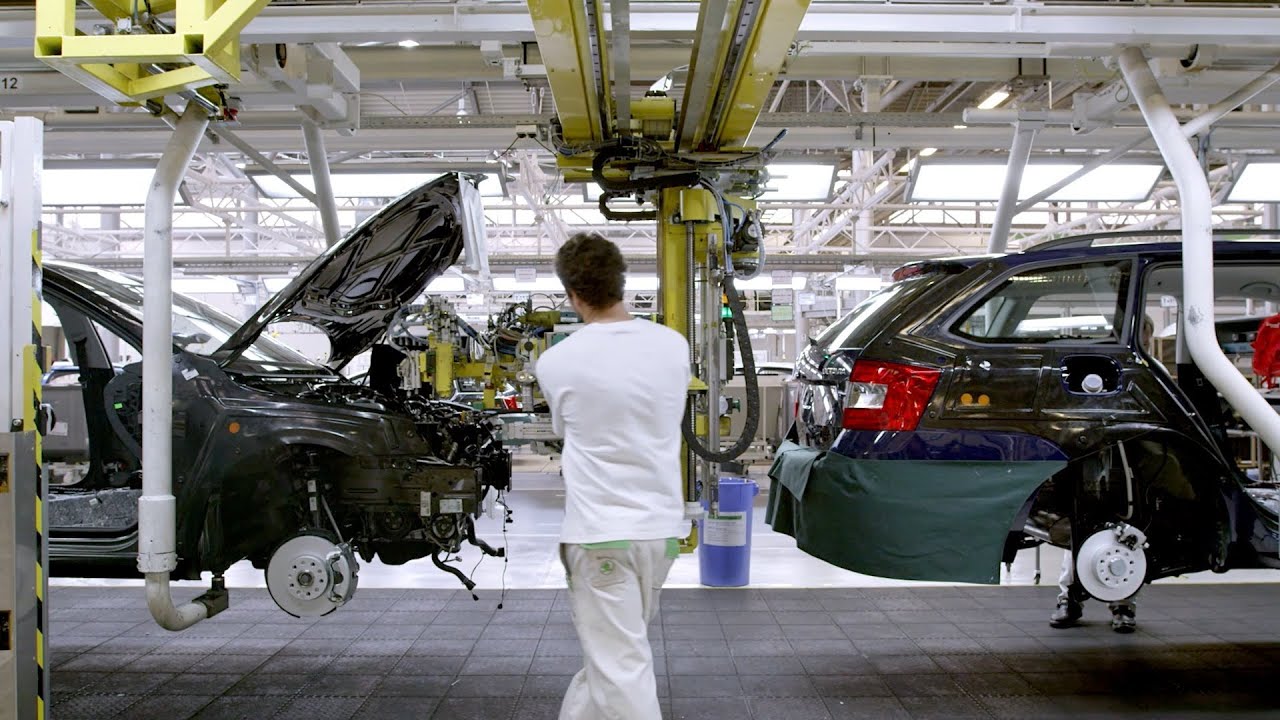
Czech passenger car production grew 14% on-year in June to 142,874 units, taking six-month output up 22% on-year to 738,454 units, according to Czech Automotive Industry Association (AIA) data seen by Kallanish.
Passenger car exports in June rose 6.6% to 125,147 units, while domestic sales surged 24% to almost 10,000 cars.
Largest carmaker Skoda saw first-half output rise 32% to 464,353 cars, while Hyundai’s production grew 6% to 177,100 units and Toyota reported a 9% increase to 97,001 cars.
Production of buses meanwhile fell 4.3% in H1 to 2,511 units, while output of trucks dropped 0.6% to 649 units.
The Czech Republic is Central and Eastern Europe’s largest car manufacturer, sourcing automotive steel from US Steel Kosice (USSK) and ArcelorMittal among other suppliers, and producing most cars for export.
Like in neighbouring Poland, Czech car production has rebounded strongly this year as carmakers look to clear their substantial order backlog following the easing of components shortages. Automotive is one of the few steel end-use sectors forecast to see growth in the EU this year. However, there are fears that production will ultimately decline again as new order intake is weak amid a slowing economic environment.
Adam Smith Poland

Voestalpine starts carbon capture plant at Linz
Voestalpine has started up a carbon capture pilot plant at its steel mill in Linz, Austria, Kallanish learns from supplier Andritz.
It separates carbon dioxide from the flue gases emitted during iron making using an amine-based process designed by Andritz. The captured CO2 is filled into large industrial gas bottles and delivered to an Austrian energy storage company that is investigating new ways of making it available for re-use in steel production, the plant-builder explains.
The plant was ordered by the K1-MET metallurgical competence centre. This is a research body working with national and international partners like voestalpine to address issues such as energy efficiency, circular economy, and climate-neutral metal production.
The plant was built in addition to voestalpine’s other ventures aimed at reducing emissions by using direct reduced iron and hydrogen. However, “the availability of renewable energy and green hydrogen will not be sufficient to meet medium-term climate targets. Carbon capture will play a key role in significantly reducing CO2 emissions in this transition phase,” says Andritz chief executive Joachim Schönbeck.
Christian Koehl Germany

Cleveland-Cliffs emphasises US Steel bid, USW support
Cleveland-Cliffs is responding to US Steel’s rejection of its $7.3 billion buyout proposal made last week, bringing the private offering into the public’s eye and reiterating that the company has received exclusive support from the United Steel Workers (USW) labour union.
“I believe it necessary to now make our proposal public to help expedite substantive engagement between our two companies,” says Lourenco Goncalves, Cleveland-Cliffs’ chief executive and president.
USW has a collective bargaining agreement with US Steel that allows the union to counter any takeover offer with a competing offer of its own. However, the union has reiterated in a joint announcement with Cleveland-Cliffs that it will not stand in the way of a Cleveland-Cliffs bid. Kallanish notes that the USW has explicitly stated that it will only endorse a proposal made by the Cleveland, Ohio-based flat steel maker.
In its most recent announcement, Cleveland-Cliffs notes that its $7.3 billion represents a 43% premium above US Steel’s current market price, 1% higher than its initial offering, which was 42% above US Steel’s market price near the end of July.
“With this transaction we will create the only American member of the top ten steel companies in the world, joining a select group of just three other companies outside of China – one European, one Japanese and one Korean. We believe that having Cleveland-Cliffs as a world-class, internationally competitive steel company is critical for our country to retain its economic leadership and to regain its manufacturing independence,” Goncalves explains.
Zach Johnson USA