

German steel market expects higher prices in autumn
German steel traders and producers expect steel prices to increase during September, according to a monthly S&P Global Commodity Insights survey, as activity typically picks up after the summer holiday season.
The September index for trader sentiment was 68.75 points, compared to 45 in August, data from S&P Global’s German Steel Sentiment Survey showed.
The index for producer sentiment was at 50 points, up from 41.67 for August, indicating traders and stockholders were more bullish on near-term price trends.
The overall September index for prices was 59.38 points, up from 43.33 for August.
While steelmakers aim for higher prices as buyers return seasonally, mills have this year been faced by low demand, particularly from the automotive and construction industries, amid an uncertain outlook at a time of high ferrous scrap and energy costs, sources said.
“The mills officially offer higher prices,” one flat steel trader said. “But service centers affiliated with the steelmakers have been simultaneously offering coil with a significant discount.”
A European mill source said: “There are no signals that the prices would recover, no big changes in raw material and other costs and demand.”
Platts assessed hot-rolled coil down Eur10/mt ($11/mt) day on day at Eur655/mt ex-works Ruhr on Sept. 6, according to S&P Global data.
The Platts assessment of Northwest Europe rebar Sept. 6 was up Eur15/mt week on week to Eur580/mt ex-works. On the other hand, Platts assessed European medium sections (category 1, S235 JR) down Eur20/mt week on week to Eur790/mt delivered.
The overall index for German inventory sentiment increased to 45.63 points from 36.67 in August, reflecting market expectations of a recovery in inventories.
The index for steel producers was 35 points, compared with 33.33 points in August. The index for trader sentiment stood at 56.25 points, up from 40 for August.
Although distributors were expected to restock in September, the demand recovery is unlikely to be sustainable, sources said.
Production levels
Sources expected mills to increase production during September, but to remain at relatively low levels.
One long steel distributor source said mills were aiming to increase prices for long steel products in the wake of strong scrap and higher energy costs. “They will either increase prices or lower production or maybe do both,” he said.
The index for the production outlook was 33.75 points for September, up from 15.83 points for August, while trader sentiment was 37.50 points, compared with 15 points in August. The index for producer sentiment was 30 points, compared with an August index of 16.67.
Author: Rabia Arif
Tata Steel, ABB to team up to explore technologies to reduce carbon footprint
Steelmaker Tata Steel Ltd and technology supplier ABB have signed a Memorandum of Understanding (MoU) to work together to create innovative models and technologies to reduce the carbon footprint of steel production, the company announced Sept. 6.
Tata Steel is among the world’s largest steel companies with a crude steel capacity of 35 million mt/year and is committed to reaching carbon neutrality by 2045 with an interim target to reduce carbon emissions to less than 2 mt of CO2 per mt of crude steel in its Indian operations by 2025.
The two companies will focus on system-level assessments of Tata Steel’s manufacturing plants and production facilities for evaluation and co-development of short and long-term options for energy efficiency, decarbonization and circularity.
“Steel companies know there are opportunities to improve their processes,” said Vipul Gautam, group vice president, global account executive for Tata Group, ABB. “World Economic Forum figures anticipate the energy transition will require as much as 3 billion mt of metals over the medium term,” he said. “ABB is confident in working with our customers and partners to evolve how steelmaking is powered to help reach production and environmental targets,” he added.
Tata Steel expects to increase capacity to 40 million mt/year by 2030, hence this collaboration with ABB. The companies will explore energy optimization via hydrogen as an alternative fuel for upstream processes and energy reduction.
Author: Annalisa Villa

Hy24 joins H2 Green Steel investors in Eur1.5 bil fundraising for Swedish plant
Hydrogen fund Hy24 has invested in the 5 million mt/year H2 Green Steel project in Sweden, co-leading a new private placement of Eur1.5 billion ($1.6 billion) in equity, together with existing investors Altor, GIC and Just Climate, to build the plant which will use renewable hydrogen to replace coal in the steel production process.
The planned 700-MW electrolyzer, powered by renewables, will produce hydrogen for the iron reduction process at the plant in Boden, reducing CO2 emissions by around 95% compared to a typical steel plant, H2 Green Steel said in a statement Sept. 7.
“H2 Green Steel Boden is the most advanced large-scale, green industrial project in the world,” Hy24 CEO Pierre-Etienne Franc said in the statement. “It is a trailblazer in decarbonization of hard-to-abate industrial sectors like steel.”
Construction is underway, and the company is targeting first operations by the end of 2025, reaching output of 5 million mt in 2026, H2 Green Steel said.
The company has already signed offtake agreements for its green steel with customers such as carmaker Mercedes-Benz, automotive industry supplier ZF, truck maker Scania and Cargill Metals.
Platts, part of S&P Global Commodity Insights, assessed Northwest European hot-rolled carbon-accounted coil steel up Eur15/mt on the day at Eur780/mt ($835.54/mt) ex-works Ruhr on Sept. 6, a Eur180-200/mt premium to conventional HRC production.
Thyssenkrupp Nucera will supply the alkaline-based electrolyzers for the project.
Platts assessed the cost of producing renewable hydrogen via alkaline electrolysis in Europe at Eur5.68/kg ($6.08/kg) Sept. 6 (Netherlands, including capex), based on month-ahead power prices, down from a peak of over Eur34/kg in August 2022.
Steel decarbonization potential
Hydrogen deployed in the steel sector has the greatest decarbonization impact, according to analysis from S&P Global.
The EU is targeting 10 million mt/year of domestic hydrogen production by 2030, with a further 10 million mt/year in imports. S&P Global analysts said 10 million mt of green hydrogen deployed in the steel sector could meet 11% of global steel demand, avoiding 340 million mt CO2/year.
Sweden is becoming a leading location for green steel.
On Sept. 5, Prime Minister Ulf Kristersson inaugurated a 20-MW green hydrogen plant at Ovako’s Hofors facility for heating steel before rolling.
The electrolyzer will generate 3,880 cu m/hour of green hydrogen, which will be used for steel heating and powering fuel cell trucks, the company said.
“Sweden is now the hub of the fossil-free revolution in steel making,” Kristersson said. “What Ovako is accomplishing here today is a crucial step. This is green transition in action, not just words.”

Authors: James Burgess, Annalisa Villa

EU HRC prices mostly stable, demand low
Domestic hot-rolled coil prices in Europe were largely stable Sept. 7, while trading activity was dull amid low demand.
Distributors have been focused on reducing stocks, and in some cases competing with the mills, market sources said.
Demand from end-users has been limited as steel consumption from the construction industry was low and outlook for vehicle manufacturing was largely negative.
“It seems that prices will move down despite attempts of the mills to increase offers,” a distributor source said. “Demand is unlikely to improve, and large volumes of cheap import will enter the European market in October.”
Fourth-quarter safeguard quota was expected to fill within the first couple of days of October because significant volumes were awaiting customs clearance at European ports. As a result, buyers preferred waiting until Asian suppliers started offering January delivery.
Platts assessed domestic hot-rolled coil price in Northwest Europe unchanged on the day at Eur655/mt ex-works Ruhr on Sept. 7.
Market participants estimated tradable values in the Eur640-670/mt ex-works Ruhr range.
Platts assessed domestic hot-rolled coil prices in South Europe down Eur5/mt on the day at Eur640/mt ex-works Italy. The assessment was based on tradable values heard in the market.
Author: Maria Tanatar
EU Flat and Long Steel week summary by Argus Media
EU Flat Steel Summary
European hot-rolled coil prices rose over the past week as mills hiked their offers on high costs, but low apparent demand means they will struggle to reach their target levels.
Argus’ daily northwest EU HRC index was €641/t on 6 September, up marginally from €637/t on 30 August. Over the same period the daily Italian HRC index rose from €628/t to €631.50/t.
Most mills have now announced €680-700/t as their target levels, but buyers are deeply sceptical given fiercely competitive sheet markets.
In north Europe the fiscal year end is approaching for some companies, meaning they are focused on liquidating stocks rather than restocking. Concerns over automotive demand are also exacerbating this to an extent – one important automotive supplier in Slovenia has been flooded, causing some supply chain disruption that is likely to intensify.
Some mills are becoming increasingly competitive on hot-dip galvanised and cold-rolled coil, according to German service centres, which, if true, is likely related to slower automotive demand. Automakers and their supply chain have been the main bright spot for coil producing mills in recent months, so any slowdown could weigh on prices.
To try and justify their new asking prices, mills are talking about increasing coking coal and carbon costs, and difficulties clearing HRC under the other countries quota, which is likely to fill very quickly upon resetting on 1 October.
EU Long Steel Summary
Subdued post-holiday demand in Italy and across Europe forced Italian producers to cut prices for long products, amid a downbeat construction sector outlook in response to challenging economic conditions in major markets.
The situation has changed little with the holiday period drawing to close, with demand muted and sentiment negative, a market participant said. The economic situation in Europe — and notably in Germany — is gloomy, they added. High inflation and interest rates have undermined the steel sector, another participant said.
Sale levels for Italian rebar settled at €600-610/t ex-works, with some mils heard willing to discount to around €590/t ex-works in the domestic market. Rebar offers from Italy to nearby countries were few and far between, but spools could be purchased at €575-585/t cfr in the Balkan market, as buyers stated. Bulgarian rebar was quoted at slightly over €600/t delivered locally and €595-600/t delivered in Romania late last week. Romanian material was available well below these levels, although the size range was limited.
Drawing-quality wire rod prices in Italy were steady in a €580-600/t delivered range.
Overseas offers were largely stable, with some negotiations under way, but most customers had sufficient stocks. Algerian rebar and wire rod was quoted at $550-560/t fob, while Egyptian indications were at $570-580/t fob but negotiable. Turkish rebar was available at $570-580/t fob and mesh-quality wire rod at $580-600/t fob depending on the supplier and tonnage. Moldova targeted the Romanian market at around €580/t delivered for wire rod. Asian wire rod offers were at $520/t fob and above, but tighter trade restrictions weighed on demand too.


ArcelorMittal accelerates investment in Mardyck
ArcelorMittal France has ordered a reversible 6-high cold rolling mill for processing high-grade non-oriented silicon steel strip (NGO) for electric motors. The equipment supplied by Austria’s Andritz will be part of the steelmaker’s new electrical steel facility in Mardyck, northern France.
Mardyck will see five new lines started in 2024 for the production of electrical steel for use in manufacturing engines for battery electric vehicles (BEVs) and hybrid vehicles. This involves a €300 million ($321m) investment (see Kallanish passim). The steelmaker is grouping all its electrical steel production at the Mardyck complex and at the plant in Saint Chély.
The new mill will roll up to 1,450mm wide strip to a minimum finished material gauge of 0.2mm, providing high roll force, roll torque, and bending forces at a relatively small work roll diameter, Andritz says.
“Along with the extensive process instrumentation and an exceptionally flexible cooling and strip-drying strategy, ArcelorMittal will receive the perfect solution to meet the challenging quality demands on the end product at a high production level,” the technology supplier says in a note. The equipment will be assembled and tested at its facility in Hemer, Germany.
Natalia Capra France


Blastr launches environmental impact assessment
Blastr Green Steel has seen the launch of the environmental impact assessment (EIA) procedure for its plant in Inkoo, Finland, Kallanish hears from the Norway-based greenfield venture.
The EIA programme is currently on public display for comments until 19 September. Until then, authorities as well as local residents, associations and other interested stakeholders can participate in the procedure by providing formal feedback to the coordinating authority, the Uusimaa Regional Development Centre.
“The preparation of the EIA programme has been a huge task, involving a wide range of experts from different fields. We have discussed the content extensively with various authorities, local organisations and other stakeholders, and taken their feedback into account in it,” says Antti Kaikkonen, managing director of Blastr.
The EIA programme forms the basis for the actual impact assessment, which is due to be completed in spring 2024. “Engineering is going forward, and the pre-feasibility studies are nearing completion. We aim to select next-phase engineering partners and suppliers for the steel plant and the hydrogen facility during the next months,” Kaikkonen continues.
Meanwhile, a spokesman for the company informs Kallanish that the mill will eventually need 7-10 TWh of CO2-free power to produce hydrogen and make ultra-low-carbon steel. Natural gas, or later possibly biogas, is used to add carbon content to steel (1-2%) and for drying in certain process phases, he notes.
Christian Koehl Germany

Celsa’s creditors make plans for takeover
The group of investment funds that could soon take over control of Spanish steelmaker Celsa have started attending meetings with authorities and trade unions to plan the future of the company.
This week they met with USOC, one of the largest trade unions in the area of Barcelona. During the meeting they stressed that a swift takeover was envisaged. They also said the person in charge of this transition will be Rafael Vilaseca, chosen by the funds as future president of the board of Celsa. Vilaseca is an executive with long-standing experience in the gas, energy and steel sector.
The Spanish press has also noted that the Rubiralta family, the current owners of Celsa, is still evaluating possible moves to appeal the latest court decision, but the options are very limited.
The next stage would be for the investment funds to present the request to take over the company to the Spanish government. The move needs to be approved by the authorities following a recent law regarding takeovers of strategic national company assets by foreign entities, Kallanish notes.
Emanuele Norsa Italy
H2 Green Steel raises €1.5 billion in equity
H2 Green Steel has raised €1.5 billion ($1.6 billion) in equity from an investor group led by Altor, GIC, Hy24 and Just Climate. The Swedish venture claims this is the largest private placement in Europe this year.
The private placement is co-led by new investor Hy24, together with existing investors Altor, GIC and Just Climate, Kallanish learns. The transaction involves new investors Andra AP-fonden and Temasek, plus a group of existing investors that include AMF, Cristina Stenbeck, Hitachi Energy, IMAS Foundation, Kinnevik, Schaeffler, Vargas and Wallenberg Investments holding company FAM.
The proceeds will finance the construction and development of H2GS’s greenfield steel plant in Boden, Sweden, where groundworks have been ongoing since summer 2022.
“The calibre of investors that are backing us is impressive. Some of the most professional institutions, investors and industrial companies globally are part of this round … and it proves the market demand for green steel,” says Henrik Henriksson, chief executive of H2GS.
Since launching in 2021, H2GS has raised more than €1.8 billion of equity in three financing rounds. The company closed its series A equity round of €86 million in May 2021 and announced the close of its series B1 round of €260m in October 2022.
Christian Koehl Germany
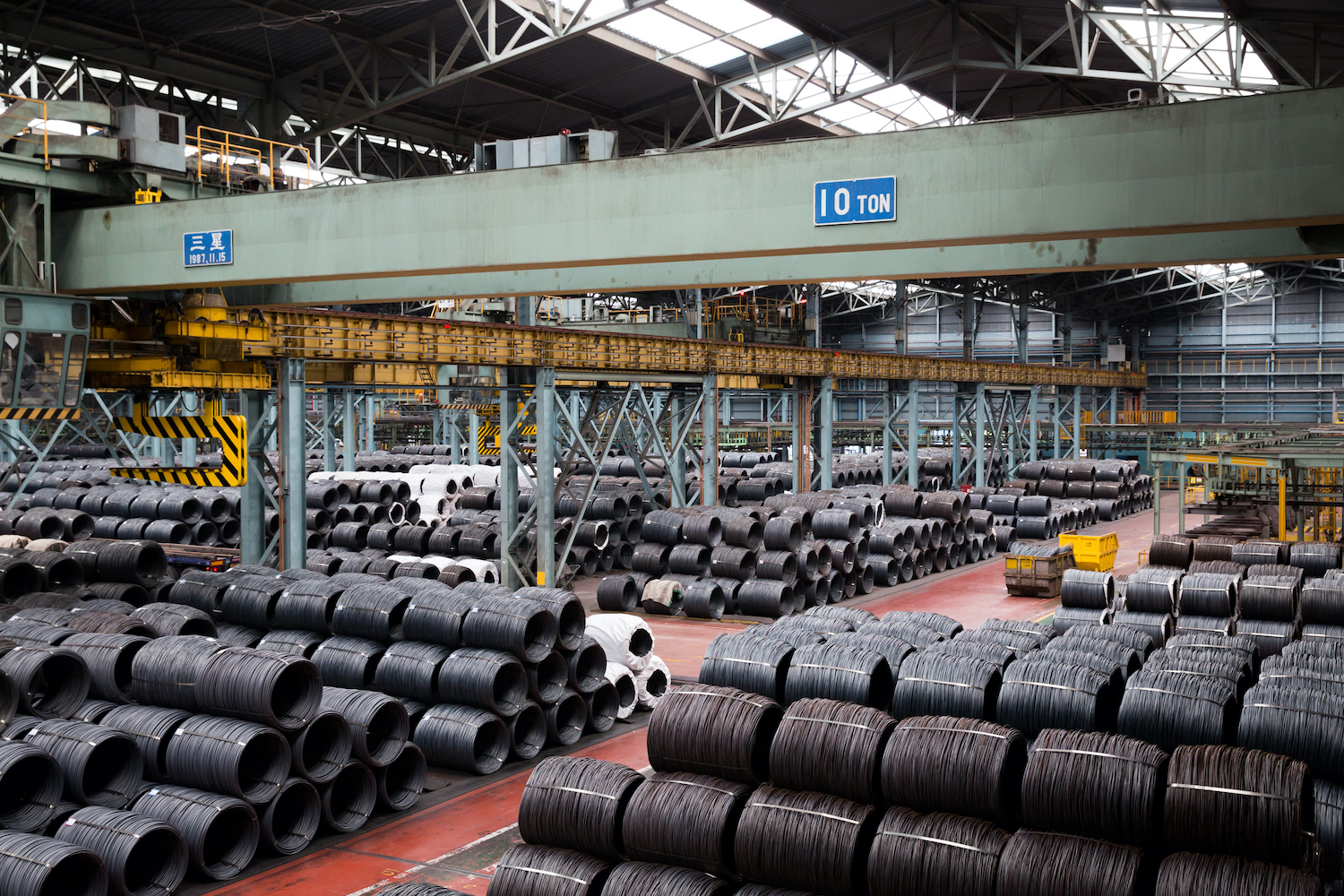
Northern European rod prices increase after quiet summer
Northern European wire rod prices have increased this week after a sluggish market throughout summer, sources say. Most participants eventually expect new hikes amid a rebound in demand and restocking this month.
“Most customers did not purchase new volumes during the summer, because there was no activity in the market, but now there are some signs that the situation is changing,” one trader from the Netherlands tells Kallanish.
Prices have increased between €15-20/tonne ($16-21).
Domestic transaction prices for drawing-quality wire rod are at €600/t ($641/t) ex-works and mesh-grade wire rod is at €620/t, sources say.
Producers are asking for €620/t ex-works, on average, for mesh-quality rod.
“The mills in Europe are trying to ramp up wire rod prices and we will see if there will be some new demand from customers,” another participant in the market notes. “Maybe there will also be some movement due to the traditional autumn restocking in September, after the summer break.”
Offers are heard from outside the EU at €570-580/t cfr Rotterdam, with small tonnages booked, he adds.
At the same time, European scrap values continued to decrease in August amid low demand. This is influencing the wire rod market, another participant notes.
German scrap prices decreased last month amid low demand. Old thick scrap sort 3 was at €300/t, while new scrap sort 2/8 was at €305/t. E40 shredded scrap was at €310/t. In Austria, prices for old thick scrap sort 3 were down to €310/t and new scrap sort 2/8 was at €320/t.
Italian drawing-quality wire rod remained at €560-580/t delivered at the beginning of September.
Svetoslav Abrossimov Bulgaria