


Entry into force of CBAM marks milestone, but effectiveness still to be proven, says EUROFER
The start of the transitional period of the Carbon Border Adjustment Mechanism (CBAM) on 1 October 2023 is a major milestone in the implementation of the EU Green Deal. The initial phase of the CBAM, with simplified monitoring and reporting, will be crucial to assess how watertight its functioning is in preventing carbon leakage in European industrial sectors, such as steel, to other countries that continue to invest in highly CO2-intensive technologies, states the European Steel Association.
“The EU steel industry has been shouldering a CO2 price for several years while steel imports from third countries, which on average have a significantly higher CO2 footprint, have been exempted thus far. We welcome the start of the CBAM test phase and expect that an effective carbon price will be introduced at the EU border in 2026 to level the playing field”, said Axel Eggert, Director General of the European Steel Association (EUROFER).
He continued: “We need to be extremely vigilant to ensure that the investment in the unprecedented number of EU steel decarbonisation projects is successful. This is even more urgent considering the latest OECD figures highlight there is over 600 million tonnes of global steel excess capacity – more than four times the EU’s annual steel production – with projects in the pipeline for several hundred million tonnes of additional steel capacity, based on highly CO2-intensive technologies. In this context, it is of the utmost importance that the meeting between Commission President Ursula von der Leyen and U.S. President Joe Biden on 20 October leads to an effective Global Arrangement on Sustainable Steel, establishing the right trade solutions to reduce excess capacity and decarbonise the global steel industry by 2050”.
The initial phase of the CBAM will test how watertight it is against carbon leakage towards countries that do not have equivalent climate legislation or carbon costs. Notably, default values should be sufficiently high to incentivise operators importing the most polluting products to declare real data and so avoid free-riding. Timely checks and deterring penalties are also required to address circumvention practices in complex sectors like steel. Carbon leakage also needs to be addressed throughout the entire value chain, including the downstream sectors currently not covered by the CBAM, and across global markets with an effective solution to preserve the competitiveness of European exports.
From Sunday 1 October, importers will be required to report on a quarterly basis the emissions embedded in steel, aluminium, cement, fertilizers, hydrogen and electricity imported to the EU. The first reports, covering the last quarter of 2023, are due by the end of January 2024. Payments of the levy on emissions will only commence in 2026.
CBAM monitoring and reporting rules are largely based on those used for the EU Emissions Trading System (ETS), which companies have been complying with since 2005. Nonetheless, to ensure a smooth transition, the European Commission, in its implementing regulation, has provided more flexibility for the first three quarterly reports until mid-2024. Importers can notably use default values or other monitoring and reporting methods applied in their respective countries. Additionally, they can revise and correct their reports until July 2024. In this context, constructive cooperation among all actors in the value chain and timely preparation is paramount for success, including by mapping trade flows, doublechecking the new rules and collecting the required information.


Southeast Europe continues to decrease steel output
Southeast Europe (SEE) crude steel production decreased in August, according to the latest worldsteel data monitored by Kallanish. Regional output amounted to 181,559 tonnes, compared with 246,806t in July.
In the first eight months of the year, regional production decreased to almost 2.08 million tonnes from 3.27mt in January-July 2022.
However, worldsteel did not provide data for August steel production in Bosnia or Moldova.
Serbia was again the largest steel producer among the seven countries of SEE, which also include Bulgaria, Croatia, Slovenia, Bosnia, North Macedonia and Moldova.
Serbia’s production of crude steel totalled 1.02mt in January-August, down by 13.4%. The second-largest steel producer in the region, Slovenia, achieved eight-month production of 367,291t, down by 17.6%.
Third-largest producer Bulgaria saw its crude steel output approximately flat at 361,400t. However, fourth-largest North Macedonia did not produce any volumes last month. In January-August it produced 183,587t compared to 157,374t in the same period last year.
Fifth-largest Croatia saw crude steel production at 147,998t, up 11.4%
Earlier, Special steelmaker Slovenian Steel Group (SIJ) resumed full capacity production at its subsidiaries SIJ Metal Ravne and SIJ Ravne Systems after the devastating floods that hit the country at the beginning of August (see Kallanish passim).
In July, SIJ Group suspended production of stainless steel at its SIJ Acroni unit due to an accident at the hot rolling mill (see Kallanish passim). This was expected to impact production for up to three months.
HBIS Group Serbia Iron & Steel restarted blast furnace No.1 in March at its Smederevo works. The enterprise planned to suspend one BF in summer for maintenance.
The Bulgarian Association of Metallurgical Industries (BAMI) warned earlier this year of increased imports into the EU of rebar and light sections of non-alloy and other alloy steels from Egypt and Algeria.
Svetoslav Abrossimov Bulgaria


Kicherer secures carbon-reduced steel from Beltrame
Kicherer, a distributor of mainly long products based in southern Germany, has partnered with Beltrame to supply carbon-reduced merchant bar of Beltrame’s proprietary Chalibria label.
The deal makes Kicherer the first supplier of CO2-neutral merchant bar, the company says, adding that 20% of its portfolio is now CO2-free. “We expect to source more such steel from other mills,” its managing director Eberhard Frick tells Kallanish. Kicherer is also a major distributor of rebar, with several warehouses and bending shops in the country.
On the occasion of the introduction of the new product, Beltrame chief business development officer Carlo Beltrame visited Kicherer’s headquarters in Ellwangen. Chalibria is used in a number of applications in construction, automotive and renewable energies.
Kicherer emphasises its efforts for sustainable use of resources. Among other things, it operates two solar power plant with an annual capacity of nearly 2 GWh, which covers 70% of the company’s power consumption. It highlights that it was awarded for its efforts last year by Nordwest, one of Germany’s big steel purchasing cooperatives.
Christian Koehl Germany

Supply chain disruptions change end-user procurement strategies: Miele
Disturbances in global supply chains in recent times have led to a change of attitude among players in the chain, according to Konstantin Eckert, director procurement of production materials at Miele.
Speaking at MBI Infosource’s Stahltag in Frankfurt last week, Eckert cited the examples of the semiconductors shortage last year and the blockage of the Suez Canal. Incidents like that have taught players on the receiving end “how expensive it gets when you want to produce, but cannot”, he said at the event attended by Kallanish.
Such experiences have since promoted a new mindset of resilience among players along the value chain, Eckert finds. “We have a high manufacturing depth, and in case of a standstill, our fixed costs would eat us up,” he observed.
White goods maker Miele sources carbon steel as well as stainless steel strip, for which it holds separate annual negotiations at mid-year and year-end. “We have created a formal process for the negotiations, to create confidence and transparency with partners,” Eckert explained.
Regarding stainless steel, the company ensures awareness about its sources, especially for steels produced from nickel pig iron (NPI) and its sometimes problematic mining circumstances. “We keep an eye on producers and origins, as this is a factor in the value of our brand,” he pointed out.
The German company has so far secured supply deals for carbon-reduced steels with Salzgitter, thyssenkrupp and H2 Green Steel.
Christian Koehl Germany
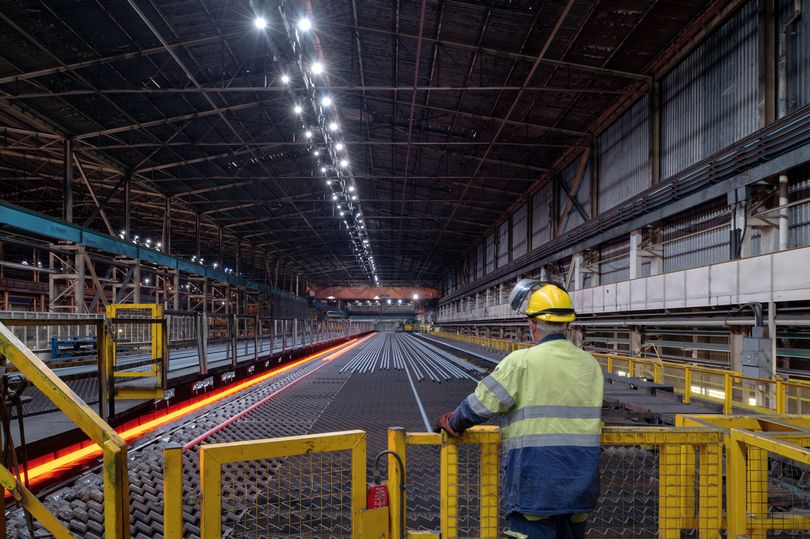
Some European steelmakers seek rebar increases amid costs
Some European steelmakers are pushing up rebar prices by around €60/tonne ($63) on average compared to the beginning of the month, with immediate effect, Kallanish learns from market participants.
Mills are pushing up values in France, Spain and Germany due to the current unsustainable price levels that allow for practically no margin. Steelmakers in Europe are facing high energy and raw material costs, as well as lower consumption of rebar, which is particularly hitting Germany (see separate story). Rebar producers who have not yet implemented increases are also seen following in the coming days. In Spain, some suppliers are said to be pushing up prices but the market is responding sluggishly.
“If raw materials and scrap remain at the current price levels, rebar will have to increase or mills will be forced to stop production,” a source comments. Steelmakers throughout Europe are beginning to produce at a loss and cutting output to balance demand and supply. However, idling plants entails increasing costs that will impact this year’s financial results.
The Spanish rebar market has not shown an improvement in activity this month. Prices remain unchanged after the summer holiday period, while demand remains practically non-existent. In France and Germany, there is similar market stagnation.
French distributors tell Kallanish they welcome the hike move and will support it.
Natalia Capra France

States continue to encourage steel overcapacity: OECD panellists
Trade barriers are leaky, subsidies difficult to counter, and excess steelmaking capacity is growing again, according to a session of the Global Forum on Steel Excess Capacity (GFSEC) held by the OECD this week and moderated by Kallanish.
Panellists at the Paris event also noted there remain incentives to locate steel capacity in the wrong areas and with the wrong technologies, and that new capacity would be difficult to replace.
Subsidies are continuing to distort steelmaking capacity, warned Alan Price, partner at Wiley Rein. There is a risk that subsidies are justified for being “green” and distort markets further. He noted that in China, support for steelmakers often has an environmental angle, even if it results in an expansion of polluting capacity. In order to be justified, subsidies should only be used for pre-commercial technologies such as hydrogen, and not for established technologies such as scrap-EAF or even DRI plants, he argued.
Martin Theuringer, managing director of German steel association WV Stahl, said that both subsidies and trade protection were often misaligned and not enough to carry out the steel industry’s transition to a greener model.
Trade measures such as the Carbon Border Adjustment Mechanism (CBAM) could only make the cost of producing steel through polluting methods equal, and could risk incentivising less green capacity to remain in production.
The German steel industry is meanwhile is pressing ahead with the transition away from traditional blast furnace-basic oxygen furnace steelmaking despite the blow of high energy prices and a lack of sufficient policy support, Theuringer added.
Meanwhile, in Southeast Asia, the steel industry is transitioning to a more carbon-intensive model, warned Yeoh Wee Jin, secretary general of the South East Asian Iron and Steel Institute (Seaisi). The region is seeing surging BF-BoF steelmaking capacity, driven largely by Chinese firms which have been rewarded for closing capacity in mainland China.
This is going to result in both overcapacity and in a surge in carbon emissions from the industry, he noted. The only way to overcome this is for local governments to become stricter in assessing investments, and insisting on new and greener technologies being used.
The efficacy of trade measures in ensuring a level playing field was meanwhile questioned by James Campbell, principal analyst at CRU. “Trade will find a way,” he noted. Whatever barriers are in place, trading companies are very creative in getting around. Sometimes this could be pushing the boundaries of trading norms, but sometimes this could be as simple as redirecting trade from new suppliers.
All panellists agreed that the problem of overcapacity is likely to remain for some time.
Tomas Gutierrez UK

Full books encourage rebar price hikes in Germany
Germany’s rebar mills are trying to bring prices up, following last week’s buying spree, which apparently signals a temporary increase in production, which mills have kept at low levels for a month.
For nearly two months, prices were hovering slightly south of €600/tonne ($633) delivered, a threshold that would easily be surpassed now with a €50/t hike, or possibly more, according to some sources.
The base price for most of July and August was at €320-330/t, which plus the size extra of €265 translates to €585-595/t. Mills had targeted €350/t in July, but had no chance of fetching it. In fact, one larger distributor was able to secure deals at closer to €300/t, its manager suggests.
Last week, numerous customers restocked their shelves, apparently prompted by the mills. “The spree was induced by the announcement of lifting prices by €25. We then bought a larger tonnage for the old base price, €320, but it had to happen within one hour,” a buyer tells Kallanish. “That’s a way to collect volumes.”
And once the order books are full, the next normal step is another price hike announcement, for those who came late, but observers believe there will be little uptake. “Mills lifted prices, and not just by a bit, but a hefty €40 on average,” another manager says.
He sees base prices now at €370-380/t, which would translate to €635-645/t delivered. He believes this will be hard to assert in the foreseeable future, given the dismal state of the construction industry. “The [rebar] benders do not have the demand they once had, and it is the same with any construction material dealer,” he notes.
It will therefore take a while before the next purchasing wave comes, and by then the recent hikes may have all but deflated.
Christian Koehl Germany

European steel hollow sections prices widen upward despite slow trading
Fastmarkets heard deals of small tonnages being purchased, with one trader in Northern Europe saying mills had become more rigid with their higher offers.
The trader added that they believe prices have reached a bottom.
“With the price increase, the mills clearly state the lowest price was reached,” the trader told Fastmarkets.
But other market participants in the region said prices for beams remained level with trading slow and demand weak.
Fastmarkets’ weekly price assessment for steel sections (medium) domestic, delivered Northern Europe, was €750-830 ($790-874) per tonne on Wednesday, widening upward by €30 per tonne from €750-800 per tonne on September 20.
Similarly, Fastmarkets’ weekly price assessment for steel sections (medium) domestic, delivered Southern Europe, was €750-830 per tonne on Wednesday, also widening upward by €30 per tonne week on week from €750-800 per tonne.
Fastmarkets heard that sections prices in Poland and Romania were relatively stable over the past week, with market levels ranging from €705-715 per tonne CPT, on a theoretical weight basis.
Meanwhile, hot-rolled coil feedstock prices fell in the past seven days amid slow trading and weak end-user demand.
Steelmakers in the region have cut back on production, sources said, with HRC traders believing the move could help balance supply and demand in the first quarter of 2024.
Fastmarkets’ daily calculation of its steel hot-rolled coil index domestic, exw Northern Europe, was €625.63 per tonne on Wednesday, down by €9.25 per tonne from €634.88 per tonne on September 20.
Published by: Holly Chant


Germany’s Wagon Automotive signs deal with Salzgitter Flachstahl for low carbon steel supply
Automotive industry supplier Wagon Automotive Nagold signed a memorandum of understanding with German steel producer Salzgitter Flachstahl to use the latter’s CO2-reduced steel to manufacture its complex body shell modules, the companies said Sept. 28.
The two companies did not disclose the volume of the supply agreement, but said that “the bulk of supplies in Germany will go to the Wagon Automotive plant in Nagold and will comprise mainly surface-treated flat steel products.”
“We are delighted to have been able to convince Wagon Automotive Nagold GmbH of the merits of our SALCOS project,” Phillip Meiser, Sales Director of Salzgitter Flachstahl said. “We think that by working together, we all can successfully make the ‘green’ transformation.”
Wagon Automotive is already a partner of Salzgitter Flachstahl. The SALCOS project is a Salzgitter Low CO2 Steelmaking program in which the company will be converting its steel production step by step to hydrogen-based processes with the target to achieve neutral carbon production from 2033. Currently, Salzgitter is already able to supply its customers with CO2-reduced steel made by the so-called Peiner route in which the slabs are produced from scrap using the plant’s electric arc furnace, or EAF.
Platts, part of S&P Global Commodity Insights, assessed Northwest European hot-rolled carbon-accounted coil up Eur5/mt on the day Sept. 27 at Eur830/mt ($873.08/mt) ex-works Ruhr. The assessment was calculated in line with the sum of Platts Daily Carbon-Accounted Steel Premium assessment and Platts Daily Hot-Rolled Coil price assessment in Northwest Europe. Offers for material with CO2 content close to 0/mt under scopes 1-2 were heard at Eur200-300/mt.
Annalisa Villa


Joe Biden and EU leaders to discuss steel tariffs
US President Joe Biden will host European Union leaders Charles Michel and Ursula von der Leyen at the White House on 20 October for the second US-EU summit session since Biden’s administration took office in January 2021. Kallanish understands that steel tariffs are among the agenda items.
Michel serves as president of the European Council, and von der Leyen is president of the European Commission. The Biden administration had previously temporarily suspended Section 232 tariffs and had imposed a tariff-rate quota agreement with EU nations in hopes of establishing a new trade agreement in 2021.
“The leaders will review the strong cooperation between the United States and the European Union, including our shared commitment to support Ukraine as it defends its sovereignty and to impose costs on Russia for its aggression. … They will advance US-EU efforts to accelerate the global clean energy economy based on secure, resilient supply chains, and will continue cooperation in critical and emerging technologies, including digital infrastructure and artificial intelligence,” comments US White House press secretary Karine Jean-Pierre.
In the last US-EU summit held in June 2021, President Biden’s administration and representatives from the European Union agreed to discuss the implementation of Section 232 tariffs regarding steel imports against constituent countries of the EU in order to reduce tensions between the trading partners. The US agreed to end Section 232 tariffs imposed against the United Kingdom in 2022.
Zach Johnson, USA