


Nordwest to build new distribution hub
Nordwest AG, one of Germany’s big steel purchasing cooperatives, is preparing the construction of a new central warehouse in Alsfeld, in the state of Hesse.
Nordwest started preparing the project in 2020, but had to wait for several approvals from local authorities to continue. In late September, it was granted the final approval to be able to set a timetable for the new distribution hub. Construction is set to start in the first quarter of 2024, and delivery should commence as of mid-2025, Kallanish understands.
“It is no secret that we would have liked to execute the planning for our new mega warehouse much sooner,” says Nordwest executive Jörg Simon. “However, it is important to run through all procedures correctly, so that we have planning safety.”
Nordwest will maintain cooperation with logistics provider Rhenus, which is already its partner in the current central warehouse in Giessen.
The new hub will have a storage space of 68,000m², as well as 45 ramps that can dispatch up to 120 trucks per day. Apart from steel, Nordwest also handles general hardware, tools, construction material and sanitary equipment. Of last year’s revenue of €1.29 billion ($1.37 billion), steel accounted for €500 million.
Nordwest is among the groups that recently joined forces to form the pan-European steel distributors’ organisation Astedis.
Christian Koehl Germany


Klöckner supplies CO2-reduced steel to Acciaitubi
Klöckner & Co has signed an agreement for the supply of 500 tonnes of CO2-reduced steel to Italian steel tube producer Acciaitubi, Kallanish hears.
The distribution group’s service centre subsidiary Becker Stahl-Service GmbH has already executed the first partial delivery. According to Klöckner, Acciaitubi is among the first manufacturers in Europe to produce tube from CO2-reduced steel.
Those tubes will be manufactured exclusively for Uxello and ZNB Maastricht, to be used as parts for sprinkler systems for commercial properties across Europe, Klöckner details. The green steel tube supply chain is initially expected to have a total annual volume of up to 3,000 tonnes, it notes.
Under its Nexigen brand, Klöckner Co provides CO2-reduced solutions in the areas of materials, processing, logistics and data services. It claims to provide full transparency about the product carbon footprint (PCF) from resource extraction over production to logistics (cradle-to-gate).
Christian Koehl Germany

EU approves Jacquet acquisition of Swiss Steel subsidiaries
The investigation concluded there are no competition concerns “as the market share increments are modest, the switching costs for customers are low, and customers will continue to have an adequate number of alternative suppliers in all relevant markets,” the Commission says in a document obtained by Kallanish.
In February, Swiss Steel signed an agreement for the sale of several distribution subsidiaries to Jacquet Metals, a distributor of specialty metals. The transaction includes Swiss Steel s.r.o in the Czech Republic, Swiss Steel Baltic OÜ in Estonia, Swiss Steel Magyarorszag Kft in Hungary, Swiss Steel Baltic SIA in Latvia, Swiss Steel Baltic, UAB in Lithuania, Swiss Steel Polska in Poland and Swiss Steel Slovakia, belonging to the Swiss Steel group.
Together, these generated total net revenue of €158 million ($166m) and Ebitda of €12m in 2022, with 267 employees, by selling mostly non-Swiss Steel products.
This is the second significant agreement between Swiss Steel and Jacques Metals, following the sale of distribution entities in Germany, Austria, Belgium and the Netherlands in 2015 (see Kallanish passim).
Natalia Capra France

Sidenor restarts Reinosa rolling mill operations
Spanish special steelmaker Sidenor says it resumed operations on Monday at its Reinosa plant’s rolling mill.
The facility, which produces special steel bar for the automotive sector, remained halted for almost a year after costlier energy in Spain impacted the company’s performance, Kallanish notes.
Production will involve 20-25 employees working in two shifts.
“The restart is possible thanks to the company’s investments in innovation, energy efficiency, decarbonisation, optimisation of resources and improvement of competitiveness,” it comments. “This also follows Sidenor’s forecast for growing market demand in 2024.”
In June, the steelmaker announced it is building a new 30-kilovolt (Kv) electricity supply line for the Reinosa plant. The project, which is valued at €2 million ($2.14m), should be completed in December.
The company is also advancing a project, in collaboration with Basque agency EVE, for the development and use of renewable energy sources. This involves the construction of eight photovoltaic solar plants in Lleida, Tarragona and Barcelona.
Todor Kirkov Bulgaria

Scrap prices unlikely to recover before spring: Assofermet
Considering weak finished products sales, Italian steelmakers exclude a short-term rebound in scrap prices, with a recovery unlikely to happen before next spring, Italian trade association Assofermet says in its market note monitored by Kallanish.
Scrap sales volumes remain low due to reduced demand from mills, but the relative shortage ensures that prices at least remain stable. Margins, however, have deteriorated significantly. “Despite the above scenario, the hope in a possible improvement remains, even if it’s difficult to make any predictions in the short term,” the association says.
Market prices were stable in September. The flow of scrap towards mills was good and regular depending on different production needs. “Unfortunately, despite the expectations of a recovery [in September] after the weakness of previous months, sales of finished products were limited, forcing steel mills to reduce production costs. Today, scrap yards at all steel mill are full, which may lead to lower demand for scrap if the weakness in finished products persists,” the note continues.
Meanwhile, the lack of pig iron availability from some Russian producers continues. “Despite the introduction of the 7% duty on Russian pig iron exports, at the moment there are no repercussions on prices considering the large availability of material at the port of Marghera. Therefore, values remain unchanged amid a downward trend considering the continued low purchases by steel mills,” Assofermet concludes.
Natalia Capra France

China seen remaining major exporter, EU safeguard struggling
China will remain a major steel exporter amid the war in Ukraine and sanctions against Russia, says CRU European flat steel analyst Matthew Watkins.
“At the same time, we saw that a lot of Chinese steel is going to Turkey after the devastating earthquake and also to the rest of the world,” he noted at the EUROMETAL regional meeting Nordics in Copenhagen on Thursday attended by Kallanish. “Chinese exports are very high this year.”
According to him, the exports are being driven by three reasons – how attractive a current destination market is, low domestic demand and how price competitive the steel material is. “Chinese mills’ profitability is much better outside China. Previously, it was not the case so much,” he added.
“After the Covid-19 pandemic, due to the Russian-Ukrainian war, Europe has started to buy much more steel from other Asian counties like Japan, Vietnam, Thailand and others,” Watkins observed. “The European quota system was not set up to deal with that new trend.”
It is not a very lucrative business to make steel in Europe at present, and volumes are low, he said. “And the main reason is not the imports from countries outside Europe, but emissions prices for CO2, which have risen and are influencing the market more and more,” he commented.
According to him, in the near future, China will remain a big exporter, not only to Europe. But its production will probably decline because of lower domestic demand and measures by authorities to reduce steel output amid CO2 emissions. “India’s steel exports will grow, on the other hand, because it has a plan to increase production,” he added.
Svetoslav Abrossimov Bulgaria

EUROMETAL met Nordic distributors in Copenhagen
EUROMETAL organized together with the Danish federation Stålforeningen a EUROMETAL Regional Meeting Nordics.
This event aimed at the Scandinavian steel distribution market brought together 77 participants in Copenhagen.
The 2023 edition was marked by the joint organization with Ståltrends, the annual Stålforeningen event.
Stockholding distributors, Service Centers and Traders were able to participate in 2 days of the conference, one focused on the Danish market and the other on the Nordic and global market.
Topics such as the future of steel, premium and zero-emission variants, their acceptance among customers, the role of digital in distribution and the impact of CBAM on European steel distribution were covered.
The event concluded with a panel discussion where Nordic producers and distributors could share their views on the challenges of Nordic Steel Distribution for 2024 and beyond.
This event gave rise to several articles in the specialized press:
- Green steel, decarbonization drive, CBAM: key takeaways from EUROMETAL’s Nordics meeting
- Changing society, geopolitics redefine European steel
- Customers, producers will pay for green steel: SSAB
- Steel industry weighs the costs as CBAM transition period begins
- China seen remaining major exporter, EU safeguard struggling


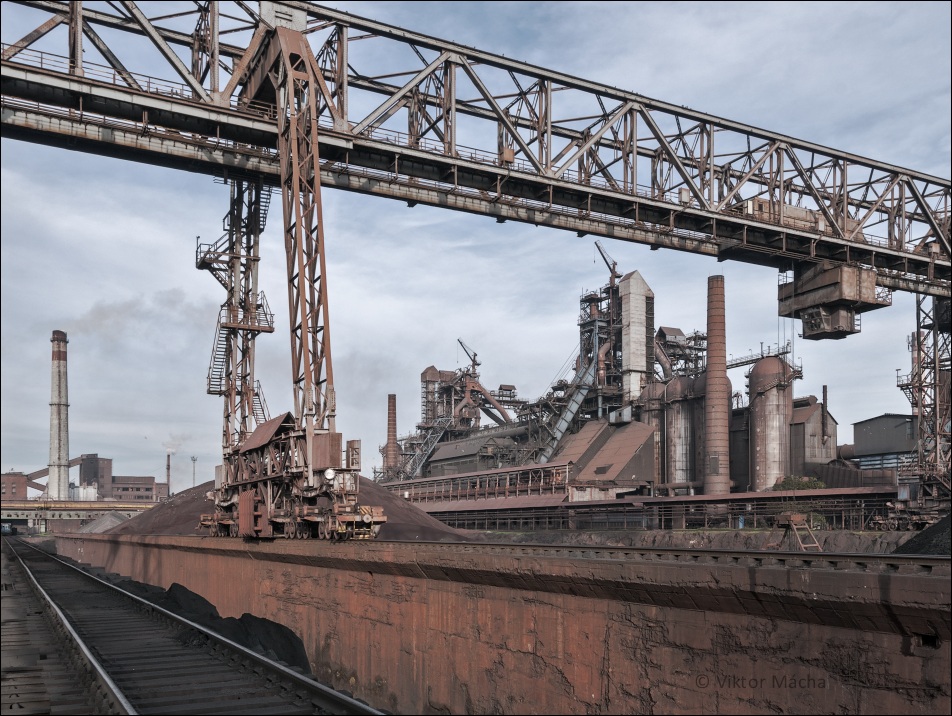
EU approves Liberty Steel buy of Hungary’s Dunaferr steelworks
The EU has approved the sale of Hungary’s Dunaferr iron and steel works to UK-registered Liberty Steel, putting the mill’s rescue on track, the Hungarian Ministry of Economic Development said Oct. 3.
“With the approval, the last obstacle to the successful sale and future of Dunaferr has been removed,” Gergely Fábián, minister of state for industrial policy and technology, said in a statement on the government’s website.
A Liberty Steel spokesperson Oct. 4. separately confirmed the EU gave “regulatory approval” for it to buy the Dunaferr steelworks. “We are now working at pace to complete the transaction as quickly as possible,” the spokesperson told S&P Global Commodity Insights.
The mill is capable of producing 1.2 million mt/year of hot iron and 1.6 million mt/year of crude steel.
The EU approved Liberty Steel’s acquisition of Dunaferr under a “simplified merger control procedure” in which that company submitted a winning Eur55 million bid ($58 million), according to the economic development ministry.
“Dunaferr became insolvent due to the irresponsibility of its previous foreign management and misguided [anti-Russian] sanctions,” Fábián said adding that the operation of the plant became impossible, as a result, endangering jobs of thousands of workers. While Dunaferr “escaped” from last year’s seemingly hopeless situation, there is still a lot to be done to insure its continued operation, and the Ministry of Economic Development will continue to play an active role in the future of the company, a key Hungarian economic player, according to Fábián.
The EU’s approval of the sale of Dunaferr to Libery Steel follows a protest in July from Ukraine’s Metinvest iron ore mining and steel company, which also competed for Dunaferr but was not admitted to the final bidding round, asking EU competition authorities investigate that tender, which, in its opinion, did not meet transparency criteria.
In August, Liberty Steel, Dunaferr’s management and liquidator agreed to stop smelting operations at the mill, taking offline its only operating blast furnace [of the two in total installed there] for at least three months. The weak European market, large volumes of foreign imports, costs in meeting EU carbon emission standards and preparations for a “green” transformation were cited as factors for the pausing steel production at the plant.
In September, Liberty Steel signed a memorandum of understanding with the Hungarian government and Chinese engineering company CISDI to develop a plan to reduce the mill’s scope 1 CO2 emissions by potentially 80%, something that could be achieved by re-equipping the currently met coal-based plant with electric arc furnace technology.
In July 2022, Liberty Steel informed the market of the green transition in the works for its Liberty Galati mill in Romania, the largest in that country and one of the largest in Eastern Europe. The company was then to select a supplier of hybrid electric arc furnace for Galati to produce low-carbon steel, but the tender was never completed. Around the same time, Liberty signed a contract with Italian plant-maker Danieli for the supply of two hybrid EAFs for its other Eastern European steelworks, at Ostrava in the Czech Republic.
“We have made good progress with Ostrava’s GREENSTEEL transformation, with the development of the main energy bridge underway, space freed up for the control center, land acquired for the planned new high speed electricity line and the feasibility study for a new 150-MW solar farm at the plant now complete,” the Liberty Steel spokesperson said.


Northwest EU domestic rebar increase as mills aim higher levels
Northwest European domestic rebar prices jumped week on week Oct. 4 as mills aimed for higher levels.
Platts assessment of Northwest Europe Rebar was up Eur30/mt at Eur605/mt ex-works in the week to Oct. 4.
One distributor source in the Benelux region reported a deal for 250 mt of rebar at Eur625/mt delivered Benelux, however, adding that demand remained weak for long steel products in the domestic market due to slow construction activity.
One European mill source told that German mills were raising rebar offers in the domestic market. “Mills are trying to ask for more but are accepting less [in case of deals], but it is a clear indication that the market trend is changing. We are seeing demand in the market now,” he said.
Another European mill source reported that there was a positive change in the market as customers seemed willing to pay higher prices for long steel products. The sources noted that even though mills had not been successful in achieving transactions levels at announced elevated offers, still transactions were happening at higher levels than earlier. The source indicated a workable level for rebar in the domestic Northwest European market at Eur610-Eur620/mt delivered.
One European trader expected prices around Eur600-Eur610/mt delivered to be workable for rebar deals in the local Northwest European market.
Meanwhile, Platts assessment of European medium sections (category 1, S235 JR) was stable at Eur780/mt delivered on Oct. 4.
Market sources reported workable ranges for beams around Eur745-Eur820/mt delivered, based on location and demand. Some sources reported that customers were only buying as per needed basis and avoiding restocking activity.

Turkish steelmaker Kardemir targeting European Green Deal compliance
Kardemir, Turkey’s largest integrated long steel producer, is to continue its green steel and environmental investments to comply with the European Green Deal.
Highlighting that European and Turkish steel producers have focused on carbon reduction investments in recent years, Kardemir said it has already completed 22 of 34 different environmental investment projects as a part of the third phase of its investment plan.
“We are aiming to complete the remaining 12 other projects gradually in the coming few years in line with our sustainability policy, aiming to comply with the European Green Deal and Carbon Border Adjustment Mechanism,” it said.
The company will also continue its value-added steel investments synchronously to expand its product range, Kardemir said.
“Our new ladle furnace, continuous casting facility and vacuum degassing plant investment will be realized in this regard in the coming year.”
The company is building a 30 MW power plant to reduce its energy costs.
Fluctuations in raw material and energy costs as well as demand conditions have been pressuring Turkish mills’ steel pricing recently.
Energy prices in Turkey increased further with the latest hikes announced last weekend.
Platts assessed Turkish exported rebar at $567.50/mt FOB on Oct. 4, down $2.50/mt day on day, according to S&P Global Commodity Insights data.
Kardemir has 3.5 million mt/year liquid steel capacity and produces billet, rebar, wire rod, sections and angles.