

Global steel demand slips in August
Global apparent steel consumption in August was down 4.5% month-on-month but up 1.3% year-on-year at 146.4 million tonnes, according to a Kallanish analysis. So far this year, Europe and Southeast Asia have been the main drag on growth. While China has stalled, India, Turkey, and the Middle East have seen the strongest growth.
Over January-August this year, global apparent steel consumption fell just 0.4% on-year to 1.206 billion tonnes. Chinese apparent demand dropped 0.4% to 622.8mt.
Europe has been the largest single drag on global growth, with apparent demand in the EU27 falling 11.7% to 91.2mt year-to-date. The UK also saw a 7% decline to 5.1mt.
India was meanwhile by far the biggest growth driver. Over January-August, apparent steel demand was up 16.4% at 86mt.
Turkey and the Middle East meanwhile also both saw significant increases in demand. Turkish apparent steel demand was up 17.8% to 25.7mt over the year to date, Kallanish calculates. Middle Eastern demand meanwhile increased 5.8% to 32.2mt.
Sub-Saharan Africa also saw an 8.6% increase y-o-y to 10.9mt.
In the Americas, North and Central America saw demand inch 0.7% higher to 94.5mt, while South America saw demand fall 4.9% to just under 27mt over January-August.
The Russia-Ukraine war had a larger effect on demand in 2022 than this year, leading to an increase in demand in Russia and Ukraine. Year-to-date apparent demand in Russia was up 22.1% to 39.8mt, while demand in Ukraine jumped 84.6% on the same basis to 2.78mt. At 572,000t, Ukraine’s August demand was the highest since January 2022.

Thyssenkrupp Materials Services offers carbon credits
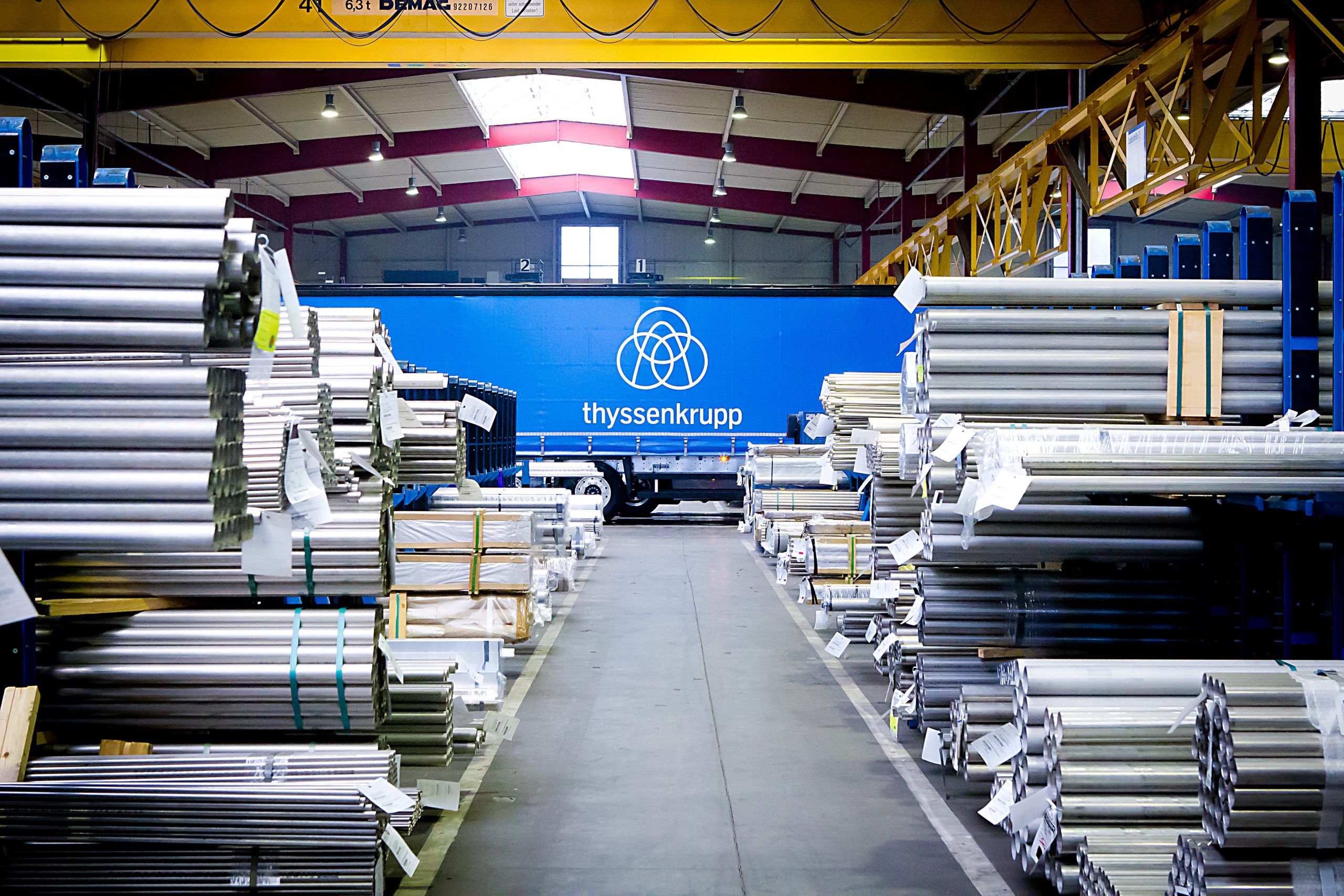
Thyssenkrupp Materials Trading, the trading unit of thyssenkrupp Materials Services, offset its CO2 footprint in the 2021/22 fiscal year with emission reduction certificates, Kallanish hears.
After carrying out its own emission reduction efforts, the remaining 310 tonnes of CO2 emissions will be offset with exclusively high-quality carbon removal credits. Each credit corresponds to 1 tonne of permanently removed atmospheric CO2. Tk Materials Services claims it is the first company in its sector to offer carbon credits.
The measure was preceded by the introduction of the Voluntary Carbon Credits Desk (VCC Desk) in spring 2023. The company’s VCC Desk acts as a central contact point and one-stop shop for emission reduction certificates for the company as well as external customers. The resulting offsetting is relevant for the company’s own carbon footprint as well as for the emissions associated with the customer’s trading products, tk Materials Trading explains.
It notes that it relies on carbon removal credits through innovative technologies. This includes the production of insulating materials from carbon-neutral cellulose fibres from renewable sources and the reduction of CO2 emissions through the recycling of thermal waste. The company adds it is also supporting a large-scale conservation project to restore wetlands, in line with 12 of the United Nations Sustainable Development Goals (SDGs).
Christian Koehl Germany

Voestalpine starts up new special steel plant
On Wednesday, voestalpine celebrated the opening of the state-of-the-art special steel plant in Kapfenberg, Austria, the first of its type to be newly built in Europe in four decades.
According to the company, the plant is the world’s most advanced in terms of digitalisation and sustainability. It says it marks a technological milestone of pioneering high-performance materials for the automotive, energy, and aerospace industries. It meets the most advanced Industry 4.0 standards, with around 8,000 process data which are continuously acquired, implemented, and evaluated in parallel, voestalpine says.
All the melting processes are directed from a central control station, Kallanish understands. The employees are given the necessary training in robotics, sensors, and data analysis at the company’s own digitalisation competence centre. Also, a new campus for 60 apprentices will be built at the site to ensure future apprentice training. Construction work began in summer 2023, and completion is scheduled for fall 2025.
Until the certification process is complete, the plant will operate in test mode, in parallel with the old plant. It will become fully operational during the business year 2023/24, with the capacity to produce 205,000 tonnes/year of special steels for highly sophisticated customer segments.
The groundbreaking ceremony was held in 2018. The investment amounts to around €467 million ($493m). As already reported, the difficult business environment during the Covid-19 pandemic, as well as difficulties in the delivery of key equipment, resulted in an increase of the originally planned investment of €350m.
Christian Koehl Germany

Italian distributors chase volumes, low margins
Italian merchant bar contracts are stable compared to the beginning of October, but the high point of the range is not achieved anymore due to continued weak demand and low purchasing volumes. Sellers and buyers believe this level of activity will endure until the end of the year with some better days towards mid-November when distributors will have to buy for the end of the year. Margins are tight both upstream and downstream owing to high financial, energy and production costs.
Sources in the sector tell Kallanish that the large distributors are suffering squeezed margins because of the lack of volumes, while small companies are seeing their turnover decrease each month.
Merchant bar values are on a downward trajectory, hovering at €300-310/t base ex-works ($316-327). Including size extras, prices are hovering at €720-730/t.
Section prices are also flattening versus the beginning of the month, under pressure from cheaper imported material. Both Spanish and seaborne beams from Turkey arrived at Italian ports at heavily discounted prices. The first category of beams on the domestic market is fetching approximately €800/t ex-works on average but material is often sold below this level due to the aggressive commercial attitude of some large service centres that continue to chase volumes to weather the lower consumption.
Natalia Capra France

EUROMETAL at Norsk Stål’s 200th anniversary celebrations
EUROMETAL participated this Wednesday in the celebrations of Norsk Stål’s 200th anniversary.
The oldest Norwegian steel and metal distributor has brought together its collaborators and partners in Oslo.
During the ceremony animated by Arne Hjeltnes that took place at The National Museum, we could hear Anniken Hauglie, from The Confederation of Norwegian Enterprise (NHO) who addressed the
Framework for Norwegian Industry; Mette Halvorsen Ottoy from Equinor who spoke to us about the Industry outlook and green transition and a presentation by Nils Kristian Knudsen from Handelsbanken on How will the inflation and interest rate outlook affect the future business cycle.
The event also featured the presentation of the work of painter and artist Frank Brunner entitled Unveiling of artwork and a guided tour of The National Museum.
EUROMETAL was represented by President Fernando Espada and its Managing Director Ricardo Silva. They would like to thank Norsk Stảl AS, in the person of its CEO Helge Runer and its owner Leif Hübert, for the invitation and warm welcome during this memorable and significant anniversary in the history of the Norwegian company.



Buyers have mixed outlook for EU HRC prices as demand weak
Some European steelmakers introduced offer increases of Eur5/mt to Eur20/mt in the week started Oct. 16 to prevent further price declines and due to high production costs. The move saw a mixed response from buyers. Some said that demand would remain low, and a price rise would be impossible without additional production cuts. Some others said restocking, the need to cover costs and a lack of competitive imports would drive prices higher.
Demand was a concern due to weak steel consumption from end-users and distributors avoiding restocking because of sufficient stocks.
“Demand remains the biggest issue, prices have been declining despite big production cuts,” a trader said. “Every steelmaker did something to reduce production. And some mills discussing further stoppages. But in the current economic situation demand is unlikely to improve soon.”
Germany’s ArcelorMittal temporarily idled blast furnaces No. 2 and No. 3 at its Bremen site Oct. 1. ArcelorMittal has also shut blast furnace A at its steel plant in Ghent, Belgium, and was planning to close a furnace at its Fos-sur-Mer site in France. Blast furnaces at the Salzgitter plant in Germany and Tata Steel in the Netherlands have also remained idled for maintenance.
“I do not see any possibility to move prices up, as stocks [of distributors] are still high and end-user demand low,” a German service center said. “Mills offer late November-December rolling coil, so they do not have full order books.”
Market participants said while distributor stocks were high, buyers would need to restock for the first quarter.
“It seems that stocks are not as high as buyers claim,” a distributor said. “They need to buy, and they will return to the market soon looking for some volumes. It is clear that coil prices are already at the bottom. The mills stopped giving discounts, so the lowest prices are gone.”
In the first half of October, European mills were offering discounts to fill production lines for the fourth quarter. But in the middle of the month steelmakers shunned low prices and pushed offers higher.
Production cuts have been sufficient to support domestic prices, some market sources said.
A lack of competitive import offers and long lead times for overseas material made buyers to turn to domestic suppliers.
“Mills’ order books are not good, but they are also not tragic,” an Italian market source said. “Mills will no longer accept lower prices; they need to cover costs. And they will see buyers booking domestic coil instead of import.”
Platts assessed domestic HRC prices in Northwest Europe down Eur5/mt on the day at Eur610/mt ex-works Ruhr on Oct. 18.
Tradable values were heard in the Eur610-620/mt ex-works Ruhr range.
A limited number of deals not attainable from all mills were settled at Eur600/mt ex-works Ruhr. Offers were reported in the Eur610-640/mt ex-works NWE range.
Platts assessed domestic HRC prices in South Europe up Eur10/mt on the day at Eur600/mt ex-works Italy on Oct. 18.
Offers were heard at Eur620/mt ex-works Italy and tradable values at Eur600/mt ex-works Italy.
Import HRC offers from Vietnam were heard at Eur580/mt CIF Italy.
Author Maria Tanatar
Platts is part of S&P Global Commodity Insights.


EUROMETAL calls for EU-US deal that addresses excess steel capacity, supports decarbonization
- New EU-US agreement on sustainable steel, aluminum to be announced Oct 20
- Seeking agreement that respects fair trade and free competition
- EUROMETAL called for amendments to the CBAM
European steel distributors association Eurometal has called on the European Commission to ensure free competition and a level playing field ahead of an EU-US summit on Oct. 20 when a new bilateral agreement on sustainable steel and aluminum is expected to be announced.
According to industry stakeholders surveyed by S&P Global Commodity Insights, the EU and the US are expected to announce the Global Arrangement on Sustainable Steel and Aluminum, which will seek to re-establish normal and undistorted trans-Atlantic trade in the metals and contribute to decarbonizing the steel and aluminum sectors.
In a letter addressed to EC executive vice-president Valdis Dombrovskis published on Oct. 18, EUROMETAL president Fernando Espada called for an EU-US agreement that addresses “global excess capacity” while supporting the industry’s plans for decarbonization.
“Europe can become a top producer of low CO2 steel products globally and our industry is now actively working towards this end goal,” he said.
“The Commission should support and facilitate these initiatives whilst of course ensuring that fair trade and free competition is respected.”
Espada also called for amendments to the Carbon Border Adjustment Mechanism, which he claimed had introduced an additional layer of uncertainty into the industry and reduced the competitiveness of European steel producers.
Espada said that not all national entities were able to provide the necessary details required for implementation, adding that it was “extremely challenging” to apply it to all products containing steel components.
“We are already witnessing an increase in imports of closer to consumer products in certain market areas,” he said.
“This is detrimental to our customer base, the processors, and we expect the Commission to provide assistance and prioritize the interests of steel users and industries that consume steel.”
Espada added that “serious improvements” in the design of CBAM were required, particularly with respect to exports and downstream steel products.
Author: Euan Sadden


US, EU metals unions call for global steel, aluminum deal that prioritizes workers
The US-based United Steelworkers union and European metals trade union IndustriAll asked US and EU trade representatives Oct. 18 for a Global Arrangement on Sustainable Steel and Aluminum that ensures workers rights in addition to addressing nonmarket excess capacity and carbon intensity.
In an letter addressed to US trade Representative Katherine Tai and European Commission Executive Vice-President Valdis Dombrovskis, comes ahead of an EU-US summit on Oct. 20 when a new bilateral agreement on sustainable steel and aluminum is expected to be announced.
The US and EU, which have set a deadline of Oct. 31 to reach an agreement, have previously said like-minded economies would be invited to participate in the arrangement.
“Trade unions insist that interested partners should only be able to join the GASSA if they respect international workers’ rights; lowering working standards and conditions to try and remain ‘competitive’ is inexcusable,” the unions said in their letter. “Furthermore, unfair state aid must end, and trade unions insist that aid linked to decarbonization efforts must have social conditionalities and cannot exacerbate global excess capacity.”
The US and EU have the potential to be global leaders in decarbonization efforts in the steel and nonferrous sectors, the unions said.
“However, a successful pathway for the GASSA will require strong and reactive trade defense measures,” they states. “It should encourage global producers to meet or exceed our shared values for a cleaner environment to help fight climate change, as well as respect internationally recognized and democratic labor rights.”
The groups noted a September report by the Organization for Economic Cooperation and Development Steel Committee that found global steel production is projected to reach 2.5 billion mt in 2023, with an increase of 56 million mt this year alone, marking the largest annual expansion in a decade.
“The time of cheap steel and nonferrous metals, produced in unfair market conditions, flooding open markets, must end,” the unions said.