


Metalmorphosis: How decarbonisation is transforming the iron and steel industry
Decarbonisation will support the emergence of new production, processing and trading hubs for low-carbon iron and steel. Driven by rising demand for green steel, the industry’s push for net zero is set to transform the value chain of a commodity essential to the industrialised world.
These new hubs will centre on abundant, low-cost renewable electricity and competitive green hydrogen supply, both key to the production of green direct reduced iron (DRI), used as feedstock in steelmaking. Lack of high-quality iron ore resources seems to be less of an impediment now as seaborne DRI trade from the Middle East and Australia becomes a reality.
We identify three key drivers:
- steel producers moving to phase out highly polluting blast furnaces and replace these with electric arc furnaces (EAFs), powered by renewables;
- growing demand for less carbon-intensive feedstocks; and
- the steel industry’s increased use of high-grade scrap through recycling.
Mature markets with higher carbon prices will move from importing finished steel from more emissions-intensive producers, such as China and India, to importing green DRI to manufacture green steel using EAFs. Carbon policies such as the European Union’s (EU) Carbon Border Adjustment Mechanism (CBAM), designed to punish high-emitting producers, will further rebalance the steel trade.
This does not mean that steel producers in China and India will fall behind. Many are already beginning to invest in EAF capacity to retain their positions, while the greater use of higher-quality scrap through recycling will also benefit most existing producers, as it is sourced from demand centres.
In this month’s Horizons, we consider how the iron and steel industry will decarbonise and what impact its success will have on global supply and trade. As pressure to address its carbon emissions mounts, the metamorphosis of the iron and steel industry is underway.
Overcoming the challenges of decarbonising iron and steel
Accounting for around 8% of global carbon emissions, iron and steel production sits squarely on the list of hard-to-abate sectors.
Despite this, the industry is exploring a range of production-based opportunities to reduce both its carbon intensity and net emissions. Blast-furnace efficiency programmes will help, reducing emissions by up to 15%. But the greater impact will come from replacing coal-powered blast furnaces with EAFs run on renewables. Cleaner feedstocks and the increasing use of scrap must also play a part.
All face challenges: EAFs remain small scale to date, hydrogen-based DRI is unproven and far from commercialisation, and quality issues with scrap continue to limit its use in high-grade steel production. These issues are not insurmountable, however. With the right levels of investment and policy support, decarbonising steel is a realisable goal, bringing with it the potential to transform the industry outlook.
Going electric: EAFs as a segue to steel’s decarbonisation goals
EAFs fed with low-carbon metallics will be the most impactful step towards greener steel, offering a near-term pathway ahead of newer low-carbon technologies that have yet to be commercialised.
EAFs face technical challenges in three key areas ‒ current small furnace size, high energy intensity and quality restrictions ‒ but progress is being made. The right mix of low-carbon feedstocks ‒ such as DRI produced using hydrogen (H-DRI) and low-impurity scrap, along with the rising availability of renewable power ‒ is already fuelling EAF growth. Companies including Nippon Steel have announced plans to develop super-sized EAFs to help address scalability issues.
As a result, the EAF share of global steel production will increase from the current 28% to almost 50% by 2050, according to our base–case scenario, requiring at least 550 million tonnes of new EAF capacity. This will not come cheap. At a typical capital cost of US$200-250 per tonne, the required investment will be as much as US$130 billion. In our net zero 2050 scenario, broadly aligned with the goals of the Paris Agreement, this figure climbs to US$250 billion.
Steelmakers in Europe, Japan, China and the US are the first responders in EAF adoption. But while this will help cement their position as major steel producers, growth in demand for green DRI as a feedstock for EAF will open the door for new steel manufacturing. Future green DRI producers in regions such as the Middle East may seek to go further down the value chain and produce their own green metallics for export.
Figure 1: Green metallics demand growth and production hubs (2050)

Not just any old iron: the rise of green DRI
DRI – and specifically demand for green DRI ‒ will be the primary beneficiary of steel’s decarbonisation journey. In our base case, DRI’s share of total metallics demand will rise from 6% currently to 13% by 2050, with production growing nearly five times faster than total metallics demand, to 320 Mt.
Critically, we expect almost half of all DRI produced by 2050 to be hydrogen-based. As new processing hubs emerge, by 2050, almost 25% of DRI supply will be traded, compared with just 7% now.
Europe, China, Japan and South Korea will be the epicentres of green DRI demand as they move to decarbonise. To achieve this, however, steelmakers in these markets will need to decide whether to make DRI domestically rather than import hot briquette iron from emerging supply hubs. The availability and cost of green hydrogen and renewable power, proximity to raw materials (DR pellets/high-grade iron ore), and carbon policies will dictate the outcome.
Green DRI hubs emerging near clean energy sources
Competitive green hydrogen will be a game changer in steel’s decarbonisation. Future green DRI hubs will be determined by how close they are to low-carbon hydrogen production, particularly given the uncertainties around how traded hydrogen will be transported and stored. The availability of low-carbon, low-cost natural gas will also provide an additional advantage for intermittent blending with green hydrogen until 100% H-DRI becomes widely available.
The Middle East and Australia are well positioned to capitalise on this opportunity and the project pipeline in both regions is growing fast. Some 25 Mt has been announced in the Middle East over the past two years. Australia has also seen large Japanese and South Korean steelmakers planning investments in green DRI/hot briquetted iron for export.
Global steelmakers, energy companies, miners and trading houses are leading the race to produce green DRI by taking advantage of multiple catalysts in both the Middle East and Australia:
- Renewable power and green hydrogen potential: the Middle East and Australia sit in the top echelon for solar irradiance and will see the share of renewables in their power mix exceed 50% and 75%, respectively, by 2050. The availability of land and attractive renewable power costs should support globally competitive delivered hydrogen prices of US$ 2-3/kg by 2050.
- Natural gas: the Middle East boasts ample low-cost gas supply through to 2050, supporting gas use for blending with green hydrogen. Australia has significant undeveloped gas resources, but will require supportive policies for its development.
- Iron ore and DR pellets: Australia is the world’s biggest iron ore exporter, though its ore is largely unsuited to DRI making (except for a few projects), so will require smelter technology. Brazil, however, is well positioned to produce high–grade ore, though it faces operational challenges at mine sites. The Middle East is well placed to expand as a pellet hub, as it imports more high–grade iron ore from Brazil and upcoming high-grade ore projects in Africa. Brazil’s Vale is also setting up mega–hubs in Saudi Arabia, the United Arab Emirates and Oman to feed DRI furnaces.
- Technology and tie-ups: the Middle East already accounts for 40% of global DRI production, giving the region the technological edge.
Figure 2: Green DRI hub determinants, 2050

The iron and steel sector has long been aware of a shortage of high-quality iron ore to feed DRI demand and has finally stepped up its response. Over the past year, leading iron –ore miners and steelmakers have switched gears to explore smelter technology (to reduce and melt low-grade DRI), the electric refinement of any grade of ore, investments in high-grade ore mining projects and forward integration into value-added products.
In our base case, we expect the industry to face a gap of around 200 Mt of high-grade ore by 2050. With iron ore accounting for around half the total production cost of DRI, access to the necessary grade of feedstock is becoming more pressing. There are solutions, though they vary by region and type of ore and come at a cost:
- Brazil and Africa can produce moderately rich iron –ore grades that can be beneficiated and processed by steelmakers to make them suitable for DRI; processing will add around 6% to DRI-making costs.
- Australian ore largely produces low-grade DRI, which can be smelted to high-grade DRI through electric melters, but this will involve a cost increase of 20‒25%.
Figure 3: High-grade iron ore demand-supply gap and likely solutions

DRI decision time for steelmakers: produce or import?
Incumbent steelmakers face an obvious decision. Do they acquire the green hydrogen and raw materials needed to produce DRI at home using renewable power or import green DRI from countries abundant in clean energy and suitable iron ore resources? How steelmakers respond will shift trade patterns across the supply chain.
- In the EU, producing EAF steel using imported Middle Eastern DRI will be up to 15% cheaper than making steel using locally manufactured DRI. We expect the EU to be the largest importer of DRI globally, accounting for over a third of total trade by 2050.
- The world’s biggest steel producer, China, is likely to look to a mix of imported and locally produced DRI. While imports from the Middle East will be more competitive, China is also likely to invest at home to support its massive domestic steel sector. Low–grade DRI imports from Australia will be on a par with domestic production costs. Several Pilbara miners have already announced technical collaborations with Chinese steel producers.
- Japan and South Korea will largely import DRI from both the Middle East and Australia, as domestic costs sit at the higher end of the cost curve due to higher energy and raw–material costs. Steelmakers from the region have already announced DRI collaboration projects with Middle Eastern and Australian producers, to be shipped home for processing.
Figure 4: Cost comparison across DRI hubs and potential trade opportunity by 2050

The rise in DRI production and trade will create new investment and revenue generation opportunities for companies across the value chain. We expect DRI capacity to double over the next three decades, requiring up to US$80 billion of capital investment, excluding the need for additional investment in green hydrogen, smelters for low–grade DRI, pellet hubs and shipping.
From quantity to quality: the rise of scrap
The increased use of scrap through recycling is the final part of steel’s decarbonisation jigsaw. Through recycling, steel mills can reduce their carbon footprint by up to 60% and save 1.5 tonnes of iron ore, 0.9 tonnes of metallurgical coal and 0.3 tonnes of other additives.
The major issue with scrap has long been unremovable tramp elements (impurities) that restrict high-grade steel production. Strict quality specifications determine the limit on tramp elements in the final output. As the cost of greener steel rises, quality will take precedence over quantity.
Here, technology can help. Streamlining the scrap supply chain and limiting impurities can be addressed in several ways:
- Foster greater collaboration between the steel industry and governments to ensure supportive regulations to reduce scrap contamination and improve availability.
- Improve standards to ensure end-use product design incorporates easy dismantling.
- Incentivise small and fragmented scrap hubs to maintain records of source, contamination and type.
- Ensure processing centres are set up near collection hubs.
- Incentivise the use of low-impurity scrap by offering tax rebates or incentives
- Scrap hubs: improve supply growth, generation source and impurity content.
Figure 5: Scrap supply analysis by type of scrap

We expect mature economies with the most ambitious net-zero targets to emerge as future scrap hubs and key markets for DRI imports, as both incentivise the switch to EAF steel production.
For China, the world’s biggest steel producer, things are more uncertain. Recycling offers a huge potential advantage for local steelmakers. But scrap availability will only gather pace in the latter half of the forecast period, as the majority of China’s construction boom ‒ a major source of scrap as buildings are demolished ‒ has taken place since the 2000s and has a lifespan of 30 to 50 years.
This growing role for scrap in green steel will also support DRI demand, as blending will be required to reduce impurities, a further boon to green DRI producers.
The dawn of CBAM: transforming Europe’s steel trade
A further driver of the transformation of iron and steel and the emergence of new hubs is policy. The most obvious example is the EU’s CBAM.
The implications of the CBAM are clear. The EU imported 23% of its finished steel in 2022 but imported 34% (equal to around 90 Mt) of its carbon emissions from finished and semi-finished steel. From 2026, an increasing share of these emissions must be paid for under the CBAM. Within nine years, 100% of the carbon content of steel imported into the EU will be taxed.
As a result, the delivered price of steel in the EU is expected to increase by a quarter by 2034, equal to an additional US$300/tonne. When benchmarked to EU steel mills, this will equate to an average cost burden of US$100/t because of the higher emissions intensity of imports.
Figure 6: EU CBAM impact on steel trade

The impact of the CBAM on EU steel imports and domestic production will be felt around the globe, as European countries weigh up whether to import finished steel, green DRI to produce steel or additional scrap. The implications for exporters vary by region:
- Emissions-intensive Chinese and Indian flat steel will be hit hardest. Coastal mills using greener raw materials with optimum cost structures will still make the cut.
- Japan and South Korean mills targeting the EU will benefit, as both nations are at the forefront of decarbonisation. Their greater share of high-grade steel production will also cushion the impact.
- Low-emission Turkish steel will benefit, but will still face constraints as scrap-based EAFs are more suited to long steel products. However, the upside is limited, as EU steel imports are dominated by flat steel.
- Commonwealth of Independent States (CIS) nations will be further penalised through sanctions.
Conclusion: the metalmorphosis is coming
Decarbonisation is transforming the supply and trade of iron and steel, and supporting the development of new production, processing and trading hubs as demand for greener feedstocks grows.
By replacing highly polluting blast furnaces with EAFs, established producers operating in major demand centres will consolidate their dominant positions in steel production. This alone will not be enough, however, as the industry must look further up the supply chain to reach net zero. Low-carbon feedstocks, primarily DRI, will be essential to support EAF capacity. DRI produced with green hydrogen offers a real route to delivering low-carbon steel.
New hubs will develop in countries with abundant low-cost renewables energy and competitive green hydrogen capacity, even without high-grade iron ore resources. The Middle East, Australia and Brazil look well placed to take advantage as seaborne DRI trade expands. Steel producers must also double-down on the use of higher-quality scrap through recycling, as nations focus on scrap collection and recycling policies especially in the 2030s.
Meanwhile, policy will play its part. The EU’s CBAM will penalise the most emissions-intensive producers, leaving European steel mills to decide between importing and making green DRI and semi-finished steel to produce their own steel.
The decarbonisation of iron and steel is underway. Few industry players will be left untouched.
Wood Mackenzie Horizons – October 2023 – whitepaper
Authors
Malan Wu, Global Head of Assets, Metals and Mining Research
Isha Chaudhary, Global Head of Steel, Raw Materials and Alloys Markets
Mihir Vora, Principal Analyst, Steel and Raw Material Markets
Source: woodmac.com

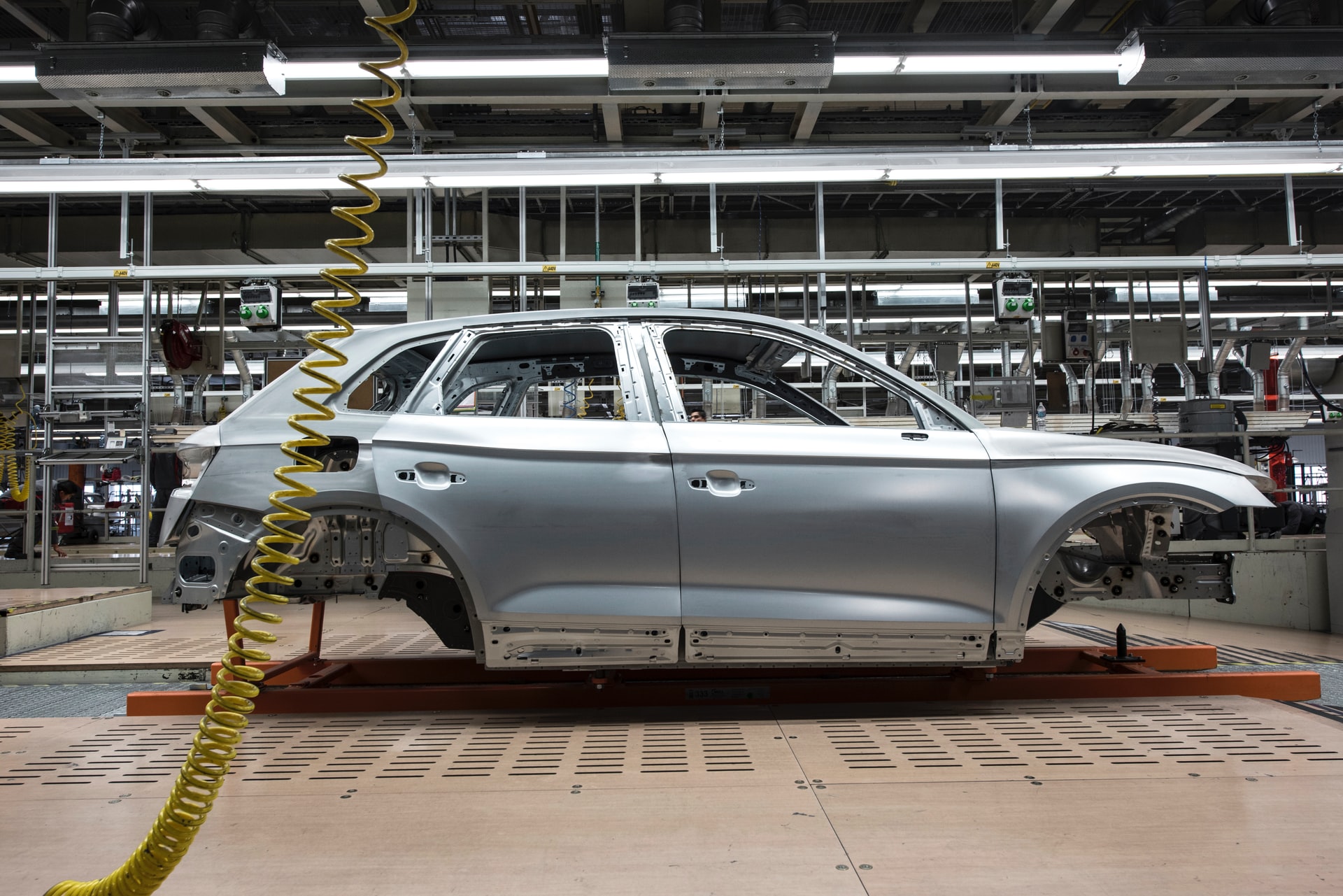
Spain’s car industry recovery continues in September
The Spanish automotive sector saw performance improve year-on-year in September, Kallanish notes.
According to the national automotive association, Asociación Nacional de Fabricantes de Automóviles y Camiones (Anfac), output in September was 210,510 units, up 4.8% versus the same period in 2022. Nine-month production amounted to 1.82 million vehicles, which was 14% higher over January-September last year.
Meanwhile, the country exported 197,709 units in September. This was 13.5% more compared to a year earlier. European markets had an 89.6% share in Spanish deliveries that month, a 1.5 percentage point growth on-year, with Germany, France, the UK, Italy and Turkey the main destinations. January-September exports rose 20.3% over the same period in 2022 to 1.67 million vehicles, Anfac data show.
“The improvement is good news for the sector and for the Spanish economy, but we must not relax since the domestic sector remains weak compared to pre-pandemic figures, while we move towards the transformation implied by electric vehicles,” comments Anfac president José López-Tafall.
Essential for the industry will be “changes in taxation, aid for direct purchases, promotion of publicly accessible charging infrastructure and a new industrial policy to guarantee competitiveness and employment amid the challenging geopolitical competition in the sector,” he adds.
Todor Kirkov Bulgaria


Spanish steelmakers demand national CBAM authority
Spanish steelmakers’ association Unesid has expressed concern at the absence of a competent authority to manage the Carbon Border Adjustment Mechanism (CBAM) in the country, Kallanish notes.
The organisation has asked Spanish ecological transition and demographic challenge minister Teresa Ribera to accelerate the process since it is of “extreme urgency” following CBAM’s imposition from 1 October.
“There are many doubts in the market about the methods of action and, although the European Commission has published some explanatory guide, the issues are not clear enough,” says Unesid general director Andrés Barceló. According to the executive, the sector urgently needs an interlocutor in the administration to whom the industry can address its concerns.
“It is indispensable given the many technical aspects involved, some of them with extreme relevance for the correct use of CBAM, such as the coefficients to be applied to entries in case of lacking or doubtful data from importers into the EU,” Barceló explains.
Although the implementation of the new system aims to prevent or limit imports of carbon-intensive products into Europe, the executive points out: “Unfortunately, EU exports will continue to have to absorb the climate costs imposed by the regulation without any compensation, which will continue to represent a clear competitive disadvantage for the regional companies.”
Todor Kirkov Bulgaria

Net-Zero Industry Act to support steel decarbonisation: Eurofer
Eurofer has welcomed the European Parliament Committee on Industry, Research and Energy (ITRE)’s decision to recognise all steel decarbonisation technologies as net-zero and introduce binding sustainability criteria for clean technologies in public procurement. The association says this is a positive development for the decarbonisation of the steel sector.
The new measures included in the Net-Zero Industry Act (NZIA) should ensure faster implementation of EU steel decarbonisation projects at industrial scale. It is now essential to maintain the momentum towards a successful transition, the European steelmakers’ association observes.
“Steel companies have announced substantial investments in multiple EU member states, with groundbreaking low-carbon projects scheduled for as early as 2025 and 2026,” Eurofer director general Axel Eggert says in a note sent to Kallanish.
“Innovative processes, including hydrogen-based steelmaking and Carbon Capture, Utilisation and Storage [CCUS], will now benefit from faster permitting procedures. At the same time, the introduction of sustainability criteria in all public procurement auctions for net-zero technologies will help establish much-needed lead markets for green products,” he adds.
The provisions proposed by ITRE reaffirm the principle of technological neutrality and acknowledge the essential role of hydrogen-based, electricity-based and CCUS technologies to achieve EU climate targets, Eurofer notes. The ITRE report underlines that CCUS can only work by developing a fully-fledged value chain approach, taking into consideration infrastructure, cross-border rules for transportation as well as standardisation.
Overall, the measures will lower the risk of delaying the transition due to lengthy and complex administrative procedures, while rewarding environmental benefits by supporting the use of low-carbon components and materials that come with a premium, such as steel.
“While lead markets can certainly help, we still need to secure enough financial incentives to level the playing field with our global competitors. The EU cannot risk lagging behind if we want to lead the clean tech race and ensure our strategic autonomy in a world subject to ever-increasing geopolitical risks,” Eggert concludes.
MEPs voted in, with amendments, NZIA on Wednesday, setting a target for Europe to produce 40% of net-zero technologies based on National Energy and Climate Plans (NECPs) and to capture 25% of the global market value for these technologies. It also set an EU level target for annual CO2 injection capacity by 2030 of 50 million tonnes. Without these measures, “Europe would face decarbonisation by deindustrialisation,” says lead MEP Christian Ehler.
Adam Smith Poland

US will extend EU tariff suspension, negotiations continue
The US will continue the suspension of Section 232 tariffs on EU steel while the two entities actively work toward an agreement, according to a US official.
Kallanish learns that the ambassador to the European Union, Mark Gitenstein, has clarified that the US does not intend to restore 25% tariffs on steel imports imminently.
US tariff rates were scheduled to return to levels imposed in former president Donald Trump’s Section 232 order if the EU and US fail to reach a new agreement by 31 October 2023.
Last week’s Washington, DC, summit lacked specific details about any agreement toward the tariffs but noted that progress was being made (see Kallanish 23 October). At the time, it was unclear whether the 25% levy on EU steel and 10% on EU aluminium would be restored as early as January 2024. Gitenstein on Wednesday indicated that the US does not intend to reinstate the tariffs while the two allies need more time to reach a formal agreement.
Progress was reported regarding steps to address excessive production capacity and increasing supplies of non-market steel and on safeguarding environmental steelmaking standards threatened by non-market products.
Kristen DiLandro USA

European steelmakers prepare coil price increases
Italian hot rolled coil prices are flattening on-week but values are about to increase in Europe mostly due to low availability. European producers are mulling increases for January delivery and some Italian steelmakers are not quoting.
Several sources believe HRC asking values will increase to €650-660/tonne ($687-698) delivered in Italy, while other European producers are expected to ask for €670/t delivered for January lead times. A clearer idea of price will be achieved by the end of this or next week, Kallanish notes.
In Italy, but also wider Europe, multiple re-rollers and service centres have gone back to purchasing since last week. Over the past ten days, EU producers filled their order books until the end of December. With HRC imports limited due to the exhaustion of the “other countries” fourth-quarter quota, and limited import arrivals expected in the first quarter, European steelmakers will be the main source of supply.
The short availability is forecast to support higher prices in the coming months and Q1 2024. This is also due to the several stoppages underway at some major European steelmakers.
The issue remains low consumption downstream and lower prices for sheet and tube. Service centres are seeing continued weak demand and orders for their products, with sheet now at below €700/t ex-works and margins seeing pressure. Service centres are only now receiving HRC bought weeks ago at €650-660/t base ex-works, while their selling prices are on a declining trend.
Italian domestic HRC contracts were concluded over the past ten days at €590-610/t delivered for December lead times. New January lead time values are seen hiking by €50/t, Kallanish notes.
Natalia Capra France

European HRC prices ‘likely reached rock bottom’, but trading remains thin
Fastmarkets calculated its daily steel HRC index, domestic, exw Northern Europe at €611.46 ($650.01) per tonne on October 25, up by €0.46 per tonne from €611.00 per tonne on October 24.
The index was down by €5.42 per tonne week on week and by €20.42 per tonne month on month.
Most market sources agreed that prices have hit rock bottom and further drops are unlikely due to mounting costs at mills.
Trading in the spot market remained slow and buyers continued to postpone their restocking.
“The market is quiet and silent. I think everybody is waiting, but at the same time it looks like the market has bottomed out,” a steel service center source in the region told Fastmarkets.
Despite mills’ attempts to increase offers slightly, market sources saw prices as largely flat with indications of tradeable values at around €600-620 per tonne ex-works.
This compares with target levels voiced by some integrated mills at €630-645 per tonne ex-works for November/December-delivery HRC.
Deals were scarce with most buyers tending to book small volumes to cover urgent needs.
Market sources suggested that larger distributors were postponing purchases until a major industry trade fair in Stuttgart, Germany, in early November.
“Blechexpo might be a trendsetter, but as long as the market is quiet I think nobody will buy more than is needed and won’t speculate,” a trading source said.
Output cuts implemented by several European producers during the fourth quarter could lead to price rebounds when buyers start booking January-delivery tonnages, some sources said.
“There is little hope for a real demand rebound this year,” a distributor in Germany said. “But stocks are trending lower and buyers will need to return for volumes.”
“I think the pick-up in apparent buying can support some short-term minor price rises, but nothing booming can be expected since consumption is still weak,” the distributor added.
Fastmarkets’ daily steel HRC index, domestic, exw Italy was €600 per tonne on October 25, unchanged from a day earlier.
The index was up by €9.12 per tonne week on week, but down by €21.67 per tonne month on month.
Italian mills tried to increase their selling prices for November/December-delivery HRC to €620-630 per tonne ex-works, but no transactions were reported at these price levels.
Buyer estimates of tradable prices were at €580-600 per tonne ex-works.
But producers were rejecting bids below €600 per tonne ex-works, according to most sources.
In the downstream market, HR sheet was traded at €670-700 per tonne delivered, but some sources reported lower transactions at €660 per tonne delivered.
“Some steel service centers are being very aggressive with sales to end users, which also puts pressure on prices. The gap between HRC and cut-to-length material should be at least €100. So, sales [of HR sheet] at €660 are suicidal,” a second distributor said.
Further price declines for HRC in the nation were considered unlikely by market sources due to rising input costs at mills. A strong price rebound was also seen as unlikely due to slow demand from end users.
“Stabilization [of HRC prices] is the most likely scenario for the next couple of weeks,” a second trading source told Fastmarkets.
Meanwhile, the market for overseas coil remained quiet. Asian suppliers maintained HRC offers at around €580-600 per tonne CFR to Italy for January shipment.
Bids for such material were no higher than €550 per tonne CFR, but suppliers were not ready to cut prices.
“EU ports are full and EU buyers don’t want to do risky business; not only the price but also the risk of paying duties cools demand for imported HRC,” a third trading source said.

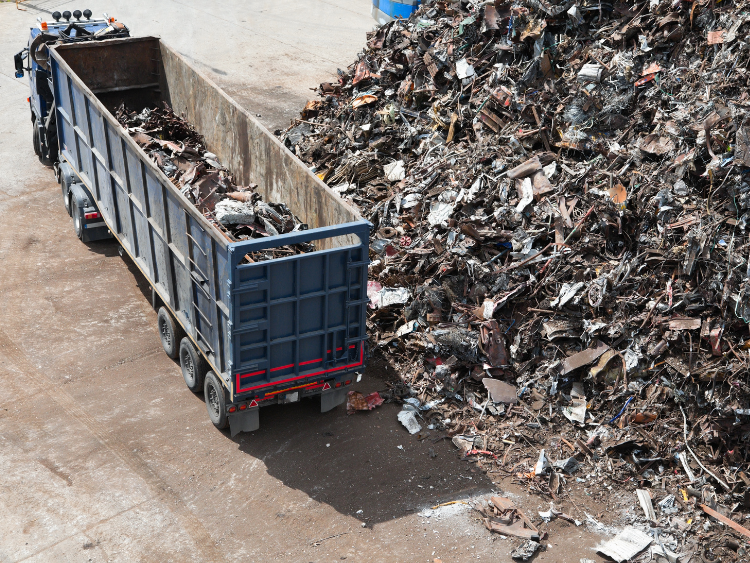
300m t/y more scrap needed for green transformation
Speaking at a Bureau of International Recycling (BIR) conference attended by Kallanish in Abu Dhabi this week, Davide said steel demand and production would slowly increase until 2050. Demands for low-carbon steel mean steel mills hope to reduce carbon emissions by 70-90%.
The switch towards electric arc furnaces (EAFs) would double their share of production by 2050 and include a significant increase in direct reduced iron (DRI) production of 245 million tonnes/year, he adds.
More than an extra 300 million tonnes/year of scrap would be needed to feed the additional EAF production in the transition to green steel, BIR also reported.
From Davide’s speech, the company expects to see 18% of of global steel production from DRI EAF, 38% from scrap EAF and 44% from BOF. This implies steady increases for DRI EAF and scrap EAF scrap from 8% and 23% in 2020. Production from BOF will shrink by 26 percentage points by 2050 from 70% in 2020. Global steel production will be in the range of 2-2.5 billion tonnes/year by 2050, the data shows.
Global scrap availability should reach over 1.2 billion tonnes/year by 2050, with the biggest increase coming from obsolete scrap, which shows the rising importance of the control of scrap sourcing, processing and utilisation.