


Turkish steel distributor Ozkanlar enters EV production sector
Ozkan said Nov. 19 that the company’s first mini commercial electric vehicle, which will have a 19.2 KWh lithium iron phosphate battery, is targeted to be available in the second half of 2024.
Several other Turkish steel companies have also focused on EV production in recent years.
One of the country’s largest steel producers, Habas, is also targeting production of electrical buses at its Manisa facility and hybrid and electrical automobiles at the purchased Honda facility in Gebze, near Istanbul.
Sales of electric vehicles have increased substantially in Turkey recently, climbing by by 890% on the year to 48,883 units in the first 10 months of 2023, since its first domestic EV producer, Togg, launched sales in April.
Platts, part of S&P Global Commodity Insights, last assessed domestic Turkish HRC at $650/mt EXW Nov. 17, up $20/mt on week, amid higher imported scrap pricing.

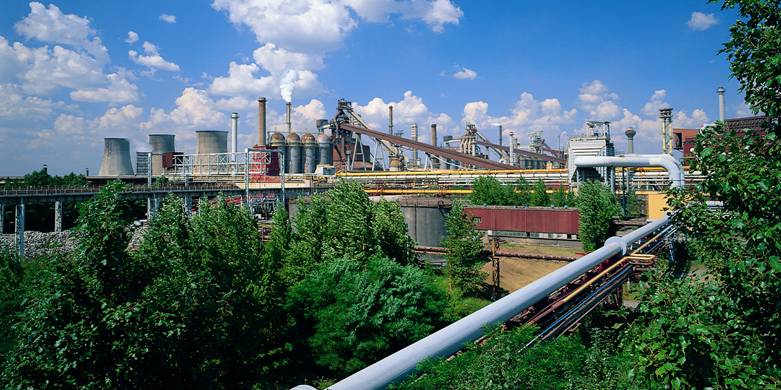
ArcelorMittal Poland says temporarily halting Sosnowiec wire rod mill operations on low demand
ArcelorMittal Poland stopped production at its Sosnowiec wire rod mill from Nov. 18, with plans to restart Nov. 27, due to lackluster demand in the domestic market, a spokesperson told S&P Global Commodity Insights Nov. 20.
The decision has been taken “following in-depth analyses of all available options,” by AM Poland, the spokesperson said, mentioning a 17% year-on-year drop in apparent steel consumption in Poland, citing the Polish Steel Association.
Sosnowiec is a downstream plant producing wire rod and cold-rolled strip.
According to the European Commission, the Polish economy remains weak, with falling private consumption. Poland’s gross domestic product in 2023 is expected to be only 0.4% and its inflation is projected at 11.1%, though the former is to projected to pick up to 2.7% in 2024 and inflation is expected to fall to 6.2%, the EC said.
European rebar prices reflect the weak economic status of Poland, with prices falling to Eur595/mt base ex-works Ruhr on Nov. 15 from Eur745/mt at the beginning of January, according to Platts’ weekly assessment.
Sources have reported weak demand for some long steel products in Northwest Europe including rebar. Mills have made efforts to raise offers for long steel products but were unsuccessful in achieving desired transaction levels. The Platts assessment of Northwest Europe rebar was down Eur5/mt week on week to Nov. 15 at Eur595/mt ex-works. Platts’ assessment of European medium sections price (category 1, S235 JR) was also down Eur5/mt week on week on Nov. 15 at Eur765/mt delivered.
Sources also reported that the customers might be avoiding restocking activity given weak seasonal demand at the end of the year. Market participants told S&P Global that inventory levels were reportedly low and customers might maintain them at those levels because demand is usually slow as the year ends.

European HRC producers remain bullish despite absence of end-user demand
European hot-rolled coil producers remained bullish Nov. 20 despite the absence of demand from end-users.
“There is no real demand from end-users and they have healthy stocks and can wait up if mills intend to hike prices,” a service-center source said.
According to another source, mills in Northwestern Europe were aiming to hike offers to Eur700/mt in first-quarter 2024, although no offers were heard at that level yet.
A deal for a smaller volume was concluded at Eur650-670/mt ex-works Ruhr with tradable values heard ranging Eur640-670/mt EXW Ruhr.
Platts assessed the price of Northwestern Europe domestic HRC down Eur5/mt from Nov. 17 at Eur660/mt Nov. 20.
In southern Europe, Italian mills were heard aiming to offer at Eur660-670/mt for deliveries in January.
However, dull demand made market participants skeptical about the sustainability of these price levels.
Platts assessed domestic prices for HRC in South Europe stable from Nov. 17 at Eur645/mt EXW Italy on Nov. 20, reflecting tradable values reported at Eur640-650/mt EXW Italy.
Limited demand was seen coming for imported material amid uncertainty prevailing about safeguard quotas in addition to talks about production cuts.
Platts assessed the import price of HRC in South Europe flat from Nov. 17 at Eur630/mt CIF Italy on Nov. 20, reflecting tradable values heard at Eur620-630/mt.
Platts is part of S&P Global Commodity Insights.

Small-tonnage restocking reported in European HRC market
But industry participants remain optimistic for a rebalancing of supply and demand dynamics as a result of production cuts and customer restocking, sources said.
While restocking has increased, customers were not in the market for large tonnages, Fastmarkets heard.
Fastmarkets calculated its daily steel HRC index, domestic, exw Northern Europe at €655.00 ($715.70) per tonne on Monday, down by €2.92 per tonne from €657.92 per tonne on Friday.
The index was down by €3.63 per tonne week on week but up by €42.79 per tonne month on month.
Sources reported an uptick in restocking, but only for small tonnages, they said.
Market participants said they were uncertain about whether the market could support an uptrend in the mid to long term.
“Customers are still unsure if an uptrend is sustainable so they are careful with what they buy for stock,” a trader source told Fastmarkets.
European mills may look to raise offer prices before the Christmas holidays, Fastmarkets heard, despite customer resistance to price rises.
Workable prices were reported by buyers at €650-660 per tonne exw. Meanwhile, a deal was reported by a buyer at €650 per tonne exw.
In Southern Europe, Fastmarkets calculated its corresponding daily steel HRC index, domestic, exw Italy at €635.00 per tonne on Monday, down by €7.92 per tonne from €642.92 per tonne on November 17.
The index was up by €5.00 per tonne week on week and by €38.33 per tonne month on month.
Tradeable values were estimated by buyers at €640-650 per tonne ex-works.
Despite a lack of real activity and demand remaining weak, sources said they expect mills to increase prices by up to €50 per tonne by January 2024.
“Real activity is very weak but we expect an uptrend due to restocking and mill production cuts,” a buyer source said.
Import HRC offers for January shipment were reported to be on offer from India and Turkey to European ports at €630-640 per tonne CFR.
Published by: India-Inés Levy


ArcelorMittal becomes steel powder supplier
ArcelorMittal is entering into the additive manufacturing market (ADM) as a steel powder supplier, the company tells Kallanish. The steelmaker is building an industrial-scale inert gas atomiser in Avilés, in Spain, to produce high-quality steel powders for multiple additive manufacturing technologies.
The output will be supplied by the Group’s new business unit, ArcelorMittal Powders.
“From our facility in Spain, we will offer a range of steel powders tailored to our customers’ needs,” says ArcelorMittal Powders chief executive Colin Hautz. “This technology … not only allows us to think about changes in the design and manufacturing process of many parts and components we use today, but also exploit one of the inherently sustainable characteristics of steel, its recyclability.”
The atomiser, which will produce powders from scrap steel and use renewable energy, is expected to be operational in January. It will have a large batch-size production capability of 200kg to 3 tonnes, and an initial annual capacity of 1000t.
ArcelorMittal’s so-called AdamIQ brand will include 316L, 430L, 17-4PH stainless steel, tool steels (H11, H13, M300) and low alloy steels. Products will be mainly supplied to the aerospace, military, automotive, medical, and energy sectors.
ArcelorMittal Powders will add further steel powder products for customers to test in 2024, the company concludes.
Todor Kirkov Bulgaria


ArcelorMittal produces first ethanol through Belgium-based carbon capture
ArcelorMittal has produced the first industrial ethanol from its capture and utilisation (CCU) Steelanol plant at its Gent facility in Belgium. This month, one of the four bioreactors produced ethanol for the first time and a production ramp-up is scheduled in the coming months, Kallanish notes.
In partnership with LanzaTech, Primetals Technologies and ERM, the steelmaker designed the Steelanol unit, the first of its kind in Europe, to capture carbon-rich waste gases from steelmaking and biologically convert them into advanced ethanol through LanzaTech’s bio-based process.
“LanzaTech’s technology works like a brewery, but instead of yeast consuming sugar, proprietary bacteria known as a biocatalyst consume carbon gas and convert it into essential chemical building blocks such as ethanol,” ArcelorMittal says in a note.
The facility was inaugurated in December 2022, with cold commissioning taking place thereafter (see Kallanish passim). The biocatalyst was then introduced into the plant with a process known as inoculation to grow microorganisms and verify the production of new molecules. The inoculator produced the first samples containing ethanol in June. In November, one of the four bioreactors produced the industrial ethanol. Steelanol has the capacity to produce 80 million litres of ethanol with the potential to reduce annual carbon emissions from the Gent plant by 125,000 tonnes.
ArcelorMittal says it has been awarded funds from different sources to scale up the project, including the European Union’s Horizon 2020 programme and the European Investment Bank.
Natalia Capra France

Bekaert sees market remaining challenging amid slow demand
Belgian wire rod maker Bekaert sees the challenging market conditions persisting in most regions into the first quarter of 2024. To weather the slow demand, the group intends to focus on margin growth and cash flow generation., as well as growth opportunities, the firm says in its nine-month earnings report obtained by Kallanish.
In January-September, Bekaert registered a difficult environment in several of its end markets as “uncertainty remains for the financial year 2023”, it says.
Sales decreased by 13% year-on-year to €3.3 billion ($3.6 billion) due to lower prices and volumes, reflecting lower raw material costs and high inflation. For the full year, Bekaert anticipates €4.3 billion in revenue.
“The phasing out of previous wire rod price increases and energy surcharges reduced revenues by approximately €350 million and the lower overall volumes reduced revenues by approximately €180 million in the first nine months,” the report says.
The Steel Wire Solutions segment posted revenue of €912m in the first three quarters of 2023. This represented a 17% decline versus the same period last year due to lower sales prices, negative currency effects, and slow demand in Europe and Latin America, particularly from markets such as construction and agriculture. As demand from the energy and utility markets is proving resilient, Bekaert forecasts some demand growth from this sector in the coming months.
The Specialty division’s revenue also saw a 15% decrease y-o-y to €512m, driven by slower demand, currency impact, lower selling prices and the construction market crisis in Europe.
The disposal of Steel Wire Solutions’ businesses in Chile and Peru is now completed, the company concludes.
Natalia Capra France

German fabricators deepen pessimism, launch image campaign
Production at Germany’s steel and metal processing companies fell by 2.9% in the third quarter compared to Q2, according to their association, WSM.
This is the second decline in a row, meaning that the industry is in a recession, WSM states. The previous year’s figures were not reached for the third time in succession, Kallanish learns from the association. In the nine-month period from January through September, production fell by 2.6% year-on-year.
The outlook for Q4 is determined by incoming orders, which were 3.8% below the previous year’s level after nine months. Orders in Q3 were 9.5% lower than in the preceding quarter and companies in the sector are correspondingly pessimistic about their business development.
The share of entrepreneurs who describe their business situation as “good” in WSM’s November poll fell to below 20%. “And business expectations for the next six months are developing even more dramatically,” the federation notes: 49% expect the business situation to deteriorate – 4 percentage points more than in October. Only 6% remain optimistic about their business expectations.
According to Christian Vietmeyer, WSM’s managing director, the current figures are “cause for great concern”, especially as the forecast for the year as a whole had to be revised downwards again to a 3% drop due to the continuing weakness in demand.
Together with 12 other trade associations in the manufacturing industries, WSM has launched a media campaign to raise awareness of the significance of small and medium-sized companies in Germany.
Under the slogan “Wir. Formen. Fortschritt.” (We. Shape. Progress.), the industries address the broader public and, especially, the government. They aim to improve the image of their role in the industrial transformation towards climate-friendly production. In the campaign, they emphasise that they are not part of the problem, but part of the solution, as makers of products and components for renewable energies.
Christian Koehl Germany
ArcelorMittal Zenica halts production amid market conditions
ArcelorMittal’s Bosnia-based Zenica long steelworks has temporarily paused production, due to weak market conditions.
“After carefully considering and evaluating all available options, ArcelorMittal Zenica temporarily idled its blast furnace on 11 November and production is being gradually suspended in other facilities, like the rolling mills, which stopped on 2 November,” a spokesperson tells Kallanish. “The plant intends to resume normal operations as soon as there is a demand recovery at a level that allows the business to operate sustainably.”
The European steel market is currently in a downcycle, with the downturn in EU apparent steel consumption having begun in the second quarter of 2022. This was due to the war in Ukraine, and unprecedented rises in energy prices, production costs and inflation, all amid growing economic uncertainty, the firm adds.
According to the company, demand conditions have significantly worsened in the second half of 2023, and this negative cycle is expected to continue, driven by ongoing economic uncertainty resulting from high inflation.
“ArcelorMittal Zenica started facing business challenges in the middle of last year, due to global trends in the steel and raw materials market. Coking coal prices have increased by 300% since 2021, electricity price has increased by 44% and natural gas price by 80%. Rail transportation cost has also increased by 25% since 2021,” it observes.
“In the same period, the Fe content of the ore in the mines that supply ArcelorMittal Zenica has dropped from 53% to 47%, meaning that more ore has to be purchased for the same steel output,” the enterprise claims. “In addition, sales quotas to the EU market are restricted, due to the safeguard regime imposed by the EU, and we are faced with cheap imports of steel products from Turkey, produced from the electric-arc furnace route using scrap.”
This will also affect the group’s supplies of iron ore, since ArcelorMittal Zenica has stopped the delivery of ore from its Prijedor mines during the production suspension.
ArcelorMittal Zenica is the largest producer of long products in the Balkans with a production capacity of 700,000 tonnes/year. The basic product range includes rebar in bars and coils, wire rod, mesh and lattice girders.
Svetoslav Abrossimov Bulgaria

Decarbonisation demands nuclear; scrap, hydrogen supply lacking: conference
The requirements of decarbonisation may lead to the rebirth of nuclear power to fuel the low-emission steelmaking transition, while hydrogen will not be viable in the short term due to lacking infrastructure. So said participants at a decarbonisation conference last week held at Acciaierie d’Italia’s Taranto steelworks.
In Europe, there are 60 steelmaking decarbonisation projects aiming for completion by 2030, with the potential to cut CO2 emissions by as much as 81.5 million tonnes/year. This is more than a third of current emissions, Eurofer director Adolfo Aiello said at the event followed by Kallanish.
The estimated amount of electricity required for these projects is around 165 terawatt-hours, including 90TWh for the production of green hydrogen from electrolysis. Aiello expects the total investment to hover at €31 billion ($33 billion) and operating expenses at about €54 billion.
The decarbonisation of primary steelmaking has started and will see the first results within 2-3 years. The longer-term achievement goal is 10-20 years, during which various technological issues will have to be resolved including the development of new clean energy sources and green hydrogen.
A first decarbonisation strategy may involve the integration of synthesis gas in the current blast furnace supply chain produced from waste and combined with CO2 carbon capture systems, as well as direct reduction iron plants. The success of the DRI option however relies on the availability of gas and mineral supply.
Considering the limitations connected to intermittency of renewable energy sources, “it seems necessary to ask ourselves whether this growing demand will not lead to the rebirth of nuclear power, with a view to coupling small modular nuclear power plants with steel mills, possibly powered by thorium and not uranium, making them completely independent and decarbonised,” chemical engineering association AIDIC said at the event.
According to the University of Pisa, hydrogen is not a short-term solution for the steel industry due to the lack of related storage transport and distribution infrastructure. Engineering and certification body Rina argued green hydrogen has the potential to replace fossil fuels but requires expensive processes and the revamping of existing steelmaking equipment. “Technologies capable of using hydrogen are already present, for which further parallel R&D, optimisation and training activities will however be necessary,” observed Rina’s Filippo Cirilli.
According to Paul Wurth’s Cristiano Castagnola, the DRI and electric arc furnace systems also present several challenges including the availability of suitable iron ore, the need to offset green hydrogen with green ammonia when the former cannot be produced competitively, and the need for high volumes of scrap and clean energy capacities, which also need to be doubled to achieve Europe’s 2050 decarbonisation objectives.
Acciaierie d’Italia has invested almost €2 billion in the decarbonisation of Taranto. It will focus on energy efficiency and optimisation, CO2 carbon capture and storage technology, the electrification of the hot-end area and DRI plant addition, and low-emission energy plant installation.
Natalia Capra France