

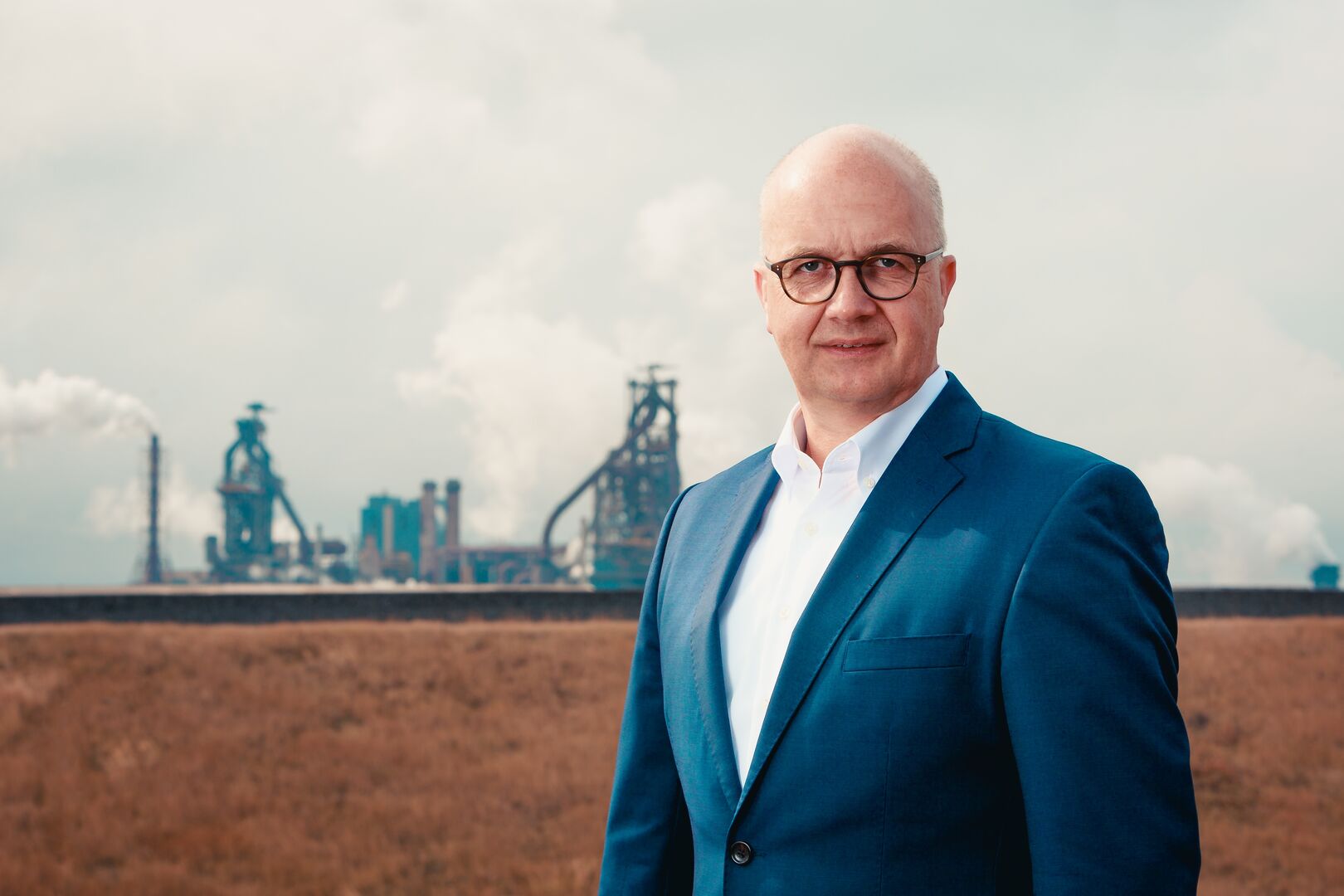
Henrik Adam elected new EUROFER President
The European Steel Association (EUROFER) has elected a new Board, President and Vice-Presidents. Henrik Adam has been appointed as President of the organisation for a two-year term. He succeeds Francesc Rubiralta Rubió, who has led EUROFER since 2022. The Steel Association of Ukraine has also been accepted as a member.
Dr. Adam currently holds the position of Vice President of Tata Steel and Chairman of the Board of Tata Steel Netherlands Holding. He also serves as Chairman of the Steel Institute VDEh in Germany. With his extensive background in the steel industry, including his earlier role as the Chairman of WorldAutoSteel and as a Vice President of EUROFER since 2019, Dr. Adam brings a wealth of experience and leadership to his new role.
Speaking after his election, Dr. Adam said: “I am looking forward to continuing the good work my predecessors have done to support the development of the European steel industry over the past years in extremely challenging times. My objectives remain the same: transitioning our sector to carbon neutrality without losing market share to third country producers with low or no climate ambition, ensuring access to affordable decarbonised energy and steel scrap as critical raw material in Europe, preventing imports that distort fair competition, and, last but not least, highlighting the importance of steel made in Europe for the EU’s resilience, strategic autonomy and prosperity of its citizens”.
“I believe the European steel industry should continue to be a strong partner of the European manufacturing industry. I can’t imagine having a local manufacturing industry – from cars and rails to batteries and wind towers – without a local steel industry. Many innovations in our sector have made our customer’s products competitive in the global market. Hence, the future of the European steel industry is vital for the future of European industry. Together with my colleagues at EUROFER, I am fully committed to working tirelessly to ensure a robust business case for the European steel industry”, he added.
Mr. Rubiralta served as President of the European Steel Association from November 2022 to November 2023. He is the Chairman and CEO of Celsa Group.
“It has been a pleasure to have represented EUROFER this past year as President, and before that as Vice-President for 12 years. I would like to thank the EUROFER team for their hard work and support during this time. I would also like to wish the future President of the Association great success in his term of office”, said Mr. Rubiralta.
“Mr. Rubiralta served during a crucial year as President of the European Steel Association in the midst of one of the most uncertain periods the global economy has faced so far. He steered the sector through an ongoing energy crisis, the disruptions caused by the war in Ukraine, increasing trade tensions, and the decarbonisation process the sector is undergoing while reinforcing the role of circularity. Under the leadership of Henrik Adam, we will continue the exchange with the EU institutions and member states to build the conditions that should provide business opportunities for steel and the steel value chain in Europe. Only European steel makes Europe stronger”, concluded Axel Eggert, Director General of EUROFER.
Source: Eurofer
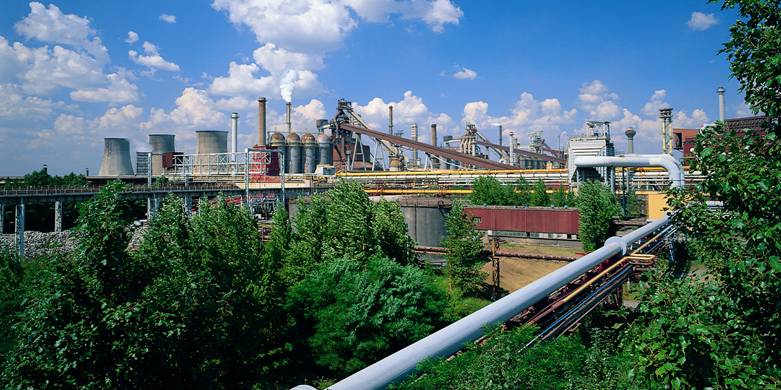
ArcelorMittal halts coke production in Poland, suspends steelworks in Bosnia
The company said in a statement Nov. 22 that it has decided to adjust coke production to the difficult economic conditions at its ArcelorMittal Poland division, preparing to put the coke oven battery in Krakow on standby.
The decision is largely down to low coke demand, which is set to decline by 36% this year, according to company estimates. But it has also been triggered by coke’s falling premium to coking coal, which ArcelorMittal Poland said no longer justifies in-house conversion.
“The demand for coke has dropped significantly, but we are also dealing with an unprecedented situation — the price of coking coal fluctuates around the price of coke, which makes production unprofitable,” ArcelorMittal Poland CEO Wojciech Koszuta said in the statement.
The Krakow battery provides only a small part of the company’s coke production in Poland though. The majority of its coke supply comes from its plant in Zdzieszowice, which continues to run as normal, with all six batteries in operation, a spokesperson for ArcelorMittal Poland said. With its 4.2 million mt/year maximal capacity, Zdzieszowice is the largest coke plant in the EU.
Previously, ArcelorMittal Poland said it stopped production at its Sosnowiec wire rod mill due to a lack of demand.
January-October saw an 8.8% year on year decline in the EU-27’s crude steel production to 106.8 million mt, according to worldsteel’s Nov. 22 report.
Bosnia halt
The weak market conditions have also forced ArcelorMittal to temporarily halt production at its 1 million mt/year ArcelorMittal Zenica steel mill in Bosnia, the spokesperson confirmed to S&P Global Commodity Insights Nov. 22.
ArcelorMittal Zenica is equipped with one blast furnace and one basic oxygen furnace, as well as two rolling mills to manufacture wire rod and rebar. But it has idled its blast furnace and production is being gradually suspended in the other facilities, with the rolling mills already halted too.
The Bosnian plant is not expected to resume normal production until demand recovers to a level that would allow the business to operate sustainably, it said.
The downturn in EU apparent steel consumption began in the second quarter of 2022 with the conflict in Ukraine, unprecedented rises in energy prices, production costs and inflation. However, it has worsened in the second half of 2023, with the negative cycle fueled by ongoing economic uncertainty, according to ArcelorMittal Zenica.
Since 2021, coking coal prices have gone up by 300%, the price of electricity has increased by 44% and that of natural gas by 80%. At the same time, rail transportation costs have jumped by 25%, the company said, adding that, in the last three years, it has had to lift workers’ wages by 32% because of inflation.
The Bosnian mill has also been affected by a deterioration in iron ore quality, entailing more spending on additional volumes.
ArcelorMittal has not specified the proportion of its installed steel capacity in Europe that has been halted, but it has confirmed that it has temporarily idled blast furnaces No. 2 and No. 3 at its Bremen site in Germany, and blast furnace A at its plant in Ghent, Belgium. It also said it is planning to close a furnace at its Fos-sur-Mer site in France.
Earlier this month, ArcelorMittal said that its steel production in Europe in January-September fell by 11% or by 2.7 million mt on the year to 22.2 million mt and that since the beginning of Q3 the spread between European spot prices of hot-rolled steel coil and raw materials costs had fallen to unsustainable levels moving lower than seen over several quarters in 2019-2020.


UK Steel sees ‘missed opportunity’ as government doesn’t roll out carbon border policy
Trade association UK Steel found it “disappointing” that contrary to what the industry expected, UK Chancellor Jeremy Hunt did not set forth a UK Carbon Border Adjustment Mechanism and a timetable to implement it by 2026 in the UK Autumn Statement Nov. 22.
The statement, one of two yearly in which the UK government lays out its economic and tax plans, only confirmed that the government “has undertaken extensive consultation on possible measures to mitigate carbon leakage risk including introducing a carbon border adjustment mechanism and will publish its response shortly,” without mentioning a timeline.
“With over 90% of global steel production facing no carbon cost, it is only right to introduce a carbon border policy to create a level playing field on carbon pricing,” UK Steel Director General Gareth Stace said. “It is a missed opportunity not to set out the government’s plans for its own carbon border policy.”
Stace said the country is now in danger of falling behind the EU timetable, leaving a critical trade-exposed industry at risk.
“As UK steelmakers are announcing plans for green steelmaking, a UK CBAM will be essential to these investments, making sure that low-emission, green, UK-made steel is not undercut by high-emission imported steel, which has not faced carbon costs,” he said. “Delaying the confirmation of a UK carbon border policy will risk the UK playing catch-up with the EU on timetables.”
A UK CBAM would create a level playing field on carbon pricing, ensuring that imported steel pays the same carbon costs as UK steelmakers, and it is key to prevent carbon leakage.
The European Union plans to implement its CBAM policy by 2026, and the UK steel association was pushing to have a similar one mirroring the EC one because “without its own one, the high-emission steel currently exported to the EU could be diverted to the UK,” the association said.
Also, according to UK Steel, “the lack of clarity and mutual recognition between the UK and European Union CBAM policies and Emission Trading Schemes could mean new trade restrictions.”
UK producers will need to comply with the EU CBAM regulation, resulting in a trade barrier to the country’s biggest export market. In 2022, the UK exported 3,399,485 mt of steel, of which 2,550,312 mt went to EU member states, constituting three-quarters of exports.
The UK produces 6 million mt of crude steel a year, around 70% of the UK’s annual requirement. Together with the EU, Canada and New Zealand, it applies comparable carbon pricing (GBP30-70/tCO2e), responsible for 155 million mt of steel, or 8.2% of global steel production in 2022, UK Steel data showed.

European CRC, HDG prices rise despite limited end-user demand
The bullish sentiment has been supported by restocking of European distributors and long lead times for imported coil.
Platts assessed domestic prices for cold-rolled coil in Northwest Europe at Eur755/mt ex-works Ruhr on Nov. 22, down Eur5/mt on the day, but up Eur10/mt on the week.
Buyers reported tradable values at Eur740-750/mt ex-works Ruhr and indicative offers at Eur750-760/mt ex-works Ruhr.
Platts assessed hot-dipped galvanized coil prices in the region up Eur5/mt on the week at Eur775/mt ex-works Ruhr on Nov. 22.
Market participants estimated tradable values at Eur760-780/mt ex-works Ruhr and offers at Eur780-800/mt ex-works Ruhr.
Real demand remained a main concern, as market participants had a largely negative steel consumption outlook for the start of 2024. Distributors have also been restocking limited volumes trying to avoid building higher inventories in the uncertain market.
But the mills have been firm in their offers due to rising costs. They also have benefited from longer lead times for imported coil.
“The mills say that the traditional spread of Eur100/mt between hot-rolled coil is no longer enough to cover costs,” a service center said.
In addition, European mills have been targeting long-term contract prices for 2024 stable year on year despite spot price drop in 2023. As a result, they are expected to maintain spot offers firm, to have additional leverage in contracts negotiations, sources said.
Platts assessed domestic prices for cold-rolled coil in South Europe up Eur25/mt on the week at Eur760/mt ex-works Italy on Nov. 22.
Offers and tradable values have been heard at Eur760-800/mt delivered Italy.
Platts assessed domestic prices for hot-dipped galvanized coil in the region up Eur25/mt on the week at Eur765/mt ex-works Italy. Offers and tradable values have been heard at Eur780-800/mt delivered Italy.
European HRC prices rise; market strengthens in South
“Sentiment in Italy is better compared to Germany as economic state in Germany seems to be more negative,” an Italian service center source said.
Deals for smaller volumes of hot-rolled coil were reported at Eur675-680/mt delivered Italy with tradable values heard at Eur665-670/mt ex-works Italy.
Platts assessed the domestic HRC price in Southern Europe up Eur15/mt on the day at Eur660/mt EXW Italy.
The anticipated rise in import offers and long lead times were likely to make buyers focus on European suppliers.
A service center source said European buyers would have to buy locally due to longer lead times for imported HRC as well as the expected exhaustion of safeguard import quotas for January-March 2024.
“Soon [hot-rolled] coil customers will see lack of cheaper imports and accept higher domestic prices,” a trader said.
Far East suppliers have been offering HRC at Eur625-630/mt CIF Italy and Indian mills at Eur635/mt CIF Italy. Market participants expected Asian mills to increase offers by Eur30-40/mt soon.
Platts assessed the import price of hot-rolled coil in South Europe stable on the day at Eur630/mt CIF Italy Nov. 22.
The price recovery in Europe has been driven by restocking of distributors, while real demand remained dull.
“Real demand is not there. Service centers are restocking for February and March and economic uncertainties are also impacting demand fundamentals,” a mill source said.
Deals for domestic HRC in Northwest Europe were heard at Eur650-680/mt EXW Ruhr while majority of sources said tradable values for domestic material were heard at Eur650-670/mt EXW Ruhr.
Platts assessed the price of domestic hot-rolled coil in Northwest Europe at Eur665/mt EXW Ruhr on Nov. 22, up Eur5/mt on the day.
“End-users are not accepting the [price] increase [from distributors] but the mills are pushing offers up to Eur680-700/mt EXW Ruhr,” a Northwest European service center source said.
Mills still look to have some volumes left to offer for the first quarter and with buyers’ unwillingness to accept a price increase, mills may have to remain flexible with negotiations, a German service center source added.

Primetals implements AI solution at tk Hohenlimburg
Primetals Technologies says it has implemented a digital assistant for detecting strip cross cracks at thyssenkrupp Hohenlimburg’s medium-wide hot-strip mill in Hagen, Germany.
This digital assistant is Primetals’ first-ever computer-vision-based solution designed for this specific purpose, Kallanish is told by the technology supplier. According to Primetals, the main benefits for thyssenkrupp are a reduction in downtime and wear related to the rolls of the hot strip mill.
When a slab carries a cross-crack, it becomes visible in the roughing mill, and the size of the crack increases after each pass. When the transfer bars then enter the finishing mill, the crack may spread, further increase in size, and create holes in the rolled material. In the worst case, a defect like this can lead to cobbles in the finishing mill, with the risk of damaging the work rolls, backup rolls, and other production equipment, Primetals explains.
To prevent transfer bars carrying strip cross cracks from entering the finishing mill, the cracks must be detected as early as possible in the process. In that way, operators can take action before a crack leads to equipment damage.
In the implemented set-up, a camera located on the exit side of the roughing mill provides the digital assistant with a live video stream. With the help of a machine learning model, which represents technology powered by artificial intelligence, the assistant processes the stream and checks for cracks.
Christian Koehl Germany


Ukraine decreases flats exports, longs shipments surge
Ukraine decreased flat-rolled exports in October compared with the previous month, according to national customs data.
Total volume delivered amounted to 103,720 tonnes, down by 34.7% on-month, but was up 74.4% on October 2022, Kallanish notes. In monetary terms, flat products exports fell 34% on-month but were 54.7% higher on-year at $62.8 million.
January-October exports were 889,120t, down by 42% on-year. The value of flat product exports amounted to $610.2m, down 52.6%.
Ten-month uncoated hot rolled coil exports reached 675,100t for $441.6m. In October alone, the country shipped 83,470t, down by 34% on-month, at a value of $48m, down 35%. It shipped 166,400t of cold rolled coil in January-October, up 22% on-month, with income at $113m, up 15%. In October alone it shipped 15,750t, down by 45.8% on-month for $10.46m, less by 41.7%.
The largest consumers of Ukrainian HRC in January-October were Poland with a 30.3% share, Bulgaria with 17% and Portugal with 8.6%. Those three countries together consumed about 60% of CRC. The main buyers of Ukrainian coated rolled products were Poland (74.4%) and Romania (20.1%).
October long-rolled metal exports increased by 3.4% on-month, but fell 54.4% on-year to 41,820t. Revenue from exports was higher by 4% on-month, but 60% less on-year at $29.8m. In January-October, Ukraine exported 428,340t, down by 35.3% on-year. Revenue amounted to $327.8m, down 48.8%.
Ten-month exports of hot-rolled bars and bars in coil were up 18.3% on-month to 173,800t for $110.3m. In October alone, 18,450t were shipped, an increase of 51% on-month. Revenue was $10.6m, up 45% on-month.
The largest consumers of Ukrainian hot-rolled bars in January-October were Poland with a 38.5% share and Germany with 20.6%. Both countries combined consumed about 60% of Ukrainian wire. Among the main buyers of other bars and bars were Moldova (24%) and Iraq (29.4%).
Ukraine saw October crude steel output increase by 80% on-year to 572,000t. In January-October, however, production was 5.16 million tonnes, down 11.7% on-year.
Svetoslav Abrossimov Bulgaria

Thyssenkrupp seeks partnership with Křetínský’s EPH
Germany’s thyssenkrupp AG is holding intensive talks with Czech group Energeticky a Prumyslovy Holding (EPH) about a possible energy alliance – apart from EPH’s interest in becoming co-owner of thyssenkrupp Steel.
For several months, Czech billionaire Daniel Křetínský has been rumoured as a close candidate to take a 50% stake in thyssenkrupp’s proposed Steel division spin-off. While thyssenkrupp has so far refrained from giving a comment or a statement on the process, it has now admitted it is in close negotiations with EPH, Křetínský’s company.
At tk’s annual press conference in Essen, chief executive Miguel Lopez highlighted the importance of a partnership with an energy company for the group’s steelmaking activities. “We see big potential in partnerships with players in the energy sector, with benefits for both sides,” Kallanish heard him say at the conference. He added that, in future, energy will make half of the production costs of steel, which is why “an energy partnership is absolutely indispensable”.
Lopez referred to “the gigantic amounts of green energy we will need for a climate-neutral operation at our steelmaking facilities.” As one of Europe’s biggest future consumers of green electricity, thyssenkrupp Steel will need long-term supply relationships and planning safety. “That’s why we are holding constructive and non-binding talks with energy company EPH,” Lopez said. These talks would eventually aim at shaping a joint venture with tk Steel, he added.
Whatever the outcome, Lopez refrained from giving a timeframe, noting that the talks are taking place in a difficult economic environment.
A journalist in the audience pointed out, however, that EPH is mainly known for producing power from coal, and not for the renewables that steelmakers need to turn clean.
Christian Koehl Germany
Demand rebounds for Italian CRC, HDG
Italian cold rolled and hot-dipped galvanised coil prices are rising by over €50/tonne ($54) compared to the beginning of the month. Market activity over the past three weeks has become lively, with producers quickly filling their January order books and quoting February lead times, market sources tell Kallanish.
Sellers are reporting good sales volumes finally coming back to the market, with improved prices “that at least cover costs”, one says. This is in line with the steep and quick transaction price increases registered in Europe for hot rolled coil, which went over €640/t base ex-works last week.
The return of demand comes after two months of very low orders, particularly for CRC which suffered from competition from cheaper Asian-origin import offers. Domestic demand is also back for CRC, which is reflected in increasing contract values.
The previous subdued level of orders seems to have generated some shortages at buyers’ warehouses. Producers are selling good volumes of both CRC and HDG for the first quarter. From the October low, prices for HDG are now at €750/t base ex-works and some €10/t less for CRC. Demand from other European countries such as France and Germany is also strong, with Italian mills selling volumes to these countries at approximately €800-810/t base delivered.
Some sources doubt the current prices will last due to the low consumption downstream. However, others are confident that a further step of increases will take place due to the lack of cheap import offers and low European domestic coil availability.
Natalia Capra France

European quality wire rod suppliers target higher prices
ArcelorMittal is communicating to its customers this week its intention to raise offer prices for new quarterly and half-year quality wire rod contracts by €100/tonne ($109). These are currently being negotiated.
The increase was triggered by the need to restore margins as well as the expectation that apparent demand should improve in the first quarter of 2024. Quality wire rod is mainly produced at blast furnace-based mills, which are currently subject to higher-than-expected iron ore and coking coal prices.
The margin squeeze for this product has been severe enough in recent months to force ArcelorMittal to reduce output at its BF-based mills producing most of its quality wire rod.
Kallanish reported earlier this week that the BF-based ArcelorMittal Zenica long steel plant, in Bosnia, has paused production due to weak market conditions. Production should be restarted at the plant as soon as the market allows it. Similarly, production at ArcelorMittal’s Polish wire rod mill in Sosnowiec is temporary stopped.
“Other steelmakers in Europe are facing the same situation as ArcelorMittal and are making similar production cuts as well as price hikes,” a senior market source commented on Wednesday.
Emanuele Norsa Italy