


H2 Green Steel adds extra Eur4 bil funding for large-scale green steel plant
Swedish H2 Green Steel has secured an additional Eur4.2 billion ($4.5 billion) in new funds and has increased the previously announced equity by Eur300 million, while it has also been awarded Eur250 million grant from the Innovation Fund, to build one of the first large-scale green steel plant and Europe’s first giga-scale electrolyzer, according to a statement released Jan. 22.
Total equity funding to date amounts to Eur2.1 billion. H2 Green Steel has now secured funding close to Eur6.5 billion for the world’s first large-scale green steel plant in northern Sweden.
More than Eur3.5billion out of Eur4.2 billion is in senior debt from a group of more than 20 lenders, including the European Investment Bank, the company told S&P Global Commodity Insights.
In a separate press note, the European Investment Bank (EIB) and the Nordic Investment Bank (NIB) confirmed they will take part in the project finance, with the EIB that will contribute Eur314 million, of which Eur200 is backed by a guarantee from the European Commission under the InvestEU programme, and Eur114 million of intermediated financing to be provided through commercial banks participating in the project financing.
“The steel industry is a strategic sector, being at the heart of the EU economy,” Vice-President of the European Investment Bank, Thomas Östros, said.
“Our commitment to reach net zero by 2050 requires this sector to undergo transformative changes. It is important that the EIB, as the EU climate bank, is supporting H2 Green Steel in its pioneering development for a breakthrough clean technology to produce low-carbon primary flat steel products.”
“No one has scrutinized our project more thoroughly than those who back our financing. This massive commitment from lenders like the European Investment Bank [is] true recognition of the quality of our company,” Henrik Henriksson, CEO of H2 Green Steel said.
H2 Green Steel was founded in 2020 with the ambition to accelerate the decarbonization of the steel industry, using green hydrogen. Traditional primary steelmaking is very energy intensive and produces massive amounts of carbon emissions. The global steel sector is currently responsible for about 8% of global final energy demand and 7% of global CO2 emissions. The green steel from the plant will have a carbon footprint close to zero, with up to 95% less CO2 emissions compared to steel produced the traditional way.
The construction of the Boden plant has already begun, with the production expected at the beginning of 2027 and with half of the initial annual volumes of 2.5 million mt of low-carbon steel already being sold in offtake agreements to customers that range from carmakers to traders to furniture producers.
Platts, part of S&P Global, assessed Northwest European hot-rolled carbon-accounted coil stable on the day at Eur870/mt ($947.517/mt) ex-works Ruhr Jan. 22. The assessment was calculated in line with the sum of Platts daily carbon-accounted steel premium (CASP) assessment and Platts daily hot-rolled coil price assessment in Northwest Europe.
Author Annalisa Villa, annalisa.villa@spglobal.com

European buyers reluctant to accept higher HRC offers amid slow trading
Soft demand supported buyers’ attempts to negotiate lower prices in the spot market, but trading remained slow, and deals were mainly heard for limited volumes, Fastmarkets learned.
Fastmarkets calculated its daily steel hot-rolled coil index domestic, exw Northern Europe at €746.25 ($813.13) per tonne on Monday, up by €2.25 per tonne from €744.00 per tonne on January 19.
The index was up by €15.00 per tonne week on week and by €50.75 per tonne month on month.
In Northern Europe, one mill was heard to be seeking €800-820 per tonne ex-works for April-delivery HRC.
In general, offers from other integrated mills in the region were heard in the range of €750-780 per tonne ex-works. Most producers heard to be offering April lead times, however several buyer sources said that some producers still could do March deliveries.
Deals for small quantities were heard at €740 per tonne ex-works.
Market participants estimated the tradable market level at €730-750 per tonne ex-works.
“Demand is still low. The customers do not believe [that the price level of] €800 per tonne ex-works will be reached. The mills have too reduced output and take orders at €730-750 per tonne ex-works,” a buyer source told Fastmarkets.
A second buyer source confirmed that the market was slow, and the trading was limited on Monday. This source told Fastmarkets that the current price rise was not demand-driven and expressed doubts that it would be sustainable.
“The market in Northern Europe is still looking for a price level to settle,” a third trading source told Fastmarkets.
Meanwhile, Fastmarkets calculated its daily steel hot-rolled coil index domestic, exw Italy at €735.55 per tonne on Monday, up by €0.13 per tonne from €735.42 on January 19.
The index was up by €13.05 per tonne week on week and by €47.22 per tonne month on month.
Offers in Italy were heard at €780 per tonne delivered, which nets back to around €765 per tonne ex-works.
Deals were heard to be concluded at €750 per tonne delivered, which nets back to €735 per tonne ex-works.
“[The price level] of €750 per tonne delivered is now widely accepted in the Italian market. Most probably, further raises are possible but at a slower pace,” a seller source told Fastmarkets.
Market participants estimated the tradable market levels for HRC in Italy in the range of €720-755 per tonne ex-works.
Import offers of HRC to both Northern Europe and Italy remained limited on Monday. According to sources, this was due to the import safeguards and the Red Sea shipping crisis.
Published by: Julia Bolotova, Darina Kahramanova


Salzgitter orders X-Pact from SMS
Salzgitter has awarded SMS the contract for control systems and process models of the group’s X-Pact product family for its strip mill unit Salzgitter Flachstahl.
The scope of supply also includes the “X-Pact Integrated Temperature Model” as a learning, self-optimising process control feature. This combines all process steps to form a superordinate temperature model and generates comprehensive recommendations for enhancing product quality and plant productivity, Kallanish hears from the technology supplier.
The system features energy-consumption-oriented operating modes as well as forward calculation of entire rolling schedules for manufacturing temperature-sensitive steels with overall improved product characteristics, SMS underlines.
In addition to the level 2 automation, the scope of supply involves the integrated strip guiding control system “X-Pact Centerline Control”, which utilises a camera system to detect deviations in the strip flow.
Christian Koehl Germany

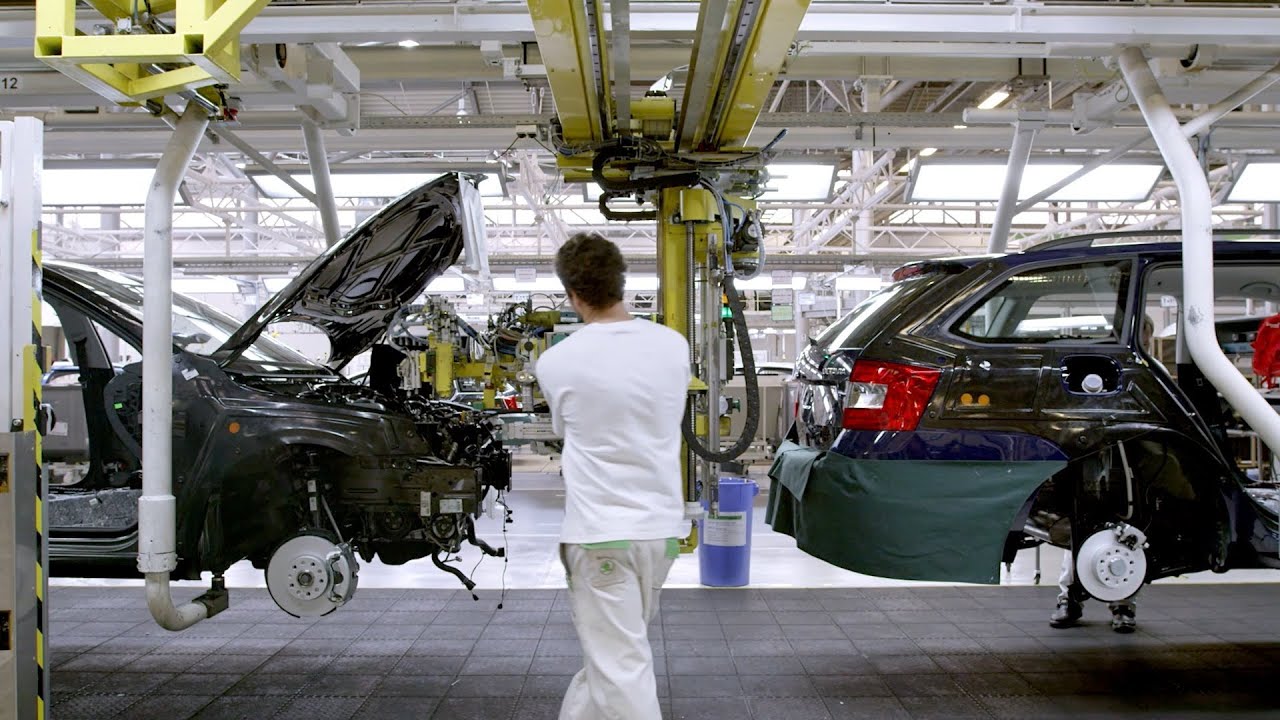
German car production rises, orders fall in 2023
German automotive federation VDA reports a “significant increase” in passenger cars made in Germany last year. Output from German plants rose by 18% year-on-year to 4.1 million cars, Kallanish learns from the federation’s annual production report. This was however still 12% below the pre-Covid year of 2019, while orders declined in 2023.
Already in the preceding year, 2022, production increased by 11% on-year, recovering gradually from the shortage of semiconductors that dominated 2021. By December 2022, production figures had risen for nine months in succession. Hence, December 2023 registered growth of only 1% y-o-y, with 253,700 units produced.
Of these, a considerable 214,000 were made for export, although that figure was down 1% on December 2022. The year in full, however, saw an increase in exports by 17% to 3.1 million units.
Orders received by German manufacturers nevertheless fell by 5% in 2023. Domestic orders fell by 18% and foreign orders by 3%. December alone showed a mixed picture, with domestic orders still down by 14%, while foreign orders rose 5%
Regarding inland registrations, a total of 2.8m new vehicles were registered on the German car market in 2023, up 7% on 2022. However, the comparison with pre-crisis levels is still clearly negative: last year, 21% fewer new vehicles were registered than in 2019, VDA notes.
Christian Koehl Germany

EAF innovation, scrap management guarantee steelmaking: UK Steel
The transition to electric arc furnace-based steelmaking is not expected to limit the UK steel industry’s capabilities, with recent innovations showing EAFs can produce even high-value-added steel by managing the raw material mix, according to UK Steel.
Tata Steel’s announcement last week it is closing its Port Talbot blast furnaces by year-end, in preparation for an EAF commissioning in 2027, has raised concerns over future UK value-added steel production.
In a briefing issued on Monday, UK Steel points out that in the UK, existing EAF producers, like Liberty Steel, are already producing highly specialised steel for aerospace and defence applications. Universities like Swansea University are meanwhile researching scrap sorting techniques, which will increase production range capabilities.
Impurities in scrap can lead to reduced fracture toughness, increased strength, or issues with formability with the steel produced. Some grades have tight limitations on residual elements, previously preventing them from being produced with EAFs. This has been an issue for certain flat products, which require a high degree of formability, UK Steel says.
“Steelmakers are overcoming these challenges through technological advances and mixing different amounts of pig iron or direct reduced iron into the EAF melt to dilute the residuals from the steel scrap and significantly increase product ranges,” UK Steel says in the briefing sent to Kallanish. “Furthermore, tight control of the scrap supply and improved technology in scrap sorting have also demonstrated the ability to prevent undesirable elements from entering the EAF feedstock.”
US steelmakers Nucor, SDI, and Big River Steel produce flats and use an average of over 30% ore-based metallics – mainly pig iron – to control residuals. They also only purchase high-quality steel scrap – for example, scrap generated directly from the steelmaking process or highly sorted shredded end-of-life scrap, UK Steel observes.
The Big River Steel plant has invested in EAF technology only previously seen in integrated steelworks to achieve highly specialised grades, it adds.
US mills’ capabilities “include producing products that cover the growing electrical steel market previously thought to be the exclusive provenance of the ore-based route by mixing scrap with ore-based metallics,” the association continues.
“Tata Steel’s announcement demonstrates the difficulty of operating in such a challenging steel market, with low steel demand, softening prices, and increasing costs,” says UK Steel director general Gareth Stace. “Decades of an uncompetitive business landscape have led to a lack of historical capital investment. Ageing assets at the end of their life means some companies must make impossible choices ahead of significant investment in green steelmaking.”
“Over the next few years, the sector will accelerate innovation and collaborate with our varied customer base to supply green steel via electric arc furnace steelmaking, using the abundance of scrap steel that the UK generates each year. Government must continue its pledge to significantly support the UK steel sector. It is time to accelerate commitments to deliver competitive electricity prices, grow green public procurement of steel, and ensure a trade remedies regime that backs British business.”
Adam Smith Poland

ArcelorMittal willing to part with ADI stake: sources
ArcelorMittal chief executive Aditya Mittal says the steelmaker is open to an amicable solution to its conflict with authorities over troubled steelmaker Acciaierie d’Italia (ADI). The ceo wrote as much in a letter received last week by Italian Prime Minister Giorgia Meloni, sources close to the matter confirm to Kallanish.
ArcelorMittal is willing to give up its stake to partner Invitalia for a price that “is only a fraction” of the company’s investment into ADI since 2018, the document says. While Invitalia has refused ArcelorMittal’s offer, the steelmaking group assures it is still on the table.
Other options of collaboration are also possible, including continuing to manage ADI as a minority shareholder for a limited period of time, thereby giving Invitalia the time to find a more permanent solution. Mittal reiterates the group is willing to dilute its ownership to a minority shareholder, lose joint control of ADI, and/or sell to an investor chosen by the government for a fair price that would at least cover its last contribution.
Last week, state-owned Invitalia sent a letter to its ADI joint venture partner, ArcelorMittal, seeking an agreement before the extraordinary administration procedure is initiated. If the company fails to reply within 14 days from receiving the document, the administration will commence.
In a note seen by Kallanish, the government said it guarantees €320 million ($348m) to cover the steelmaker’s immediate needs. The extraordinary administration phase will be temporary and the government is looking for the best private partners to safeguard production continuity, protect employment and guarantee worker safety.
This follows a new decree clearing the way for the implementation of the special administration to prepare for the departure of ArcelorMittal. Authorities are exploring all options to reach a consensual divorce with ArcelorMittal. Multiple large steel companies confirm to Kallanish to have been contacted by authorities about becoming possible private investors (see Kallanish passim).
According to preliminary data, last year ADI registered steel output below 3 million tonnes. This is below the initial objective of 4mt in 2023, while 5mt had been envisaged for 2024.
ArcelorMittal declined to comment.
Natalia Capra France

Ilsenburger Grobblech beliefert Stahlhändler Wassermann
Mit seiner Nachfrage nach CO2-reduziertem Stahl ist der Handel auf dem Weg hin zur nachhaltigen Industrie. Ganz konkret setzt die Gesellschaft Wassermann künftig auf Material der Salzgitter-Tochter Ilsenburger Grobblech, das aus der Salcos-Route des Konzerns stammt.
Seit über 50 Jahren beliefert der familiengeführte Stahlhändler Wassermann ein großes Sortiment an die Baubranche sowie den Maschinen- und Anlagenbau. Mit „grünem“ Stahl will das Unternehmen nun auf neue Anforderungen im Markt reagieren. „Unsere Kunden können ab jetzt auf die neuen Ausschreibungen und Anforderungen reagieren und in Green-Projects hochlukrative Märkte erschließen“, erklärte Geschäftsführer Ingo Wassermann. Die Transformation der gesamten Stahlbranche brauche „proaktive Partner“, ergänzte Tony Dachner, Vertriebsleiter von Ilsenburger Grobblech.
Das Programm Salcos (Salzgitter Low CO2-Steelmaking) ist der Schlüssel zu CO2-armen Qualitätsblechen im Salzgitter Konzern. Mit der schrittweisen Umstellung auf wasserstoffbasierte Verfahren soll ab 2033 eine nahezu CO2-freie Stahlproduktion möglich sein. Dabei wird die klassische Hochofenroute durch Direktreduktion und Elektrolichtbogenöfen ersetzt. Bereits jetzt könne Ilsenburger Grobblech mit CO2-reduziertem Stahl aus dem konzerneigenen Werk in Peine beliefert werden, heißt es vonseiten Salzgitter. Die Brammen werden dort mit dem Elektrolichtbogenofen aus Schrott erzeugt.
Source: stahleisen.de


Smith Stål strengthens their position with the strategic acquisition of Stena Stål
Smith Stål a leader within the Norwegian market for the supply of steel, rebar and metals has entered into an agreement to acquire Stena Stål AS.
The transaction expands Smith Ståls customer base and notably incorporates an agreement to distribute a range of specialty steel and tools through Smith Ståls national sales network, widening further their product offering. Employees of Stena Stål AS will join Smith Stål and will have immediate access to a wider selection of locally stocked items from Smith Stål to present to the customer base.
Stena Stål AS had a turnover of 70 million NOK in 2023 and 11 employees. The takeover will be completed in the first quarter of 2024.
“The merger will provide significant synergies that will benefit both our and Stena’s customers through more efficient operations and increased competitiveness across a larger product range. Stena is a quality operation, and the inherent expertise is valuable both for us and our customers.” says Arne Reinertsen, CEO of E.A. Smith.
“This will be a beneficial transaction for both employees and customers of Stena Stål AS, and we are pleased that Smith Stål is taking the business forward. E.A. Smith is a stable and long-term owner, and we look forward to future cooperation with Smith Stål to develop the distribution of product categories in which we are strong in Sweden into the Norwegian market together.” says Stefan Svensson, CEO of Stena Stål AS.
The operations at the Moss warehouse will be discontinued after the takeover and moved to Smith Ståls facility in Holmestrand.
Source: smithstal.no

German industries brace for record six-day rail strike
German train drivers’ union GDL has announced what promises to be the longest rail strike on record for state-owned Deutsche Bahn, threatening more disruption for the country’s industrial players.
In a Jan. 22 statement, the GDL called for cargo strikes from 6 pm German time Jan. 23, to be followed by all other rail services Jan. 24 and end Jan. 29.
The GDL and Deutsche Bahn, the country’s largest rail freight operator, have been in deadlock since November over wage disputes and calls for a reduced working week, producing three rounds of strikes to date.
Union boss Claus Weselsky previously told German media that action beyond 3-5 days would be avoided out of concern for the economy, yet a “bogus” wage offer from DB last week appears to have raised the stakes.
“Deutsche Bahn AG has once again shown that it is undeterred in pursuing its previous course of refusal and confrontation; there is no trace of the will to reach an agreement,” said GDL in a statement.
An extended disruption could threaten logistics of the country’s refineries, power plants, and steel producers relying on inland connections for their operations, and adds to uncertainty around the country’s economic health after a 0.3% contraction in GDP over 2023 was announced last week.
In previous strikes this January, a spokesperson from Deutsche Bahn said the company would prioritize “supply relevant trains” while operating skeleton timetables, but warned that the activity would quickly impact vital trade routes.
DB was not available to comment on the latest round of strikes.
According to German Federal Statistics Office data, railway transport accounted for around one-fifth of total freight transported in 2021, making rail links vital to access domestic and European markets.
In the last round of strikes, sources flagged disruption to normal oil product and petrochemical supplies over a three-day period, although healthy inventories provided a buffer.
For the oil sector, the country’s southern refineries are particularly dependent on railway freight, including Gunvor’s Ingolstat and Shell’s Rheinland, alongside Hamburg in the North and Gelsenkirchen in the West. Together, these refineries have some 814,000 b/d production capacity.
Gasoil, LPG, and marine fuel oil were among the products experiencing delays earlier this month, but sources have cautioned that renewed strikes over a longer period could prove more disruptive.
Author Kelly Norways, kelly.norways@spglobal.com, Cari Kiddie, cari.kiddie@spglobal.com
