


EU HRC market activity dull while buyers await price decrease
European hot-rolled coil market activity remained sluggish on Feb. 15 while buyers hold back from trading on limited real demand and anticipated price decrease.
This and sufficient inventories of distributors made buyers focus on back-to-back trading.
“When you ask the buyer what the price should be for them to make an order, they do not give any answers because they are not really keen to purchase anything,” a distributor source said.
Deals for domestic HRC in Northwest Europe were reported at Eur730/mt ex-works Ruhr. Tradable values were reported at Eur700-730/mt ex-works Ruhr by market participants.
Platts assessed the price of domestic HRC in Northwest Europe stable on the day at Eur730/mt ex-works Ruhr Feb. 15.
“The market is a big mess, demand is non-existent and the prices are moving to Eur700/mt ex-works across Europe,” a service-center source said.
Several market sources confirmed that prices were moving in the direction of Eur700/mt ex-works Europe.
A second-quarter safeguard quota is expected to be full for the majority of origins in the first few days of April. So any import booked now would be custom cleared in the third quarter, when the safeguard case might change after the yearly review that the European Commission started on Feb. 9. The final results of the review and of possible extension are expected to be announced by July 1.
“Interest in import is almost non-existent because of long lead times, good domestic supply and unpredictable changes in the safeguard extension,” a distributor source said.
HRC offers were heard from Indian and Vietnamese mills at Eur650-660/mt CIF Antwerp for April-May shipment.
Platts assessed the price of imported HRC in Northwest Europe down Eur6/mt on the day at Eur649/mt CIF Antwerp Feb. 15.
In South Europe, tradable values have also been reported at Eur730/mt ex-works Italy and near-term tradable values – at Eur750/mt ex-works Italy.
Platts assessed domestic prices for hot-rolled coil in South Europe stable on day at Eur730/mt ex-works Italy on Feb. 15.
Import offers in the region have been heard at Eur615-620/mt CIF Italy from Vietnam, with the delivery in the third quarter. Offers from India have been heard at Eur630-640/mt CIF Italy and from South Korea – at Eur680/mt CIF Italy.
Platts assessed prices for imported hot-rolled coil in South Europe stable on day at Eur629/mt ex-works Italy Feb. 15.
Author Maria Tanatar, maria.tanatar@


Europipe secures order for German LNG/hydrogen pipeline
Europipe says it has received an early order from Open Grid Europe (OGE), Essen, for the supply of large-diameter pipes for the Etzel-Wardenburg (EWA) and Wardenburg-Drohne (WAD) projects in Lower Saxony.
The two partial pipelines will create the necessary transport capacities to deliver quantities of liquefied natural gas from the Wilhelmshaven LNG terminal to consumers in the south. The realisation of the two sections of the 138 km long pipeline is planned for 2024-25. OGE has placed the order in time so that it can implement the projects on schedule, Kallanish hears from the German producer of large-diameter pipes.
The 40-inch (1,016 mm) and 48-inch (1,219 mm) steel pipes will be manufactured at the Europipe plant in Mülheim an der Ruhr. The coating of the pipes will be carried out at its subsidiary Mülheim Pipecoatings.
To enable the transportation of alternative energies, all pipes supplied will be suitable for the subsequent transportation of hydrogen, Europipe notes. The steel for pipe production will be supplied by the Europipe shareholders, Salzgitter and Dillinger.
Europipe has also announced the appointment of Carsten Schmickler as new managing director to head the company together with Roger Menneking. Schmickler will be in charge of sales and finance.
Christian Koehl Germany


German rebar prices hold relatively steady
Germany’s rebar mills over recent weeks have been able to maintain the base price level of around €400/t ($431) they had targeted as the lower end of an acceptable range in January.
“The price has held relatively steady, give or take some ten euros here and there,” a northern German buyer tells Kallanish. Maintaining the price level would be desirable, and he hopes the mills will be able to do so for the next weeks. March could bring the seasonal momentum of resurging construction activity, and thus further price stability, or even increase, he says.
Against that stands the overall decline in construction activity that kicked in in 2022/23. Once mills have worked down the deliveries booked since December, a hunger for new orders could drive them to again make price concessions.
While this scenario is not out of the question, another critical manager believes that mills are too skilled at the game to amke such concessions. “A basic lesson in business administration is the balance of fixed and variable costs. So when mills have little order volume, they will still have to distribute their input costs on the lower volumes, if they do not want to make a loss,” he says. He is sure that there will be no other option for mills if they want to cover their costs.
The alternative would be to sell below value to generate demand. But he is also sure that this will not work in the present environment of insufficient real demand. “The construction industry is living off the backlog in the books, especially residential construction,” he says.
Christian Koehl Germany
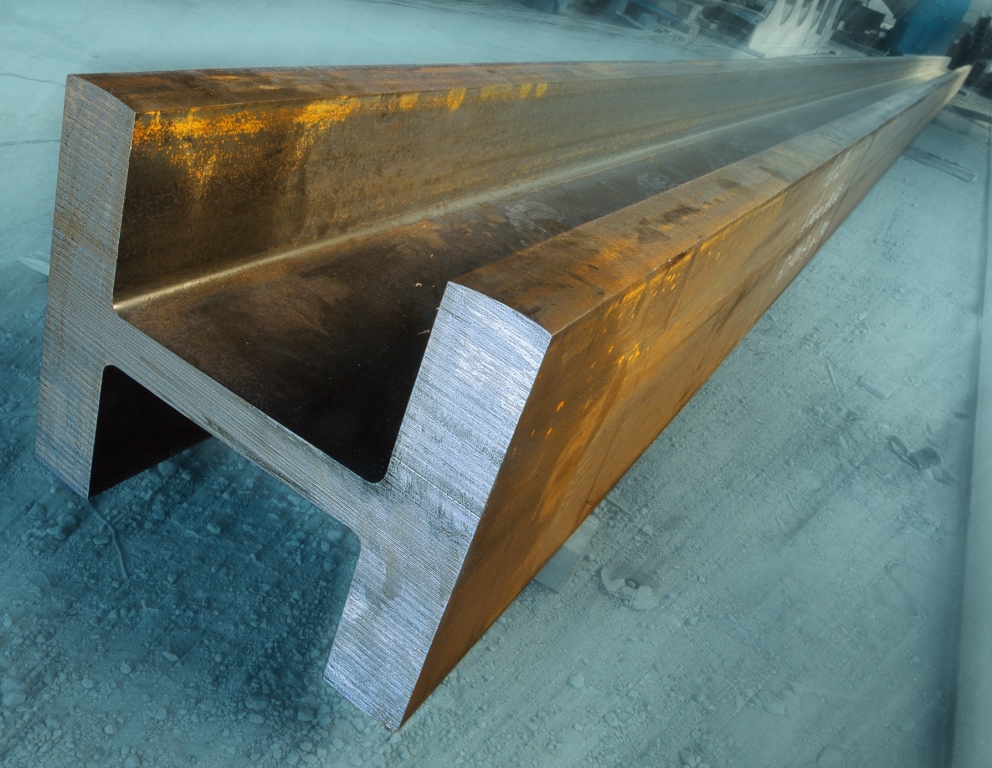
European steel beams prices flat for three consecutive weeks
Fastmarkets’ price assessment for steel beams domestic, delivered Northern Europe was €760-790 ($814- 846) per tonne on Wednesday, unchanged week on week.
Similarly, Fastmarkets’ price assessment for steel beams domestic, delivered Southern Europe was €760-790 per tonne on Wednesday, also unchanged week on week.
The Northern and Southern European beams markets have had no price movements for three consecutive weeks, with buying interest limited due to slow consumption, Fastmarkets heard.
Meanwhile, scrap feedstock prices — including heavy melting scrap (HMS) — in Turkey’s bellwether market inched down in the past week amid weak finished steel demand.
Fastmarkets’ calculation of its daily index for steel scrap HMS 1&2 (80:20 mix) North Europe origin, cfr Turkey was $416.02 per tonne on Wednesday, down by $1.72 per tonne week on week from $417.74 per tonne and by $5.21 per tonne month on month.
Published by: Holly Chant


Northern European steel longs prices stable amid slow consumption
Higher input costs and weak economic conditions resulted in little movement in the market, sources said.
Carnival holidays in the Netherlands on February 11-13 further compounded the quietness in the market, Fastmarkets understands.
But producers remained firm on current offers, given higher input costs, sources said.
Fastmarkets’ price assessment for steel reinforcing bar (rebar) domestic, delivered Northern Europe was €650-660 ($697-707) per tonne on Wednesday, widening downward by €5 per tonne week on week from €655-660 per tonne.
Market participants reported a dead market and did not expect an upturn in demand in the short term.
“The market is dead, and nothing is happening, especially with holidays over the past week across the Netherlands,” a buyer source said.
“The market has not moved week on week,” a second buyer source said.
Fastmarkets’ price assessment for steel wire rod (mesh quality) domestic, delivered Northern Europe was €650-660 per tonne on Wednesday, stable week on week.
Meanwhile, international prices for heavy melting scrap (HMS) have remained high since the beginning of February.
Fastmarkets’ calculation of its daily index for steel scrap HMS 1&2 (80:20 mix) North Europe origin, cfr Turkey was $416.02 per tonne on Wednesday, down by $1.72 per tonne week on week from $417.74 per tonne.
Published by: India-Inés Levy

Europe steel hollow sections prices stable, HRC feedstock costs decline
Prices have been flat in the past few weeks, with sentiment depressed due to slow consumption from the construction sector, according to sources.
Fastmarkets’ weekly price assessment for steel sections (medium) domestic, delivered Northern Europe was €820-890 ($879-954) per tonne on Wednesday, unchanged since January 24.
Fastmarkets’ weekly price assessment for steel sections (medium) domestic, delivered Southern Europe was €820-890 per tonne on Wednesday, also flat since January 24.
Meanwhile, hot-rolled coil feedstock costs in Europe fell in the past seven days amid slow finished steel sales.
Fastmarkets’ daily calculation of its steel hot-rolled coil index domestic, exw Northern Europe was €746 per tonne on Wednesday, down €9.38 per tonne from €755.38 per tonne a week earlier, but up by €14.75 per tonne month on month.
Published by: Holly Chant

European HRC prices slide further in bearish market
Fastmarkets calculated its daily steel HRC index, domestic, exw Northern Europe at €737.60 ($790.33) per tonne on Thursday, down by €8.40 per tonne from €746.00 on Wednesday.
The index was down by €17.19 per tonne week on week but up by €6.35 per tonne month on month.
Offers from integrated producers in the region were heard at €740-760 per tonne ex-works for HRC with April lead times. But sources pointed out that steelmakers were ready to give a discount of €10-20 per tonne on firm bids.
“Order books at mills are not so full for the second quarter, plus we had a few blast furnaces back online in January, so availability [of HRC] is expected to improve — while demand, not so much,” a buyer source in Northern Europe told Fastmarkets.
In January, several European steelmakers restarted capacities that were idled in 2023 because of low demand or due to maintenance needs, Fastmarkets reported.
In Germany, transactions were reported at €725-740 per tonne ex-works in the week from Monday February 12.
One re-roller in Benelux has reportedly sold an HRC cargo to Germany at €710 per tonne ex-works. However, this was not widely confirmed by the market before the publication deadline.
Italy-origin coil was heard offered to Germany at €755 per tonne delivered.
Despite substantial price drops since the beginning of February, trading in Northern Europe remained sluggish because buyers expected the downtrend to persist throughout February and into March, Fastmarkets understands.
“Mills failed to get higher prices for second-quarter [delivery] orders,” a buyer in Germany said. “There are no positive changes from the demand side — that’s the key problem.”
“Of course, everyone wants to restock at rock bottom [prices]. Despite price drops, we still only see low-tonnage sales here and there, no restocking,” a mill source in the region said.
Mill sources and some buyers said they did not expect HRC prices to drop below €700 per tonne ex-works due to production costs and reduced price pressure from imports.
“Uncertainty over safeguards, CBAM [the Carbon Border Adjustment Mechanism] and long lead times make imports unattractive to many buyers, despite lower prices. Buyers who wait too long to restock will have no other option but to book with European mills and pay European prices,” a steel-service center source in Germany said.
Fastmarkets calculated its daily steel HRC index, domestic, exw Italy at €730.83 per tonne on Wednesday, down by €4.80 per tonne from €735.63 per tonne on Tuesday February 13.
The index was down by €19.70 per tonne week on week but up by €8.33 per tonne month on month.
Offers of April-delivery HRC from domestic suppliers were reported around €750 per tonne delivered (€735-740 per tonne ex-works).
Buyers estimated achievable values for April-delivery HRC at €720-740 per tonne ex-works.
Trading remained sluggish in the domestic market because buyers have been keeping to the sidelines and not restocking, Fastmarkets understands.
In the secondary market, 4mm HR sheet was heard trading no higher than €820-830 per tonne CPT; sources said that achieving higher prices “was extremely difficult” due to poor demand.
No new import offers were reported due to the Lunar New Year in Asia.
Published by: Julia Bolotova
EC approves €6.9 billion state aid for H2 infrastructure
The European Commission approved on Thursday €6.9 billion ($7.4 billion) in state aid funding for hydrogen infrastructure-related projects in seven EU countries, Kallanish reports.
The so-called IPCEI Hy2Infra scheme was planned by France, Germany, Italy, the Netherlands, Poland, Portugal and Slovakia. It awards 32 companies, including five SMEs, and 33 projects in areas of electrolysis, pipelines, storage and handling terminals.
“While the renewable hydrogen supply chain in Europe is still in a nascent phase, Hy2Infra will deploy the initial building blocks of an integrated and open renewable hydrogen network,” comments Margrethe Vestager, EC vice president in charge of competition policy. “This IPCEI will establish the first regional infrastructure clusters in several member states and prepare the ground for future interconnections across Europe, in line with the European Hydrogen Strategy.”
The public funding is expected to unlock another €5.4 billion in private investments. The projects cover the deployment of around 3.2 gigawatts of electrolyser capacity; construction of 2,700 kilometres of transmission and distribution pipelines; development of 370 gigawatt-hours of hydrogen storage capacity; and construction of handling terminals and port infrastructure to handle 6,000 tonnes/year of liquid organic hydrogen carriers (LOHC).
The electrolysers should be operational between 2026 and 2028, and the pipelines between 2027 and 2029. The timelines will vary depending on locations, projects and companies, but the EC expects overall completion in 2029.
According to the awards list seen by Kallanish, the majority of projects are based in Germany (24). The country had project approvals in all four Hy2Infra workstreams, with 10 for electrolysers and nine for pipelines. Some of the companies granted support include Air Liquide, EWE Hydrogen, Linde, Lingen, Thyssengas, Gasunie, AquaDuctus, VNG and Hydrogenious.
The West Germany cluster, for instance, will have three electrolysers built in the Rhine-Ruhr area. It will be connected to three different pipeline projects and have access to a storage facility. According to Vestager, by mid-2027, the renewable hydrogen produced in the cluster will be supplied to companies operating in the steel, cement, chemical, refining, and mobility sectors. The cluster will also connect to the Dutch national hydrogen network, she notes.
“For a successful roll-out of renewable and low-carbon hydrogen, all pieces of the puzzle need to come together,” adds commissioner Thierry Breton.
The EU has previously approved two other Important Project of Common European Interest (IPCEI) state aid schemes – the Hy2Tech in July 2022 and the Hy2Use in September 2022.
France, Germany, Poland and Portugal included their participation in their Recovery and Resilience Plans, thus can partially fund some of their projects through the Recovery and Resilience Facility. The amount granted to each company and project will be made public by the EC later, once any confidential business secrets are removed from the EC’s decision documents.