


Prof. Roland Döhrn: Economic environment for steel sector remains challenging
At the EUROMETAL Steel Day & YISAD Flat Steel Conference held at Istanbul Marriott Hotel Asia on Tuesday, March 5, in cooperation with SteelOrbis and with nearly 300 participants, Professor Roland Döhrn, independent researcher at the University Duisburg-Essen, shared his evaluations regarding European economic and steel trends.
The macroeconomic environment
Prof. Döhrn’s assessment of the global economy painted a picture of ongoing fragility, with growth remaining below long-term averages. Notably, world trade experienced a significant decline, attributed to factors such as the in-sourcing of services, rising trade restrictions, and escalating shipping costs. Moreover, inflation is still above target in many countries, and the inflation forecast for 2024 has been revised upward steadily.
Despite some optimism surrounding the US economy, characterized by a stronger-than-expected performance and robust job growth – and the absence of recession even in a year with presidential elections – challenges persist, said Roland Döhrn, particularly in China, where issues in the real estate sector and demographic concerns loom large. Moreover, China is witnessing a re-direction of trade by major trading partners, and it can benefit less from the adaptation of technologies.
“Geopolitical risks continue to exert pressure on global economic stability, as evidenced by the Matteo-Iacoviello geopolitical risk index” commented Prof. Roland Döhrn, “but it can still experience some surprises (as happened with the Russian war in Ukraine).” Within the European Union, modest growth and a slow recovery are anticipated, with GDP projections indicating a marginal uptick after a period of decline in several member states. However, uncertainties surrounding monetary policy and lingering doubts about economic prospects remain prevalent. Therefore, forecasts for 2024 have been revised downward and currently the European Commission seems to be more optimistic than professional forecasters.
The euro area grapples with less favorable monetary conditions, marked by multiple interest rate hikes by the European Central Bank (ECB) to combat inflation. Consequently, borrowing costs have risen, contributing to declines in property prices and an uptick in bankruptcies. GDP forecasts show a positive revision for Spain, while a negative one for Italy, France and – above all – Germany.
Inflation remains, according to Prof. Döhrn, a critical issue in the current economic landscape. Despite some signs of moderation, inflation persists at an elevated level. The European Commission exhibits in this case a more skeptical outlook compared to professional forecasters, suggesting potential heightened concerns regarding price stability. High inflation is increasingly translating into higher wages, with potential implications for economic and social dynamics.
The steel demand and the steel market
In the EU, while production in steel-using sectors has experienced only a moderate decline so far, recent trends in leading indicators paint a less promising picture. The economic environment for the steel sector is expected to remain challenging, with leading indicators suggesting a continued deterioration in the first quarter of 2024, particularly in steel demand within the construction sector, which is anticipated to contract.
Moreover, Prof. Döhrn explained how the global steel market experienced a mixed start to 2024, with production declining, remarkably in China, while showing modest growth elsewhere. In the EU, trends indicate a downward trajectory in crude steel production, coupled with volatile imports and a decline in apparent consumption for the second consecutive year. EUROFER’s forecasts offer a somewhat optimistic outlook, anticipating a rebound in steel consumption, interpreting the difference between growth of steel weighted production and apparent consumption as a stock cycle, but, according to Döhrn, the change goes beyond that.
One of the key challenges facing the steel industry is the decline in specific steel consumption, attributed to various factors such as advancements in energy-saving technologies and changing production patterns among steel users. “Distinguishing between cyclical and fundamental drivers of this decline remains a subject of ongoing inquiry” concluded Prof. Döhrn, “highlighting the complexity of the current economic landscape.”
Source: steelorbis.com


Anthony de Carvalho: Excess capacity makes decarbonization efforts more difficult
At the EUROMETAL Steel Day & YISAD Flat Steel Conference, held at Istanbul Marriott Hotel Asia on Tuesday, March 5, in cooperation with SteelOrbis Mr. Anthony de Carvalho stated that steel overcapacity is having negative effects on markets and emissions, by causing the former not to function properly – due to bad organization in terms of resources and supply – and the latter to grow uncontrollably, having implications for the climate.
Analyzing the current steel demand situation, Mr. de Carvalho stated that the global steel demand situation is weak due to the slowdown in world economic growth, high inflation, and interest rates. Although global steel demand is slowly recovering, it is still not growing fast enough to keep up with the overcapacity growth rate.
On the other hand, de Carvalho noted, steelmaking capacity keeps rising mostly in technologies that emit higher CO2 on average than others. In the meantime, current trends are widening the gap between capacity and demand, which might result in a flood of relatively high-carbon steel exports in international steel markets in the next few years, with a squeeze on steelmakers’ profitability.
The OECD’s outlook for steel capacity expansion until 2026 sees Asian countries in the first place – especially ASEAN and India – with a growth of almost 90 million mt. The negative aspect is that around 65 million mt will still be produced using very polluting BOF technologies, whereas the rest of the world’s production is becoming more and more EAF-based.
The potential increase in capacity amounts to 158 million mt in 2024-26, and the gap between capacity and demand is more than 500 million mt. Last year, the global excess capacity – with China as the major producer – was equal to 504 million mt, which is higher than the combined production of major global steel producers and the global steel trade, that involved 282 million mt. If it keeps going like this, China risks wiping out all the other countries’ production in the global market, explained De Carvalho.
Impacts of excess capacity on world steel markets
In a study released on Friday, March 1, the OECD illustrated an empirical model to study the impacts of excess steel capacity on the world steel markets, which can be summarized with a quote from Mr. de Carvalho: “Excess steel capacity is causing non-sustainable profitability levels, and the steel industry needs better operating profit ratios in order to improve low-carbon steelmaking.” In the above mentioned study, the OECD also hypothesized what would have happened if global excess capacity had not surged, concluding that utilization rates and revenues would fall at the beginning, but in the end they would be at healthy levels – higher than the actual ones.

The preliminary results of the study show that steel stock prices also fell below predicted values in most cases, indicating a negative impact on profitability.
To conclude, global excess capacity is causing steel producers to have lower aggregate domestic market shares, a decrease in domestic utilization rates, reduced revenues and profits, as well as inconclusive impacts over other countries’ steel exports.
The changing nature of excess capacity
De Carvalho explained that the carbon intensity of excess capacity is also growing and at the same time trade policies are increasingly focusing on the carbon footprint. That is why excess capacity is hitting the steel industry with a wrong timing, as the latter is trying to focus on decarbonization. This could lead to accelerating government subsidies to support green steel in impacted countries, policies aiming to boost domestic supply of raw materials, and a greater focus on raw materials on the pathway through decarbonization.
Last year, the GFSEC signed a new three-year mandate and started a substantive work aimed to handle this problem, also outreaching to non-member Asian countries who want to participate, as the overcapacity issue is affecting them as well.
In the third quarter this year, the GFSEC will hold a ministerial meeting to develop tangible options to address overcapacity.
Source: steelorbis.com

Veysel Yayan: Turkey’s exports expected to increase in 2024
At the EUROMETAL Steel Day & YISAD Flat Steel Conference held at Istanbul Marriott Hotel Asia on Tuesday, March 5, in cooperation with SteelOrbis, Dr. Veysel Yayan, secretary general of the Turkish Iron and Steel Producers’ Association, shared his opinions on the performance of the global and Turkish steel sectors and his expectations from the future.
Dr. Yayan presented a general outlook for Turkey’s steel sector in his talk. He said the steel sector in Turkey has shown a different trend compared to the general economy. Turkey’s general economy in 2022 and 2023 recorded 5.6 percent and 4.5 percent growth increases respectively, while the steel sector contracted by 12.9 percent and 4.0 percent for the respective years. Meanwhile, global capacity utilization rates fluctuated between 75.0 percent and 80.0 percent in recent years, while Turkish steelmakers’ average capacity utilization rate in 2023 was 56.8 percent. He said that this rate should move up to as least 70 percent in the future.
Stating that the poor performance of Turkey’s steel sector was caused by the actions of China, which has had a negative impact not only on Turkey but also globally, Dr. Yayan commented “China faced pressure from global countries as it increased its exports between 2010 and 2015, resulting in Chinese steelmakers decreasing their capacities until 2020. However, more competitive and modern capacities were put into action and its capacities are expected to increase by 40 million mt despite the green transformation endeavors. That’s why China will remain a threat for the steel industry even though it has opted for stable production rates.”
Yayan said that the outlook for Turkey’s steel sector in the coming months has changed and trade activities in the sector remained strong. Finished steel consumption in Turkey increased by 17.1 percent in 2023. While flat steel production was lower than long steel production, flat products were consumed significantly more than long products, and imports accounted for 48 percent of total consumption. According to Dr. Yayan, the production of flat products will increase provided that regulations are implemented to boost domestic supply.
Yayan also expressed his opinions on decarbonization efforts in Turkey, stating that the decarbonization process in Turkey was an unfair one, mostly due to Turkey being subjected to the same safeguard duties as countries such as China, Vietnam, Taiwan and South Korea, even though Turkey is considered as a peer to EU countries in terms of the green transformation. “The EU sees Turkey as a threat and this hurts both sides. It will take some time for Europe to see this,” Yayan said.
Turkey’s crude steel production and flat steel consumption registered increases in January 2024, moving up by 24.7 percent and 33.6 percent, respectively, while flat steel exports increased more than flat steel imports. Yayan said he understood these changes as a strong positive for Turkey’s steel sector, stating that the indicators for February are even more hopeful. In 2024, Turkey’s steel exports are expected to increase and its crude steel production may exceed 40.4 million mt.
Source: steelorbis.com

Ayhan Uçar: Scrap will be more valuable during green transition, Turkey may face scrap supply issues
At the first session of EUROMETAL Steel Day & YISAD Flat Steel Conference, held at Istanbul Marriott Hotel Asia on Tuesday, March 5, in cooperation with SteelOrbis, Ayhan Uçar, procurement manager of Turkish steel producer Tatçelik, commented about the current situation in the steel industry and shared his expectations.
Stating that his company has an annual production capacity of 1.5 million mt at its three production plants in Ereğli, Mr. Uçar stated that the company’s galvanized steel capacity will increase with the commissioning of a new line with an annual 650,000 mt capacity in June this year, in addition to the existing 800,000 mt of galvanized steel capacity. The new line will enable Tatçelik to coat steel up to 4 mm thick and produce galvanized steel with widths over 1,600 mm. Adding that Tatçelik exports steel to more than 70 countries, he said that the company’s export percentage will increase to 60-70 percent this year, compared to 40-50 percent last year. In addition, as the company aims to meet its energy needs with its own electricity production, Uçar said that Tatçelik has invested over €60 million in solar and wind power plants.
He pointed out that Turkey’s flat steel production and consumption in 2023 totaled 13.68 million mt and 19.68 million mt, respectively, while indicating that 48.2 percent of flat steel consumption was met by imports despite duties and the production capacities in Turkey. The country’s exports decreased especially for hot rolled coil and cold rolled coil, he noted.
Meanwhile, anticipating that the population increase in India, where steel consumption was lower previously, will result in a hike in steel consumption, Uçar said he expects India to become the main steel supplier for Europe, with the higher steel production in the country.
Stating that energy, iron ore and coal prices will decline with the approaching summer season, the Tatçelik representative said that steel demand, which will move sideways in the next two to three months, will increase from the middle of the third quarter this year with the start of new and postponed projects. Saying that the scrap will be more valuable in the medium-to-long term amid the green transition, Uçar noted that Turkey, which produces steel via electric arc furnaces, may face scrap supply issues. In addition, regarding Turkey’s ongoing antidumping investigation into HRC from four countries, Uçar commented that the potential dumping margins could widen the gap between local and global prices, pointing out that the gap between the prices increased to $100/mt with the hike in duties.
Source: steelorbis.com

Hakan Aran: Worst period for inflation in Turkey is over
At the EUROMETAL Steel Day & YISAD Flat Steel Conference, held at Istanbul Marriott Hotel Asia on Tuesday, March 5, in cooperation with SteelOrbis, Hakan Aran, general manager of of Turkish bank İş Bankası shared with the participants his evualation of the effects of global inflation on the Turkish economy and his recommendations for the steel industry and possible solutions.
Mr. Aran started his speech by saying that economic plans were completely disrupted by the Russia-Ukraine war in 2022 and the February 6 earthquakes in Turkey in 2023, and he said that he wished that this year, which is the 100th anniversary of İşbank, would be a more comfortable year for the market. Stating that one of the main reasons for global inflation is the way the 2008 crisis was resolved, Mr. Aran underlined that issuing too much money into the market as a way out of this crisis and then resorting to monetary expansion, and also given the impact of the pandemic, led to global inflation. He stated that Turkey lost control of inflation by twice and being “stubborn” about its economic policy. Aran said that they expect the next two years to be economically difficult after 2023 when inflation was on the agenda as the first problem. “The global economic congestion will continue for the next two years. However, do not be pessimistic about the 4.5 percent monthly and 67 percent annual inflation announced yesterday. The worst period is over. The period between May 31, 2023, and May 31, 2024 will be remembered as the historically worst period in Turkey in terms of inflation, impacted by the general elections in May 2023. We think that we will close this year with annual inflation of 40-45 percent. The tight monetary policy implemented will be further strengthened by the decisions to be taken in fiscal policy in April, and this will contribute to the achievement of medium-term inflation targets. In this regard, we estimate that annual inflation will decrease to 22-25 percent by the end of 2025, and again to 10 percent by the end of 2026,” Aran said.
Sharing his evaluations and suggested solution for the steel industry, Aran stated that China turned to exports as a result of the contraction in domestic demand, affecting the export sales of all other countries, and surpassing Turkey in the European market. He underlined that Turkey’s steel exports decreased and its imports increased in 2023, and that production lagged behind consumption in both the flat and long product segments for the first time since 2012. Stating that he expects this situation to be reversed in 2024 and 2025, Mr. Aran said, “In this difficult period, it is important to focus on projects related to energy and labor efficiency and to see this congestion as an investment opportunity. The smartest thing for the Turkish steel industry to do would be to combine energy efficiency with green transformation and implement the requirements of the carbon border adjustment mechanism that will start in 2026, thus not being affected by a possible tax on exports and being able to participate in competition while demand is recovering,” he said. At this point, the İş Bankası official said that his bank has created an investment loan and with its own resources to ensure that production and investments in Turkey do not stop and to prevent exports from decreasing. In this context, he stated that investors can obtain a loan of TRY 100-800 million from the bank with a two-year grace period, a 10-year maturity period, 20 percent of which will be financed from the equity capital of the buyer and 80 percent of which will be financed by the bank, at 35 percent interest. Aran underlined that, in this way, the next two years can be well utilized in terms of investments.
Source: steelorbis.com

Flat steel sector comes together at EUROMETAL & YISAD Steel Conference
At the EUROMETAL Steel Day & YISAD Flat Steel Conference held at Istanbul Marriott Hotel Asia on Tuesday, March 5, in cooperation with SteelOrbis and with nearly 300 participants, Metin Tayfun İşeri, chairman of Turkey’s Association of Flat Steel Exporters and Manufacturers (YISAD), and EUROMETAL board member Alexander Julius, made the opening speeches.
Tayfun İşeri stated that safeguard measures have shaped the last five or six years of global iron and steel trading. While producers were considering globalization before, they have now started to focus on regionalization. According to Mr. İşeri, the Section 232 measures that entered into force with the approval of the former US President Donald Trump in 2018 led to the regionalization, and the EU had to bring in quotas on steel trading in line with this, though reluctantly. US producers took advantage of this period, the YISAD chairman said, by making more investments than before, commissioning over 10 million mt of new steel capacities and replacing old facilities with new and modern ones. Even though the EU fell behind, they have started to invest in green production and electric arc furnaces as part of the Carbon Border Adjustment Mechanism, and the EU governments have funded their local producers. In the meantime, İşeri said, the geopolitical unrest in the Middle East that began towards the end of 2023 changed and affected trading despite the opportunities. After the Suez Canal was shut down and the Panama Canal limited the number of vessels passing through, many issues surfaced. He added that several factors such as inflation and high interest rates will continue to affect demand this year.

The second welcome speech was given by Alexander Julius, EUROMETAL board member and managing partner of macroMETAL. He talked about the mission of Eurometal, giving some organizational details, including scope of their operations. He also added that Turkey is a precious source for the steel industry in Europe.
Mr. Julius added that EUROMETAL is very glad to have Turkey as a partner, as it is one of the major steel exporters to the EU. Although last year the steel export volume of Turkey to the EU was down 36 percent due to safeguard duties, AD duties and energy costs, in 2023 Turkey was still the second-biggest source of steel imports for the EU, with a total of 3.33 million mt. Furthermore, Turkey is very committed to the decarbonization issue, with 72 percent of Turkish steel production being EAF-based. Thus, its advanced technologies in this field make it a big player in the steel industry and a great supply partner for EUROMETAL.
Source: steelorbis.com
Some of the press articles that emerged from this event:
- Prof. Roland Döhrn: Economic environment for steel sector remains challenging
- Anthony de Carvalho: Excess capacity makes decarbonization efforts more difficult
- Veysel Yayan: Turkey’s exports expected to increase in 2024
- Ayhan Uçar: Scrap will be more valuable during green transition, Turkey may face scrap supply issues
- Hakan Aran: Worst period for inflation in Turkey is over
- Turkey 2024 steel production seen similar to 2021 levels
- Global capacity growth set to ‘flood’ market with higher emissions steel: OECD
- Turkish Tatcelik to start new galvanized line in June
- Turkish steel exporting body calls on EU to stop ‘double standards’ on trade rules
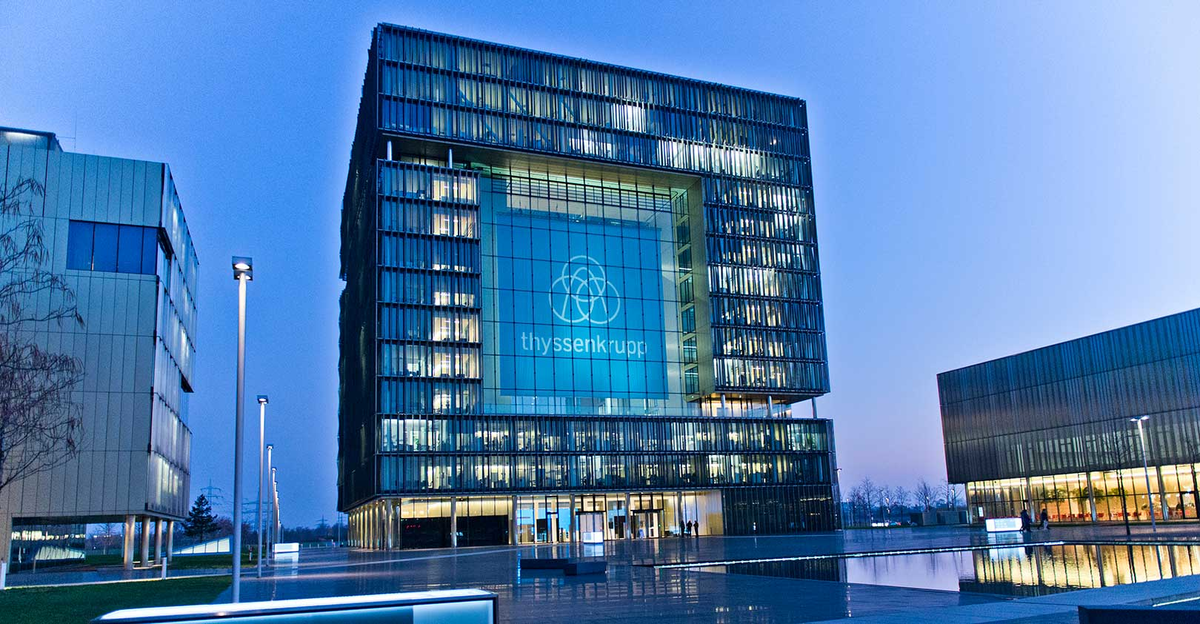
Thyssenkrupp starts electrical steel slitting line in Italy
Thyssenkrupp Steel has commissioned a new slitting line in Motta Visconti, Italy, Kallanish learns from the steelmaker. The line, replacing an existing one that is more than 30 years old, is part of the company’s investment in electric mobility, and enables production of high-efficiency electrical steel for the automotive industry.
The new line can slit up to 500 metres of material per minute, and will allow tk Steel to double production capacity for electrical steel at the Motta Visconti plant. Above all, it is designed to cut very demanding, particularly thin electrical steel – starting from a thickness of 0.20mm. This material is processed further in lamination stamping shops, and ultimately installed in high-performance traction motors for electric vehicles.
The line is able to produce NO25, which, with a thickness of 0.25mm, is characterised by excellent magnetic properties, according to tk Steel. These include a guaranteed magnetisation change loss of just 12.5 W/kg, a core loss that is an important property of electrical steel strip. This is influenced by the sheet thickness, the alloy and the production process of the material. It determines how efficiently a motor utilises electrical energy and converts it into rotational energy.
Christian Koehl Germany


Ireland stockholder eyes galvanizing line
Ireland-based steel stockholder Hibernia Steels Products is investing into a 36,000 tonnes/year hot-dip galvanizing line near Drogheda. The firm has received planning permission for the project but will need to wait 12-18 months until any potential appeals have been concluded before starting construction.
The firm is making the investment as it has identified a supply shortage in Ireland of galvanized steel, which increases the lifespan of steel and therefore reduces carbon emissions from steelmaking, Hibernia tells Kallanish.
The firm supplies the construction and machinery sectors, among others, with beams, merchant bar and hollow sections. It trades some 40,000 tonnes/year of steel and processes a further 7,000 t/y, a number that it aims to grow to 15,000 t/y. As well as processing its own steel, it subcontracts fabrication services to customers. Steel is sourced mainly from EU mills.
Adam Smith Poland

Italy appoints two more commissioners for insolvent ADI
Acciaierie d’Italia (ADI) has been declared insolvent by the Milan tribunal due to “an absence of liquidity”, a tribunal document says. This officially triggers the procedure of special administration initiated last month and allows the state to inject into the company the necessary funds to guarantee production continuity.
Last month, the Italian government placed ADI into extraordinary administration, thereby passing control of the company from ArcelorMittal and Invitalia to government-appointed commissioners, headed by Giancarlo Quaranta. Two more commissioners have been appointed to share the task with Quaranta, corporate governance specialist Giovanni Fiori and president of NE Nomisma Energia Davide Tabarelli, Kallanish learns from Italy’s Ministry of Enterprises and Made in Italy (MIMT).
Authorities are actively seeking private investors for ADI after Prime Minister Giorgia Meloni said authorities intend to avoid nationalising the troubled steelmaker. They are rumoured to be in talks with local steelmaker Arvedi, but also with Metinvest and Jindal Steel subsidiary Vulcan Green Steel, informed sources say.
While Arvedi is not commenting on its potential involvement with ADI, Metinvest has stated its interest. The company is currently supplying Taranto with raw materials and sourcing slab from Taranto for its Italian rolling mills. Almost all local steelmakers and large steel processors have also been contacted by the government about investing.
ADI sold 2.5 million tonnes of steel in 2023 and currently has 1mt of steel in stock, including raw materials and finished products. It produced about 3mt of crude steel last year. At Taranto, ADI is producing using only blast furnace No.4, which was idled on 21 February for maintenance for 24 hours (see Kallanish passim).
Natalia Capra France

European HRC prices decrease further; buyers expect mills to trim output
Mills in Northern Europe kept their official offers in the range of €730-750 ($791-813) per tonne ex-works, but they still gave discounts on firm bids, Fastmarkets heard.
Demand for HRC remained sluggish; buyers continued to postpone restocking, waiting for further price drops, market sources said.
No major deals were heard in the market.
Sources estimated tradable prices in the range of €700-730 per tonne ex-works.
Fastmarkets calculated its daily steel HRC index, domestic, exw Northern Europe at €715 per tonne on Monday, down by €0.50 per tonne from €715.50 on Friday March 1.
The index was down by €3.75 per tonne week on week and by €46 per tonne month on month.
Mills might have to cut output to stop the downtrend in prices, several buyer sources in Germany said.
“Demand is unlikely to rebound [soon],” one German buyer source said.
Mills would probably need to cut production due to low demand and falling prices, a buyer source from the Benelux area said.
“But [trimming production] will not happen immediately because some mills have just restarted operations. They will need a few months or even half a year to take such a decision,” the buyer source added.
Several European steelmakers restarted blast furnaces in early 2024 that were idled in late 2023, Fastmarkets reported previously.
In Southern Europe, Fastmarkets’ daily steel HRC index, domestic, exw Italy was calculated at €694.00 per tonne on Monday, down by €13.92 per tonne from €707.92 per tonne on March 1.
The index was down by €21.50 per tonne week on week and by €61 per tonne month on month.
In Italy, HRC offers were heard mainly at €700 per tonne ex-works and some buyer sources reported even lower offers at €680-690 per tonne ex-works.
But other industry sources could not confirm that offers below €700 per tonne ex-works were widespread in the spot market.
According to Fastmarkets’ sources, these lower prices might be offered to clients such as big stockholders and steel service centers for more significant tonnages.
“I cannot say prices below €700 [per tonne ex-works] are widely available in the spot market now, but we are moving in that direction,” a distributor in Italy said.
Tradable prices for HRC in Italy were in the range of €680-700 per tonne ex-works, market sources said.
Import offers from Vietnam to Italy with May shipment and end-July delivery were heard at €610-620 per tonne CFR.
Similar offers were heard from Egypt for June-delivery material.
India was also offering HRC at similar prices, but the country’s utilization of EU’s import quotas was uncertain, because European buyers have already purchased significant quantities from India, Fastmarkets heard.
Sales of India-origin HRC for first- and second-quarter delivery to Europe amounted to more than 850,000 tonnes, according to buyer estimates.
The EU’s January-March import allowance for India-origin HRC was 574,440 tonnes, including 279,777 tonnes rolled over from the last quarter of 2023. The April-June import allowance was 294,662 tonnes.
Published by: Julia Bolotova, Darina Kahramanova
