


Thyssenkrupp Steel to connect to GET H2 German hydrogen pipeline in 2028
Thyssenkrupp has signed a realization agreement with gas transmission system operators Nowega, OGE and Thyssengas to connect its Duisburg steel plant in Germany to the GET H2 hydrogen pipeline network in 2028 as it seeks to decarbonize its operations.
The GET H2 pipeline project plans to connect green hydrogen production hubs with industrial consumers in the Lower Saxony and North Rhine-Westphalia regions.
“With this contract, the hydrogen economy in North Rhine-Westphalia and Germany continues to take shape,” the companies said in a statement March 21.
The 135-km pipeline network between Lingen and Gelsenkirchen will be extended to the Duisburg steelworks via a 40-km link from Dorsten. GET H2 in turn will link to the planned national hydrogen pipeline network.
Thyssenkrupp is looking to move to hydrogen-based steel production, and is to construct a 2.5-million mt/year direct reduction iron plant to replace the four blast furnaces at Duisburg. First production is scheduled from the end of 2026, avoiding up to 3.5 million mt/year of CO2 emissions.
The direct reduction plant will reduce iron ore pellets to sponge iron using hydrogen, with natural gas in the interim.
In February, Thyssenkrupp issued a tender to purchase up to 151,000 mt/year of renewable and low-carbon hydrogen under 10-year contracts, with lower volumes starting from 2028, for pipeline delivery to the Duisburg steelworks.
The steelmaker will seek an expected 104,000 mt of hydrogen in 2028, rising to 143,000 mt/year over 2029-35 before reaching 151,000 mt/year over 2036-37 as it seeks to decarbonize the plant.
The gas TSOs are to convert existing gas pipelines between Vlieghuis in the Netherlands and Kalle and onward to Ochtrup to transport hydrogen and connect to the GET H2 pipeline system by 2027, with the Duisburg plant connected in 2028.
Thyssenkrupp said previously that as sufficient green hydrogen would not be available when the plant starts, it plans to use natural gas when the DRI plant is commissioned, with blue hydrogen acting as a bridge before renewable production ramps up.
Platts, part of S&P Global Commodity Insights, assessed the cost of producing hydrogen via alkaline electrolysis in Europe at Eur4.46/kg ($4.85/kg) March 20 (Netherlands, including capex), based on month-ahead power prices. Proton exchange membrane electrolysis production was assessed at Eur4.90/kg, while blue hydrogen production by steam methane reforming (including carbon, CCS and capex) was Eur2.34/kg.
The contract between Thyssenkrupp and the gas TSOs regulates the hydrogen pipeline conversion and construction, as well as rights and obligations of the partners until the start of operations.

Thyssenkrupp steel decarbonization
Thyssenkrupp Steel is the largest flat steel manufacturer in Germany, producing around 11 million mt/year of crude steel.
The company aims to cut CO2 emissions by over 30% by 2030, targeting climate neutrality across all its sites by 2045.
In July, the European Commission approved a German Eur550-million direct grant and conditional payment mechanism of up to Eur1.45 billion to support ThyssenKrupp Steel Europe in decarbonizing its steel production and accelerating renewable hydrogen uptake.
Europe-based buyers have started to show greater interest in carbon-accounted steel. Platts assessed Northwest European hot-rolled carbon-accounted coil down Eur5 on the day at Eur800/mt ex-works Ruhr March 20.
GET H2 network
The GET H2 network consortium also includes BP, RWE and Evonik.
In September, RWE produced the first hydrogen at its test electrolyzer in Lingen for a pipeline transport and storage trial.
The 250-kW high-temperature solid oxide electrolyzer from manufacturer Sunfire will produce up to 7 kg/hour of hydrogen for the GET H2 TransHyDE project, which will test hydrogen pipeline transport and storage from 2024.
RWE plans to start up a larger 14-MW pilot electrolyzer plant for industrial-scale production at Lingen in the coming months. The 14-MW plant will test the use of two electrolyzer technologies, pressurized alkaline and proton exchange membrane, which RWE is considering for future projects.
It also received construction and operation approval for the first two 100-MW electrolyzer plants of its 300-MW GET H2 Nukleus project in Lingen in September.
The 200-MW plant will produce up to 35,000 mt/year of green hydrogen for industrial decarbonization.
And in October, OGE and Nowega began work to convert the first 46-km section of pipeline from the OGE compressor station in Emsburen to Bad Bentheim in Lower Saxony and on to Legden in North Rhine-Westphalia for hydrogen use.
The conversion will see the pipeline sections separated from the gas network after which upgrade measures for the transport of hydrogen will begin. The pipeline would then be ready to flow hydrogen from 2025.
Author: James Burgess, james.burgess@spglobal.com, Annalisa Villa, annalisa.villa@spglobal.com

US’ Nucor to supply Mercedes with low-embodied carbon steel
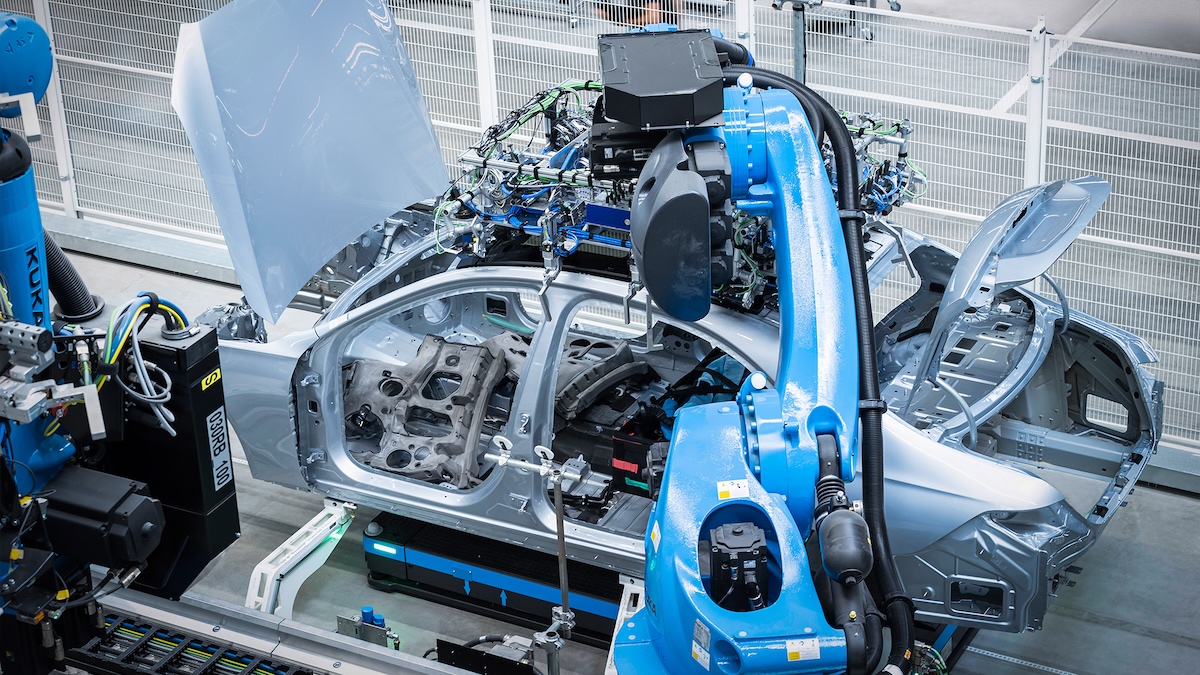
Nucor has signed an agreement with Mercedes-Benz to supply certified low-embodied carbon steel for vehicle models produced at the automaker’s Tuscaloosa, Alabama, plant, the US-based steelmaker said in a statement March 20.
Nucor will supply Mercedes with its Econiq-RE steel products, which are produced with 100% renewable energy, reducing greenhouse gas emissions to less than half of that of blast furnace-based steel production for Scopes 1, 2 and 3 emissions, it said. Econiq, launched in 2022 with General Motors as the first customer, is not a single product; it is a net-zero certification, which can be applied to any product from Nucor’s steel mills, according to the company’s website.
The agreement comes as Mercedes and other global automakers look to decarbonize supply chains, increasing demand for low-emissions steel.
The use of Nucor’s Econiq brand will reduce carbon emissions throughout Mercedes’ supply chain, according to Dan Needham, Nucor’s executive vice president for commercial. Associated volumes were not disclosed.
“Our Econiq brand is helping steel end-users meet their growth and sustainability goals, and we are proud that it is going to be a key piece of Mercedes-Benz’s path towards a net carbon-neutral new car fleet along the entire value chain,” Needham said.
Mercedes has set a goal to have its entire fleet of new vehicles be net carbon neutral across its entire value chain by 2039. To support this, it has signed agreements to source low-carbon steel with Germany’s Thyssenkrupp Steel, Italy’s Arvedi and Sweden’s H2 Green Steel to supply its European operations.
In the US, Mercedes signed an agreement with Steel Dynamics Inc. in September for the supply of more than 50,000 st/year of CO2-reduced steel for its Tuscaloosa auto plant.
Amid growing demand for greener steel products, low-carbon premiums have emerged in Europe. Platts, part of S&P Global Commodity Insights, last assessed Northwest European hot-rolled carbon-accounted coil at Eur805/mt ($874.3105/mt) ex-works Ruhr March 19, reflecting a premium of Eur125/mt over the Northwest European HRC price of Eur680/mt the same day.
The assessments reflect trade in HRC with carbon emissions certified by an internationally accepted, independent organization. The European HRC Carbon-Accounted Steel Premium reflects any differential achieved for the spot sale of hot-rolled steel on an ex-works basis, with total accounted carbon emissions of 2.1 mt of CO2, or less, for every metric ton of steel produced.
Author: Justine Coyne, justine.coyne@spglobal.com

UK details carbon border tax proposals as it kicks off consultation
- Seeks views for the design and administration of CBAM
- UK CBAM to start in 2027, a year after EU
- Iron, steel and aluminum sectors likely to be heavily impacted
The United Kingdom launched a consultation to help it design a carbon border tax on imports of emissions intensive products from 2027, the government said March 21.
The consultation, that will run for a 12-week period ending June 13, is part of the country’s efforts to introduce a carbon border adjustment mechanism (CBAM) by 2027 on imports of goods from the following sectors: aluminum, cement, ceramics, fertilizers, glass, hydrogen, iron and steel.
The purpose of the consultation is to gather views hear from importers and their agents, other businesses, individuals, tax advisers, trade and professional bodies and other interested parties, including those overseas, according to documents released by the UK Department for Energy Security and Net Zero.
The charge applied by the UK CBAM will depend on the amount of carbon emitted in the production of the good and the gap between the carbon price applied in the country of origin – if any – and the carbon price faced by UK producers.
Under the current proposal, the government will set and levy seven rates of tax, one for each sector.
This rate, which will be set by the government, will be determined by a methodology and updated on a quarterly basis, reflecting the price of UK Allowances under the UK Emissions Trading Scheme.
“The UK CBAM rate will be reduced (potentially to zero) if the embodied emissions in the CBAM goods were subject to a carbon price overseas that was greater than or equal to the UK CBAM rate for that sector,” the document said.
UK carbon prices have been extremely weak in the past 12 months on weaker demand due to lower power generation and weak manufacturing numbers, along with doubts over the government’s climate commitments.
Platts, part of S&P Global Commodity Insights, assessed UKAs at GBP35.60/mtCO2e on March 21. This is a slight rise after prices fell to a record-low of GBP31.42/mtCO2e on Jan. 29.
Prone sectors, countries
The document also said that based on historic trade flow data, the iron and steel and aluminium, will be most exposed to its CBAM.
The total value of CBAM imports from iron & steel and aluminium in 2023 were GBP4.5 billion and GBP11.87 billion respectively, according to HM Revenue and Customs data. The mechanism is likely to have a notable impact on the EU, China, Turkey, US, India and Taiwan, which are the top 5 origin markets of CBAM imports, the document showed.
The first accounting period for the carbon leakage tax will run from Jan. 1 to Dec. 31, 2027, while from 2028, the periods will become quarterly.
“Using a quarterly reference to the UK ETS price would allow for the UK CBAM rate to track the changes in the UK ETS price throughout the year, whilst balancing the need to give importers certainty on the price they will pay for their consignments in each reporting period,” the document added.
This comes after the EU’s own CBAM entered into force in its transitional phase from Oct. 31, 2023. The main purpose of CBAM seems to be to push the European industry to significantly decarbonize without being undercut by other geographies with no carbon costs.
However, EU’s CBAM, will fully apply from 2026, a year before the UK tax. This mechanism also obliges companies that import into the bloc to pay a tax to account for the difference between the carbon price paid in the country of production and the price of carbon allowances in the EU ETS.
The UK ETS, which became operational in 2021, is currently in its first phase, set to run until 2025. It regulates CO2 emissions from power generation, emissions-intensive heavy industries and aviation — a similar sectoral scope to the EU ETS. The UK has set a target to reduce emissions by 78% by 2035 compared with 1990 levels before reaching net zero by 2050.
Author: Eklavya Gupte, eklavya.gupte@spglobal.com
Low demand weighs on European steel beam prices
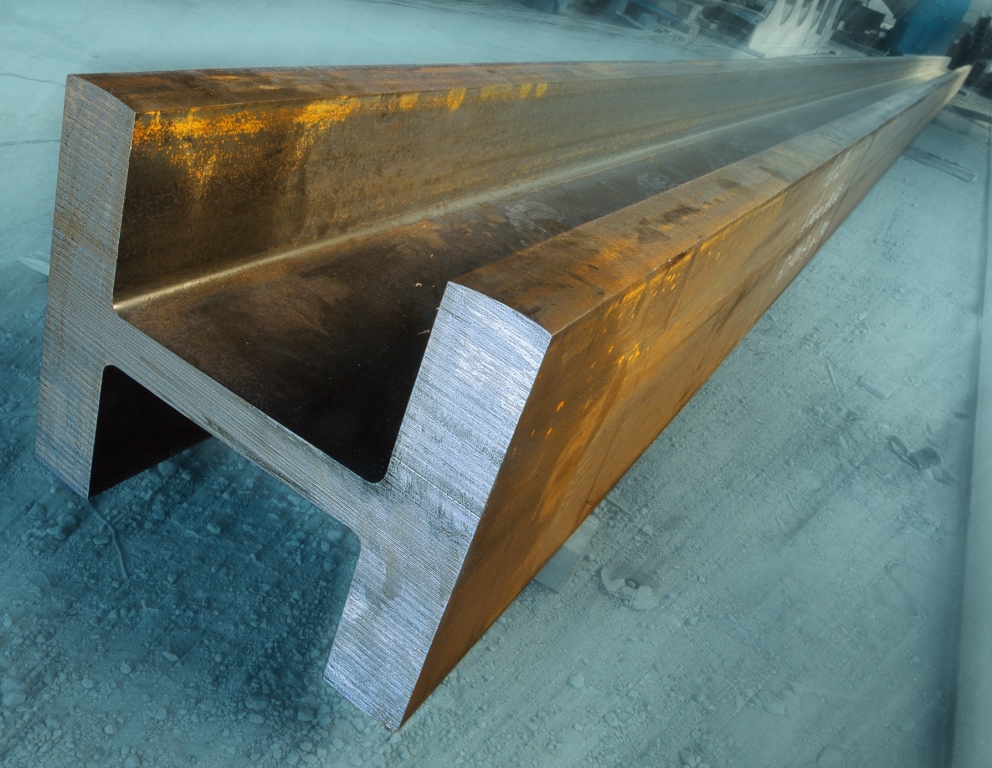
Similarly, Fastmarkets’ weekly price assessment for steel beams, domestic, delivered Southern Europe, was €700-770 per tonne on Wednesday, narrowing down by €60 per tonne from €760-770 per tonne on February 28.
“Prices are under pressure because of low demand,” a trader in Northern Europe told Fastmarkets.
Sources were pessimistic about expectations for demand in the second quarter of the year, amid weak consumption in the construction sector.
Scrap feedstock costs in Turkey’s bellwether market declined over the month, meanwhile, due to weak economic conditions and slow trading during the Islamic holy month of Ramadan.
Fastmarkets’ daily index for steel scrap HMS 1&2 (80:20 mix) North Europe origin, cfr Turkey was calculated at $375.43 per tonne on Wednesday, down by $30.03 per tonne from $405.46 per tonne on February 20.


Market conditions unchanged in Northern European steel longs market
Depressed consumption resulted in a pessimistic outlook for the Northern European rebar market, sources said.
Decreasing scrap prices have resulted in further resistance among buyers to accepting higher prices.
Fastmarkets’ calculation of its daily index for steel scrap heavy melting scrap 1&2 (80:20 mix) North Europe origin, cfr Turkey was $375.43 per tonne on Wednesday, down from $377.51 per tonne week on week.
The corresponding Fastmarkets’ weekly price assessment for steel wire rod (mesh quality), domestic, delivered Northern Europe was €645-660 per tonne on Wednesday, stable week on week.
Meanwhile, import offers were reported in the Netherlands from Algeria at €590 per tonne cfr. The majority of import offers were reported at around €630 per tonne cfr.

Trading muted in oversupplied European steel HRC market
Besides, buyers said, they wanted to see how many tonnes of imported coil would be customs-cleared on April 1 under the EU’s safeguard quotas, and what duty rates would be applied.
“We are buying as little [HRC] as we can and waiting for more clarity on import volumes for the second quarter,” a buyer in Germany said.
Market sources expected import quotas for India, South Korea and the “other countries” category – which includes Japan, Taiwan, Vietnam and Egypt – to be exceeded for the second quarter, Fastmarkets heard.
In any case, end-user demand for HRC has remained sluggish, with buyers preferring to keep their stocks low.
“Real demand is very weak,” a second trader said, “because most buyers have sufficient stocks, [and are] dealing with lower demand and strong competition between steel service centers, stockists and traders downstream. [They are also] expecting even lower [HRC] prices because of declining costs for raw materials.”
Offer prices in Northern Europe were reported at €700-710 ($761-772) per tonne ex-works, although market sources said that €680-690 per tonne ex-works would be “negotiable” on a firm bid.
Buyers’ estimates of achievable price for HRC were heard at €670-680 per tonne ex-works.
“Mills are hungry for orders, but at the same time [they are] not prepared to give in to the extremely low prices for now,” a trader in the Benelux area said.
In the Benelux countries, an offer from a re-roller was heard at €660 per tonne delivered.
Producers in the region could mainly offer May lead times.
As a result, Fastmarkets calculated its daily steel HRC index, domestic, exw Northern Europe at €680.63 ($739.93) per tonne on Thursday, down by €2.70 per tonne day on day from €683.33 per tonne.
The index was down by €14.70 per tonne week on week and by €42.50 per tonne month on month.
In Southern Europe, Fastmarkets calculated its corresponding steel HRC index, domestic, exw Italy at €663.50 per tonne on Thursday, down by €1.50 per tonne day on day from €665.00 per tonne.
The index was down by €10.25 per tonne week on week and by €58.44 per tonne month on month.
HRC offers in Italy were mainly heard at €680-690 per tonne delivered, equivalent to €670-680 per tonne ex-works, although some industry sources said that €670 per tonne delivered (€660 per tonne ex-works) was achievable on larger volumes.
Lead times were around six weeks from a local supplier, market sources said.
In the secondary market, 4mm HR sheet was heard traded at prices no higher than €750-770 per tonne CPT, with some steel service centers reported to be offering as low as €740 per tonne CPT. Downstream sales were reported to be very slow.
Offers from Vietnam, South Korea and Taiwan were generally around €580-600 per tonne CFR, but buying interest has remained low, Fastmarkets understands.
Most Asian suppliers were heard offering HRC for shipment in late May, which would mean June-July arrival.
An offer from Saudi Arabia was reported at €570 per tonne CFR for May shipment.
From Turkey, an offer of June-arrival coil was heard at €620 per tonne CFR, including duties.
Ukraine’s galvanized steel consumption reaches pre-war levels: Metinvest
Ukrainian galvanized rolled steel consumption increased last year by 41% on-year to 243,000 tonnes, says Metinvest SMC director of sales for metalworking Denys Yarko. In 2022, the figure was 172,000t.
“The main drivers for growth were the increase in demand in the civil construction segment and among end consumers, as well as the stabilisation of the electricity supply situation since the second quarter of last year,” he said at a government meeting this week. “About a third of the total consumption, 32.6%, was Ukrainian-made, with 79,000t of galvanized product going to the domestic market.”
Two thirds of the market is occupied by imported products, Kallanish notes. Of the 164,000t of imported galvanized steel consumed in Ukraine last year, the majority came from Turkey – 116,800t – doubling versus 2022.
In 2023, a significant volume of galvanized steel was also imported by Ukraine from Poland (13,600t), Slovakia (12,700t) and Romania (8,700t).
Metinvest SMC predicts further growth in consumption of galvanized steel in Ukraine. In 2024, the company expects the domestic market to increase by 19% on-year to 289,000t.
Ukrainian steel companies decreased production in February compared with the previous month to 531,900t, down by 2.2% from January, but this was up 25.5% year-on-year (see Kallanish passim). Output of pig iron decreased by 10.6% month-on-month to 495,700t, but was up 40.2% on-year. Rolled products output was 1.3% less on-month, but 35% more on-year at 447,200t.
In January-February, production of steel increased by 52% on-year to 1.08 million tonnes and pig iron by 42.4% to 1.05mt. Rolled products output surged by 52.9% to 900,200t.
Svetoslav Abrossimov Bulgaria


Salzgitter orders pickling section from Andritz
Technology group Andritz has received an order from Salzgitter Flachstahl to supply a new pickling section for the existing push pickling line designed for heavy-duty steel grades.
The line was supplied to the German steelmaker by Andritz in 1992, Kallanish understands. New process equipment will ensure continued reliable operation and increase the line’s efficiency, the Austrian equipment supplier says.
The scope of supply comprises Andritz proprietary high-end process technology for push pickling, it says. This includes a circulation system, high turbulence hydrochloric acid pickling, a compact rinsing and drying section, plus a state-of-the-art trimming shear. The new process equipment will improve strip threading through the pickling section and increase pickling efficiency, Andritz says.
Start-up is scheduled for mid-2025.
Christian Koehl Germany

Outokumpu secures land, considers nuclear reactor
The Finnish city of Tornio and Outokumpu have signed a pre-agreement regarding Outokumpu’s acquisition of 96 hectares of land in the Koivuluoto area next to Outokumpu’s Tornio operations. The steelmaker may use this to build a small modular nuclear (SMR) reactor, Kallanish notes.
The plan is to use the land area for industrial purposes by Outokumpu and its partners, which Outokumpu says enables it to create a vibrant ecosystem for a circular economy. As possible options for land use, it gives production of hydrogen, chemicals, synthetic fuels, or electricity needed for various industries. For electricity production, Outokumpu is currently reviewing a plan to build an SMR reactor in the Koivuluoto area.
“Outokumpu invests heavily in its sustainability strategy and the target is to reduce carbon dioxide emissions by 42% by 2030 compared to the 2016 baseline. Land acquisition is one of the corner stones in Outokumpu’s roadmap to enable the achievement of these targets,” says Tony Lindström, general manager of Outokumpu EvoEnergy.
Christian Koehl Germany
ArcelorMittal France new CCUS technology tests advance successfully
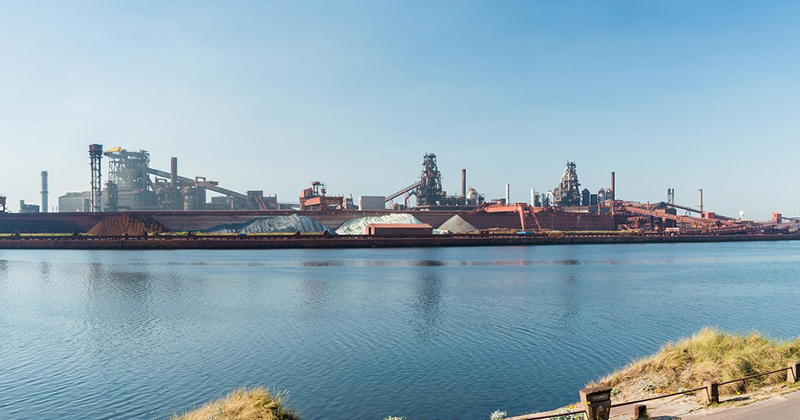
The so-called 3D Project, using a DMX technology demonstration plant for CO2 capture installed at ArcelorMittal’s Dunkirk plant, is operating stably and to expected efficiency and energy performance levels, says engineering company Axens, which commercialised DMX.
The pilot line capturing the CO2 in blast furnace gases has been the object of round-the-clock tests. The unit is producing CO2 with a high level of purity exceeding 90%, with low energy consumption and no solvent degradation despite the high concentrations of contaminants in the gas treated, Axens says.
The technology, patented by research company IFP Energies nouvelles (IFPEN), has taken 15 years of development, Kallanish notes. The steelmaker and Axens launched the 3D project in 2019. Coordinated by IFPEN, the French DMX technology is the result of a research project including ArcelorMittal, Axens, TotalEnergies, Air Products, Brevik Engineering, John Cockerill, DTU, Gassco, ETHZ and Uetikon.
It uses an amine demixing solvent to capture CO2 contained in the flue gases produced by heavy industries. Capture will be necessary in order to reduce industrial emissions. “The significant reduction in the energy required for the process and the excellent stability of the solvent make the DMX process a unique, innovative, efficient and flexible solution,” Axens says.
The DMX technology is seen accelerating French industry decarbonisation using a carbon capture utilisation storage strategy.
Natalia Capra France